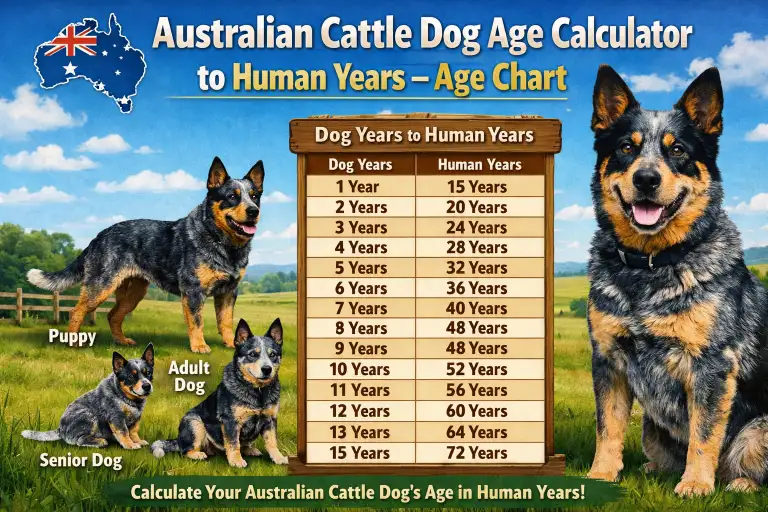
If you’ve ever wondered “How old is my Australian Cattle Dog in human years?”, this age calculator is designed to give you a breed-specific, science-based answer, not a rough guess.
Australian Cattle Dogs don’t age the same way humans do — and they don’t follow the outdated “1 dog year = 7 human years” rule either. As a medium-sized, high-endurance working breed, they mature quickly in early life, then age more gradually through adulthood before senior changes appear later.
This calculator converts your Australian Cattle Dog’s age into human-year equivalents by accounting for:
- Faster aging during puppy and adolescent years
- Slower, more stable aging through prime adult years
- Accelerated aging again in the senior stage
To use the calculator, simply enter your dog’s current age. The result reflects how veterinarians and canine aging research understand real biological aging, not just calendar years.
The age you see here is more than a number. It helps you:
- Understand which life stage your Australian Cattle Dog is in
- Anticipate age-related health and behavior changes
- Make better decisions about nutrition, exercise, and veterinary care
Australian Cattle Dog Age Chart (Dog Years to Human Years)
Many owners prefer a simple chart instead of using a calculator every time. The table below shows how an Australian Cattle Dog’s age compares to human years at different stages of life.
This chart is made for medium-sized working breeds like the Australian Cattle Dog, which usually age more slowly than large breeds but faster than very small dogs.
Australian Cattle Dog Age to Human Years
| Australian Cattle Dog Age | Human Age Equivalent | Life Stage |
|---|---|---|
| Under 6 months | About 10 years | Puppy |
| 1 year | About 15 years | Adolescent |
| 2 years | About 24 years | Young Adult |
| 3 years | About 28 years | Adult |
| 5 years | About 36 years | Adult |
| 7 years | About 44 years | Mature |
| 10 years | About 56 years | Senior |
| 12 years | About 64 years | Senior |
| 14+ years | 70+ years | Very Senior |
This table helps you quickly answer questions like:
- Is my Australian Cattle Dog still young or already a senior?
- Should I start thinking about senior food or joint care?
- Why does my dog feel older or younger than expected?
Remember, this chart shows average aging. Some Australian Cattle Dogs may act younger or older depending on their health, weight, activity level, and genetics.
How Australian Cattle Dogs Age Compared to Humans
Australian Cattle Dogs do not age at the same speed as humans. They age very fast when they are young, then slow down in adulthood, and speed up again when they become seniors. This is why the old rule “1 dog year = 7 human years” is not correct.
In the first year of life, an Australian Cattle Dog grows from a puppy into a young adult. That is something humans take more than 15 years to do. After that, aging slows down for several years, especially because this breed is strong, active, and medium-sized.
Australian Cattle Dogs are known for:
- Strong bodies and good endurance
- Slower aging than large breeds
- Staying active even when they are getting older
But even if they act young, their bodies still age on the inside. Joints, teeth, and organs change over time, even when energy levels stay high.
Why dog years are not the same as human years
Dogs age in a curved pattern, not a straight line. Early years count more. Later years count less.
This simple table helps explain that idea.
| Dog’s Age Period | What Happens | Human Aging Comparison |
|---|---|---|
| Puppy years | Very fast growth | Like a baby to a teenager |
| Adult years | Slow, steady aging | Like adult life |
| Senior years | Aging speeds up again | Like senior adulthood |
Because of this pattern, a 2-year-old Australian Cattle Dog is already similar to a young adult human, while a 7-year-old dog is closer to middle age, not “very old.”
Australian Cattle Dogs are medium-sized dogs, and that works in their favor.
| Dog Size | Typical Aging Speed |
|---|---|
| Small dogs | Slow aging, longer lives |
| Medium dogs (like ACDs) | Balanced aging |
| Large dogs | Faster aging, shorter lives |
This is one reason Australian Cattle Dogs often live longer than large breeds like German Shepherds or Great Danes.
Australian Cattle Dog Life Stages: Puppy, Adult, and Senior Years
Knowing your Australian Cattle Dog’s life stage helps you understand what is normal for their age and what changes to expect next. Even if two dogs are the same age, they may act very different depending on their life stage.
Australian Cattle Dogs often stay playful and active for many years, but their bodies still move through clear stages over time.
Australian Cattle Dog Life Stages Table
| Life Stage | Age Range (Approx.) | What Owners Usually Notice |
|---|---|---|
| Puppy | Birth to 12 months | Fast growth, high energy, learning basic skills |
| Adolescent | 1 to 2 years | Strong body, testing limits, very active |
| Adult | 3 to 7 years | Peak strength, steady energy, focused behavior |
| Senior | 8+ years | Slower movement, more rest, joint stiffness |
What these stages mean for your dog
Puppies grow very fast. Their bones, muscles, and brains are still developing, which is why gentle exercise and good food are important early on.
Adult Australian Cattle Dogs are usually at their best. They have strong bodies, sharp minds, and high drive. Many owners think their dog will stay this way forever, but aging is already happening slowly inside.
Senior dogs may still want to work, run, or play, but you might notice:
- Stiffness after resting
- Less jumping or climbing
- Longer recovery after exercise
- More sleeping during the day
These changes are normal signs of aging, not weakness.
Helping Your Australian Cattle Dog Live a Longer, Healthier Life
Once you know your Australian Cattle Dog’s age in human years, the next step is knowing how to care for them at that age. Good daily habits can help your dog stay active, comfortable, and happy for more years.
Australian Cattle Dogs are tough and energetic, but they still need the right care as they get older.
Age-Based Care Priorities
| Dog Age Range | Main Care Focus |
|---|---|
| Puppy | Healthy growth, safe exercise, training basics |
| Adult | Weight control, regular exercise, mental work |
| Senior | Joint care, slower exercise, regular vet checks |
Simple ways to support healthy aging
Keeping a healthy weight is one of the most important things you can do. Extra weight puts stress on joints and can make aging harder, especially for active breeds like Australian Cattle Dogs.
Exercise should change with age. Puppies need short and gentle play. Adults enjoy long walks and jobs to do. Senior dogs still need movement, but slower walks and more rest help protect their joints.
Regular vet visits become more important as your dog gets older. Vets can spot early signs of joint pain, dental problems, or other age-related issues before they become serious.
At home, small changes can help senior dogs a lot, such as:
- Soft bedding for joints
- Non-slip floors
- Shorter but more frequent walks
- Keeping daily routines the same
Australian Cattle Dogs often act young even when they are seniors, so it’s important to care for their age, not just their energy level.
For more general information about dog lifespans and health, you can also review guidance from the American Kennel Club (AKC), which shares breed-specific longevity and care insights for working dogs like the Australian Cattle Dog.

Ata Ur Rehman is the founder of Pet Age in Human Years Calculator, an educational platform that provides age conversion charts and lifespan guides for dogs, cats, birds, and other companion animals. His work focuses on helping pet owners understand how animal ages translate into human years using commonly accepted age conversion formulas and published lifespan averages.
The website compiles breed and species lifespan data from kennel clubs, breed organizations, and general animal lifespan studies to present simple and easy-to-understand guides for pet owners worldwide.
This website was created to centralize animal age conversion charts into one easy reference platform for pet owners.