Many owners wonder how old their Schipperke is in human years, but dog aging doesn’t follow a simple one-to-one formula. The common idea that one dog year equals seven human years is outdated and especially inaccurate for small breeds like the Schipperke.
Schipperkes mature very quickly in their early years. A one-year-old Schipperke is already comparable to a teenager or young adult in human terms, not a seven-year-old child. After this rapid early development, aging slows down, and adult Schipperkes progress through middle age and senior years more gradually than large or giant breeds.
Size plays a major role in how dogs age. As a small breed, the Schipperke generally ages more slowly over its lifetime and tends to live longer than medium or large dogs. While large breeds may reach senior status by six or seven years old, many Schipperkes don’t show senior changes until closer to nine or ten.
Breed traits also matter. Schipperkes are known for their alertness, intelligence, and high energy, which can make them appear “young” well into adulthood. However, internal aging still occurs even when a dog looks energetic, which is why understanding age conversion helps owners adjust care, nutrition, and veterinary screening at the right time.
Understanding how Schipperke aging differs from human aging is the foundation for using an accurate Schipperke age calculator. Instead of relying on a fixed multiplier, modern age estimates consider growth speed, life stage, and small-breed aging patterns to give a more realistic picture of your dog’s true biological age.
Schipperke Dog Age Calculator: Convert Dog Years to Human Years
Knowing your Schipperke’s age in human years helps you understand their health, energy, and care needs. Instead of using the old “one dog year equals seven human years” rule, we use a more accurate approach based on modern canine science and small-breed aging patterns.
Schipperkes grow fast in the first year, then age more slowly as adults. This means the first few years of life are equivalent to many human years, while later years pass more gradually.
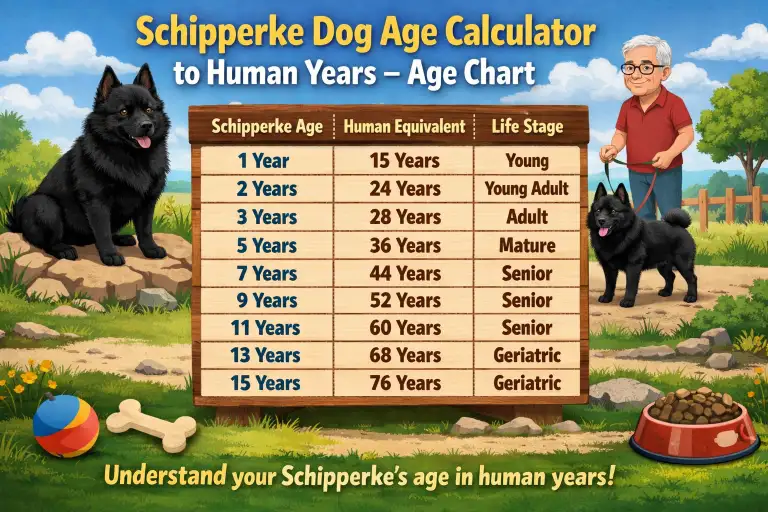
Here is a Schipperke Age to Human Years Chart to make it easy to see your dog’s age:
| Schipperke Age (Dog Years) | Human Age Equivalent | Life Stage |
|---|---|---|
| 1 | 15 | Puppy |
| 2 | 24 | Young Adult |
| 3 | 28 | Adult |
| 4 | 32 | Adult |
| 5 | 36 | Adult |
| 6 | 40 | Adult |
| 7 | 44 | Mature Adult |
| 8 | 48 | Mature Adult |
| 9 | 52 | Senior |
| 10 | 56 | Senior |
| 11 | 60 | Senior |
| 12 | 64 | Senior |
| 13 | 68 | Senior |
| 14 | 72 | Senior |
| 15 | 76 | Senior |
You can use this chart to quickly check how your Schipperke’s age compares to human years. For example, a 5-year-old Schipperke is about 36 in human years, which means they are an adult but still active and healthy.
Schipperke Life Stages Explained (Puppy, Adult, Senior)
Schipperkes go through three main life stages: puppy, adult, and senior. Knowing these stages helps you give the right care at the right time.
| Life Stage | Age Range (Dog Years) | What to Expect |
|---|---|---|
| Puppy | 0–1 | Rapid growth, learning basic commands, high energy, teething |
| Young Adult | 2–4 | Fully grown, active, playful, building personality |
| Adult | 5–8 | Stable behavior, moderate energy, starting to show early signs of aging |
| Mature Adult | 9–10 | Energy slows, may need more rest, early health checks recommended |
| Senior | 11+ | Slower movement, graying fur, more health monitoring, special care needed |
During the puppy stage, Schipperkes are full of energy and curiosity. This is the time to teach them manners, socialize them with other dogs, and give them proper nutrition to support growth.
The adult stage is when Schipperkes are most active and healthy. They have stable behavior and enjoy play and exercise. Owners should continue mental stimulation and keep them at a healthy weight.
The mature adult and senior stages are when changes start to appear. Energy may decrease, joints can become stiffer, and their coat may show signs of aging. Regular vet visits and careful observation are important to catch any health problems early.
Understanding these life stages makes it easier to track your Schipperke’s age using the age calculator and to plan for care that fits each stage.
What Affects a Schipperke’s Aging and Lifespan
A Schipperke’s lifespan and how fast they age can change depending on several factors. Knowing these can help you give your dog the best care and help them live a long, healthy life.
| Factor | How It Affects Aging | What Owners Can Do |
|---|---|---|
| Genetics | Determines natural lifespan and health risks | Choose a healthy puppy from a responsible breeder |
| Size & Breed | Small dogs like Schipperkes usually live longer than large breeds | Adjust care based on breed size and energy needs |
| Diet & Weight | Poor diet or being overweight can cause early health problems | Feed high-quality food and monitor weight |
| Exercise | Lack of exercise can lead to obesity and slower aging | Give daily walks and playtime |
| Neutering/Spaying | Can slightly affect longevity and reduce some health risks | Discuss timing with your vet |
| Preventive Vet Care | Regular checkups catch problems early | Schedule yearly or semi-annual vet visits |
These factors show that aging is not the same for every dog. Two Schipperkes of the same age can be very different in health and energy depending on their lifestyle, diet, and care. Paying attention to these factors helps owners slow aging effects and keep their dog happy and active for longer.
Helping Your Schipperke Age Healthily at Every Stage
Taking care of your Schipperke properly can help them live longer and stay active. Different stages of life need different types of care, nutrition, and exercise.
| Age Range | Care Focus | Tips for Owners |
|---|---|---|
| Puppy (0–1) | Growth and socialization | Feed high-quality puppy food, start training, provide lots of play and socialization |
| Young Adult (2–4) | Activity and mental stimulation | Keep them active with walks and games, continue training, monitor weight |
| Adult (5–8) | Health and maintenance | Balanced diet, regular exercise, start annual vet checkups |
| Mature Adult (9–10) | Early senior care | Moderate exercise, watch for joint stiffness, monitor health closely |
| Senior (11+) | Comfort and health support | Soft bedding, shorter walks, frequent vet visits, special diet for aging dogs |
Other tips to help your Schipperke age well include:
- Nutrition: Provide high-quality food suited for their life stage. Avoid overfeeding.
- Exercise: Small dogs still need daily walks and mental stimulation. Games and toys help keep them active.
- Vet Care: Schedule regular checkups. Blood tests and dental care can catch problems early.
- Weight Management: Keep your dog at a healthy weight to reduce stress on joints and organs.
- Spaying/Neutering: Discuss with your vet how this may impact health and lifespan.
“For more detailed information about this breed, visit the American Kennel Club’s official breed page.”

Ata Ur Rehman is the founder of Pet Age in Human Years Calculator, an educational platform that provides age conversion charts and lifespan guides for dogs, cats, birds, and other companion animals. His work focuses on helping pet owners understand how animal ages translate into human years using commonly accepted age conversion formulas and published lifespan averages.
The website compiles breed and species lifespan data from kennel clubs, breed organizations, and general animal lifespan studies to present simple and easy-to-understand guides for pet owners worldwide.
This website was created to centralize animal age conversion charts into one easy reference platform for pet owners.