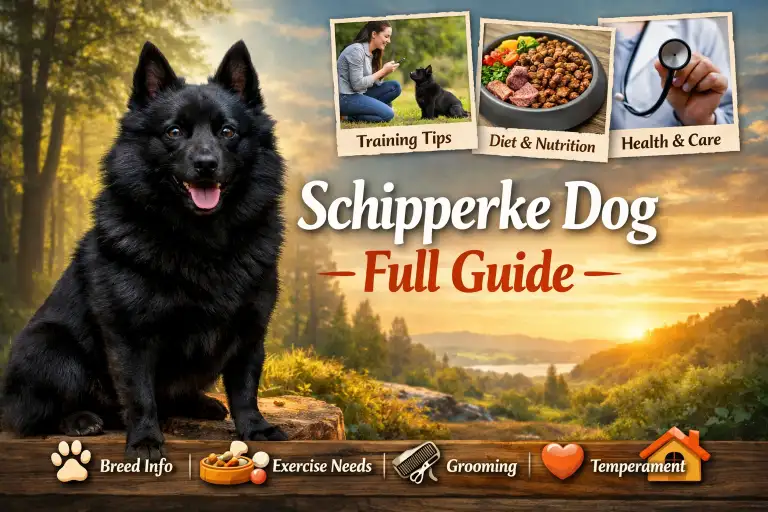
The Schipperke dog is a small Belgian breed with a reputation that often surprises first-time owners. At a glance, they look like a compact, fox-faced companion dog. In real life, they behave far more like a miniature watchdog with working-dog instincts than a laid-back lap dog. This mismatch between appearance and personality is one of the biggest reasons people either fall in love with the breed—or struggle with it.
Originally developed in Belgium as a barge dog and skilled ratter, the Schipperke earned its keep by guarding boats, alerting owners to strangers, and controlling vermin. That heritage still shows today. Modern Schipperkes are intensely alert, highly observant, and naturally suspicious of unfamiliar people and sounds. They don’t need to be taught to “watch”—it comes pre-installed.
Despite their small size, Schipperkes are not fragile dogs. They are sturdy, athletic, and mentally sharp, with an energy level that often catches owners off guard. Many first-time owners underestimate how much stimulation this breed needs, assuming that a small dog will be easy to manage indoors. In reality, a bored Schipperke quickly becomes a noisy, destructive, or overly controlling one.
What sets the Schipperke apart from many other small breeds is its combination of intelligence and independence. They learn quickly, but they also question commands if they don’t see a reason to comply. This makes them excellent problem-solvers and escape artists—but also challenging for owners who expect blind obedience.
The Schipperke is best described as a big personality in a small, self-confident body. They thrive in homes where their alertness is appreciated, their intelligence is engaged, and their boundaries are clearly defined. For the right owner, they are deeply loyal, entertaining, and endlessly expressive companions. For the wrong one, they can feel overwhelming.
Schipperke Quick Facts
| Trait | Details |
|---|---|
| Breed origin | Belgium |
| Original purpose | Barge dog, ratter, watchdog |
| Size | Small |
| Average weight | 10–16 lbs (4.5–7 kg) |
| Average height | 10–13 inches |
| Lifespan | 13–15 years |
| Energy level | High |
| Intelligence | Very high |
| Barking tendency | High |
| Shedding | Moderate to heavy (seasonal) |
| Best suited for | Active, engaged owners |
This overview gives a clear picture of what living with a Schipperke is really like—before diving deeper into size, temperament, care needs, and long-term suitability in the sections ahead.
Schipperke Size, Appearance & Physical Traits
Schipperkes are small dogs, but they carry a lot of energy and confidence in their little bodies. They look like a fox with their pointed ears, sharp eyes, and fluffy black coat. Their body is compact and square, which makes them very agile and quick. Even though they are tiny, they are strong and built for action, not just cuddling.
Male Schipperkes are usually slightly bigger than females. They have a thick double coat that stands off their body, giving them a ruff around the neck. Most are black, which is the most recognized color, but a few may have shades of brown or red. Their coat needs some brushing, especially during seasonal shedding, but it does not need daily grooming. One of their most distinctive features is the ruff and cape, which makes them look like a little lion. Some Schipperkes have naturally short tails, while others may have a small docked tail depending on regional standards.
Schipperkes are small but very alert. Their fox-like face and bright, sparkling eyes give away their intelligence and curiosity. They move quickly and with purpose, often showing their playful and mischievous side. These dogs are highly observant and often notice things before their owners do.
Schipperke Size & Appearance Chart
| Feature | Male | Female | Notes |
|---|---|---|---|
| Height | 11–13 inches | 10–12 inches | Measured at the shoulder |
| Weight | 12–16 lbs | 10–14 lbs | Small but sturdy |
| Coat | Double, thick | Double, thick | Black most common |
| Shedding | Moderate to heavy | Moderate to heavy | Seasonal blowouts |
| Energy Level | High | High | Needs daily exercise |
| Tail | Natural or docked | Natural or docked | Breed standard varies |
| Distinctive Features | Ruff, cape, fox-like face | Ruff, cape, fox-like face | Alert, expressive eyes |
This section gives a clear visual of what a Schipperke looks like and what to expect in size, weight, and coat care. They may be small, but they have a big personality and strong presence.
Schipperke Temperament, Personality & Real-Life Behavior
Schipperkes are small dogs, but their personality is big. They are smart, curious, and very alert. This makes them excellent watchdogs because they notice new sounds or people right away. They can be suspicious of strangers but are very loyal and loving to their family.
These dogs are also very independent. They like to make their own choices, which means training needs patience and consistency. They are clever and can figure things out quickly, but they may test rules if they do not understand the reason behind them.
With family, Schipperkes are affectionate and enjoy spending time with people they trust. They can become “Velcro dogs,” following their owners around the house. They are playful and enjoy games, but they also need mental challenges to stay happy.
Around children, Schipperkes can do well if the kids are gentle and respectful. They are small, so rough handling can hurt them or make them nervous. They are better suited to older children who understand how to interact with small dogs.
When it comes to other pets, Schipperkes have a strong prey drive. They may chase small animals like cats or rodents unless they are properly socialized. They can live with other dogs, but supervision is important at first to make sure everyone gets along.
Schipperke Temperament Traits
| Trait | Level | What It Means |
|---|---|---|
| Intelligence | Very high | Learns quickly, clever problem solver |
| Energy | High | Needs daily exercise and mental games |
| Loyalty | Very high | Strong bond with family |
| Alertness | Very high | Quick to notice new sounds or people |
| Independence | Medium | Likes to make own decisions, can be stubborn |
| Barking | High | Will alert family to strangers or unusual events |
| Prey Drive | Medium-High | May chase small animals if not socialized |
| Child Friendly | Medium | Best with gentle, older children |
| Dog Friendly | Medium | Can live with other dogs with proper introduction |
Schipperkes are smart, lively, and sometimes mischievous. Understanding their personality helps owners give them the right training, attention, and playtime. They are fun and loving, but they need guidance and mental stimulation to thrive.
Care Needs — Exercise, Training, Grooming & Health
Schipperkes are small dogs, but they have high energy and big needs. They need both physical exercise and mental stimulation every day. A short walk is not enough; they enjoy running, playing fetch, and puzzle games that challenge their mind. Without enough activity, they can become bored, bark a lot, or get into mischief.
Training a Schipperke can be fun but tricky. They are smart and learn quickly, but they can also be stubborn. Using positive reinforcement, like treats and praise, works best. Harsh commands usually make them confused or anxious. Consistency and patience are key to raising a well-behaved Schipperke.
Grooming is easy but important. Their thick double coat needs brushing a few times a week, especially during seasonal shedding. They do not need frequent baths, but nails, ears, and teeth should be checked regularly. They are generally healthy dogs but can have some breed-specific health issues, including MPS IIIB, epilepsy, and patellar luxation. Most Schipperkes live 13–15 years with proper care.
Schipperke Care Needs
| Category | Level | Owner Tips |
|---|---|---|
| Exercise | High | Daily walks plus active play or mental games |
| Training | Medium-High | Positive reinforcement, consistent rules |
| Grooming | Medium | Brush a few times per week, check nails/ears/teeth |
| Shedding | Moderate-High | Seasonal blowouts require extra brushing |
| Health Concerns | Medium | Watch for MPS IIIB, epilepsy, joint issues |
| Lifespan | 13–15 years | Maintain regular vet checkups |
Schipperkes need an engaged owner who can provide daily activity, training, and attention to health. They are not a low-energy dog despite their small size, so understanding these needs is essential to keeping them happy and well-behaved.
Is the Schipperke Right for You? (Pros, Cons, Costs & Alternatives)
Schipperkes are small dogs with big personalities, so they are not the right dog for everyone. They are best for owners who have time, energy, and patience. They need daily exercise, mental stimulation, and consistent training. Owners who enjoy interactive play, games, and problem-solving with their dog will find a Schipperke rewarding.
These dogs are very loyal and alert, which makes them excellent watchdogs. However, they can bark a lot and may be suspicious of strangers. They are usually good with older children, but small kids or rough handling may make them nervous. Schipperkes may chase small pets if not socialized properly. They are ideal for apartments only if they get enough exercise and mental work.
Schipperkes are generally healthy, but they have some breed-specific health concerns like MPS IIIB, epilepsy, and joint problems. Puppy prices can range from $1,000–$2,000, depending on breeder reputation, and ongoing costs for food, grooming, and vet care are moderate. Insurance can help cover unexpected health issues.
Schipperke Pros & Cons
| Pros | Cons |
|---|---|
| Small size, portable | Can bark a lot |
| Very intelligent | Independent and stubborn |
| Loyal and affectionate | Prey drive can be high |
| Alert watchdog instincts | Needs daily exercise and mental stimulation |
| Long lifespan (13–15 years) | Not ideal for first-time owners without preparation |
Schipperke vs Similar Small Breeds
| Breed | Size | Energy | Barking | Trainability | Best For |
|---|---|---|---|---|---|
| Schipperke | Small | High | High | Medium | Active, engaged owners |
| Pomeranian | Small | Medium | High | Medium | Owners who want playful lap dog |
| Miniature Pinscher | Small | High | Medium | Medium | Owners looking for active small dog |
| Finnish Spitz | Small-Medium | Medium-High | High | Medium | Families with space for activity |
Schipperkes are not the easiest dogs, but they are rewarding for the right person. If you want a small dog with energy, intelligence, and loyalty, and you can meet their needs, a Schipperke can be a perfect companion.
“For more detailed information about this breed, visit the American Kennel Club’s official breed page.”

Ata Ur Rehman is the founder of Pet Age in Human Years Calculator, an educational platform that provides age conversion charts and lifespan guides for dogs, cats, birds, and other companion animals. His work focuses on helping pet owners understand how animal ages translate into human years using commonly accepted age conversion formulas and published lifespan averages.
The website compiles breed and species lifespan data from kennel clubs, breed organizations, and general animal lifespan studies to present simple and easy-to-understand guides for pet owners worldwide.
This website was created to centralize animal age conversion charts into one easy reference platform for pet owners.