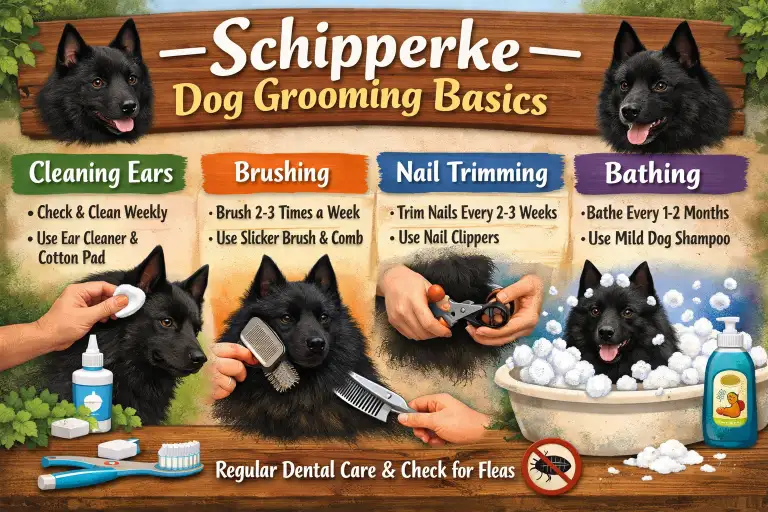
Schipperkes may be small, but their grooming needs are often misunderstood. Many owners assume this breed is low-maintenance because they don’t require haircuts. In reality, proper grooming plays a major role in controlling shedding, protecting the skin, and keeping the coat healthy and comfortable year-round.
The Schipperke has a dense double coat designed to insulate the body and protect the skin. When that coat isn’t maintained correctly, loose undercoat builds up, airflow to the skin is reduced, and problems like excessive shedding, itching, dull coat texture, and skin irritation become more likely. Regular grooming helps remove dead hair, distribute natural oils, and support the skin’s protective barrier.
Good grooming also affects your dog’s comfort and behavior. A well-brushed coat prevents tight undercoat from pulling on the skin, especially during seasonal shedding periods. Clean ears, trimmed nails, and healthy skin reduce discomfort that can lead to restlessness, scratching, or sensitivity when handled.
This guide focuses on practical, breed-appropriate grooming rather than cosmetic trimming. You’ll learn how to care for a Schipperke’s coat at home, how often grooming should be done, and which routines actually make a difference for shedding control and skin health. Whether you’re a first-time Schipperke owner or looking to improve your current grooming routine, understanding why coat care matters is the foundation for keeping this breed healthy and comfortable.
Understanding the Schipperke Double Coat and Shedding
The Schipperke has a double coat, which means it has two layers of fur. The outer coat is straight, thick, and protective. The undercoat is soft, dense, and keeps the dog warm. Because of this, Schipperkes shed more than many people expect, especially during seasonal coat changes in spring and fall. If the undercoat is not brushed regularly, it can get tangled and form mats, which can be uncomfortable for your dog.
Knowing about the coat helps you plan grooming. Brushing the undercoat removes loose hair and helps keep the skin healthy. Bathing too often or shaving the coat can damage it, making shedding worse and reducing the coat’s natural protection.
Here’s a simple table to help you understand the Schipperke coat and shedding:
Schipperke Coat Type and Shedding Overview
| Coat Layer | Function | Shedding Level | Grooming Impact |
|---|---|---|---|
| Outer coat | Protects skin and repels dirt | Moderate | Needs brushing to remove loose hair |
| Undercoat | Keeps dog warm and insulated | Heavy during shedding seasons | Needs regular deshedding to prevent mats |
| Seasonal coat blow | Undercoat is shed and replaced | Very heavy | Extra brushing needed 2–3 times a week |
Schipperke Grooming Routine at Home (Step-by-Step)
Grooming a Schipperke at home can be simple if you follow a regular routine. The goal is to keep the coat clean, healthy, and free from mats while reducing shedding. Here is an easy guide for daily, weekly, and seasonal grooming.
Essential Tools
Before starting, gather the right tools. Using the correct brushes and products makes grooming faster and safer.
Best Grooming Tools for Schipperkes
| Tool Type | What It’s Used For | When to Use | Common Mistakes |
|---|---|---|---|
| Slicker brush | Removes loose hair and small tangles | 2–3 times per week | Pressing too hard and hurting skin |
| Undercoat rake | Removes thick undercoat hair | Weekly during shedding | Using on wet coat |
| Pin brush | Smooths outer coat | After brushing out tangles | Skipping undercoat first |
| Comb | Checks for mats behind ears & legs | Weekly | Not checking high-risk areas |
| Dog shampoo | Cleans coat without drying skin | Every 6–8 weeks | Using human shampoo |
| Towel & blow dryer | Drying coat safely | After bath | Using hot air directly on skin |
Brushing and Deshedding
- Brush the undercoat gently to remove loose hair.
- Work in sections: start at the neck, move to back, sides, and legs.
- Check behind ears, under arms, and around the collar for mats.
- During heavy shedding, brush 2–3 times per week.
Bathing
- Bathe your Schipperke every 6–8 weeks or when dirty.
- Use a dog-safe shampoo with a pH suitable for dogs.
- Rinse thoroughly to avoid skin irritation.
- Towel dry first, then use a blow dryer on low heat if your dog tolerates it.
Schipperke Grooming Schedule
| Task | Frequency | Notes |
|---|---|---|
| Brushing | 2–3 times per week | More often during seasonal shedding |
| Bathing | Every 6–8 weeks | Avoid overbathing to protect skin |
| Nail trimming | Every 3–4 weeks | Check weekly if nails grow fast |
| Ear cleaning | Once a week | Look for wax buildup or odor |
| Coat check for mats | Weekly | Focus on ears, underarms, tail area |
Following this routine keeps your Schipperke comfortable, reduces hair around the house, and prevents coat problems.
Extra Grooming Care: Nails, Ears, Teeth, and Skin Health
Taking care of your Schipperke goes beyond brushing and bathing. Nails, ears, teeth, and skin all need attention to keep your dog healthy and comfortable.
Nails should be trimmed every 3–4 weeks. Long nails can make walking uncomfortable and may cause joint problems. Use a dog nail clipper or grinder and be careful not to cut the quick, which can bleed and hurt.
Schipperkes have upright ears, so cleaning them is simple but important. Check for wax buildup, dirt, or odor once a week. Use a dog-safe ear cleaner and a cotton ball. Never insert anything deep into the ear canal.
Dental care prevents bad breath, tooth decay, and gum disease. Brush your dog’s teeth several times a week using dog toothpaste and a soft toothbrush. Dental chews and toys also help keep teeth clean.
Skin and coat health is closely linked to grooming. Look for signs of irritation, redness, bumps, or unusual hair loss. Early detection can prevent infections and keep your dog comfortable. Avoid overbathing, which can dry the skin, and use shampoos made for dogs to maintain the coat’s natural oils.
Common Schipperke Grooming Issues and Warning Signs
| Issue | What You Might See | Likely Cause | What to Do |
|---|---|---|---|
| Overgrown nails | Clicking on floor, curling nails | Not trimming regularly | Trim carefully, use grinder if needed |
| Ear infection | Odor, redness, scratching | Wax buildup or moisture | Clean ears, consult vet if persists |
| Dental problems | Bad breath, tartar, difficulty eating | Poor dental care | Brush teeth, dental chews, vet check |
| Skin irritation or mats | Red spots, scratching, tangles | Infrequent brushing, allergies | Brush regularly, check skin, see vet if severe |
| Excessive shedding | Hair around house, loose undercoat | Seasonal coat change | Increase brushing frequency |
Common Grooming Mistakes, FAQs, and Professional Grooming
Even experienced owners can make mistakes when grooming a Schipperke. Avoiding these common errors will keep your dog safe, comfortable, and looking their best.
Many owners think shaving the coat will reduce shedding. This is false. Shaving damages the protective double coat and can cause more shedding, uneven regrowth, and skin problems. Overbathing is another common mistake. Bathing too often strips natural oils from the skin, leaving it dry and itchy. Using human shampoos or harsh products can also irritate the skin.
Knowing when to groom at home versus visiting a professional is important. Home grooming works well for regular brushing, basic baths, and nail care. Professional groomers are helpful for heavy mats, undercoat blow-outs, or if your dog is anxious or difficult to handle. Seasonal shedding periods or special events may also be a good reason to use a professional groomer.
Here’s a simple table to help Schipperke owners avoid mistakes and know when to seek help:
Common Grooming Mistakes and Solutions
| Mistake | Why It’s a Problem | How to Fix It |
|---|---|---|
| Shaving the coat | Damages double coat, increases shedding | Stick to brushing and trimming mats only |
| Overbathing | Dries out skin, removes natural oils | Bathe every 6–8 weeks |
| Using human shampoo | Irritates skin and coat | Use dog-specific shampoo |
| Ignoring nails | Causes discomfort and walking problems | Trim nails every 3–4 weeks |
| Skipping ear checks | Leads to infections | Clean ears weekly, check for odor/redness |
| Brushing only occasionally | Mats, shedding buildup | Brush 2–3 times per week, more during shedding season |
FAQs for Schipperke Owners
- Do Schipperkes shed a lot? Yes, especially during seasonal coat changes.
- Can I shave my Schipperke? No, it harms the coat. Regular brushing is best.
- How often should I bathe my dog? Every 6–8 weeks or when dirty.
- Do I need a professional groomer? Only if mats are severe, your dog is anxious, or for seasonal blow-outs.
“For more detailed information about this breed, visit the American Kennel Club’s official breed page.”

Ata Ur Rehman is the founder of Pet Age in Human Years Calculator, an educational platform that provides age conversion charts and lifespan guides for dogs, cats, birds, and other companion animals. His work focuses on helping pet owners understand how animal ages translate into human years using commonly accepted age conversion formulas and published lifespan averages.
The website compiles breed and species lifespan data from kennel clubs, breed organizations, and general animal lifespan studies to present simple and easy-to-understand guides for pet owners worldwide.
This website was created to centralize animal age conversion charts into one easy reference platform for pet owners.