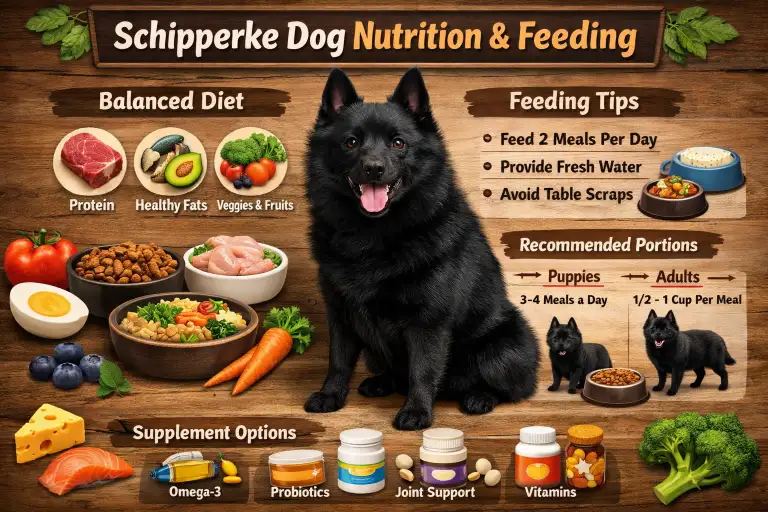
Schipperkes are small dogs, but their nutrition needs are anything but small. This breed is known for its high energy, alert nature, and fast metabolism, which means diet plays a major role in maintaining healthy weight, stable energy levels, good digestion, and long-term health.
This guide is designed to help you understand what a Schipperke actually needs in the bowl, not just what looks good on a dog food label. Whether you have a growing puppy, an active adult, or a slowing senior, getting the basics right prevents many of the most common problems Schipperke owners face—unwanted weight gain, constant hunger, digestive upset, or poor coat quality.
Schipperkes are considered a small but active breed, typically weighing between 10–16 pounds. Compared to larger dogs, they burn calories faster relative to their size, but they are also prone to overfeeding if portions aren’t controlled carefully. This combination makes balanced nutrition and precise portions especially important.
At a foundational level, a healthy Schipperke diet should:
- Support lean muscle without excess calories
- Provide enough fat for sustained energy and coat health
- Include digestible carbohydrates and fiber for gut health
- Deliver complete vitamins and minerals for immune, joint, and metabolic function
From a veterinary nutrition standpoint, complete diets should meet AAFCO or FEDIAF nutritional standards, ensuring they provide all essential nutrients in the correct balance. Feeding “high-quality” food isn’t about marketing buzzwords—it’s about nutrient density, digestibility, and appropriate calorie levels for a small, energetic dog.
Schipperkes also tend to be food-motivated and intelligent, which can lead to begging, treat overuse, or rapid weight gain if feeding habits aren’t consistent. Nutrition isn’t just about what you feed—it’s also about how much, how often, and how consistently you feed.
Before getting into portions, food types, and special diets, it’s important to understand the basic nutritional framework that keeps Schipperkes healthy:
- Balanced macronutrients (protein, fat, carbohydrates)
- Breed-appropriate calorie intake
- Portion awareness rather than free feeding
- Regular monitoring of body condition, not just the number on the scale
Getting these fundamentals right sets the stage for every other feeding decision you’ll make—and helps your Schipperke stay energetic, lean, and healthy for years to come.
How Much to Feed a Schipperke (Calories, Portions, and Schedule)
Feeding a Schipperke the right amount is one of the most important steps to keep them healthy. Too much food can lead to weight gain and joint problems, while too little can make them tired, weak, or even cause health issues.
Schipperkes are small but very active dogs. Their calorie needs depend on age, weight, and activity level. Puppies need more calories for growth, adults need enough for energy, and seniors need fewer calories as their activity slows down.
Here is a simple feeding chart by weight and calories for Schipperkes:
| Schipperke Weight | Activity Level | Daily Calories |
|---|---|---|
| 10 lbs | Low activity | 230–270 kcal |
| 10 lbs | Moderate | 270–300 kcal |
| 10 lbs | High activity | 300–340 kcal |
| 13 lbs | Low activity | 290–330 kcal |
| 13 lbs | Moderate | 330–370 kcal |
| 13 lbs | High activity | 370–410 kcal |
| 16 lbs | Low activity | 350–390 kcal |
| 16 lbs | Moderate | 390–430 kcal |
| 16 lbs | High activity | 430–470 kcal |
Feeding frequency is also important:
| Age / Life Stage | Meals per Day |
|---|---|
| Puppy (2–6 months) | 3–4 small meals |
| Puppy (6–12 months) | 2–3 meals |
| Adult (1–7 years) | 2 meals |
| Senior (7+ years) | 2 smaller meals |
Tips for portion control:
- Use a measuring cup instead of free-feeding.
- Check your dog’s body condition: You should feel their ribs without pressing hard, and they should have a visible waist from above.
- Adjust food if your dog gains or loses weight.
Best Food for Schipperkes: What to Put in the Bowl
Choosing the right food for your Schipperke is key to keeping them healthy, happy, and full of energy. Schipperkes are small dogs with lots of energy, so their food needs to be nutritious, balanced, and easy to digest.
There are several types of dog food you can choose from. Each has benefits and drawbacks. Here’s a simple comparison:
| Food Type | Pros | Cons |
|---|---|---|
| Dry Kibble | Convenient, long shelf life, helps clean teeth | Some brands have low-quality ingredients |
| Wet/Canned | Tasty, high moisture content | More expensive, can spoil faster |
| Fresh / Gently Cooked | Very digestible, high nutrient content | Needs refrigeration, can be costly |
| Raw / Freeze-Dried | High protein, close to natural diet | Risk of bacteria, needs careful handling |
| Homemade | You control ingredients | Must balance nutrients carefully, time-consuming |
How to pick the right food:
- Look for foods that meet AAFCO standards to ensure complete nutrition.
- Check the protein and fat levels for small, active dogs like Schipperkes. They need higher protein for muscle and fat for energy.
- Avoid foods with too many fillers or low-quality ingredients.
Reading dog food labels is easier than it looks:
- The first ingredients should be meat or fish, not grains or by-products.
- Check the guaranteed analysis for protein, fat, fiber, and moisture.
- Ignore marketing words like “premium” or “superfood” — focus on nutrients and portion size.
Small dogs can be picky, so it’s okay to mix a little wet food with dry kibble or rotate flavors. Just make sure total calories stay consistent.
Foods Schipperkes Can and Cannot Eat (Treats Included)
Knowing which foods are safe and which are dangerous is very important for Schipperkes. Small dogs can get sick quickly if they eat something toxic, and treats can easily add too many calories if you’re not careful.
Here’s a clear guide to safe and unsafe foods for Schipperkes:
| Safe Foods | How to Serve | Unsafe / Toxic Foods |
|---|---|---|
| Chicken, turkey, lean beef | Cooked, no bones, plain | Chocolate |
| Eggs | Boiled or scrambled, plain | Grapes / raisins |
| Rice, pasta, oats | Cooked, plain | Onions / garlic |
| Carrots, green beans, peas | Raw or cooked | Macadamia nuts |
| Apples, blueberries | Small pieces, no seeds | Avocado |
| Pumpkin | Plain, cooked | Alcohol |
| Yogurt | Plain, unsweetened | Xylitol (sweetener) |
| Sweet potatoes | Cooked, plain | Coffee / caffeine |
Treat guidelines:
- Treats should be less than 10% of daily calories.
- Small pieces are better for training and prevent overeating.
- Avoid giving table scraps that are fatty, salty, or spicy.
Tips for feeding safely:
- Introduce new foods one at a time to watch for digestive upset.
- Always provide fresh water alongside meals and treats.
- Keep dangerous foods out of reach — Schipperkes are clever and can grab food from counters or tables.
Special Diets, Common Feeding Problems, and When to See a Vet
Some Schipperkes have special diet needs or feeding challenges. Knowing what to do can prevent health problems and keep your dog happy and energetic.
Common issues and how to handle them:
| Problem | Cause | Practical Solution |
|---|---|---|
| Food allergies | Sensitivity to proteins, grains, or additives | Try limited ingredient diets or hypoallergenic dog food |
| Sensitive stomach | Change of food, rich treats, or too much fat | Feed easily digestible food, smaller meals, add fiber if needed |
| Weight gain | Overfeeding, low activity | Measure food, reduce treats, increase exercise |
| Picky eating | Texture, flavor, boredom | Rotate flavors, mix wet and dry food, keep consistent schedule |
| Fast eating | Increases risk of choking or vomiting | Use slow-feeder bowl or divide meals into smaller portions |
| Begging / overeating | Learned behavior | Stick to feeding schedule, give treats in moderation |
Tips for switching foods safely:
- Change gradually over 7–10 days mixing old and new food.
- Watch for loose stool, vomiting, or lack of appetite.
- Keep portions consistent and monitor body condition.
When to see a vet or veterinary nutritionist:
- Sudden weight changes or poor coat condition
- Chronic diarrhea, vomiting, or food refusal
- Persistent allergies or itchy skin
- Questions about homemade or raw diets
Following these guidelines helps Schipperkes stay healthy, lean, and happy. Regular check-ins with your vet ensure your dog’s diet matches their life stage and activity level.
“For more detailed information about this breed, visit the American Kennel Club’s official breed page.”

Ata Ur Rehman is the founder of Pet Age in Human Years Calculator, an educational platform that provides age conversion charts and lifespan guides for dogs, cats, birds, and other companion animals. His work focuses on helping pet owners understand how animal ages translate into human years using commonly accepted age conversion formulas and published lifespan averages.
The website compiles breed and species lifespan data from kennel clubs, breed organizations, and general animal lifespan studies to present simple and easy-to-understand guides for pet owners worldwide.
This website was created to centralize animal age conversion charts into one easy reference platform for pet owners.