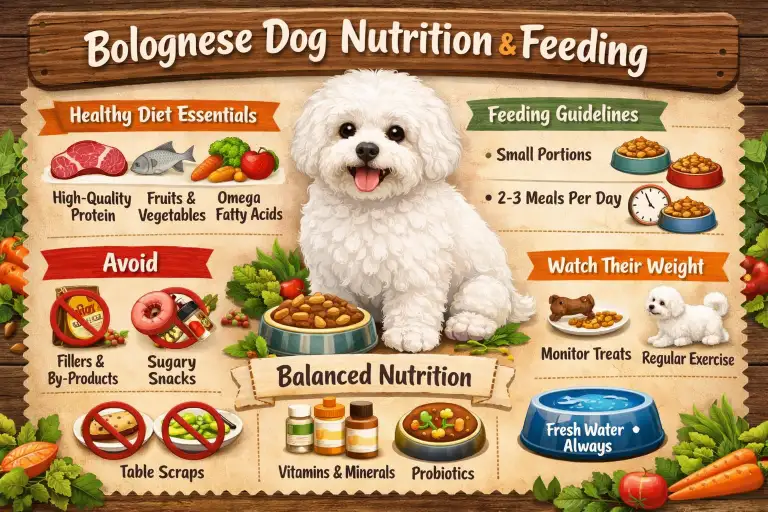
Bolognese dogs may be small in size, but their nutritional needs are just as important—and often easier to get wrong—than those of larger breeds. As a toy companion breed, the Bolognese typically lives an indoor, low-to-moderate activity lifestyle, has a slower metabolism than working dogs, and is prone to weight gain if portions aren’t carefully managed. Proper nutrition plays a direct role in their energy levels, coat quality, digestion, dental health, and long-term wellbeing.
One of the most important things for Bolognese owners to understand is that small dogs have higher calorie needs per pound of body weight than large dogs, yet far less margin for error. An extra treat here or a slightly oversized portion there can quickly lead to unwanted weight gain. Because the Bolognese has a fluffy white coat, changes in body condition are often hidden until the dog is already overweight. This makes intentional feeding and regular body checks especially important.
The Bolognese breed also has a few nutritional priorities worth highlighting. Their long, cotton-like coat benefits from adequate high-quality protein and healthy fats, particularly omega-3 and omega-6 fatty acids, which support skin health and coat texture. Many Bolognese dogs are sensitive to low-quality ingredients or abrupt diet changes, so digestibility and ingredient quality matter more than flashy marketing claims. Dental health is another consideration, as small breeds are more prone to tartar buildup and gum disease, which can influence food choice and feeding habits.
Unlike high-energy or working breeds, most Bolognese dogs do not need calorie-dense diets. Overfeeding rich foods or free-feeding throughout the day is a common mistake. Instead, this breed thrives on measured meals, consistent feeding routines, and foods designed for small or toy breeds that deliver balanced nutrition in smaller portions.
This guide is designed to help you make confident, practical feeding decisions for your Bolognese—whether you’re raising a puppy, maintaining a healthy adult, or supporting a senior dog. By understanding the basics of Bolognese nutrition first, you’ll be better equipped to choose the right food, feed the right amount, and spot problems early before they affect your dog’s health.
How Much to Feed a Bolognese Dog (By Age, Weight, and Activity)
Knowing how much to feed a Bolognese dog is one of the most important parts of good nutrition. Because this breed is small, even small feeding mistakes can lead to weight gain or low energy. The goal is to give enough food for health and energy, but not so much that extra weight builds up.
Bolognese dogs usually weigh between 5 and 9 pounds (2.3–4 kg). Their calorie needs depend on age, activity level, and whether they are neutered or spayed.
A calm indoor adult Bolognese needs much less food than a growing puppy or a very active dog.
Daily Calorie Needs for a Bolognese Dog
| Dog Type | Approx. Weight | Daily Calories (Range) |
|---|---|---|
| Puppy (under 1 year) | 4–7 lbs | 220–320 kcal |
| Adult (low activity) | 6–9 lbs | 180–240 kcal |
| Adult (moderate activity) | 6–9 lbs | 220–280 kcal |
| Senior dog | 6–9 lbs | 160–220 kcal |
These are general guidelines, not exact rules. Always adjust based on your dog’s body shape, energy level, and advice from your vet.
Most small-breed dry dog foods contain 350–400 calories per cup.
| Calories Needed | Approx. Dry Food Amount |
|---|---|
| 180 kcal | ½ cup |
| 220 kcal | ⅔ cup |
| 260 kcal | ¾ cup |
| 300 kcal | Just under 1 cup |
If you feed wet, fresh, or mixed food, always check the calorie label on the package.
Feeding Frequency by Age
| Life Stage | Meals Per Day |
|---|---|
| Puppy (2–6 months) | 3 meals |
| Puppy (6–12 months) | 2–3 meals |
| Adult | 2 meals |
| Senior | 2 smaller meals |
Feeding twice a day helps keep blood sugar steady and reduces begging behavior.
How to Tell If You’re Feeding the Right Amount
Use your hands, not just the scale:
- You should feel the ribs easily, but not see them.
- The waist should be visible when viewed from above.
- The belly should tuck up slightly from the side.
If your Bolognese feels round or heavy when picked up, portions may be too large—even if you are “following the bag.”
Common Feeding Mistakes to Avoid
- Free-feeding all day
- Too many treats (treats should be under 10% of daily calories)
- Feeding based only on the dog food bag
- Letting fluffy coat hide weight gain
Small dogs need small, measured portions, not guesses.
Best Food for Bolognese Dogs: What to Put in the Bowl
Choosing the right food for a Bolognese dog is about quality, balance, and portion size, not fancy labels. This breed does best on food that is easy to digest, made for small dogs, and not too high in calories.
Because Bolognese dogs are small and usually live indoors, they do not need heavy or very rich food. Too much fat or too many fillers can cause weight gain, soft stool, or picky eating.
A good food for a Bolognese dog should:
- List real animal protein (like chicken, turkey, fish, or lamb) as the first ingredient
- Be made for small or toy breeds
- Have moderate fat levels, not extra-rich
- Include vitamins and minerals that meet AAFCO standards
- Be easy to chew (small kibble or soft texture)
Avoid foods with many unnamed ingredients, strong artificial colors, or heavy use of sugar-like fillers.
Comparison of Dog Food Types for Bolognese Dogs
| Food Type | Pros | Cons | Best For |
|---|---|---|---|
| Dry kibble | Easy to store, helps reduce plaque, affordable | Lower moisture, some dogs dislike it | Most adult Bolognese dogs |
| Wet food | High moisture, tasty, easy to chew | More calories per bite, higher cost | Picky eaters, seniors |
| Fresh cooked | Very digestible, high-quality ingredients | Expensive, short shelf life | Sensitive stomachs |
| Freeze-dried | Light, high protein, easy to mix | Needs rehydration, costly | Mixing with kibble |
| Raw | Natural texture, high protein | Safety risks if unbalanced | Only with vet guidance |
| Homemade | Full control over ingredients | Easy to unbalance | Only with nutritionist plan |
Small-Breed Formulas Matter
Small-breed foods are made with:
- Smaller kibble size for tiny mouths
- Higher nutrient density in small portions
- Better balance for fast metabolisms
Using large-breed or “all-life-stage” food often leads to overeating because portions are harder to measure.
Mixing Wet and Dry Food
Many Bolognese dogs do well with mixed feeding:
- Dry food for structure and dental support
- Small amount of wet or fresh food for taste and moisture
Always adjust portions so total calories stay the same.
Water Is Part of the Diet
Bolognese dogs should always have clean water available. Dogs eating dry food need more water than those eating wet or fresh meals. If your dog drinks very little, adding water or wet food can help prevent dehydration.
Foods Bolognese Dogs Can and Cannot Eat
Many Bolognese owners like to share food with their dogs. Some human foods are safe and healthy in small amounts, but others can be very dangerous. Because Bolognese dogs are small, even a little bit of the wrong food can cause serious problems.
Knowing what foods are safe and which ones to avoid helps protect your dog’s health and prevents emergency vet visits.
These foods can be given as treats or meal toppers, not full meals.
| Food | Why It’s Safe | How to Serve |
|---|---|---|
| Cooked chicken | Lean protein | Plain, no salt or seasoning |
| Cooked turkey | Easy to digest | Skinless, boneless |
| Plain rice | Gentle on stomach | Cooked, no butter |
| Carrots | Low calorie, crunchy | Raw or cooked |
| Green beans | Good fiber | Plain, chopped |
| Pumpkin (plain) | Helps digestion | Small spoonful |
| Apple slices | Vitamins and fiber | No seeds |
Treats should make up less than 10% of daily calories.
These foods are toxic or dangerous for dogs.
| Food | Why It’s Dangerous |
|---|---|
| Chocolate | Can cause heart and nerve problems |
| Grapes & raisins | Can lead to kidney failure |
| Onions & garlic | Damage red blood cells |
| Xylitol (sugar-free gum) | Causes rapid blood sugar drop |
| Alcohol | Toxic even in tiny amounts |
| Cooked bones | Can splinter and choke |
| Fatty table scraps | Can cause pancreatitis |
Bolognese dogs gain weight easily, so treat size matters.
- Use pea-sized treats
- Break treats into smaller pieces
- Count treats as part of daily food
- Avoid feeding from the table
For training:
- Use soft, tiny treats
- Mix treats with praise
- Reduce meal size slightly on training days
Common Feeding Problems and Special Diets for Bolognese Dogs
Bolognese dogs are loving and gentle, but many owners face feeding problems with this breed. The good news is that most issues can be fixed with simple changes and patience.
Picky Eating
Some Bolognese dogs refuse food or eat very slowly. This often happens because they are offered too many treats or too many food changes.
Helpful tips:
- Feed at the same time every day
- Pick up uneaten food after 15–20 minutes
- Avoid adding toppings every time
- Do not offer table food when they skip meals
Because Bolognese dogs are small, weight changes happen fast.
| Problem | Common Cause | What to Do |
|---|---|---|
| Weight gain | Too many treats, large portions | Measure food, cut treats |
| Weight loss | Illness, stress, poor diet | See vet, increase calories |
| Soft belly | Low activity | Increase walks, reduce food |
Signs include:
- Loose stool
- Gas
- Itchy skin
- Frequent licking
Simple diet tips:
- Choose food with one protein source
- Avoid sudden food changes
- Avoid low-quality fillers
How to Switch Food Safely
Changing food too fast can cause stomach upset.
| Day | Old Food | New Food |
|---|---|---|
| 1–2 | 75% | 25% |
| 3–4 | 50% | 50% |
| 5–6 | 25% | 75% |
| 7 | 0% | 100% |
“For more detailed information about this breed, visit the American Kennel Club’s official breed page.

Ata Ur Rehman is the founder of Pet Age in Human Years Calculator, an educational platform that provides age conversion charts and lifespan guides for dogs, cats, birds, and other companion animals. His work focuses on helping pet owners understand how animal ages translate into human years using commonly accepted age conversion formulas and published lifespan averages.
The website compiles breed and species lifespan data from kennel clubs, breed organizations, and general animal lifespan studies to present simple and easy-to-understand guides for pet owners worldwide.
This website was created to centralize animal age conversion charts into one easy reference platform for pet owners.