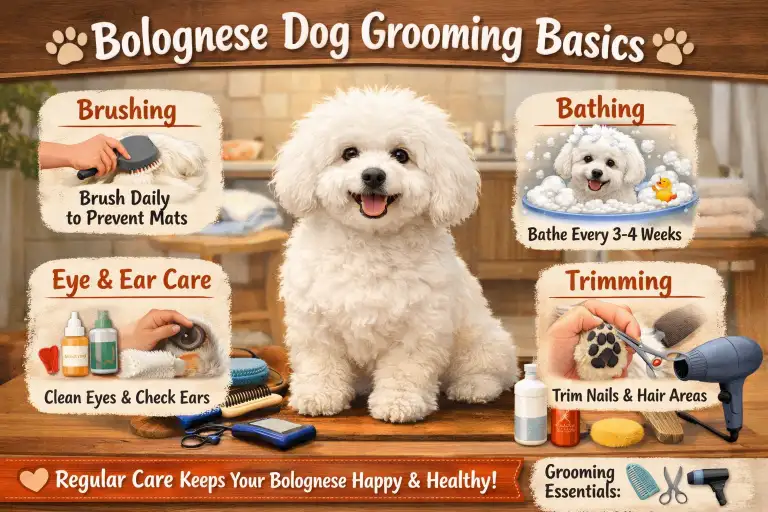
Bolognese dogs may be small, but their grooming needs are anything but minimal. This breed has a long, soft, cottony single coat that doesn’t shed much, which is exactly why regular grooming is essential. Without consistent care, that beautiful white coat can quickly turn into a tangled, matted mess that’s uncomfortable for the dog and difficult to fix later.
Proper grooming for a Bolognese isn’t just about looks. It directly affects skin health, comfort, hygiene, and overall wellbeing. Mats pull on the skin, trap moisture, and create the perfect environment for irritation, hot spots, and infections. Poor grooming can also hide early signs of problems like dry skin, redness, parasites, or allergies that owners might otherwise catch quickly.
From a groomer’s perspective, Bolognese dogs that are maintained regularly are calmer, easier to handle, and far more comfortable on the grooming table. Dogs that go too long between grooming sessions often become sensitive, anxious, or even painful to groom due to tight mats and neglected areas behind the ears, under the legs, and around the collar.
This guide focuses on practical, realistic grooming basics for Bolognese owners — what actually works at home, how often grooming should be done, and how to prevent common problems before they start. Whether you plan to groom mostly at home or rely on a professional groomer, understanding the basics will help you keep your Bolognese clean, comfortable, and looking the way this breed is meant to look.
Understanding the Bolognese Coat and Grooming Needs
The Bolognese dog has a long, soft, fluffy white coat that feels more like cotton than fur. This coat is single-layered, which means there is no thick undercoat like you see in many shedding breeds. Because of this, Bolognese dogs are often called low-shedding and are sometimes considered more allergy-friendly. However, low shedding does not mean low grooming.
Since loose hair does not fall out easily, it stays trapped in the coat. If this hair is not brushed out often, it twists together and forms tangles and mats. Mats usually start in high-movement areas like behind the ears, under the arms, around the neck, and near the tail. Once mats tighten, they can pull on the skin and cause pain, redness, and skin problems.
Another important thing to understand is that the Bolognese coat keeps growing. It does not stop at a certain length. This means regular brushing, bathing, trimming, and drying are needed to keep the coat clean and comfortable. Dirt, moisture, and food stains are also more visible on a white coat, so grooming helps with hygiene and odor control.
The table below shows how the Bolognese coat affects grooming needs:
| Bolognese Coat Feature | What It Means for Grooming |
|---|---|
| Long, cottony coat | Needs frequent brushing to prevent tangles |
| Single coat (no undercoat) | Low shedding but high matting risk |
| White color | Shows dirt, tear stains, and discoloration easily |
| Continuous hair growth | Requires regular trimming and maintenance |
| Soft texture | Mats faster than silky or coarse coats |
Because of these coat traits, Bolognese dogs need consistent grooming, not just occasional brushing. Skipping grooming for even a few weeks can lead to mats that are hard to remove safely at home.
Bolognese Dog Grooming Routine at Home
Grooming a Bolognese at home works best when you follow a simple routine. Small, regular steps are much easier than waiting too long and dealing with heavy tangles. Most owners can handle basic grooming at home with the right tools and a little patience.
Brushing is the most important part of Bolognese grooming. The coat should be brushed often, even if the dog looks clean. Always brush gently and slowly, starting from the ends of the hair and working toward the skin. Never pull hard, because this can hurt your dog and make grooming stressful.
Bathing keeps the white coat clean and fresh, but too many baths can dry the skin. Use only dog shampoo, never human shampoo. After a bath, drying is very important. A damp coat can cause mats and skin problems. The coat should be fully dry before your dog runs or lies down.
The table below shows a simple grooming schedule most Bolognese owners can follow:
| Grooming Task | How Often | Why It Matters |
|---|---|---|
| Brushing | 4–6 times per week | Prevents mats and tangles |
| Bathing | Every 3–4 weeks | Keeps coat clean and odor-free |
| Drying after baths | Every bath | Stops matting and skin issues |
| Trimming (light) | Every 6–8 weeks | Keeps coat neat and manageable |
Using the right tools makes grooming safer and easier. You do not need many tools, but the ones you use should be gentle and made for dogs.
Here is a basic grooming tools checklist for a Bolognese:
| Grooming Tool | What It Is Used For |
|---|---|
| Slicker brush | Removes tangles and loose hair |
| Metal comb | Finds small knots near the skin |
| Dog shampoo (gentle) | Cleans coat without drying skin |
| Towel and pet dryer | Dries coat fully after baths |
| Detangling spray (optional) | Helps loosen small knots |
If you find small tangles, spray a little detangler and gently work them out with your fingers or comb. If mats feel tight or close to the skin, it is safer to leave them for a professional groomer. Cutting mats with scissors at home can easily lead to
Extra Grooming Care for Bolognese Dogs
Besides brushing and bathing, Bolognese dogs need extra care in a few important areas. These steps are simple but help prevent common health and hygiene problems, especially in small white-coated dogs.
Eye care is very important for Bolognese dogs. Tear stains can show up easily on white fur. Wipe around the eyes gently using a soft cloth or dog-safe eye wipe. Do this often to stop stains from building up. Never use harsh products near the eyes.
Ear care helps prevent infections. Bolognese dogs have drop ears, which can trap moisture. Check the ears once a week. They should smell clean and look pink, not red. Clean only the outer ear using a dog ear cleaner. Never push anything deep into the ear.
Nail care keeps your dog comfortable when walking. Long nails can cause pain and change how your dog stands. Trim nails regularly or have a groomer do it. If you hear nails clicking on the floor, they are too long.
Dental care is often ignored but very important. Small dogs like the Bolognese are more likely to have tooth problems. Brushing teeth helps prevent bad breath, gum disease, and tooth loss. Use only dog toothpaste.
Skin checks should be part of grooming time. While brushing, look for redness, flakes, bumps, or sore spots. Catching skin problems early can save your dog from pain later.
The table below shows how often each extra care task should be done:
| Care Area | How Often | Simple Tips |
|---|---|---|
| Eyes | Daily or every other day | Use soft wipes, be gentle |
| Ears | Weekly | Clean only outer ear |
| Nails | Every 3–4 weeks | Stop if bleeding occurs |
| Teeth | 2–3 times per week | Use dog toothpaste only |
| Skin check | During brushing | Watch for redness or sores |
If you notice strong odors, heavy redness, shaking of the head, or sore skin, it is best to contact a vet or professional groomer.
Professional Grooming, Common Mistakes, and FAQs
Even with good home care, most Bolognese dogs still need professional grooming. A groomer can trim the coat evenly, safely remove tight mats, and keep the dog comfortable. Most Bolognese dogs visit a groomer every 6 to 8 weeks, depending on coat length and how well they are brushed at home.
Some grooming tasks are safer for professionals. These include full haircuts, removing heavy mats, and trimming around the face and private areas. Groomers also know how to handle dogs that feel nervous or move a lot during grooming.
The table below helps you understand what you can do at home and what is best left to a groomer:
| Grooming Task | Safe at Home | Better with a Groomer |
|---|---|---|
| Brushing | Yes | No |
| Bathing | Yes | Optional |
| Light trimming | Sometimes | Yes |
| Nail trimming | Sometimes | Yes |
| Removing tight mats | No | Yes |
| Full haircut | No | Yes |
Many grooming problems come from common mistakes. One big mistake is not brushing often enough. Another is bathing without brushing first, which can make mats worse. Using human shampoo is also a mistake because it can dry out dog skin. Some owners also wait too long between grooming sessions, making grooming painful for the dog.
Below are answers to common questions Bolognese owners ask:
| Question | Simple Answer |
|---|---|
| Can I shave my Bolognese? | Shaving is not recommended unless advised by a groomer or vet |
| Does a Bolognese shed? | Very little, but loose hair stays in the coat |
| Is the Bolognese hypoallergenic? | No dog is fully hypoallergenic, but they are low-shedding |
| How do I stop matting? | Brush often and keep the coat fully dry |
| When should puppies start grooming? | As early as possible with gentle brushing |
Good grooming keeps your Bolognese clean, happy, and comfortable. A simple routine, the right tools, and regular professional help make a big difference over time.
“For more detailed information about this breed, visit the American Kennel Club’s official breed page.”

Ata Ur Rehman is the founder of Pet Age in Human Years Calculator, an educational platform that provides age conversion charts and lifespan guides for dogs, cats, birds, and other companion animals. His work focuses on helping pet owners understand how animal ages translate into human years using commonly accepted age conversion formulas and published lifespan averages.
The website compiles breed and species lifespan data from kennel clubs, breed organizations, and general animal lifespan studies to present simple and easy-to-understand guides for pet owners worldwide.
This website was created to centralize animal age conversion charts into one easy reference platform for pet owners.