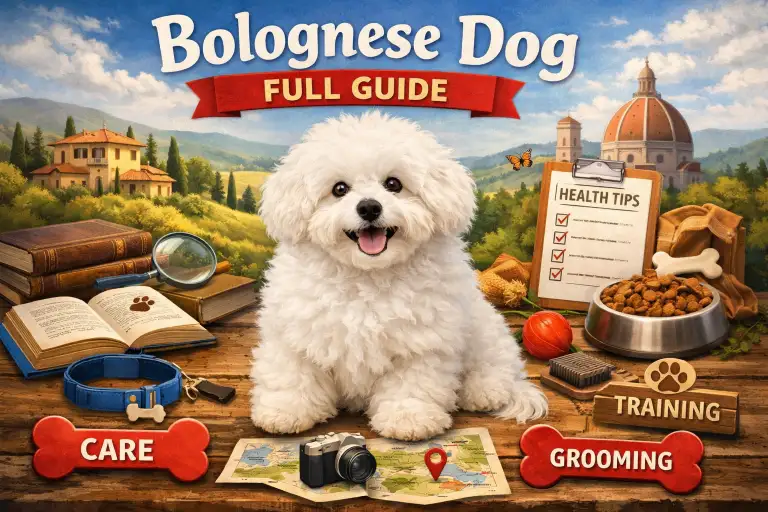
The Bolognese Dog is a small, ancient companion breed best known for its cloud-like white coat, deep loyalty to its people, and calm, emotionally tuned personality. Unlike many modern toy breeds developed primarily for looks, the Bolognese was bred for one purpose that still defines it today: close human companionship. This is not a decorative lap dog that tolerates attention—it is a people-focused breed that actively seeks connection, routines, and shared daily life.
Originating in Italy, the Bolognese belongs to the Bichon family of companion dogs but stands apart in temperament and energy level. While breeds like the Bichon Frise or Havanese tend to be more playful and outgoing with everyone, the Bolognese is typically more reserved, deeply bonded to its owner, and selectively social. Many long-time owners describe the breed as “emotionally intelligent,” noting how quickly these dogs respond to changes in mood, stress, or household rhythm.
In terms of size, the Bolognese is compact and lightweight, making it well suited for apartment living and smaller homes. However, prospective owners often underestimate the breed’s emotional needs. This is a dog that thrives on presence rather than space. Left alone for long hours or treated as a low-interaction pet, a Bolognese may develop anxiety-based behaviors such as excessive barking, clinginess, or withdrawal. When properly matched with a lifestyle that allows frequent companionship, the breed is calm, quiet, and remarkably easy to live with.
Another defining feature of the Bolognese Dog is its low-shedding, single-coat structure, which attracts allergy-sensitive owners. While often labeled “hypoallergenic,” it’s more accurate to say the breed produces less dander than many others. This benefit comes with a trade-off: regular grooming is essential to prevent matting and maintain coat health.
Today, the Bolognese remains relatively rare, especially outside Europe, and is still considered a niche companion breed. This rarity contributes to higher purchase costs and limited availability but also means that well-bred dogs tend to come from highly dedicated breeders who prioritize temperament and health over mass production. For owners seeking a quiet, affectionate, deeply loyal small dog rather than an energetic entertainer, the Bolognese offers a uniquely rewarding companionship experience.
Bolognese Dog Appearance, Size, and Coat
The Bolognese Dog is small, fluffy, and easy to recognize. At first glance, many people think it looks like a walking cotton ball. But behind that soft look is a well-balanced and sturdy little dog.
This breed has a compact body with a square shape. It is not fragile, even though it is small. When a Bolognese walks, its movement is calm and steady, not bouncy or rushed. The head is medium-sized with dark, round eyes that give the dog a gentle and thoughtful expression. The ears hang down close to the head and blend into the coat.
The coat is one of the most important features of the Bolognese. It is a single coat, not a double coat. This means there is no thick undercoat. The hair grows long and has a soft, wool-like texture. It forms loose curls and puffs rather than tight ringlets. The coat is always white, with no markings allowed in breed standards.
Because the Bolognese has a single coat, it sheds very little. This is why many people with mild allergies are drawn to the breed. However, low shedding does not mean low care. The coat can mat easily if it is not brushed often. Regular grooming is a must to keep the dog comfortable and clean.
The breed is also sensitive to weather. In hot climates, the thick coat can cause overheating if the dog is not kept cool. In cold weather, the coat offers some protection, but the small body size means the dog should not stay outside for long periods.
Below is a quick table to make the key appearance facts easy to scan.
| Feature | Details |
|---|---|
| Height | About 10–12 inches |
| Weight | Around 5.5–9 pounds |
| Body Type | Compact and square |
| Coat Type | Single coat, long and fluffy |
| Coat Color | Solid white only |
| Shedding Level | Very low |
| Allergy Friendly | Better for allergy-sensitive homes |
| Heat Tolerance | Low to moderate |
| Cold Tolerance | Moderate with supervision |
The Bolognese may be small, but its appearance reflects its purpose. This is a dog made to live closely with people, stay indoors most of the time, and be a calm companion rather than an outdoor adventurer.
Bolognese Dog Temperament and Personality
The Bolognese Dog is best known for its loving and loyal nature. This breed forms a very strong bond with its owner and likes to stay close at all times. Many owners say their Bolognese follows them from room to room and always wants to be near. This is not a dog that enjoys being ignored or left alone for long hours.
The breed is calm and gentle by nature. It is not overly energetic or wild indoors. Most Bolognese dogs prefer quiet play, short walks, and long cuddle time. Because of this, they fit well into peaceful homes and relaxed lifestyles. Loud or chaotic environments may stress them if they are not slowly introduced.
With family members, the Bolognese is affectionate and trusting. It enjoys attention but is not pushy. With strangers, the breed is often shy or reserved at first. It may take time before the dog feels comfortable. Once trust is built, the dog becomes friendly but usually stays more focused on its owner than on new people.
When it comes to children, the Bolognese does best with gentle and calm kids. The breed does not like rough handling or sudden movements. Older children who understand how to treat a small dog kindly are usually a better match. Supervision is always important because of the dog’s small size.
The Bolognese generally gets along well with other dogs and cats, especially when raised together. It does not have a strong prey drive and is not aggressive. However, because it is sensitive, it may feel nervous around very energetic or dominant dogs.
One important personality trait to understand is emotional sensitivity. The Bolognese easily picks up on human emotions. If the owner is stressed or upset, the dog often reacts by staying close or becoming quiet. This sensitivity also means harsh words or punishment can hurt the dog’s confidence. Positive, gentle handling works best.
Below is a simple table to help readers quickly understand the breed’s temperament.
| Trait | Description |
|---|---|
| Affection Level | Very high |
| Loyalty | Extremely strong |
| Energy Level | Low to moderate |
| Friendliness to Strangers | Reserved at first |
| Good With Children | Best with calm, older kids |
| Good With Other Pets | Usually yes |
| Sensitivity Level | High |
| Barking Tendency | Low to moderate |
Overall, the Bolognese Dog is a quiet, loving companion that thrives on emotional closeness. It is ideal for people who want a dog that feels like a true family member rather than a playful entertainer.
Bolognese Dog Care, Training, and Health
Caring for a Bolognese Dog is mostly about time, patience, and gentle handling. This breed does not need heavy exercise, but it does need daily attention and routine. A short walk once or twice a day, along with indoor play, is usually enough to keep the dog happy and healthy.
Training a Bolognese is possible, but it must be done kindly. The breed is smart, but also very sensitive. Harsh words, yelling, or punishment can make the dog scared or stubborn. Positive training methods work best. This means using treats, praise, and calm repetition. House training may take longer than with some other breeds, so patience is important.
Because the Bolognese loves being with its owner, it may struggle when left alone. Some dogs develop separation anxiety. This can show as barking, crying, or following the owner everywhere. Gradual alone-time training and a stable daily schedule can help reduce this problem.
Grooming is a big part of Bolognese care. The long white coat needs brushing several times a week to prevent knots and mats. Many owners choose professional grooming every four to six weeks. Regular ear cleaning, nail trimming, and tooth brushing are also important, especially since small breeds are prone to dental problems.
In terms of health, the Bolognese is generally a healthy and long-living breed. However, like all small dogs, it can have certain health risks. Most of these are manageable with regular vet visits and responsible breeding.
The table below highlights the main care and health points in a simple way.
| Care Area | What to Expect |
|---|---|
| Daily Exercise | Short walks and indoor play |
| Mental Stimulation | Puzzle toys and gentle training |
| Trainability | Moderate, needs patience |
| Grooming Needs | High, frequent brushing |
| Common Health Issues | Dental disease, knee problems |
| Lifespan | About 12–15 years |
| Vet Care | Regular checkups recommended |
| Alone Time Tolerance | Low |
Overall, the Bolognese Dog is not difficult to care for, but it is not a low-effort breed either. Owners who enjoy grooming and spending time with their dog will find the care routine rewarding.
Is the Bolognese Dog Right for You?
The Bolognese Dog is not a good fit for everyone, but for the right person, it can be a wonderful companion. This breed is best suited for people who enjoy calm routines, close bonding, and spending a lot of time at home. If you want a dog that feels like a true shadow and family member, the Bolognese may be a great match.
This breed does very well in apartments and small homes. It does not need a yard as long as it gets daily walks and attention. Seniors and remote workers often enjoy this breed because of its quiet nature and emotional closeness. First-time dog owners can also do well, as long as they are patient with training and grooming.
Families with children should think carefully. The Bolognese is gentle but small and sensitive. It is better suited to homes with older children who know how to handle a small dog kindly. Very busy or noisy households may overwhelm the breed.
Cost is another important factor. Because the Bolognese is rare, puppy prices are usually high. Grooming costs also add up over time. While medical costs are usually moderate, regular dental care is important and should be planned for.
Below is a table that helps quickly decide if this breed fits your lifestyle.
| Lifestyle Factor | Good Match? |
|---|---|
| Apartment Living | Yes |
| First-Time Owner | Yes, with patience |
| Families With Young Kids | Not ideal |
| Seniors | Yes |
| Active Athletes | No |
| Long Work Hours Away | No |
| Multi-Pet Homes | Usually yes |
| Low Grooming Commitment | No |
The pros and cons table below gives a clear picture of what ownership is really like.
| Pros | Cons |
|---|---|
| Very affectionate and loyal | Does not like being alone |
| Calm and quiet indoors | High grooming needs |
| Low shedding coat | Can be hard to house train |
| Good for apartments | Sensitive to stress |
| Long lifespan | Expensive and rare |
If you are choosing between similar breeds, the Bolognese is usually calmer and more owner-focused than the Maltese or Bichon Frise. Compared to the Havanese, it is less playful and more reserved. People who want a gentle, emotional companion often prefer the Bolognese, while those wanting a more outgoing dog may choose another breed.
“For more detailed information about this breed, visit the American Kennel Club’s official breed page.”

Ata Ur Rehman is the founder of Pet Age in Human Years Calculator, an educational platform that provides age conversion charts and lifespan guides for dogs, cats, birds, and other companion animals. His work focuses on helping pet owners understand how animal ages translate into human years using commonly accepted age conversion formulas and published lifespan averages.
The website compiles breed and species lifespan data from kennel clubs, breed organizations, and general animal lifespan studies to present simple and easy-to-understand guides for pet owners worldwide.
This website was created to centralize animal age conversion charts into one easy reference platform for pet owners.