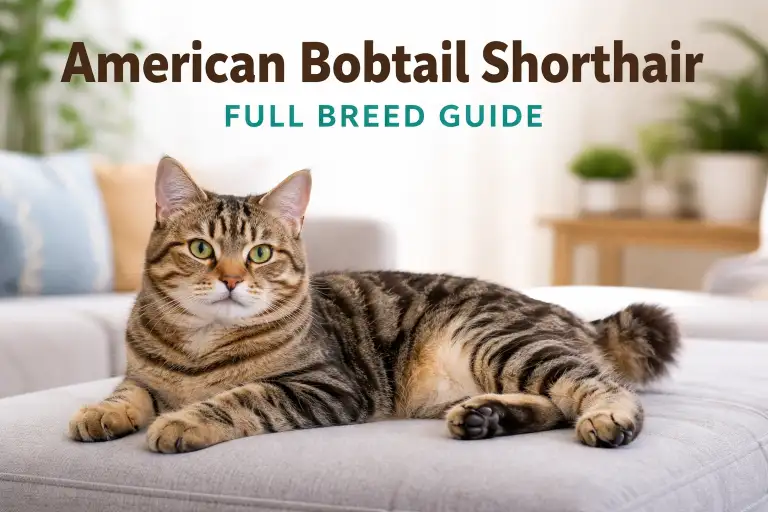
American Bobtail Shorthair: Complete Breed Guide, Personality, Care & Cost
The American Bobtail Shorthair is a distinctive, people-oriented cat breed known for its naturally short tail, athletic build, and remarkably social personality. Often described by owners as having a “dog-like” presence, this breed tends to form strong bonds with its humans while still maintaining a confident, adaptable independence that suits a wide range of households.
Recommended Dog Care Products
Based on your dog’s age, these products may help with comfort, health, grooming, and daily care.

Purina Pro Plan Veterinary Supplements
Daily probiotics for dogs to support digestive and gut health.
View on Amazon ↗
Earth Rated Poop Bags for Dogs
Leak-proof, extra thick waste bag refill rolls with lavender scent.
View on Amazon ↗
Greenies Pill Pockets for Dogs
Large dog treats for capsule medication, peanut butter flavor.
View on Amazon ↗
HONEY CARE All-Absorb Dog Wrap
Small male dog wraps, 50 count, useful for daily care support.
View on Amazon ↗
Seresto Flea & Tick Collar
Flea and tick treatment and prevention for dogs over 18 lbs.
View on Amazon ↗
Milk-Bone MaroSnacks
Small dog treats with real bone marrow in a 40 oz canister.
View on Amazon ↗
Vital Essentials Dog Treats
Freeze dried beef liver dog treats, grain free and single ingredient.
View on Amazon ↗
Stain & Odor Eliminator
Enzyme cleaner for pet stains, carpet messes, and strong odors.
View on Amazon ↗
Pur Luv Chicken Jerky Treats
Dog treats made with real chicken breast, high protein and chew-friendly.
View on Amazon ↗
Milk-Bone Flavor Snacks
Mini crunchy dog biscuits in a 36 oz canister for small rewards.
View on Amazon ↗As an Amazon Associate, we may earn from qualifying purchases.
Unlike many modern breeds developed for extreme looks, the American Bobtail Shorthair was shaped with function, temperament, and genetic diversity in mind. The result is a cat that looks slightly wild but behaves with a calm, affectionate, and highly intelligent demeanor. These cats are typically interactive without being demanding, playful without being chaotic, and loyal without becoming clingy.
For prospective owners, the appeal often goes beyond appearance. American Bobtail Shorthairs are known for reading human routines well, following family members from room to room, and participating in daily life rather than observing from a distance. They tend to thrive in homes where they are treated as companions rather than decorative pets.
This guide explores the American Bobtail Shorthair in depth, covering its origins, physical traits, temperament, activity needs, health considerations, and real-world suitability. Whether you are considering adding one to your home or simply researching the breed, this article is designed to give you a realistic, experience-driven understanding of what life with an American Bobtail Shorthair is actually like.
History & Origin
The American Bobtail Shorthair is a relatively young cat breed, but its story is rooted in natural development rather than extreme selective breeding. The breed began in the United States during the late 1960s, when a short-tailed brown tabby kitten was discovered and later bred with a domestic cat. The kittens from this pairing inherited the naturally bobbed tail, which became the foundation of the breed.
Unlike some short-tailed cats from other parts of the world, the American Bobtail is not related to the Manx or Japanese Bobtail. Its short tail is the result of a natural genetic mutation that appeared on its own, not one created through human intervention. Responsible breeders later worked to preserve this trait while also focusing on health, temperament, and genetic diversity.
From the beginning, breeders avoided close inbreeding. Instead, they used healthy domestic cats with similar looks and calm personalities. This helped create a strong, sturdy breed with fewer inherited health problems than many highly refined cat breeds.
The American Bobtail was officially recognized by major cat associations in the late 20th century. Today, it is still considered a rare breed, but it is respected for its balanced nature, intelligence, and family-friendly behavior.
The breed’s history explains much of its personality today. Because it developed from working, adaptable cats rather than show-only lines, the American Bobtail Shorthair tends to be confident, flexible, and comfortable in many different living situations.
The American Bobtail Shorthair is a modern American breed, but its story begins with a natural surprise rather than planned design. The breed’s most famous feature, the short tail, comes from a natural genetic mutation, not from tail docking or human intervention.
Recommended Dog Care Products
Based on your dog’s age, these products may help with comfort, health, grooming, and daily care.
Purina Pro Plan Veterinary Supplements
Daily probiotics for dogs to support digestive and gut health.
View on Amazon ↗
Earth Rated Poop Bags for Dogs
Leak-proof, extra thick waste bag refill rolls with lavender scent.
View on Amazon ↗
Greenies Pill Pockets for Dogs
Large dog treats for capsule medication, peanut butter flavor.
View on Amazon ↗
HONEY CARE All-Absorb Dog Wrap
Small male dog wraps, 50 count, useful for daily care support.
View on Amazon ↗
Seresto Flea & Tick Collar
Flea and tick treatment and prevention for dogs over 18 lbs.
View on Amazon ↗
Milk-Bone MaroSnacks
Small dog treats with real bone marrow in a 40 oz canister.
View on Amazon ↗
Vital Essentials Dog Treats
Freeze dried beef liver dog treats, grain free and single ingredient.
View on Amazon ↗
Stain & Odor Eliminator
Enzyme cleaner for pet stains, carpet messes, and strong odors.
View on Amazon ↗
Pur Luv Chicken Jerky Treats
Dog treats made with real chicken breast, high protein and chew-friendly.
View on Amazon ↗
Milk-Bone Flavor Snacks
Mini crunchy dog biscuits in a 36 oz canister for small rewards.
View on Amazon ↗As an Amazon Associate, we may earn from qualifying purchases.
In the late 1960s, breeders in the United States noticed cats with naturally short tails appearing in regular litters. These cats were healthy, active, and had friendly personalities. Instead of narrowing the gene pool, early breeders focused on keeping strong genetics, good health, and stable temperaments. This approach helped the breed avoid many problems seen in more extreme-looking cats.
The American Bobtail was developed using mixed domestic cats with natural bobbed tails, rather than relying on a single bloodline. Because of this, the breed keeps a rugged, slightly wild look while staying gentle and social in behavior. This wide genetic base is one reason the breed is known for being hardy and adaptable.
Over time, the breed gained recognition from major cat organizations such as the The International Cat Association and the Cat Fanciers’ Association. Today, the American Bobtail Shorthair is still considered rare, but it is respected for its balanced mix of looks, intelligence, and companionship.
Many breeders and owners believe the breed’s history explains its personality. Because it was developed with health and behavior in mind, the American Bobtail Shorthair tends to be confident, people-focused, and easy to live with in everyday homes.
Appearance
The American Bobtail Shorthair has a strong, natural look that many people describe as slightly wild but friendly. This breed is built for movement and play, not for a delicate or extreme appearance. Everything about the body shows balance and strength.
Size and weight ranges
American Bobtail Shorthairs are medium to large cats. Males are usually bigger and heavier than females.
- Adult males often weigh 12 to 16 pounds
- Adult females usually weigh 7 to 11 pounds
These cats grow slowly and may not reach full size until 3 to 4 years of age, which is later than many other breeds.
Build and body type
This breed has a muscular and athletic body. The chest is broad, the legs are strong, and the paws are large and rounded. The body is slightly rectangular rather than short and compact. Because of this build, the American Bobtail Shorthair looks powerful but still moves smoothly and easily.
Coat type and colors
The shorthair coat is dense and firm, not silky or thin. It helps protect the cat and is easy to maintain.
This breed comes in many colors and patterns, including tabby, solid, tortoiseshell, and colorpoint. No single color is considered better than another.
The coat may feel a bit thicker in colder months and lighter during warmer seasons.
Recommended Dog Care Products
Based on your dog’s age, these products may help with comfort, health, grooming, and daily care.
Purina Pro Plan Veterinary Supplements
Daily probiotics for dogs to support digestive and gut health.
View on Amazon ↗
Earth Rated Poop Bags for Dogs
Leak-proof, extra thick waste bag refill rolls with lavender scent.
View on Amazon ↗
Greenies Pill Pockets for Dogs
Large dog treats for capsule medication, peanut butter flavor.
View on Amazon ↗
HONEY CARE All-Absorb Dog Wrap
Small male dog wraps, 50 count, useful for daily care support.
View on Amazon ↗
Seresto Flea & Tick Collar
Flea and tick treatment and prevention for dogs over 18 lbs.
View on Amazon ↗
Milk-Bone MaroSnacks
Small dog treats with real bone marrow in a 40 oz canister.
View on Amazon ↗
Vital Essentials Dog Treats
Freeze dried beef liver dog treats, grain free and single ingredient.
View on Amazon ↗
Stain & Odor Eliminator
Enzyme cleaner for pet stains, carpet messes, and strong odors.
View on Amazon ↗
Pur Luv Chicken Jerky Treats
Dog treats made with real chicken breast, high protein and chew-friendly.
View on Amazon ↗
Milk-Bone Flavor Snacks
Mini crunchy dog biscuits in a 36 oz canister for small rewards.
View on Amazon ↗As an Amazon Associate, we may earn from qualifying purchases.
Distinctive breed features
The most famous feature is the short tail. Each American Bobtail’s tail is unique. Some are straight, some curve, and some have small bends. The tail is usually one-third to one-half the length of a normal cat’s tail and should move naturally.
Other noticeable features include:
- A broad head with a gentle, alert expression
- Slightly almond-shaped eyes that can be many colors
- Ears that are medium-sized and sometimes lightly tufted
Overall, the American Bobtail Shorthair looks strong, natural, and confident rather than fancy or fragile.
Temperament & Personality
The American Bobtail Shorthair is known for a friendly, calm, and people-focused personality. This breed enjoys being part of daily life and often stays close to family members without being overly needy.
Core personality traits
Most American Bobtail Shorthairs are:
- Smart and curious
- Calm but playful
- Confident in new situations
- Gentle with people
They like to explore their home and understand how things work. Many owners notice that these cats enjoy watching doors, cabinets, and routines closely.
Affection level and bonding
This breed forms strong bonds with its people. American Bobtail Shorthairs often choose one or two favorite humans but still stay friendly with everyone in the home. They enjoy sitting near you, following you from room to room, or resting at your feet.
They usually enjoy affection but do not demand constant attention. This makes them a good choice for families who want a loving but balanced cat.
Independence vs clinginess
American Bobtail Shorthairs are not clingy, but they do not like being ignored for long periods. They can handle short alone times, especially if they have toys or windows to watch. Very long days alone may lead to boredom or mild behavior issues.
Vocalization tendencies
This breed is not very loud. Instead of constant meowing, they may use soft chirps, trills, or quiet sounds to communicate. Many owners describe them as “talking” in gentle ways rather than being noisy.
Recommended Dog Care Products
Based on your dog’s age, these products may help with comfort, health, grooming, and daily care.
Purina Pro Plan Veterinary Supplements
Daily probiotics for dogs to support digestive and gut health.
View on Amazon ↗
Earth Rated Poop Bags for Dogs
Leak-proof, extra thick waste bag refill rolls with lavender scent.
View on Amazon ↗
Greenies Pill Pockets for Dogs
Large dog treats for capsule medication, peanut butter flavor.
View on Amazon ↗
HONEY CARE All-Absorb Dog Wrap
Small male dog wraps, 50 count, useful for daily care support.
View on Amazon ↗
Seresto Flea & Tick Collar
Flea and tick treatment and prevention for dogs over 18 lbs.
View on Amazon ↗
Milk-Bone MaroSnacks
Small dog treats with real bone marrow in a 40 oz canister.
View on Amazon ↗
Vital Essentials Dog Treats
Freeze dried beef liver dog treats, grain free and single ingredient.
View on Amazon ↗
Stain & Odor Eliminator
Enzyme cleaner for pet stains, carpet messes, and strong odors.
View on Amazon ↗
Pur Luv Chicken Jerky Treats
Dog treats made with real chicken breast, high protein and chew-friendly.
View on Amazon ↗
Milk-Bone Flavor Snacks
Mini crunchy dog biscuits in a 36 oz canister for small rewards.
View on Amazon ↗As an Amazon Associate, we may earn from qualifying purchases.
Behavior with children
American Bobtail Shorthairs are usually patient and tolerant with children, especially when children are taught how to handle cats kindly. They enjoy gentle play and are less likely to panic or scratch when handled respectfully.
Behavior with other cats
This breed often does well in multi-cat homes. They are not very territorial and usually adjust well when introductions are done slowly and properly.
Behavior with dogs and other pets
Many American Bobtail Shorthairs get along well with cat-friendly dogs. They tend to be confident and curious rather than fearful. With small pets, supervision is important, as natural hunting instincts still exist.
Overall, this breed is calm, social, and emotionally steady, making it easy to live with in many types of homes.
Suitability
The American Bobtail Shorthair fits well into many types of homes. This breed is flexible, social, and easy to live with, which makes it a good choice for different lifestyles.
Families with children
This breed is usually a great match for families with kids. American Bobtail Shorthairs are patient and calm. They handle gentle play well and are less likely to react badly when treated kindly. Children should still be taught how to respect a cat’s space.
First-time cat owners
American Bobtail Shorthairs are often a good choice for first-time owners. They are friendly, easy to handle, and not overly sensitive. Their balanced personality makes them easier to understand than very shy or very demanding breeds.
Apartment living
This breed can do well in apartments, as long as it gets daily play and mental activity. They enjoy climbing, window watching, and interactive toys. A small space is fine if their mind stays busy.
Seniors or low-energy households
American Bobtail Shorthairs adapt well to quiet homes. They enjoy calm company and are happy to relax near their owners. As long as they get light playtime, they do not need constant action.
Multi-pet homes
This breed usually adjusts well in homes with other cats or dogs, especially when introductions are slow and positive. Their confident but friendly nature helps reduce stress with other pets.
Indoor-only vs outdoor living
American Bobtail Shorthairs do best as indoor cats or with safe outdoor access like a catio or leash walks. Their friendly nature makes them less street-smart, so free roaming outdoors is not recommended.
Overall, this breed suits owners who want a social, steady, and adaptable companion without extreme behavior needs.
Activity & Exercise Needs
The American Bobtail Shorthair is an active but balanced cat. This breed enjoys play and movement, but it is not wild or nonstop. Their energy comes in short bursts followed by calm rest time.
Daily activity level
Most American Bobtail Shorthairs need daily play sessions, usually 20 to 30 minutes total. This can be split into short games throughout the day. Without enough activity, they may become bored or look for trouble.
Mental stimulation needs
This breed is very smart and likes to think. Puzzle toys, food games, and learning simple tricks help keep their mind busy. Many owners notice these cats enjoy figuring things out rather than just chasing toys.
Preferred play styles
American Bobtail Shorthairs often enjoy:
- Interactive wand toys
- Fetch-style games
- Climbing cat trees or shelves
- Watching birds from windows
- Learning simple commands or leash walking
They like play that includes their people, not just toys left on the floor.
Signs of boredom
If this breed is bored, you may see:
- Chewing or scratching furniture
- Opening doors or cabinets
- Extra attention-seeking behavior
Regular play, routine, and mental challenges help prevent these issues and keep the cat happy.
Overall, this breed does best with owners who enjoy daily interaction and gentle playtime.
Training & Socialization
The American Bobtail Shorthair is easy to train compared to many other cat breeds. This is because they are smart, curious, and enjoy spending time with their people.
Intelligence and trainability
This breed learns quickly and often enjoys problem-solving. Many American Bobtail Shorthairs can learn:
- Their name
- Simple commands
- Fetch games
- Leash walking
Short training sessions with treats and praise work best. Harsh training does not work well and can damage trust.
Socialization with people
American Bobtail Shorthairs usually like meeting new people. Early social time helps them stay confident as adults. Kittens that are gently handled and exposed to different sounds and visitors tend to grow into calm, friendly cats.
Socialization with other pets
This breed adjusts well to other cats and dogs when introductions are done slowly. Giving each pet its own space at first helps reduce stress. Over time, many American Bobtail Shorthairs become comfortable sharing their home.
Common behavior challenges
Some common challenges include:
- Boredom if left alone too long
- Curiosity that leads to opening doors or drawers
- Mild separation stress in very social cats
Keeping a routine and offering daily interaction helps prevent most issues.
Overall, this breed responds best to kind, patient, and positive training methods.
Grooming Needs
The American Bobtail Shorthair is a low-maintenance breed when it comes to grooming. Their coat is designed to be practical and easy to care for.
Shedding level
This breed sheds moderately. Shedding may increase slightly during spring and fall, but it is usually manageable with regular brushing.
Brushing and bathing
Brushing once or twice a week is usually enough to remove loose hair and keep the coat healthy. Bathing is rarely needed unless the cat gets very dirty. Most American Bobtail Shorthairs tolerate baths better than expected if introduced slowly.
Nail, ear, and dental care
Basic care includes:
- Trimming nails every few weeks
- Checking ears for dirt or redness
- Brushing teeth or using dental treats when possible
These simple steps help prevent common health issues over time.
Climate and seasonal needs
The short, dense coat helps protect the cat in different weather. Indoor cats stay comfortable year-round, but colder homes may lead to a slightly thicker winter coat.
Overall, grooming this breed is simple and does not take much time, making it a good choice for busy owners.
Health & Lifespan
The American Bobtail Shorthair is known as a generally healthy and strong breed. This is partly because the breed was developed with a wide gene pool instead of close inbreeding.
Typical lifespan
Most American Bobtail Shorthairs live 13 to 18 years, and some live even longer with good care, a healthy diet, and regular vet visits.
Overall health
This breed is considered hardy and less prone to serious inherited problems than many purebred cats. Their natural development helped keep many health risks low.
Common health concerns
While no breed is perfect, American Bobtail Shorthairs may occasionally experience:
- Hip or joint issues in very large cats
- Spine or tail-related concerns (rare, but important to monitor)
- Dental disease if oral care is ignored
Responsible breeders check breeding cats carefully to reduce these risks.
Veterinary care and screenings
Regular vet checkups help catch problems early. Vets may pay special attention to:
- Tail and spine movement
- Joint health as the cat ages
- Teeth and gum condition
Keeping vaccinations up to date and maintaining a healthy weight are key parts of long-term health.
Overall, the American Bobtail Shorthair is a long-living breed that does best with preventive care and regular attention.
Cost to Own This Breed
Owning an American Bobtail Shorthair comes with moderate to high costs, mainly because the breed is rare and carefully bred.
Kitten price
A well-bred American Bobtail Shorthair kitten from a responsible breeder usually costs $1,200 to $2,500. Price can change based on location, pedigree, and breeder reputation. Adoption may be less expensive, but this breed is not often found in shelters.
Routine care costs
Monthly and yearly costs often include:
- Quality food
- Litter and basic supplies
- Regular vet checkups and vaccines
- Flea, parasite, and dental care
These costs are similar to other medium-to-large cats.
Medical and preventive expenses
Even healthy cats need medical care. Owners should plan for:
- Annual vet visits
- Emergency care if needed
- Spay or neuter surgery if not already done
Insurance considerations
Pet insurance can help manage unexpected medical costs. Because American Bobtail Shorthairs are generally healthy, insurance plans are often reasonably priced.
Overall, this breed is not cheap, but the cost reflects careful breeding, strong health, and a long lifespan.
Next section: Pros & Cons
Pros & Cons
The American Bobtail Shorthair has many great qualities, but no breed is perfect. Understanding both the good and the challenging parts helps future owners make the right choice.
Pros
- Friendly and social with people
- Good with children and other pets
- Smart and easy to train
- Playful but not overly wild
- Strong and generally healthy
- Low grooming needs
Cons
- Can get bored if left alone too long
- Needs daily interaction and play
- Rare breed, so kittens can be expensive
- Not ideal for owners who want a very quiet or independent cat
Overall, this breed is best for owners who want a social, interactive, and balanced companion rather than a hands-off pet.
Similar Breeds & Comparisons
If you like the American Bobtail Shorthair, there are a few other cat breeds with similar looks or personalities. Comparing breeds can help you decide which one fits your home best.
American Bobtail vs Maine Coon
Both breeds are friendly and good with families. Maine Coons are usually larger and have long coats that need more grooming. American Bobtails are shorter-haired and often easier to care for, with a more playful and curious style.
American Bobtail vs Pixie-Bob
These two breeds look very similar and both have short tails. Pixie-Bobs tend to be heavier and more serious in behavior. American Bobtails are usually more flexible, social, and easier for first-time owners.
American Bobtail vs Bengal
Bengals are very active and need a lot of play and space. American Bobtails are calmer and easier to manage while still being playful. Owners who want energy without chaos often prefer the Bobtail.
Choosing the right breed
Choose the American Bobtail Shorthair if you want:
- A social but not demanding cat
- Easy grooming
- Good behavior with kids and pets
- A balanced mix of play and calm time
Other breeds may be better if you want a very large cat, a highly active climber, or a long-haired appearance.
Frequently Asked Questions
Are American Bobtail Shorthairs good indoor cats?
Yes. They do very well indoors as long as they get daily play, toys, and mental activity. Safe outdoor spaces like catios are a bonus but not required.
Do American Bobtail Shorthairs like being held?
Many enjoy being held for short periods, but most prefer sitting close to their owners rather than being carried for long times.
Are American Bobtail Shorthairs really “dog-like”?
In some ways, yes. They often follow their owners, enjoy interactive play, and can learn tricks or leash walking.
How vocal is this breed?
This breed is usually quiet. They may make soft sounds or chirps but are not known for loud or constant meowing.
Are bobbed tails harmful or painful?
No. The short tail is natural and does not cause pain when bred responsibly. Each tail looks different, and flexibility is normal.
Can this breed handle being alone?
They can handle short periods alone but do best in homes where someone is around part of the day. Long hours alone may lead to boredom.
Are American Bobtail Shorthairs rare?
Yes. They are still uncommon, which is why kittens may be harder to find and more expensive.
Final Thoughts
The American Bobtail Shorthair is a friendly, smart, and steady companion. This breed works well for many types of homes, from families with children to quiet households. Their playful nature, strong bond with people, and easy grooming needs make them enjoyable to live with every day.
This breed is best for owners who want a cat that likes company and interaction without being overly demanding. They enjoy routines, gentle play, and feeling included in family life. People who spend long hours away from home or want a very independent cat may find this breed less suitable.
If you are looking for a cat that is social, adaptable, and naturally healthy, the American Bobtail Shorthair is a strong choice. Choosing a responsible breeder, offering daily play, and providing regular vet care will help this cat live a long and happy life.
For official breed standards, registration details, and additional background information, readers can explore the American Bobtail breed profile from The International Cat Association (TICA), a trusted global authority on recognized cat breeds:
https://tica.org/breeds/browse-all-breeds?view=article&id=173:american-bobtail&catid=79

Ata Ur Rehman is the founder of Pet Age in Human Years Calculator, an educational platform that provides age conversion charts and lifespan guides for dogs, cats, birds, and other companion animals. His work focuses on helping pet owners understand how animal ages translate into human years using commonly accepted age conversion formulas and published lifespan averages.
The website compiles breed and species lifespan data from kennel clubs, breed organizations, and general animal lifespan studies to present simple and easy-to-understand guides for pet owners worldwide.
This website was created to centralize animal age conversion charts into one easy reference platform for pet owners.