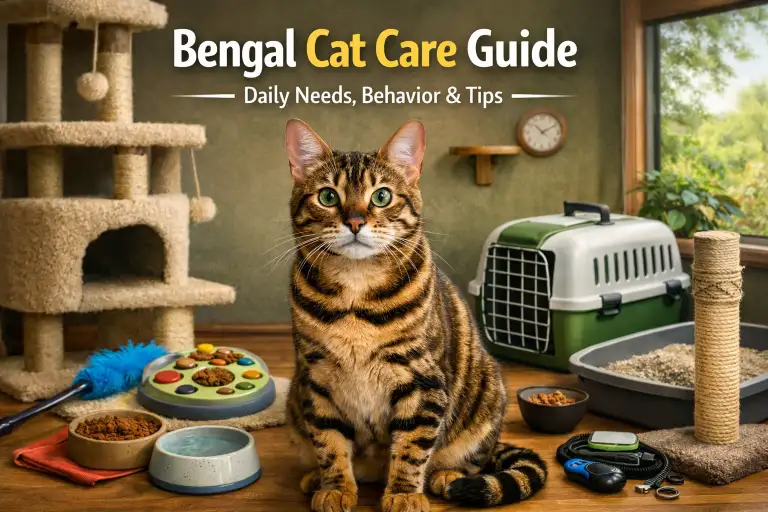
Bengal Cat Care Guide: Daily Needs, Behavior, and Owner Tips
Bengal cat care is fundamentally different from caring for a typical house cat. While all cats need food, shelter, and affection, Bengals require far more mental stimulation, physical activity, and structured interaction to stay healthy and well-behaved. Understanding these needs early helps prevent many of the behavior problems that lead owners to feel overwhelmed.
Recommended Dog Care Products
Based on your dog’s age, these products may help with comfort, health, grooming, and daily care.

Purina Pro Plan Veterinary Supplements
Daily probiotics for dogs to support digestive and gut health.
View on Amazon ↗
Earth Rated Poop Bags for Dogs
Leak-proof, extra thick waste bag refill rolls with lavender scent.
View on Amazon ↗
Greenies Pill Pockets for Dogs
Large dog treats for capsule medication, peanut butter flavor.
View on Amazon ↗
HONEY CARE All-Absorb Dog Wrap
Small male dog wraps, 50 count, useful for daily care support.
View on Amazon ↗
Seresto Flea & Tick Collar
Flea and tick treatment and prevention for dogs over 18 lbs.
View on Amazon ↗
Milk-Bone MaroSnacks
Small dog treats with real bone marrow in a 40 oz canister.
View on Amazon ↗
Vital Essentials Dog Treats
Freeze dried beef liver dog treats, grain free and single ingredient.
View on Amazon ↗
Stain & Odor Eliminator
Enzyme cleaner for pet stains, carpet messes, and strong odors.
View on Amazon ↗
Pur Luv Chicken Jerky Treats
Dog treats made with real chicken breast, high protein and chew-friendly.
View on Amazon ↗
Milk-Bone Flavor Snacks
Mini crunchy dog biscuits in a 36 oz canister for small rewards.
View on Amazon ↗As an Amazon Associate, we may earn from qualifying purchases.
Bengals are known for their high energy, intelligence, and curiosity. These traits come from generations of selective breeding for an active, alert cat—not a passive lap companion. A Bengal that isn’t properly stimulated will often invent its own entertainment, which may look like destructive scratching, excessive vocalizing, climbing unsafe areas, or trying to escape outdoors. These behaviors are not signs of a “bad” cat; they are signs of unmet care needs.
Many new owners underestimate what “high-maintenance” really means with a Bengal. It doesn’t mean constant grooming or special products. It means daily, intentional engagement. Bengals thrive on routine, challenge, and interaction. Skipping play sessions, relying on passive toys, or assuming they will “calm down on their own” often leads to frustration for both the cat and the owner.
Another important part of Bengal cat care is recognizing that these cats form strong bonds with their humans. They tend to follow people from room to room, demand attention, and become bored or anxious if left without stimulation for long periods. This makes them a poor fit for owners who want a low-interaction pet or who are rarely home without providing enrichment.
Before committing to a Bengal, owners should honestly assess their time, patience, and living environment. Bengals do best in homes where their physical and mental needs are treated as a daily responsibility, not an occasional extra. When those needs are met, Bengals are affectionate, engaging, and deeply rewarding companions—but when they aren’t, problems appear quickly.
Bengal Cats vs Typical House Cats (Care Expectations)
| Care Aspect | Bengal Cat | Typical House Cat |
|---|---|---|
| Energy level | Very high, needs daily active play | Moderate, often self-regulated |
| Mental stimulation | Essential for well-being | Helpful but not always critical |
| Human interaction | High daily involvement needed | Varies, often lower |
| Risk of boredom behaviors | High if understimulated | Lower in most cases |
| Suitability for first-time owners | Challenging without preparation | Often more forgiving |
Daily & Weekly Care Routine for Bengal Cats
Bengal cats need a clear daily routine. Without it, they often become bored, restless, or destructive. A routine helps your Bengal feel secure and gives them the physical and mental outlet they need every day.
Daily care basics
Most Bengal cats need at least 30–60 minutes of active play each day. This should be split into short sessions, not done all at once. Toys that move, chase, or fly work best. Wand toys, feather toys, and interactive games are much better than toys left on the floor.
Recommended Dog Care Products
Based on your dog’s age, these products may help with comfort, health, grooming, and daily care.
Purina Pro Plan Veterinary Supplements
Daily probiotics for dogs to support digestive and gut health.
View on Amazon ↗
Earth Rated Poop Bags for Dogs
Leak-proof, extra thick waste bag refill rolls with lavender scent.
View on Amazon ↗
Greenies Pill Pockets for Dogs
Large dog treats for capsule medication, peanut butter flavor.
View on Amazon ↗
HONEY CARE All-Absorb Dog Wrap
Small male dog wraps, 50 count, useful for daily care support.
View on Amazon ↗
Seresto Flea & Tick Collar
Flea and tick treatment and prevention for dogs over 18 lbs.
View on Amazon ↗
Milk-Bone MaroSnacks
Small dog treats with real bone marrow in a 40 oz canister.
View on Amazon ↗
Vital Essentials Dog Treats
Freeze dried beef liver dog treats, grain free and single ingredient.
View on Amazon ↗
Stain & Odor Eliminator
Enzyme cleaner for pet stains, carpet messes, and strong odors.
View on Amazon ↗
Pur Luv Chicken Jerky Treats
Dog treats made with real chicken breast, high protein and chew-friendly.
View on Amazon ↗
Milk-Bone Flavor Snacks
Mini crunchy dog biscuits in a 36 oz canister for small rewards.
View on Amazon ↗As an Amazon Associate, we may earn from qualifying purchases.
Bengals also need mental exercise, not just running. Puzzle toys, treat games, and short training sessions keep their brain busy. Many Bengals enjoy learning simple tricks or commands because they like challenges.
Human interaction matters a lot. Bengals like to be near their people and can become unhappy if ignored. Talking to your cat, playing together, and letting them follow you around the house are all part of normal Bengal care.
Weekly and regular care
Bengals have short coats and usually do not need heavy grooming. A quick brush once a week helps remove loose hair and keeps the coat shiny. Nail trimming is usually needed every one to two weeks because active cats grow nails quickly.
Litter boxes should be cleaned daily and checked weekly for placement and size. Bengals dislike dirty or poorly placed litter boxes and may avoid them if they feel uncomfortable.
Time and effort reality
Caring for a Bengal takes more time than caring for many other cats. This does not mean constant work, but it does mean daily attention. Skipping play or interaction often leads to behavior problems later.
Bengal Cat Care Frequency Guide
| Care Task | How Often | Time Needed | Why It Matters |
|---|---|---|---|
| Active play | Daily | 30–60 minutes | Burns energy and prevents boredom |
| Mental games or training | Daily or every other day | 10–15 minutes | Keeps the brain engaged |
| Social interaction | Daily | Ongoing | Prevents stress and loneliness |
| Brushing | Weekly | 5–10 minutes | Reduces shedding and hairballs |
| Nail trimming | Every 1–2 weeks | 5 minutes | Prevents scratches and snagging |
| Litter box cleaning | Daily | 2–5 minutes | Encourages proper litter use |
Home Setup, Enrichment & Environment
A good home setup is very important for Bengal cat care. Bengals are active, curious, and love to climb. If the home is boring or has no safe outlets, a Bengal will find trouble on its own.
Vertical space is not optional
Bengal cats like to be high up. Cat trees, wall shelves, and window perches give them safe places to climb and watch. Height helps them feel confident and reduces stress. A tall cat tree is often better than many small toys.
Recommended Dog Care Products
Based on your dog’s age, these products may help with comfort, health, grooming, and daily care.
Purina Pro Plan Veterinary Supplements
Daily probiotics for dogs to support digestive and gut health.
View on Amazon ↗
Earth Rated Poop Bags for Dogs
Leak-proof, extra thick waste bag refill rolls with lavender scent.
View on Amazon ↗
Greenies Pill Pockets for Dogs
Large dog treats for capsule medication, peanut butter flavor.
View on Amazon ↗
HONEY CARE All-Absorb Dog Wrap
Small male dog wraps, 50 count, useful for daily care support.
View on Amazon ↗
Seresto Flea & Tick Collar
Flea and tick treatment and prevention for dogs over 18 lbs.
View on Amazon ↗
Milk-Bone MaroSnacks
Small dog treats with real bone marrow in a 40 oz canister.
View on Amazon ↗
Vital Essentials Dog Treats
Freeze dried beef liver dog treats, grain free and single ingredient.
View on Amazon ↗
Stain & Odor Eliminator
Enzyme cleaner for pet stains, carpet messes, and strong odors.
View on Amazon ↗
Pur Luv Chicken Jerky Treats
Dog treats made with real chicken breast, high protein and chew-friendly.
View on Amazon ↗
Milk-Bone Flavor Snacks
Mini crunchy dog biscuits in a 36 oz canister for small rewards.
View on Amazon ↗As an Amazon Associate, we may earn from qualifying purchases.
Scratching areas should be planned
Scratching is normal for Bengal cats. Place scratching posts near sleeping areas and busy rooms. Use both vertical and flat scratchers. If scratching areas are placed correctly, furniture damage is much less likely.
Litter box setup matters
Bengals are clean cats. They prefer large, open litter boxes placed in quiet but easy-to-reach areas. Crowded or noisy locations can cause litter box problems. In multi-cat homes, extra litter boxes help reduce stress.
Enrichment prevents boredom
Toys should be rotated every few days so they stay interesting. Puzzle toys, food games, and interactive toys work best. Leaving all toys out at once often leads to boredom.
Indoor-only vs outdoor access
Most Bengals are safest indoors. Some owners choose leash training or safe outdoor enclosures. Letting Bengals roam freely outside is risky because they are fast, bold, and may not fear danger.
Essential vs Optional Bengal Enrichment Items
| Item | Essential or Optional | Purpose | Common Owner Mistake |
|---|---|---|---|
| Tall cat tree | Essential | Climbing and confidence | Buying a tree that is too short |
| Scratching posts | Essential | Nail care and stress relief | Placing them too far from activity |
| Puzzle toys | Essential | Mental exercise | Using them only once |
| Window perch | Optional | Watching outdoors | Placing in low-traffic views |
| Outdoor leash or catio | Optional | Safe outdoor time | Skipping training or supervision |
A well-set home helps your Bengal feel calm, busy, and safe. Many behavior problems improve when the environment meets the cat’s natural needs.
Common Bengal Cat Problems, Owner Mistakes & Safety Risks
Many Bengal cat problems are not caused by the cat. They are caused by missing care needs. When a Bengal does not get enough play, attention, or space, problems show up fast.
Recommended Dog Care Products
Based on your dog’s age, these products may help with comfort, health, grooming, and daily care.
Purina Pro Plan Veterinary Supplements
Daily probiotics for dogs to support digestive and gut health.
View on Amazon ↗
Earth Rated Poop Bags for Dogs
Leak-proof, extra thick waste bag refill rolls with lavender scent.
View on Amazon ↗
Greenies Pill Pockets for Dogs
Large dog treats for capsule medication, peanut butter flavor.
View on Amazon ↗
HONEY CARE All-Absorb Dog Wrap
Small male dog wraps, 50 count, useful for daily care support.
View on Amazon ↗
Seresto Flea & Tick Collar
Flea and tick treatment and prevention for dogs over 18 lbs.
View on Amazon ↗
Milk-Bone MaroSnacks
Small dog treats with real bone marrow in a 40 oz canister.
View on Amazon ↗
Vital Essentials Dog Treats
Freeze dried beef liver dog treats, grain free and single ingredient.
View on Amazon ↗
Stain & Odor Eliminator
Enzyme cleaner for pet stains, carpet messes, and strong odors.
View on Amazon ↗
Pur Luv Chicken Jerky Treats
Dog treats made with real chicken breast, high protein and chew-friendly.
View on Amazon ↗
Milk-Bone Flavor Snacks
Mini crunchy dog biscuits in a 36 oz canister for small rewards.
View on Amazon ↗As an Amazon Associate, we may earn from qualifying purchases.
Common behavior problems
Bengals often become destructive when bored. This may include scratching furniture, knocking things over, chewing objects, or running wildly around the house. Some Bengals cry loudly or seem restless for no clear reason. These behaviors usually mean the cat needs more activity or mental challenge.
Aggression can also happen. This is often playful aggression, not anger. A Bengal that bites or grabs during play may be overstimulated or under-exercised.
Owner mistakes that cause problems
One common mistake is thinking Bengals will calm down on their own. While some cats slow down with age, Bengals still need daily play and attention. Another mistake is using only passive toys and not joining playtime.
Some owners punish bad behavior. This often makes things worse. Bengals respond better to redirection, play, and routine.
Safety risks to watch for
Bengals are fast and curious. They may run out open doors or jump onto unsafe places. Small objects, loose cords, and open windows can be dangerous. Stress can also cause health problems if ignored for too long.
Bengal Cat Behaviors and What They Usually Mean
| Behavior | Common Cause | What to Do | What to Avoid |
|---|---|---|---|
| Scratching furniture | No good scratchers | Add scratch posts nearby | Yelling or punishment |
| Loud crying | Boredom or attention need | Add play and interaction | Ignoring for long periods |
| Biting during play | Overstimulation | End play calmly and rest | Using hands as toys |
| Trying to escape | Curiosity or lack of space | Improve indoor enrichment | Letting roam freely |
| Hiding often | Stress or fear | Check environment and routine | Forcing interaction |
Most Bengal behavior problems improve when care is consistent and the home is set up correctly. Early action is always easier than fixing long-term habits.
Bengal Cat Care by Life Stage & When to Seek Help
Bengal cat care changes as your cat grows. Kittens, adults, and senior Bengals all have different needs. Knowing what to expect at each stage helps you give better care and notice problems early.
Bengal kittens
Bengal kittens have very high energy. They need short play sessions many times a day. This is also the best time to teach good habits, like gentle play and using scratchers. Kittens should not be left bored for long, or bad habits can start early.
Adult Bengals
Adult Bengals are still active and playful. They need daily exercise and mental games to stay happy. Most behavior problems in adult Bengals come from boredom or lack of routine. Keeping a steady schedule helps a lot.
Senior Bengals
Senior Bengals may slow down, but they still need attention and gentle play. Jumping and climbing may become harder. Soft bedding, easy access to favorite spots, and regular vet checkups are important. Small changes in behavior can be signs of pain or illness.
Multi-cat homes
Bengals can live with other cats, but they may overwhelm calmer cats. Each cat should have its own food bowls, litter boxes, and resting spots. Watch for signs of stress, such as hiding or fighting.
When to seek professional help
If your Bengal shows sudden behavior changes, stops eating, hides often, or becomes aggressive without reason, a vet visit is important. If health problems are ruled out but behavior issues continue, a feline behavior expert can help.
Bengal Care Changes by Life Stage
| Life Stage | Main Care Focus | Common Issues | When to Get Help |
|---|---|---|---|
| Kitten | Play, training, routine | Biting, climbing | If behavior is hard to control |
| Adult | Exercise and enrichment | Destruction, boredom | If behavior worsens suddenly |
| Senior | Comfort and monitoring | Pain, low activity | Any sudden change |
| Multi-cat | Balance and space | Stress, fighting | Ongoing tension |
For trusted, science-based feline care standards and behavior guidance, readers can explore the Bengal-related care principles and general cat welfare resources from the International Cat Care, a globally respected authority dedicated to improving the health and wellbeing of cats worldwide.

Ata Ur Rehman is the founder of Pet Age in Human Years Calculator, an educational platform that provides age conversion charts and lifespan guides for dogs, cats, birds, and other companion animals. His work focuses on helping pet owners understand how animal ages translate into human years using commonly accepted age conversion formulas and published lifespan averages.
The website compiles breed and species lifespan data from kennel clubs, breed organizations, and general animal lifespan studies to present simple and easy-to-understand guides for pet owners worldwide.
This website was created to centralize animal age conversion charts into one easy reference platform for pet owners.