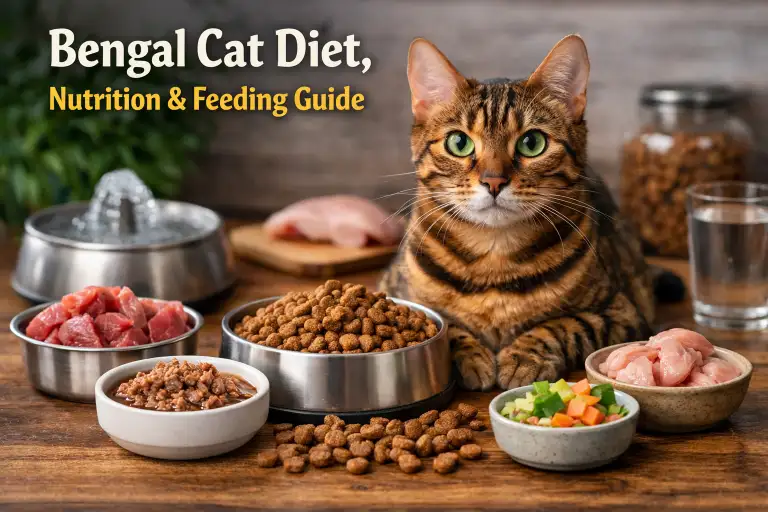
Bengal Cat Diet, Nutrition & Feeding Guide
Bengal cats are known for their athletic build, high activity levels, and sharp intelligence, and their diet needs to support all three. While Bengals don’t require exotic or extreme foods, they do benefit from a nutritionally balanced diet that reflects how a cat’s body is designed to work. Understanding what really matters in a Bengal cat diet helps owners make confident, safe feeding decisions without falling for myths or marketing trends.
Recommended Dog Care Products
Based on your dog’s age, these products may help with comfort, health, grooming, and daily care.

Purina Pro Plan Veterinary Supplements
Daily probiotics for dogs to support digestive and gut health.
View on Amazon ↗
Earth Rated Poop Bags for Dogs
Leak-proof, extra thick waste bag refill rolls with lavender scent.
View on Amazon ↗
Greenies Pill Pockets for Dogs
Large dog treats for capsule medication, peanut butter flavor.
View on Amazon ↗
HONEY CARE All-Absorb Dog Wrap
Small male dog wraps, 50 count, useful for daily care support.
View on Amazon ↗
Seresto Flea & Tick Collar
Flea and tick treatment and prevention for dogs over 18 lbs.
View on Amazon ↗
Milk-Bone MaroSnacks
Small dog treats with real bone marrow in a 40 oz canister.
View on Amazon ↗
Vital Essentials Dog Treats
Freeze dried beef liver dog treats, grain free and single ingredient.
View on Amazon ↗
Stain & Odor Eliminator
Enzyme cleaner for pet stains, carpet messes, and strong odors.
View on Amazon ↗
Pur Luv Chicken Jerky Treats
Dog treats made with real chicken breast, high protein and chew-friendly.
View on Amazon ↗
Milk-Bone Flavor Snacks
Mini crunchy dog biscuits in a 36 oz canister for small rewards.
View on Amazon ↗As an Amazon Associate, we may earn from qualifying purchases.
All cats, including Bengals, are obligate carnivores. This means their bodies are biologically adapted to get most of their nutrition from animal-based foods. Protein and fat are not optional extras for Bengals—they are the foundation of energy, muscle maintenance, and overall health. Carbohydrates, on the other hand, are not essential for cats, even active ones. Bengals can digest small amounts of carbohydrates, but these should not displace animal-sourced nutrients in a well-balanced diet.
Because Bengals tend to be more active than the average house cat, their calorie needs may be slightly higher, but this does not mean they should be overfed. Quality and balance matter more than sheer quantity. A diet that supports lean muscle, steady energy, and hydration will do more for a Bengal’s health than simply choosing the “highest protein” label on the shelf.
Another key point for Bengal owners is that cats rely on complete and balanced foods to meet their micronutrient needs. Nutrients like taurine, certain fatty acids, vitamins, and minerals must be present in the correct amounts. Deficiencies can develop over time if a diet is unbalanced, even if the cat appears energetic and healthy in the short term.
To keep this simple, the table below summarizes the core nutritional priorities that matter most when choosing food for a Bengal cat.
| Nutrient focus | Why it matters for Bengals | Practical owner takeaway |
|---|---|---|
| Animal protein | Supports lean muscle and high activity | Prioritize animal-based ingredients |
| Dietary fat | Primary energy source for cats | Fat is necessary, not harmful |
| Carbohydrates | Not essential for cats | Low to moderate levels are acceptable |
| Taurine | Essential amino acid for heart and eye health | Must come from complete foods |
| Moisture | Supports hydration and urinary health | Wet food helps increase intake |
A well-fed Bengal is not defined by a trendy diet or a long ingredient list, but by consistent energy levels, a lean body condition, a healthy coat, and normal appetite. When these basics are met, most Bengal cats thrive on commercially prepared diets that are complete, balanced, and appropriate for their life stage.
Wet Food, Dry Food, or Mixed Feeding for Bengal Cats
Many Bengal cat owners wonder which type of food is best: wet food, dry food, or a mix of both. The truth is that each option has benefits and drawbacks, and the best choice often depends on your cat’s habits and your daily routine.
Wet food contains a high amount of moisture. This helps support hydration, which is important because many cats do not drink enough water on their own. Wet food also tends to have fewer calories per bite, which can help with portion control. The downside is that it costs more and cannot be left out for long periods.
Dry food is easy to store and convenient to serve. Some cats enjoy crunchier textures, and dry food can work well when meals need to be measured carefully. However, dry food contains very little water, so cats eating only dry food may need extra encouragement to drink.
Mixed feeding combines both wet and dry food. Many Bengal owners choose this approach because it balances convenience with hydration. It also adds variety, which can help prevent boredom in intelligent, curious cats like Bengals.
Recommended Dog Care Products
Based on your dog’s age, these products may help with comfort, health, grooming, and daily care.
Purina Pro Plan Veterinary Supplements
Daily probiotics for dogs to support digestive and gut health.
View on Amazon ↗
Earth Rated Poop Bags for Dogs
Leak-proof, extra thick waste bag refill rolls with lavender scent.
View on Amazon ↗
Greenies Pill Pockets for Dogs
Large dog treats for capsule medication, peanut butter flavor.
View on Amazon ↗
HONEY CARE All-Absorb Dog Wrap
Small male dog wraps, 50 count, useful for daily care support.
View on Amazon ↗
Seresto Flea & Tick Collar
Flea and tick treatment and prevention for dogs over 18 lbs.
View on Amazon ↗
Milk-Bone MaroSnacks
Small dog treats with real bone marrow in a 40 oz canister.
View on Amazon ↗
Vital Essentials Dog Treats
Freeze dried beef liver dog treats, grain free and single ingredient.
View on Amazon ↗
Stain & Odor Eliminator
Enzyme cleaner for pet stains, carpet messes, and strong odors.
View on Amazon ↗
Pur Luv Chicken Jerky Treats
Dog treats made with real chicken breast, high protein and chew-friendly.
View on Amazon ↗
Milk-Bone Flavor Snacks
Mini crunchy dog biscuits in a 36 oz canister for small rewards.
View on Amazon ↗As an Amazon Associate, we may earn from qualifying purchases.
The table below shows a simple comparison to help you decide what fits your household best.
| Feeding type | Main benefits | Possible downsides | Best fit for |
|---|---|---|---|
| Wet food | High moisture, easier hydration | Higher cost, spoils quickly | Cats that don’t drink much |
| Dry food | Convenient, easy to measure | Low moisture | Busy households with schedules |
| Mixed feeding | Balance of hydration and convenience | Needs planning | Most Bengal cats |
No matter which feeding style you choose, portion control is important. Because dry food is more calorie-dense, small scoops can add up quickly. Wet food often looks like more food but may contain fewer calories overall.
Many Bengal cats do well with mixed feeding because it supports hydration while still being practical for owners. What matters most is that the food is complete and balanced, and that your cat maintains a healthy weight and steady energy.
How Much and How Often to Feed a Bengal Cat
One of the most common questions Bengal owners ask is how much food their cat really needs. There is no single answer that fits every cat. Age, activity level, and whether your Bengal lives indoors or outdoors all play a role.
Most Bengal cats do best with scheduled meals instead of free-feeding. Scheduled meals help prevent overeating and make it easier to notice changes in appetite. Bengals are smart and food-motivated, so free-feeding can quickly lead to weight gain.
The table below shows a simple feeding schedule most owners can follow.
| Life stage | Typical feeding frequency |
|---|---|
| Bengal kitten | 3–4 meals per day |
| Adult Bengal | 2 meals per day |
| Senior Bengal | 2 smaller meals per day |
Portion size is just as important as meal timing. Food packages list calorie information, which can help you measure meals instead of guessing. Active Bengals may need slightly more food, while calm indoor cats usually need less.
Watch your cat’s body, not just the bowl. You should be able to feel your Bengal’s ribs without pressing hard, and they should have a visible waist when viewed from above. Constant begging does not always mean hunger. Bengals often beg because they are curious, bored, or used to getting extra snacks.
Signs your Bengal may be eating too much include steady weight gain and low energy. Signs of eating too little include visible ribs, low energy, or constant hunger behavior that does not improve after meals.
Feeding the right amount takes time and small adjustments. Slow changes help you find the balance without upsetting your cat’s routine.
Recommended Dog Care Products
Based on your dog’s age, these products may help with comfort, health, grooming, and daily care.
Purina Pro Plan Veterinary Supplements
Daily probiotics for dogs to support digestive and gut health.
View on Amazon ↗
Earth Rated Poop Bags for Dogs
Leak-proof, extra thick waste bag refill rolls with lavender scent.
View on Amazon ↗
Greenies Pill Pockets for Dogs
Large dog treats for capsule medication, peanut butter flavor.
View on Amazon ↗
HONEY CARE All-Absorb Dog Wrap
Small male dog wraps, 50 count, useful for daily care support.
View on Amazon ↗
Seresto Flea & Tick Collar
Flea and tick treatment and prevention for dogs over 18 lbs.
View on Amazon ↗
Milk-Bone MaroSnacks
Small dog treats with real bone marrow in a 40 oz canister.
View on Amazon ↗
Vital Essentials Dog Treats
Freeze dried beef liver dog treats, grain free and single ingredient.
View on Amazon ↗
Stain & Odor Eliminator
Enzyme cleaner for pet stains, carpet messes, and strong odors.
View on Amazon ↗
Pur Luv Chicken Jerky Treats
Dog treats made with real chicken breast, high protein and chew-friendly.
View on Amazon ↗
Milk-Bone Flavor Snacks
Mini crunchy dog biscuits in a 36 oz canister for small rewards.
View on Amazon ↗As an Amazon Associate, we may earn from qualifying purchases.
Feeding a Bengal Cat at Different Life Stages
A Bengal cat’s food needs change as they grow older. Feeding the right way at each life stage helps support healthy growth, strong muscles, and steady energy.
Bengal kittens grow fast and burn a lot of energy. They need more food than adult cats and should eat several small meals each day. Skipping meals or limiting food too early can affect proper growth. Kittens should always eat food made for kittens, which is higher in calories and nutrients.
Adult Bengal cats need a balanced diet that supports muscle without causing weight gain. This is the stage where overfeeding happens most often. Adult Bengals are active, but they still need measured meals and a steady routine. Adjust food amounts based on how active your cat is.
Senior Bengal cats may slow down with age, even if they still act playful. Their bodies often need fewer calories, but good nutrition is still important. Sudden weight loss, poor appetite, or big behavior changes should never be ignored.
The table below gives a quick overview of feeding focus at each life stage.
| Life stage | Main feeding focus | Simple owner guidance |
|---|---|---|
| Kitten | Growth and energy | Feed often, don’t restrict |
| Adult | Muscle and balance | Measure meals carefully |
| Senior | Comfort and appetite | Adjust portions slowly |
When moving from one life stage to another, changes should be gradual. Mixing old and new food over time helps prevent stomach upset and food refusal.
Treats, Hydration, and Common Feeding Mistakes with Bengals
Treats can be useful, but they should stay a small part of a Bengal cat’s diet. Bengals are very food-motivated, and many will beg, steal, or act hungry even after eating. Too many treats can quickly add extra calories and lead to weight gain. As a simple rule, treats should make up only a small portion of daily food, not replace meals.
Some owners offer human food as treats, but this can be risky. Foods like onions, garlic, chocolate, grapes, and seasoned leftovers are unsafe for cats. Even safe foods should never become a habit. Cats need balanced nutrition that human food cannot provide.
Water intake is another important part of feeding. Many cats do not drink enough on their own, especially if they eat mostly dry food. Wet food helps increase water intake. Clean water bowls, fresh water daily, and water fountains can also encourage drinking.
Bengal cats are smart and active, which means feeding mistakes happen easily. The table below highlights common problems and better choices.
Recommended Dog Care Products
Based on your dog’s age, these products may help with comfort, health, grooming, and daily care.
Purina Pro Plan Veterinary Supplements
Daily probiotics for dogs to support digestive and gut health.
View on Amazon ↗
Earth Rated Poop Bags for Dogs
Leak-proof, extra thick waste bag refill rolls with lavender scent.
View on Amazon ↗
Greenies Pill Pockets for Dogs
Large dog treats for capsule medication, peanut butter flavor.
View on Amazon ↗
HONEY CARE All-Absorb Dog Wrap
Small male dog wraps, 50 count, useful for daily care support.
View on Amazon ↗
Seresto Flea & Tick Collar
Flea and tick treatment and prevention for dogs over 18 lbs.
View on Amazon ↗
Milk-Bone MaroSnacks
Small dog treats with real bone marrow in a 40 oz canister.
View on Amazon ↗
Vital Essentials Dog Treats
Freeze dried beef liver dog treats, grain free and single ingredient.
View on Amazon ↗
Stain & Odor Eliminator
Enzyme cleaner for pet stains, carpet messes, and strong odors.
View on Amazon ↗
Pur Luv Chicken Jerky Treats
Dog treats made with real chicken breast, high protein and chew-friendly.
View on Amazon ↗
Milk-Bone Flavor Snacks
Mini crunchy dog biscuits in a 36 oz canister for small rewards.
View on Amazon ↗As an Amazon Associate, we may earn from qualifying purchases.
| Common mistake | Why it happens | Better approach |
|---|---|---|
| Overfeeding | Bengals act hungry often | Measure meals |
| Too many treats | Food-motivated behavior | Limit treats daily |
| Ignoring hydration | Cats hide thirst | Add wet food |
| Changing foods too fast | Online confusion | Switch slowly |
If your Bengal shows sudden changes in appetite, weight, or energy that do not improve with small feeding adjustments, it may be time to speak with a veterinarian. Calm observation and steady routines solve most feeding issues before they become problems.
For general feline nutrition standards and guidance used by many pet food manufacturers, readers can explore the cat nutrition information provided by the Association of American Feed Control Officials (AAFCO), which helps define what a complete and balanced cat diet should include.

Ata Ur Rehman is the founder of Pet Age in Human Years Calculator, an educational platform that provides age conversion charts and lifespan guides for dogs, cats, birds, and other companion animals. His work focuses on helping pet owners understand how animal ages translate into human years using commonly accepted age conversion formulas and published lifespan averages.
The website compiles breed and species lifespan data from kennel clubs, breed organizations, and general animal lifespan studies to present simple and easy-to-understand guides for pet owners worldwide.
This website was created to centralize animal age conversion charts into one easy reference platform for pet owners.