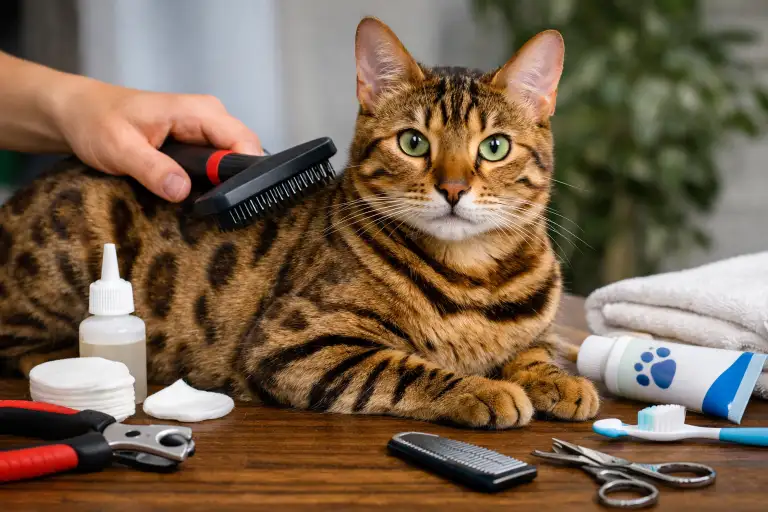
Bengal Grooming Basics: A Practical Guide for Stress-Free Care
Bengal cats are often described as “low-maintenance” because of their short coats, but that description can be misleading. While Bengals don’t require frequent brushing or professional grooming like long-haired breeds, they do still need regular grooming to stay comfortable, healthy, and easy to handle.
Recommended Dog Care Products
Based on your dog’s age, these products may help with comfort, health, grooming, and daily care.

Purina Pro Plan Veterinary Supplements
Daily probiotics for dogs to support digestive and gut health.
View on Amazon ↗
Earth Rated Poop Bags for Dogs
Leak-proof, extra thick waste bag refill rolls with lavender scent.
View on Amazon ↗
Greenies Pill Pockets for Dogs
Large dog treats for capsule medication, peanut butter flavor.
View on Amazon ↗
HONEY CARE All-Absorb Dog Wrap
Small male dog wraps, 50 count, useful for daily care support.
View on Amazon ↗
Seresto Flea & Tick Collar
Flea and tick treatment and prevention for dogs over 18 lbs.
View on Amazon ↗
Milk-Bone MaroSnacks
Small dog treats with real bone marrow in a 40 oz canister.
View on Amazon ↗
Vital Essentials Dog Treats
Freeze dried beef liver dog treats, grain free and single ingredient.
View on Amazon ↗
Stain & Odor Eliminator
Enzyme cleaner for pet stains, carpet messes, and strong odors.
View on Amazon ↗
Pur Luv Chicken Jerky Treats
Dog treats made with real chicken breast, high protein and chew-friendly.
View on Amazon ↗
Milk-Bone Flavor Snacks
Mini crunchy dog biscuits in a 36 oz canister for small rewards.
View on Amazon ↗As an Amazon Associate, we may earn from qualifying purchases.
Grooming a Bengal cat isn’t about making the coat look pretty. It’s about supporting healthy skin, managing shedding, keeping nails at a safe length, and spotting small problems before they turn into vet visits. Regular grooming also helps your Bengal get used to being handled, which matters with a breed known for high energy, strong opinions, and quick reactions when overstimulated.
Bengals are more active and more sensitive than many short-haired cats. Their skin can react poorly to over-brushing or frequent bathing, and their intelligence means they notice changes in routine immediately. This makes a gentle, consistent grooming approach far more effective than occasional long sessions.
This guide focuses on practical, stress-aware Bengal grooming basics that real owners can maintain at home. It avoids unnecessary products, unsafe techniques, and breed myths, and instead explains what Bengals actually need, how often they need it, and when it’s better to stop or seek professional help.
Understanding Bengal Cat Grooming Needs
Bengal cats have short, smooth coats, but their grooming needs are not the same as other short-haired cats. Their fur is dense and lies close to the skin, which means dirt, loose hair, and skin oils can build up if grooming is ignored.
Bengals are very active cats. They run, jump, climb, and explore more than many breeds. Because of this, their nails often grow fast, and their ears may collect more dirt, especially in indoor cats that use scratching posts and climbing trees.
Most Bengal cats have sensitive skin. Brushing too often or using the wrong technique can cause skin redness, itchiness, or hair breakage. Grooming should be gentle and short. Long grooming sessions can make a Bengal annoyed or overstimulated very quickly.
Where your Bengal lives also matters.
Indoor Bengals usually need light but regular grooming to manage shedding and nail length. Outdoor or indoor-outdoor Bengals may need more ear checks and paw inspections because they come into contact with more dirt and debris.
Age plays a role as well.
Kittens need grooming mainly to learn handling and build trust. Adult Bengals need routine care to stay comfortable. Senior Bengals may need extra help with nails and coat care because they groom themselves less as they age.
The most important thing to remember is that Bengals do not need heavy grooming. They need the right amount of grooming, done calmly and consistently. Too much grooming can cause stress and skin problems, while too little can lead to overgrown nails and discomfort.
Recommended Dog Care Products
Based on your dog’s age, these products may help with comfort, health, grooming, and daily care.
Purina Pro Plan Veterinary Supplements
Daily probiotics for dogs to support digestive and gut health.
View on Amazon ↗
Earth Rated Poop Bags for Dogs
Leak-proof, extra thick waste bag refill rolls with lavender scent.
View on Amazon ↗
Greenies Pill Pockets for Dogs
Large dog treats for capsule medication, peanut butter flavor.
View on Amazon ↗
HONEY CARE All-Absorb Dog Wrap
Small male dog wraps, 50 count, useful for daily care support.
View on Amazon ↗
Seresto Flea & Tick Collar
Flea and tick treatment and prevention for dogs over 18 lbs.
View on Amazon ↗
Milk-Bone MaroSnacks
Small dog treats with real bone marrow in a 40 oz canister.
View on Amazon ↗
Vital Essentials Dog Treats
Freeze dried beef liver dog treats, grain free and single ingredient.
View on Amazon ↗
Stain & Odor Eliminator
Enzyme cleaner for pet stains, carpet messes, and strong odors.
View on Amazon ↗
Pur Luv Chicken Jerky Treats
Dog treats made with real chicken breast, high protein and chew-friendly.
View on Amazon ↗
Milk-Bone Flavor Snacks
Mini crunchy dog biscuits in a 36 oz canister for small rewards.
View on Amazon ↗As an Amazon Associate, we may earn from qualifying purchases.
| Bengal situation | Key grooming focus | How often (simple guide) | Owner caution note |
|---|---|---|---|
| Kitten (indoor) | Handling practice, light brushing | Short sessions weekly | Stop early if wiggly or upset |
| Adult (indoor) | Shedding control, nails | Brush weekly, nails every 2–3 weeks | Avoid long sessions |
| Adult (outdoor/indoor-outdoor) | Ear checks, paw checks, nails | Add checks weekly | Watch for debris and irritation |
| Senior (indoor) | Nails, gentle coat checks | Brush weekly, nails every 2–3 weeks | Go slow and keep sessions short |
Brushing and Coat Care for Bengal Cats
Bengal cats have short hair, but they still need brushing. Brushing helps remove loose hair, spread natural skin oils, and reduce shedding around your home. It also gives you a chance to check your cat’s skin for dryness, bumps, or irritation.
Most Bengals do not need daily brushing. In normal weeks, brushing once a week is enough. During heavy shedding seasons, usually in spring or fall, brushing two times a week can help control loose hair.
Keep brushing sessions short. Five minutes is often enough for a Bengal. Brushing for too long can make them annoyed or overstimulated. Many Bengals enjoy grooming at first but may suddenly become restless, flick their tail, or walk away. These are signs to stop.
Use gentle strokes and brush in the direction the hair grows. Do not press hard. Bengal skin can be sensitive, and rough brushing can cause redness or discomfort. If you notice your cat’s skin looks pink, flaky, or irritated, reduce brushing and check your technique.
Watch for these signs that brushing is too much:
- Your Bengal tries to bite the brush
- Ears flatten or tail starts whipping
- Skin looks red after brushing
- Your cat runs away or hides
Below is a quick guide to make brushing easy to follow.
Bengal brushing frequency and technique guide
- Normal weeks: once per week, light pressure, short sessions
- Shedding season: two times per week, gentle strokes, stop if restless
- Sensitive skin: once every 10–14 days, very light brushing, watch skin closely
Brushing should feel calm, not forced. If your Bengal walks away, let them go. Regular short sessions work better than long grooming attempts.
| Situation | Brushing frequency | Technique focus | When to stop |
|---|---|---|---|
| Normal weeks | Once per week | Light pressure, short sessions | Tail flicking, walking away |
| Shedding season | Two times per week | Gentle strokes with the hair growth | Restless body, ears flatten |
| Sensitive skin | Once every 10–14 days | Very light brushing, minimal passes | Redness, flaking, irritation |
Nail Trimming, Ear, Eye, and Dental Care Basics
Bengal cats may not need haircuts, but they do need regular care for their nails, ears, eyes, and teeth. These small tasks help prevent pain, infections, and behavior problems.
Nail trimming
Bengals are very active, but their nails still grow quickly. Long nails can catch on furniture, scratch skin, or break. Most Bengals need their nails trimmed every two to three weeks.
Recommended Dog Care Products
Based on your dog’s age, these products may help with comfort, health, grooming, and daily care.
Purina Pro Plan Veterinary Supplements
Daily probiotics for dogs to support digestive and gut health.
View on Amazon ↗
Earth Rated Poop Bags for Dogs
Leak-proof, extra thick waste bag refill rolls with lavender scent.
View on Amazon ↗
Greenies Pill Pockets for Dogs
Large dog treats for capsule medication, peanut butter flavor.
View on Amazon ↗
HONEY CARE All-Absorb Dog Wrap
Small male dog wraps, 50 count, useful for daily care support.
View on Amazon ↗
Seresto Flea & Tick Collar
Flea and tick treatment and prevention for dogs over 18 lbs.
View on Amazon ↗
Milk-Bone MaroSnacks
Small dog treats with real bone marrow in a 40 oz canister.
View on Amazon ↗
Vital Essentials Dog Treats
Freeze dried beef liver dog treats, grain free and single ingredient.
View on Amazon ↗
Stain & Odor Eliminator
Enzyme cleaner for pet stains, carpet messes, and strong odors.
View on Amazon ↗
Pur Luv Chicken Jerky Treats
Dog treats made with real chicken breast, high protein and chew-friendly.
View on Amazon ↗
Milk-Bone Flavor Snacks
Mini crunchy dog biscuits in a 36 oz canister for small rewards.
View on Amazon ↗As an Amazon Associate, we may earn from qualifying purchases.
Trim only the sharp tip of the nail. Never cut into the pink area inside the nail. If your Bengal pulls away, stop and try again another day. Short, calm sessions are safer than forcing all nails at once.
Ear care
Check your Bengal’s ears about once a month. A small amount of wax is normal. Strong smell, dark buildup, or redness is not normal and needs a vet check.
Clean ears only when they look dirty. Over-cleaning can irritate the ear canal. Never push anything deep into the ear.
Eye care
Some Bengals have small amounts of clear or light brown eye discharge. This is normal. Gently wipe the area with a soft, damp cloth if needed.
If you see thick discharge, swelling, or your cat keeps squinting, stop cleaning and contact a vet.
Dental care
Many owners forget about teeth, but dental health is important for Bengals. Gum disease can cause pain and bad breath. Even simple dental care helps.
Try to check your Bengal’s mouth often. If brushing teeth at home is not possible, regular checks and vet cleanings still make a big difference.
Below is a simple grooming task guide for Bengal cats.
Bengal grooming task frequency overview
- Nail trimming: every 2–3 weeks
- Ear checks: once a month
- Eye checks: weekly
- Dental checks: weekly mouth check, vet cleanings as advised
| Grooming task | Typical frequency | Safe at-home action | When to involve a vet or groomer |
|---|---|---|---|
| Nail trimming | Every 2–3 weeks | Trim the sharp tip only | If your cat fights hard or nails bleed |
| Ear checks | Once a month | Look for light wax and normal smell | Strong smell, dark buildup, redness |
| Eye checks | Weekly | Wipe light discharge with a soft damp cloth | Thick discharge, swelling, squinting |
| Dental checks | Weekly mouth check | Quick mouth look if your cat allows | Bad breath, red gums, pain signs |
Safe Handling, Grooming Frequency, and Common Mistakes
Bengal cats are smart, fast, and strong. This means grooming must be done with care. Even a friendly Bengal can react quickly if they feel stressed or trapped.
Recommended Dog Care Products
Based on your dog’s age, these products may help with comfort, health, grooming, and daily care.
Purina Pro Plan Veterinary Supplements
Daily probiotics for dogs to support digestive and gut health.
View on Amazon ↗
Earth Rated Poop Bags for Dogs
Leak-proof, extra thick waste bag refill rolls with lavender scent.
View on Amazon ↗
Greenies Pill Pockets for Dogs
Large dog treats for capsule medication, peanut butter flavor.
View on Amazon ↗
HONEY CARE All-Absorb Dog Wrap
Small male dog wraps, 50 count, useful for daily care support.
View on Amazon ↗
Seresto Flea & Tick Collar
Flea and tick treatment and prevention for dogs over 18 lbs.
View on Amazon ↗
Milk-Bone MaroSnacks
Small dog treats with real bone marrow in a 40 oz canister.
View on Amazon ↗
Vital Essentials Dog Treats
Freeze dried beef liver dog treats, grain free and single ingredient.
View on Amazon ↗
Stain & Odor Eliminator
Enzyme cleaner for pet stains, carpet messes, and strong odors.
View on Amazon ↗
Pur Luv Chicken Jerky Treats
Dog treats made with real chicken breast, high protein and chew-friendly.
View on Amazon ↗
Milk-Bone Flavor Snacks
Mini crunchy dog biscuits in a 36 oz canister for small rewards.
View on Amazon ↗As an Amazon Associate, we may earn from qualifying purchases.
Always groom your Bengal when they are calm. Good times are after play, meals, or naps. Avoid grooming when your cat is full of energy or already annoyed.
Watch your Bengal’s body language during grooming. Stop if you see:
- Tail whipping back and forth
- Ears turning sideways or flat
- Sudden biting or grabbing
- Growling or loud meowing
Stopping early helps build trust. It is better to groom a little and stop than to push too far and cause fear.
Keep grooming sessions short. Most Bengals do best with 3 to 5 minutes at a time. You do not need to do everything in one day. You can brush one day and trim nails another day.
Here are common grooming mistakes Bengal owners make:
- Brushing too often and irritating the skin
- Forcing nail trims when the cat is resisting
- Cleaning ears too much
- Thinking Bengals never need grooming
- Ignoring stress signs until the cat reacts
If grooming feels unsafe, it is okay to ask for help. Professional groomers and vets are trained to handle difficult situations safely.
This section also ties everything together with grooming frequency:
- Brushing: once weekly, more during shedding
- Nails: every 2–3 weeks
- Ears: check monthly
- Eyes: quick weekly check
- Teeth: regular mouth checks
| Stress signal | What it can mean | What you should do |
|---|---|---|
| Tail whipping | Your cat is getting annoyed | Stop and try later |
| Ears sideways or flat | Fear or overstimulation | Pause and give space |
| Sudden grabbing or biting | “I’m done” warning | End the session safely |
| Growling or loud meowing | High stress | Stop and avoid forcing grooming |
For additional, vet-reviewed guidance on safe feline grooming and handling, readers can explore the grooming advice from International Cat Care, a globally respected authority on cat health and welfare.

Ata Ur Rehman is the founder of Pet Age in Human Years Calculator, an educational platform that provides age conversion charts and lifespan guides for dogs, cats, birds, and other companion animals. His work focuses on helping pet owners understand how animal ages translate into human years using commonly accepted age conversion formulas and published lifespan averages.
The website compiles breed and species lifespan data from kennel clubs, breed organizations, and general animal lifespan studies to present simple and easy-to-understand guides for pet owners worldwide.
This website was created to centralize animal age conversion charts into one easy reference platform for pet owners.