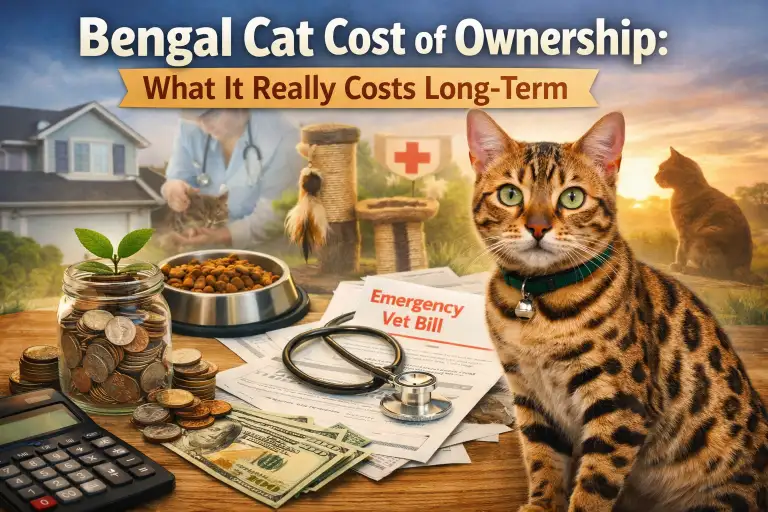
Bengal Cat Cost of Ownership: What It Really Costs to Own One Long-Term
Bengal cats are often chosen for their striking appearance and intelligence, but their long-term cost of ownership is frequently misunderstood. Many prospective owners focus on the upfront price of a Bengal kitten and underestimate the ongoing financial commitment that follows. This gap between expectation and reality is one of the most common reasons Bengals are rehomed later in life.
Recommended Dog Care Products
Based on your dog’s age, these products may help with comfort, health, grooming, and daily care.

Purina Pro Plan Veterinary Supplements
Daily probiotics for dogs to support digestive and gut health.
View on Amazon ↗
Earth Rated Poop Bags for Dogs
Leak-proof, extra thick waste bag refill rolls with lavender scent.
View on Amazon ↗
Greenies Pill Pockets for Dogs
Large dog treats for capsule medication, peanut butter flavor.
View on Amazon ↗
HONEY CARE All-Absorb Dog Wrap
Small male dog wraps, 50 count, useful for daily care support.
View on Amazon ↗
Seresto Flea & Tick Collar
Flea and tick treatment and prevention for dogs over 18 lbs.
View on Amazon ↗
Milk-Bone MaroSnacks
Small dog treats with real bone marrow in a 40 oz canister.
View on Amazon ↗
Vital Essentials Dog Treats
Freeze dried beef liver dog treats, grain free and single ingredient.
View on Amazon ↗
Stain & Odor Eliminator
Enzyme cleaner for pet stains, carpet messes, and strong odors.
View on Amazon ↗
Pur Luv Chicken Jerky Treats
Dog treats made with real chicken breast, high protein and chew-friendly.
View on Amazon ↗
Milk-Bone Flavor Snacks
Mini crunchy dog biscuits in a 36 oz canister for small rewards.
View on Amazon ↗As an Amazon Associate, we may earn from qualifying purchases.
Understanding the Bengal cat cost of ownership means looking beyond food and litter. Bengals are highly active, mentally demanding cats that require more enrichment, supervision, and preventive care than the average household cat. These needs translate into higher recurring expenses and a greater time investment, both of which should be considered part of responsible ownership.
This guide is designed to help you evaluate whether owning a Bengal fits your financial situation long term. All cost figures discussed throughout the article are realistic estimates based on typical ownership scenarios, not guarantees or promises. Actual expenses vary depending on lifestyle, environment, and individual cat needs, but planning conservatively helps avoid financial strain and compromised care.
Approaching Bengal ownership with a clear understanding of costs protects both the owner and the cat. When finances are planned honestly from the start, owners are better equipped to provide consistent care, handle unexpected expenses, and commit to the full lifespan of a Bengal cat.
One-Time and First-Year Costs of Owning a Bengal Cat
The first year with a Bengal cat is usually the most expensive. This is when most setup costs and early veterinary care happen. Planning for these expenses ahead of time helps avoid stress after bringing a Bengal home.
| First-year expense category | Low | Average | High | Why this cost varies |
|---|---|---|---|---|
| Adoption or purchase | Low | Average | High | Source, age, and availability |
| First vet visits and basic checks | Low | Average | High | Clinic pricing, tests needed, local demand |
| Spay/neuter (if not already done) | Low | Average | High | Age, health status, and clinic type |
| Vaccines and preventive basics | Low | Average | High | Schedule needs and regional vet norms |
| Setup supplies | Low | Average | High | Quality level, home size, and what you already own |
| Enrichment and climbing setup | Low | Average | High | Bengal activity level and how “Bengal-proof” your home must be |
| Carrier and travel safety gear | Low | Average | High | Size, durability, and features |
| Early replacements and upgrades | Low | Average | High | How fast items wear out and what your cat prefers |
Most Bengal owners will face one-time costs such as adoption or purchase fees, first veterinary visits, and spaying or neutering if it has not already been done. These early vet visits often include health checks, vaccines, and basic testing to make sure the cat is starting out healthy.
There are also setup costs that many people forget to plan for. Bengal cats are very active and curious, so they need strong scratching posts, climbing areas, toys, and safe spaces to explore. Cheap or low-quality items often wear out quickly and need to be replaced, which can increase costs during the first year.
The first year also comes with higher food and litter use while you learn what works best for your cat. Some Bengals need diet changes or special food due to sensitive stomachs or high energy levels. These adjustments are normal but can raise first-year spending.
Time is another important cost in the first year. Bengals need daily play, training, and attention. Owners who cannot give this time may end up spending more on replacement toys, behavior help, or extra services.
Ongoing Monthly and Annual Bengal Cat Expenses
After the first year, Bengal cat costs become more regular and easier to predict. These are the expenses you will pay month after month and year after year as long as your cat lives with you.
Recommended Dog Care Products
Based on your dog’s age, these products may help with comfort, health, grooming, and daily care.
Purina Pro Plan Veterinary Supplements
Daily probiotics for dogs to support digestive and gut health.
View on Amazon ↗
Earth Rated Poop Bags for Dogs
Leak-proof, extra thick waste bag refill rolls with lavender scent.
View on Amazon ↗
Greenies Pill Pockets for Dogs
Large dog treats for capsule medication, peanut butter flavor.
View on Amazon ↗
HONEY CARE All-Absorb Dog Wrap
Small male dog wraps, 50 count, useful for daily care support.
View on Amazon ↗
Seresto Flea & Tick Collar
Flea and tick treatment and prevention for dogs over 18 lbs.
View on Amazon ↗
Milk-Bone MaroSnacks
Small dog treats with real bone marrow in a 40 oz canister.
View on Amazon ↗
Vital Essentials Dog Treats
Freeze dried beef liver dog treats, grain free and single ingredient.
View on Amazon ↗
Stain & Odor Eliminator
Enzyme cleaner for pet stains, carpet messes, and strong odors.
View on Amazon ↗
Pur Luv Chicken Jerky Treats
Dog treats made with real chicken breast, high protein and chew-friendly.
View on Amazon ↗
Milk-Bone Flavor Snacks
Mini crunchy dog biscuits in a 36 oz canister for small rewards.
View on Amazon ↗As an Amazon Associate, we may earn from qualifying purchases.
| Ongoing expense type | Monthly view | Annual view | What affects the cost most |
|---|---|---|---|
| Food | Monthly | Annual | Activity level, food quality, and diet changes |
| Litter | Monthly | Annual | Number of boxes, litter type, and cleaning routine |
| Routine vet care | Monthly | Annual | Clinic pricing, exam frequency, and preventive plan |
| Parasite prevention | Monthly | Annual | Indoor vs outdoor exposure and local risk levels |
| Enrichment and toys | Monthly | Annual | How fast items wear out and how much stimulation your cat needs |
| Scratching and climbing upkeep | Monthly | Annual | Home setup and replacement schedule |
| Household wear and tear | Monthly | Annual | Cat activity level and home materials |
Food is one of the biggest ongoing costs. Bengal cats are very active and burn more energy than many other cats. This means they often eat more or need higher-quality food to stay healthy. Food costs can change over time as your cat ages or if health needs change.
Litter is another steady expense. Most Bengal cats need more than one litter box, especially in active households or larger homes. More boxes mean more litter used each month and more frequent cleaning.
Routine veterinary care should be planned every year. This usually includes wellness exams, basic vaccines, and parasite prevention. These visits help catch health problems early, which can lower bigger costs later.
Bengals also need regular mental and physical activity. Toys, puzzle feeders, climbing shelves, and scratching items wear out and need replacing. These costs may seem small, but they add up over time.
There are also small household costs linked to Bengals. Their jumping, climbing, and running can cause more wear on furniture, curtains, and screens. While not a direct pet bill, it is still part of real ownership costs.
Unexpected, Emergency, and Aging-Related Costs
Some Bengal cat costs are hard to predict, but they are very important to plan for. These expenses do not happen every month, but when they do, they can be stressful if you are not ready.
| Often-overlooked scenario | Why it happens more with Bengals | Financial impact | Simple planning step |
|---|---|---|---|
| Injury from jumping or climbing | High activity and risky leaps | Can be high | Keep high-risk areas safer and watch behavior changes |
| Swallowed strings or small objects | Curious, playful behavior | Can be high | Store small items safely and use safer toys |
| Sudden stomach or bowel issues | Diet changes or sensitivities | Can be medium to high | Change food slowly and track symptoms early |
| Stress-related behavior problems | Needs stimulation and routine | Can be medium to high | Daily play and predictable routines |
| Diagnostic testing for unclear illness | Symptoms can be vague | Can be high | Plan for testing as part of real-life ownership |
| Senior care increases | Aging brings more needs | Can be medium to high | Expect costs to rise later and plan ahead |
| End-of-life care decisions | Care needs change fast | Can be high | Think ahead about options and support needs |
Bengal cats are very active and love to climb, jump, and explore. Because of this, injuries can happen more often than with calmer cats. A fall, a sprain, or a swallowed object can lead to an emergency vet visit with high costs in a short time.
Health problems can also appear without warning. Tests, scans, and treatments may be needed to find out what is wrong. These tests can cost more than regular vet visits and may require follow-up care.
As Bengal cats get older, their care often becomes more expensive. Senior cats may need more vet visits, special food, or long-term medicine. These aging costs usually rise slowly, but they add up over the later years of a cat’s life.
There is also a time and emotional cost during emergencies. Taking time off work, traveling to emergency clinics, and caring for a sick cat all affect daily life. These factors are part of real ownership, even though they are not listed on a bill.
Recommended Dog Care Products
Based on your dog’s age, these products may help with comfort, health, grooming, and daily care.
Purina Pro Plan Veterinary Supplements
Daily probiotics for dogs to support digestive and gut health.
View on Amazon ↗
Earth Rated Poop Bags for Dogs
Leak-proof, extra thick waste bag refill rolls with lavender scent.
View on Amazon ↗
Greenies Pill Pockets for Dogs
Large dog treats for capsule medication, peanut butter flavor.
View on Amazon ↗
HONEY CARE All-Absorb Dog Wrap
Small male dog wraps, 50 count, useful for daily care support.
View on Amazon ↗
Seresto Flea & Tick Collar
Flea and tick treatment and prevention for dogs over 18 lbs.
View on Amazon ↗
Milk-Bone MaroSnacks
Small dog treats with real bone marrow in a 40 oz canister.
View on Amazon ↗
Vital Essentials Dog Treats
Freeze dried beef liver dog treats, grain free and single ingredient.
View on Amazon ↗
Stain & Odor Eliminator
Enzyme cleaner for pet stains, carpet messes, and strong odors.
View on Amazon ↗
Pur Luv Chicken Jerky Treats
Dog treats made with real chicken breast, high protein and chew-friendly.
View on Amazon ↗
Milk-Bone Flavor Snacks
Mini crunchy dog biscuits in a 36 oz canister for small rewards.
View on Amazon ↗As an Amazon Associate, we may earn from qualifying purchases.
Lifetime Cost of Owning a Bengal Cat: Is It Worth It for You?
When you add up all costs over a Bengal cat’s life, the total can be much higher than many people expect. This includes first-year setup costs, monthly care, yearly vet visits, and unexpected emergencies. Bengals usually live many years, so even small monthly costs grow into large lifetime expenses.
| Budget style | Yearly cost level | Estimated lifetime total level | Typical owner assumptions |
|---|---|---|---|
| Low | Lower | Lower | Strong prevention, stable health, minimal travel, basic enrichment that still meets needs |
| Average | Typical | Typical | Regular vet care, consistent enrichment, some replacements, occasional unexpected costs |
| High | Higher | Higher | More emergencies or chronic needs, higher ongoing enrichment, more travel care, higher replacement and testing needs |
The lifetime cost of owning a Bengal cat depends on how you live with your cat. Indoor-only Bengals with good enrichment may have lower risk but higher enrichment costs. More active lifestyles, travel, or health issues can raise expenses over time. Some owners spend less, while others spend much more, depending on care choices and surprises.
Many new owners make the mistake of planning only for average costs. The real challenge is being ready for high-cost years, such as medical emergencies or senior care. If your budget can only handle basic monthly needs, Bengal ownership may become stressful later.
Owning a Bengal cat is not just about money. It also requires daily time, attention, and long-term commitment. If you are able to plan for both the financial and personal costs, a Bengal can be a rewarding companion. If not, it may be better to wait or choose a lower-maintenance cat.
For general guidance on feline care standards, health planning, and responsible ownership, readers can explore the Bengal cat care resources provided by International Cat Care, a globally respected authority on cat welfare and lifelong care.

Ata Ur Rehman is the founder of Pet Age in Human Years Calculator, an educational platform that provides age conversion charts and lifespan guides for dogs, cats, birds, and other companion animals. His work focuses on helping pet owners understand how animal ages translate into human years using commonly accepted age conversion formulas and published lifespan averages.
The website compiles breed and species lifespan data from kennel clubs, breed organizations, and general animal lifespan studies to present simple and easy-to-understand guides for pet owners worldwide.
This website was created to centralize animal age conversion charts into one easy reference platform for pet owners.