British Longhair Cat Care Guide for Daily Needs and Healthy Living
The British Longhair is a calm and friendly cat that often seems easy to care for at first glance. Their soft, dense fur and relaxed personality make them appear low-maintenance, but they do require consistent attention to stay healthy and comfortable. Skipping basic care can lead to hidden problems like matting, hairballs, or weight issues.
Recommended Dog Care Products
Based on your dog’s age, these products may help with comfort, health, grooming, and daily care.

Purina Pro Plan Veterinary Supplements
Daily probiotics for dogs to support digestive and gut health.
View on Amazon ↗
Earth Rated Poop Bags for Dogs
Leak-proof, extra thick waste bag refill rolls with lavender scent.
View on Amazon ↗
Greenies Pill Pockets for Dogs
Large dog treats for capsule medication, peanut butter flavor.
View on Amazon ↗
HONEY CARE All-Absorb Dog Wrap
Small male dog wraps, 50 count, useful for daily care support.
View on Amazon ↗
Seresto Flea & Tick Collar
Flea and tick treatment and prevention for dogs over 18 lbs.
View on Amazon ↗
Milk-Bone MaroSnacks
Small dog treats with real bone marrow in a 40 oz canister.
View on Amazon ↗
Vital Essentials Dog Treats
Freeze dried beef liver dog treats, grain free and single ingredient.
View on Amazon ↗
Stain & Odor Eliminator
Enzyme cleaner for pet stains, carpet messes, and strong odors.
View on Amazon ↗
Pur Luv Chicken Jerky Treats
Dog treats made with real chicken breast, high protein and chew-friendly.
View on Amazon ↗
Milk-Bone Flavor Snacks
Mini crunchy dog biscuits in a 36 oz canister for small rewards.
View on Amazon ↗As an Amazon Associate, we may earn from qualifying purchases.
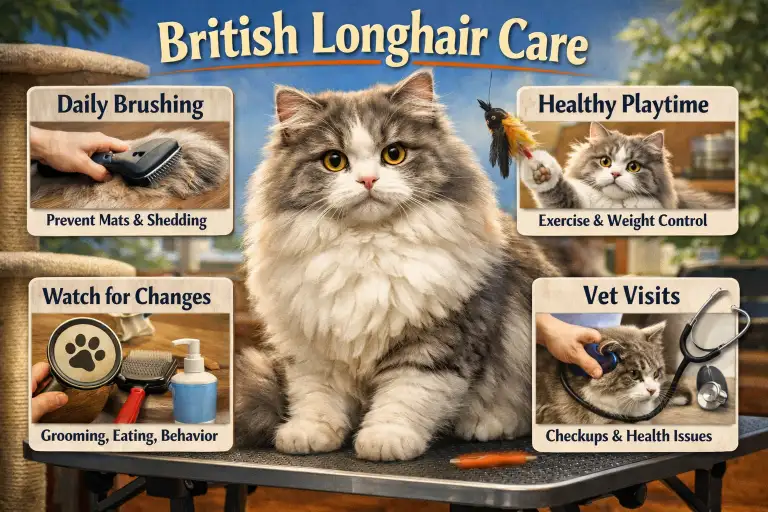
These cats have a thick, plush coat that feels soft but can trap dirt and loose hair if not brushed regularly. Unlike some longhaired cats, mats don’t appear immediately, but once they form, they can stick tightly to the skin. Daily brushing helps prevent tangles and keeps their coat shiny and healthy.
British Longhairs are built with a strong, cobby body. They are not very active naturally, which makes monitoring their weight important. Indoor cats, in particular, can gain weight quickly if playtime and exercise are limited. Simple daily interaction and short play sessions can help keep them fit.
Behavior-wise, British Longhairs are calm and tolerant. They often hide discomfort rather than show it. Changes in grooming habits, eating, or activity levels may be the first sign of a problem. Owners need to pay attention to these small signals to prevent bigger issues.
Daily and Weekly British Longhair Care Routine
A consistent care routine helps your British Longhair stay healthy and happy. Daily and weekly habits make a big difference in preventing coat and health problems.
Daily tasks include a quick brush to remove loose fur, checking eyes and ears for discharge, and making sure the litter box is clean. Observing your cat’s behavior during the day can also alert you to any unusual changes, like lethargy or hiding.
Weekly tasks should focus on deeper grooming. Brushing through the entire coat prevents mats, trimming nails if needed, and inspecting ears for dirt or wax buildup. You can also check teeth for tartar and provide short play sessions to encourage activity.
To make this easy, you can use a simple table to organize care tasks:
| Task | Daily | Weekly | Notes |
|---|---|---|---|
| Brushing | Quick 5 min | Full coat brushing | Focus on underarms and belly |
| Eye/Ear check | ✓ | ✓ | Clean any discharge gently |
| Litter box | ✓ | – | Observe for changes in urination or stool |
| Nail check | – | ✓ | Trim only if necessary |
| Play/Exercise | ✓ | ✓ | 5–10 min sessions at least |
Grooming, Shedding, and Coat Maintenance
British Longhairs shed moderately throughout the year, with heavier shedding during spring and fall. Brushing regularly helps reduce loose fur around the house and prevents hairballs from forming in their digestive tract.
Mats tend to appear first under the armpits, behind the ears, and along the belly. Using a soft slicker brush or comb with wide teeth works best to gently remove tangles without hurting the cat. Avoid cutting mats yourself unless you know how, as it can easily injure the skin.
Recommended Dog Care Products
Based on your dog’s age, these products may help with comfort, health, grooming, and daily care.
Purina Pro Plan Veterinary Supplements
Daily probiotics for dogs to support digestive and gut health.
View on Amazon ↗
Earth Rated Poop Bags for Dogs
Leak-proof, extra thick waste bag refill rolls with lavender scent.
View on Amazon ↗
Greenies Pill Pockets for Dogs
Large dog treats for capsule medication, peanut butter flavor.
View on Amazon ↗
HONEY CARE All-Absorb Dog Wrap
Small male dog wraps, 50 count, useful for daily care support.
View on Amazon ↗
Seresto Flea & Tick Collar
Flea and tick treatment and prevention for dogs over 18 lbs.
View on Amazon ↗
Milk-Bone MaroSnacks
Small dog treats with real bone marrow in a 40 oz canister.
View on Amazon ↗
Vital Essentials Dog Treats
Freeze dried beef liver dog treats, grain free and single ingredient.
View on Amazon ↗
Stain & Odor Eliminator
Enzyme cleaner for pet stains, carpet messes, and strong odors.
View on Amazon ↗
Pur Luv Chicken Jerky Treats
Dog treats made with real chicken breast, high protein and chew-friendly.
View on Amazon ↗
Milk-Bone Flavor Snacks
Mini crunchy dog biscuits in a 36 oz canister for small rewards.
View on Amazon ↗As an Amazon Associate, we may earn from qualifying purchases.
Bathing is usually not needed unless your cat gets something sticky or dirty on the coat. Most British Longhairs groom themselves effectively, but occasional baths can help if the coat becomes greasy. Always use cat-safe shampoo and lukewarm water.
Here’s a table to summarize brushing and coat care needs:
| Coat Issue | Brushing Frequency | Additional Care |
|---|---|---|
| Loose hair | Daily | Prevent hairballs |
| Light mats | Weekly | Use wide-tooth comb |
| Heavy mats | As needed | Seek professional groomer |
| Seasonal shedding | 2–3 times per week extra | Monitor skin condition |
Common British Longhair Care Mistakes to Avoid
Many owners make small mistakes that can cause unnecessary problems for British Longhairs. Being aware of these helps prevent stress for both cat and owner.
One common mistake is under-brushing, assuming the coat looks fine. Mats can hide under the fur until they become painful. Another is overfeeding and under-exercising, leading to weight gain in calm, indoor cats. Skipping grooming training when they are kittens can make adult brushing sessions stressful.
Using the wrong tools is another problem. Fine-tooth combs or harsh brushes can irritate the skin. Finally, owners sometimes ignore subtle signs of discomfort because British Longhairs tolerate pain quietly. Paying attention to behavior and coat condition is essential.
| Mistake | Better Approach |
|---|---|
| Under-brushing | Brush regularly, even if coat looks fine |
| Overfeeding / Low activity | Monitor weight, provide daily play |
| Skipping kitten grooming training | Start brushing early and gently |
| Using wrong tools | Use soft brushes or wide-tooth combs |
| Ignoring subtle signs | Watch for changes in grooming, movement, or appetite |
British Longhair Care FAQs and Vet Guidance
British Longhairs are generally healthy, but knowing when to consult a professional is important. Here are common questions owners ask:
- Are British Longhairs high maintenance?
They require regular grooming but are otherwise low-stress pets. - Are they good for first-time owners?
Yes, their calm temperament makes them suitable for beginners. - How much daily care is needed?
About 10–15 minutes for brushing and monitoring. - When should I see a vet or groomer?
If mats become painful, skin looks irritated, or your cat shows unusual behavior, consult a professional promptly.
| Concern | Action |
|---|---|
| Skin irritation or mats | Seek groomer or vet advice |
| Excessive shedding | Check diet, health, or seasonal factors |
| Changes in eating or activity | Schedule vet visit |
| Hairballs | Increase brushing and provide hairball-safe diet |
For further expert guidance on safe cat grooming and general care, you can visit International Cat Care, a trusted authority on feline health and welfare: https://icatcare.org/advice/grooming/

Ata Ur Rehman is the founder of Pet Age in Human Years Calculator, an educational platform that provides age conversion charts and lifespan guides for dogs, cats, birds, and other companion animals. His work focuses on helping pet owners understand how animal ages translate into human years using commonly accepted age conversion formulas and published lifespan averages.
The website compiles breed and species lifespan data from kennel clubs, breed organizations, and general animal lifespan studies to present simple and easy-to-understand guides for pet owners worldwide.
This website was created to centralize animal age conversion charts into one easy reference platform for pet owners.
Recommended Dog Care Products
Based on your dog’s age, these products may help with comfort, health, grooming, and daily care.
Purina Pro Plan Veterinary Supplements
Daily probiotics for dogs to support digestive and gut health.
View on Amazon ↗
Earth Rated Poop Bags for Dogs
Leak-proof, extra thick waste bag refill rolls with lavender scent.
View on Amazon ↗
Greenies Pill Pockets for Dogs
Large dog treats for capsule medication, peanut butter flavor.
View on Amazon ↗
HONEY CARE All-Absorb Dog Wrap
Small male dog wraps, 50 count, useful for daily care support.
View on Amazon ↗
Seresto Flea & Tick Collar
Flea and tick treatment and prevention for dogs over 18 lbs.
View on Amazon ↗
Milk-Bone MaroSnacks
Small dog treats with real bone marrow in a 40 oz canister.
View on Amazon ↗
Vital Essentials Dog Treats
Freeze dried beef liver dog treats, grain free and single ingredient.
View on Amazon ↗
Stain & Odor Eliminator
Enzyme cleaner for pet stains, carpet messes, and strong odors.
View on Amazon ↗
Pur Luv Chicken Jerky Treats
Dog treats made with real chicken breast, high protein and chew-friendly.
View on Amazon ↗
Milk-Bone Flavor Snacks
Mini crunchy dog biscuits in a 36 oz canister for small rewards.
View on Amazon ↗As an Amazon Associate, we may earn from qualifying purchases.