British Longhair Cat Diet, Nutrition and Feeding Guide Explained
British Longhair cats are calm, sturdy, and beautiful, but their diet needs careful attention. Their long, thick coat and stocky build mean they need food that supports healthy muscles, skin, and coat while keeping their weight in check. A balanced diet helps them stay active, happy, and healthy for many years.
Recommended Dog Care Products
Based on your dog’s age, these products may help with comfort, health, grooming, and daily care.

Purina Pro Plan Veterinary Supplements
Daily probiotics for dogs to support digestive and gut health.
View on Amazon ↗
Earth Rated Poop Bags for Dogs
Leak-proof, extra thick waste bag refill rolls with lavender scent.
View on Amazon ↗
Greenies Pill Pockets for Dogs
Large dog treats for capsule medication, peanut butter flavor.
View on Amazon ↗
HONEY CARE All-Absorb Dog Wrap
Small male dog wraps, 50 count, useful for daily care support.
View on Amazon ↗
Seresto Flea & Tick Collar
Flea and tick treatment and prevention for dogs over 18 lbs.
View on Amazon ↗
Milk-Bone MaroSnacks
Small dog treats with real bone marrow in a 40 oz canister.
View on Amazon ↗
Vital Essentials Dog Treats
Freeze dried beef liver dog treats, grain free and single ingredient.
View on Amazon ↗
Stain & Odor Eliminator
Enzyme cleaner for pet stains, carpet messes, and strong odors.
View on Amazon ↗
Pur Luv Chicken Jerky Treats
Dog treats made with real chicken breast, high protein and chew-friendly.
View on Amazon ↗
Milk-Bone Flavor Snacks
Mini crunchy dog biscuits in a 36 oz canister for small rewards.
View on Amazon ↗As an Amazon Associate, we may earn from qualifying purchases.
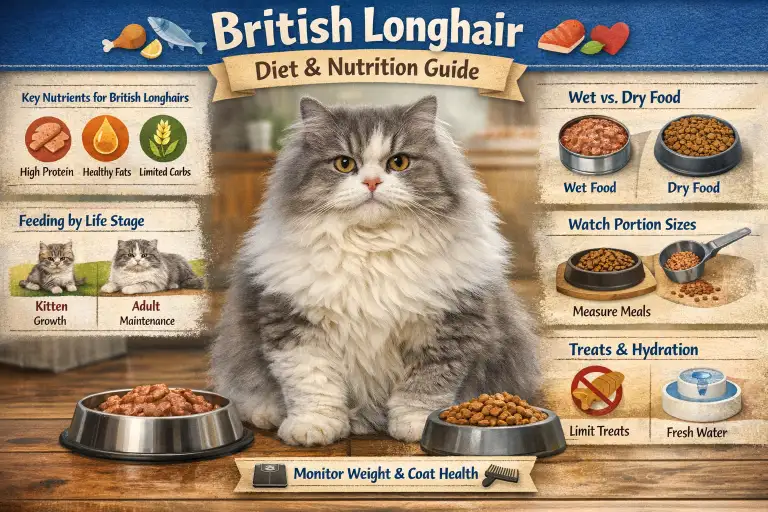
Cats are obligate carnivores. This means they must get most of their nutrients from meat. Protein is essential for maintaining muscle, supporting the immune system, and keeping the coat soft and shiny. British Longhairs especially need high-quality protein that is easy to digest. Protein from chicken, fish, or turkey is better than plant-based proteins because their bodies use it more efficiently.
Fats are also important for energy and coat health. Healthy fats keep the skin from drying out and give the luxurious British Longhair coat its shine. They also help food taste good, which encourages cats to eat a proper amount without overfeeding. Too much fat, however, can cause weight gain in this breed, so balance is key.
Carbohydrates are not required for cats but small amounts in food are usually okay. They can help give energy and make kibble hold together. The problem comes when carbs replace meat in a cat’s diet. Too many carbs can lead to extra calories and weight gain. British Longhairs, who often move slowly indoors, benefit most from diets higher in protein and moderate in fat, with limited carbs.
Best Food Choices for British Longhair Cats
Choosing the right food is one of the most important steps in caring for your British Longhair. Cats can eat wet food, dry food, or a mix of both. Wet food helps keep your cat hydrated because it contains more water. Dry food is convenient and can be left out for longer periods, but it usually has less moisture. Many owners use a mix to get the benefits of both.
British Longhairs have thick coats, which can hide weight gain. Feeding foods that are nutrient-dense but not calorie-heavy helps prevent overweight problems. It’s important to look at high-quality protein sources first and avoid fillers like corn or wheat that don’t add much nutrition.
Here is a simple comparison to help you decide:
| Food Type | Pros | Cons |
|---|---|---|
| Wet Food | High moisture, supports hydration, often high protein | Can be messy, more expensive |
| Dry Food | Convenient, helps with teeth texture, can be left out | Lower moisture, may contain more carbs |
| Mixed Feeding | Combines benefits of wet and dry | Needs careful portion control |
Always read the food label for guaranteed protein and fat content. Look for foods labeled “complete and balanced” for cats. This ensures your British Longhair is getting all the essential nutrients without needing extra supplements.
How Much to Feed a British Longhair Cat
Portion control is very important for British Longhairs because they are often indoor cats with low activity levels. Feeding too much can cause obesity, which may not be obvious under their thick coat. Feeding too little can cause weight loss and muscle problems.
A good feeding approach is to divide the daily food into two or three meals. Measure each meal according to your cat’s age, size, and activity level. Watching your cat’s body shape is more important than following the number on the food bag exactly. You should be able to feel your cat’s ribs without pressing too hard, and see a small waist when looking from above.
Recommended Dog Care Products
Based on your dog’s age, these products may help with comfort, health, grooming, and daily care.
Purina Pro Plan Veterinary Supplements
Daily probiotics for dogs to support digestive and gut health.
View on Amazon ↗
Earth Rated Poop Bags for Dogs
Leak-proof, extra thick waste bag refill rolls with lavender scent.
View on Amazon ↗
Greenies Pill Pockets for Dogs
Large dog treats for capsule medication, peanut butter flavor.
View on Amazon ↗
HONEY CARE All-Absorb Dog Wrap
Small male dog wraps, 50 count, useful for daily care support.
View on Amazon ↗
Seresto Flea & Tick Collar
Flea and tick treatment and prevention for dogs over 18 lbs.
View on Amazon ↗
Milk-Bone MaroSnacks
Small dog treats with real bone marrow in a 40 oz canister.
View on Amazon ↗
Vital Essentials Dog Treats
Freeze dried beef liver dog treats, grain free and single ingredient.
View on Amazon ↗
Stain & Odor Eliminator
Enzyme cleaner for pet stains, carpet messes, and strong odors.
View on Amazon ↗
Pur Luv Chicken Jerky Treats
Dog treats made with real chicken breast, high protein and chew-friendly.
View on Amazon ↗
Milk-Bone Flavor Snacks
Mini crunchy dog biscuits in a 36 oz canister for small rewards.
View on Amazon ↗As an Amazon Associate, we may earn from qualifying purchases.
Here’s a simple conceptual guide for portioning (for guidance only, not medical advice):
| Life Stage | Activity | Portion Notes |
|---|---|---|
| Kitten | High | Feed more frequently, smaller meals |
| Adult | Moderate | 2–3 meals daily, adjust if weight gain occurs |
| Senior | Low | Slightly smaller meals, watch protein for muscle maintenance |
Overfeeding can sneak up slowly, and underfeeding may cause low energy or coat issues. Regular observation and small adjustments are safer than changing food drastically.
Feeding British Longhairs by Age and Lifestyle
British Longhairs’ nutritional needs change as they grow. Kittens need food that helps their rapid growth and provides high energy. Adults need fewer calories but still need high-quality protein to keep muscles strong. Seniors may need food that is easier to digest while maintaining protein intake for muscle health.
Indoor cats burn fewer calories than outdoor cats. British Longhairs often prefer lounging, so it’s important to monitor their weight and adjust portions as needed. Spayed and neutered cats may also require fewer calories because their metabolism slows down slightly.
Here’s a conceptual table for life stage and lifestyle feeding focus:
| Age/Lifestyle | Feeding Focus |
|---|---|
| Kitten | High protein, frequent meals, high energy |
| Adult Indoor | Balanced protein and fat, moderate calories |
| Adult Active/Outdoor | More calories and protein for activity |
| Senior | Easily digestible protein, maintain muscle, lower calories if inactive |
Multi-cat households may need extra care to prevent overeating. Make sure each cat has access to its own portion without competition.
Treats, Hydration, and Common Feeding Mistakes
Treats can be fun, but too many can add extra calories quickly. Limit treats to small amounts and avoid feeding human food that may be toxic, like chocolate, onions, or grapes.
Hydration is important for British Longhairs. Wet food contributes water, but cats should always have fresh water available. Some cats prefer a cat fountain, which encourages drinking.
Common feeding mistakes include overfeeding because the cat seems hungry, underestimating calorie content in treats, and feeding too many high-carb foods. Watch your cat’s body condition and adjust portions before weight becomes an issue.
Here’s a helpful summary table:
Recommended Dog Care Products
Based on your dog’s age, these products may help with comfort, health, grooming, and daily care.
Purina Pro Plan Veterinary Supplements
Daily probiotics for dogs to support digestive and gut health.
View on Amazon ↗
Earth Rated Poop Bags for Dogs
Leak-proof, extra thick waste bag refill rolls with lavender scent.
View on Amazon ↗
Greenies Pill Pockets for Dogs
Large dog treats for capsule medication, peanut butter flavor.
View on Amazon ↗
HONEY CARE All-Absorb Dog Wrap
Small male dog wraps, 50 count, useful for daily care support.
View on Amazon ↗
Seresto Flea & Tick Collar
Flea and tick treatment and prevention for dogs over 18 lbs.
View on Amazon ↗
Milk-Bone MaroSnacks
Small dog treats with real bone marrow in a 40 oz canister.
View on Amazon ↗
Vital Essentials Dog Treats
Freeze dried beef liver dog treats, grain free and single ingredient.
View on Amazon ↗
Stain & Odor Eliminator
Enzyme cleaner for pet stains, carpet messes, and strong odors.
View on Amazon ↗
Pur Luv Chicken Jerky Treats
Dog treats made with real chicken breast, high protein and chew-friendly.
View on Amazon ↗
Milk-Bone Flavor Snacks
Mini crunchy dog biscuits in a 36 oz canister for small rewards.
View on Amazon ↗As an Amazon Associate, we may earn from qualifying purchases.
| Mistake | Safer Alternative |
|---|---|
| Overfeeding due to begging | Measure meals, stick to portion guide |
| Giving too many treats | Limit to 5–10% of daily calories |
| Relying on dry food only | Mix with wet food to support hydration |
| Ignoring coat changes | Monitor weight and coat condition regularly |
If your cat shows sudden weight loss, poor coat, or changes in appetite, consult a veterinarian. Regular check-ups help catch issues early.
For more detailed guidance on safe feline nutrition, owners can review the advice from International Cat Care, a trusted authority on cat health and welfare: International Cat Care Nutrition Guidance.

Ata Ur Rehman is the founder of Pet Age in Human Years Calculator, an educational platform that provides age conversion charts and lifespan guides for dogs, cats, birds, and other companion animals. His work focuses on helping pet owners understand how animal ages translate into human years using commonly accepted age conversion formulas and published lifespan averages.
The website compiles breed and species lifespan data from kennel clubs, breed organizations, and general animal lifespan studies to present simple and easy-to-understand guides for pet owners worldwide.
This website was created to centralize animal age conversion charts into one easy reference platform for pet owners.