British Longhair Kitten Care Guide for Growth and Early Health
Bringing home a British Longhair kitten is an exciting and heartwarming experience. These kittens are known for their soft, dense coats, calm personalities, and gentle nature. They are usually quiet, affectionate, and prefer to observe their surroundings rather than being constantly active. This makes them perfect companions for first-time cat owners or families who want a relaxed pet.
Recommended Dog Care Products
Based on your dog’s age, these products may help with comfort, health, grooming, and daily care.

Purina Pro Plan Veterinary Supplements
Daily probiotics for dogs to support digestive and gut health.
View on Amazon ↗
Earth Rated Poop Bags for Dogs
Leak-proof, extra thick waste bag refill rolls with lavender scent.
View on Amazon ↗
Greenies Pill Pockets for Dogs
Large dog treats for capsule medication, peanut butter flavor.
View on Amazon ↗
HONEY CARE All-Absorb Dog Wrap
Small male dog wraps, 50 count, useful for daily care support.
View on Amazon ↗
Seresto Flea & Tick Collar
Flea and tick treatment and prevention for dogs over 18 lbs.
View on Amazon ↗
Milk-Bone MaroSnacks
Small dog treats with real bone marrow in a 40 oz canister.
View on Amazon ↗
Vital Essentials Dog Treats
Freeze dried beef liver dog treats, grain free and single ingredient.
View on Amazon ↗
Stain & Odor Eliminator
Enzyme cleaner for pet stains, carpet messes, and strong odors.
View on Amazon ↗
Pur Luv Chicken Jerky Treats
Dog treats made with real chicken breast, high protein and chew-friendly.
View on Amazon ↗
Milk-Bone Flavor Snacks
Mini crunchy dog biscuits in a 36 oz canister for small rewards.
View on Amazon ↗As an Amazon Associate, we may earn from qualifying purchases.
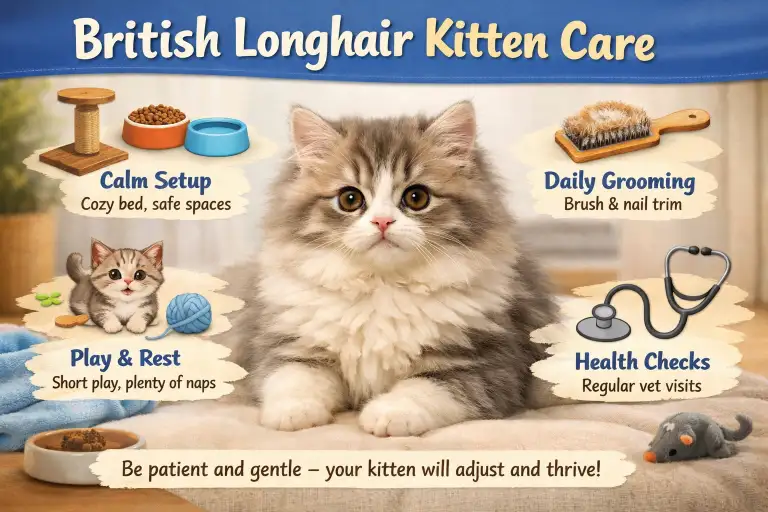
British Longhairs grow slowly compared to some other kittens. They do not have long bursts of energy but enjoy short, playful sessions followed by plenty of rest. Understanding their calm temperament helps new owners provide the right environment and patience during the first weeks.
A British Longhair kitten’s coat is thick and long, which means early grooming is important. Brushing for just a few minutes a day can prevent tangles and help your kitten get used to being handled. Starting grooming routines early also strengthens your bond and makes future care easier.
During the first few weeks in your home, your kitten will be learning about new sounds, spaces, and people. It’s normal if they hide or seem shy at first. With calm handling, gentle play, and predictable routines, they will slowly become more confident and affectionate.
| Aspect | What to Expect with a British Longhair Kitten |
|---|---|
| Temperament | Calm, gentle, quietly affectionate |
| Energy level | Moderate, with short playful bursts |
| Bonding style | Prefers nearby companionship over constant handling |
| Coat type | Dense, long coat that benefits from early grooming |
| Adaptation to new homes | May take a few days to settle in fully |
| Suitability for beginners | Very good with patient, attentive owners |
Preparing Your Home for a British Longhair Kitten
Before your kitten arrives, it’s important to make your home safe and comfortable. Choose quiet spaces for sleeping, eating, and using the litter box. British Longhairs enjoy calm environments and can be stressed by too much noise or sudden changes.
Set up a cozy bed in a warm corner where your kitten can rest undisturbed. Keep their food and water bowls in an easy-to-reach spot and place the litter box in a private area. Make sure the litter box is shallow enough for a small kitten to climb in and out easily.
Remove hazards like exposed wires, small objects they could swallow, and toxic plants. British Longhairs are curious and might explore high places, so secure shelves and make sure windows are safely closed or screened.
Provide a few toys and scratching posts. British Longhairs enjoy short play sessions, and toys help prevent boredom. A scratching post also protects your furniture and encourages natural behavior.
| Home Item | Recommended Setup |
|---|---|
| Sleeping area | Quiet, warm, with soft bedding |
| Food & water | Accessible, consistent location |
| Litter box | Private, shallow, easy to enter |
| Toys | Small, safe toys for short play sessions |
| Scratching post | Sturdy and reachable |
Feeding, Growth & Daily Routine for British Longhair Kittens
British Longhair kittens need proper nutrition to support their slow but steady growth. Feed them high-quality kitten food, and follow the age-based feeding recommendations on the package. Most kittens eat 3–4 times per day until they are around six months old.
Fresh water should always be available. Long-haired kittens can sometimes have messy faces after eating, so check and clean their mouths gently if needed. Monitor their weight weekly to ensure they are growing consistently.
Recommended Dog Care Products
Based on your dog’s age, these products may help with comfort, health, grooming, and daily care.
Purina Pro Plan Veterinary Supplements
Daily probiotics for dogs to support digestive and gut health.
View on Amazon ↗
Earth Rated Poop Bags for Dogs
Leak-proof, extra thick waste bag refill rolls with lavender scent.
View on Amazon ↗
Greenies Pill Pockets for Dogs
Large dog treats for capsule medication, peanut butter flavor.
View on Amazon ↗
HONEY CARE All-Absorb Dog Wrap
Small male dog wraps, 50 count, useful for daily care support.
View on Amazon ↗
Seresto Flea & Tick Collar
Flea and tick treatment and prevention for dogs over 18 lbs.
View on Amazon ↗
Milk-Bone MaroSnacks
Small dog treats with real bone marrow in a 40 oz canister.
View on Amazon ↗
Vital Essentials Dog Treats
Freeze dried beef liver dog treats, grain free and single ingredient.
View on Amazon ↗
Stain & Odor Eliminator
Enzyme cleaner for pet stains, carpet messes, and strong odors.
View on Amazon ↗
Pur Luv Chicken Jerky Treats
Dog treats made with real chicken breast, high protein and chew-friendly.
View on Amazon ↗
Milk-Bone Flavor Snacks
Mini crunchy dog biscuits in a 36 oz canister for small rewards.
View on Amazon ↗As an Amazon Associate, we may earn from qualifying purchases.
Sleep is just as important as play. British Longhairs take frequent naps throughout the day, often between play sessions. Try to keep a routine for feeding, play, and rest to help them feel secure.
Short play sessions two to three times a day are usually enough. Encourage exploration with toys, tunnels, or gentle interaction. Avoid over-stimulating them, as this breed tends to prefer calm and predictable activities.
| Age | Meals per Day | Notes |
|---|---|---|
| 8–12 weeks | 4 | Small portions, monitor appetite |
| 3–6 months | 3 | Adjust portions as growth slows |
| 6–12 months | 2–3 | Introduce routine adult feeding schedule |
| Daily Routine | Activity |
|---|---|
| Morning | Breakfast + 10–15 min play |
| Midday | Nap + gentle interaction |
| Afternoon | Snack + 10–15 min play |
| Evening | Dinner + grooming or quiet bonding |
| Night | Sleep in quiet area |
Grooming, Coat Care & Hygiene Basics
British Longhairs have thick, dense coats that can mat if not cared for regularly. Start brushing your kitten for a few minutes every day. Use a soft brush suitable for long-haired kittens, and focus on areas that tangle easily, like behind the ears and under the legs.
Bathing is rarely needed but you can gently wipe their face and paws with a damp cloth. Check their eyes and ears weekly for any dirt or discharge. Early grooming habits make it easier to handle future shedding and coat changes as your kitten grows.
Trim their nails carefully every couple of weeks. If your kitten resists, stop and try again later—short sessions build trust. Providing scratching posts also helps them maintain nail length naturally.
Dental hygiene is important too. You can introduce a soft kitten toothbrush or offer dental treats designed for young cats. This helps prevent tartar buildup and keeps their breath fresh as they grow.
| Grooming Task | Frequency | Notes |
|---|---|---|
| Brushing | Daily | Focus on high-tangle areas |
| Ear cleaning | Weekly | Use soft, dry cloth or vet-approved solution |
| Eye cleaning | Weekly | Wipe gently if needed |
| Nail trimming | Every 2 weeks | Short sessions, positive reinforcement |
| Dental care | Several times/week | Soft brush or kitten-safe dental treats |
Health, Behavior & Common British Longhair Kitten Mistakes
British Longhairs are usually healthy kittens, but like all cats, they need early vet visits for wellness checks. A veterinarian can monitor weight, growth, and overall development. It’s normal for kittens to hide at first, explore slowly, and take breaks from social interaction.
Common mistakes new owners make include overfeeding, skipping grooming because the kitten is small, and misinterpreting quiet behavior as illness. Understanding normal British Longhair behavior helps prevent unnecessary worry.
Play biting, scratching, and hiding are normal behaviors. Redirect play to toys, encourage gentle handling, and provide safe spaces for rest. This breed prefers predictable routines and calm handling, so patience is key.
Observing your kitten daily allows you to notice normal patterns and detect small changes early. Remember, most minor adjustments are normal as your kitten grows and learns about their new home.
Recommended Dog Care Products
Based on your dog’s age, these products may help with comfort, health, grooming, and daily care.
Purina Pro Plan Veterinary Supplements
Daily probiotics for dogs to support digestive and gut health.
View on Amazon ↗
Earth Rated Poop Bags for Dogs
Leak-proof, extra thick waste bag refill rolls with lavender scent.
View on Amazon ↗
Greenies Pill Pockets for Dogs
Large dog treats for capsule medication, peanut butter flavor.
View on Amazon ↗
HONEY CARE All-Absorb Dog Wrap
Small male dog wraps, 50 count, useful for daily care support.
View on Amazon ↗
Seresto Flea & Tick Collar
Flea and tick treatment and prevention for dogs over 18 lbs.
View on Amazon ↗
Milk-Bone MaroSnacks
Small dog treats with real bone marrow in a 40 oz canister.
View on Amazon ↗
Vital Essentials Dog Treats
Freeze dried beef liver dog treats, grain free and single ingredient.
View on Amazon ↗
Stain & Odor Eliminator
Enzyme cleaner for pet stains, carpet messes, and strong odors.
View on Amazon ↗
Pur Luv Chicken Jerky Treats
Dog treats made with real chicken breast, high protein and chew-friendly.
View on Amazon ↗
Milk-Bone Flavor Snacks
Mini crunchy dog biscuits in a 36 oz canister for small rewards.
View on Amazon ↗As an Amazon Associate, we may earn from qualifying purchases.
| Behavior / Mistake | Correct Approach |
|---|---|
| Overfeeding | Follow portion guidance by age |
| Avoiding grooming | Start short sessions daily |
| Shyness / hiding | Provide safe spaces and gentle interaction |
| Play biting / scratching | Redirect to toys, teach gentle play |
| Misreading calmness | Recognize breed’s naturally reserved temperament |
For additional guidance on British Longhair health and care, you can review expert advice from the International Cat Care website here.

Ata Ur Rehman is the founder of Pet Age in Human Years Calculator, an educational platform that provides age conversion charts and lifespan guides for dogs, cats, birds, and other companion animals. His work focuses on helping pet owners understand how animal ages translate into human years using commonly accepted age conversion formulas and published lifespan averages.
The website compiles breed and species lifespan data from kennel clubs, breed organizations, and general animal lifespan studies to present simple and easy-to-understand guides for pet owners worldwide.
This website was created to centralize animal age conversion charts into one easy reference platform for pet owners.