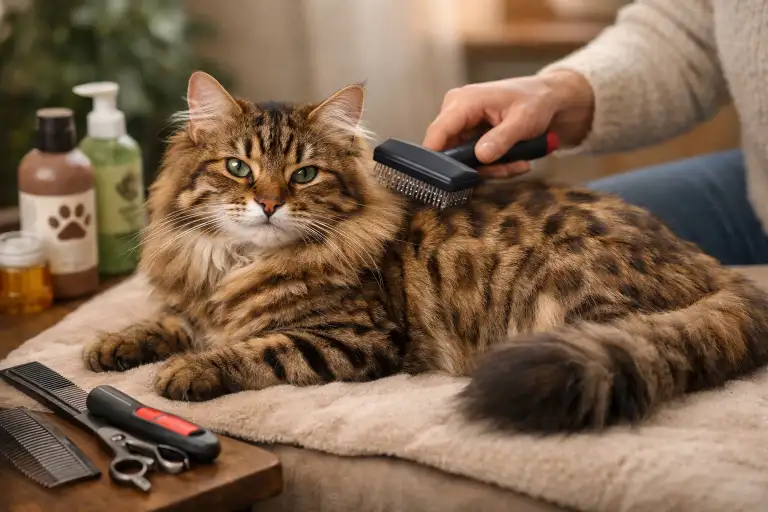
Bengal Longhair Care Guide: Grooming, Shedding, and Daily Care Tips
Bengal Longhair cats are often misunderstood when it comes to care. Many owners assume they’ll be just as low-maintenance as short-coated Bengals, while others expect the same grooming demands as very dense, heavy-coated longhair breeds. In reality, Bengal Longhair care sits somewhere in between — and getting it right early makes a huge difference to your cat’s comfort, coat health, and behavior.
Recommended Dog Care Products
Based on your dog’s age, these products may help with comfort, health, grooming, and daily care.

Purina Pro Plan Veterinary Supplements
Daily probiotics for dogs to support digestive and gut health.
View on Amazon ↗
Earth Rated Poop Bags for Dogs
Leak-proof, extra thick waste bag refill rolls with lavender scent.
View on Amazon ↗
Greenies Pill Pockets for Dogs
Large dog treats for capsule medication, peanut butter flavor.
View on Amazon ↗
HONEY CARE All-Absorb Dog Wrap
Small male dog wraps, 50 count, useful for daily care support.
View on Amazon ↗
Seresto Flea & Tick Collar
Flea and tick treatment and prevention for dogs over 18 lbs.
View on Amazon ↗
Milk-Bone MaroSnacks
Small dog treats with real bone marrow in a 40 oz canister.
View on Amazon ↗
Vital Essentials Dog Treats
Freeze dried beef liver dog treats, grain free and single ingredient.
View on Amazon ↗
Stain & Odor Eliminator
Enzyme cleaner for pet stains, carpet messes, and strong odors.
View on Amazon ↗
Pur Luv Chicken Jerky Treats
Dog treats made with real chicken breast, high protein and chew-friendly.
View on Amazon ↗
Milk-Bone Flavor Snacks
Mini crunchy dog biscuits in a 36 oz canister for small rewards.
View on Amazon ↗As an Amazon Associate, we may earn from qualifying purchases.
This guide is for current Bengal Longhair owners, new adopters, and Bengal owners whose cat’s coat has grown longer than expected. It’s also especially useful if you’re dealing with shedding, tangles, grooming resistance, or you’re unsure how much daily care is actually necessary.
Unlike generic longhair cat advice, Bengal Longhair care has to account for two things at the same time: a longer, more mat-prone coat and the high energy, athletic nature Bengals are known for. That combination affects how often you groom, where mats form, how shedding behaves, and even how stress or boredom shows up through the coat.
The goal of this guide is to help you understand what your Bengal Longhair really needs on a daily and weekly basis, how to prevent common problems like mats and grooming battles, and when home care is enough — or when it’s time to involve a professional. Everything here is written with real owner routines in mind, not idealized or unrealistic standards.
By the end, you should have a clear, manageable care approach that fits into everyday life and keeps your Bengal Longhair comfortable, healthy, and easier to live with long-term.
Understanding Bengal Longhair Care Needs (Coat, Energy, and Behavior)
To care for a Bengal Longhair properly, you need to understand how their coat and personality work together. This is not just a “longhair cat” and not just a “Bengal.” It is a mix of both, and that changes daily care.
Bengal Longhairs usually have a softer and longer coat than standard Bengals, but it is not always very thick. Because of this, many owners think mats won’t happen. In real life, mats often form in areas where the cat moves the most, such as under the arms, behind the ears, around the neck, and near the back legs.
Bengals are very active cats. They jump, climb, run, and play more than most cats. All this movement causes the fur to rub together, which leads to tangles and shedding even if the coat looks fine at first. High energy also means their coat picks up more dirt, loose hair, and oils.
Behavior is closely connected to coat health. When a Bengal Longhair is bored, stressed, or not getting enough play, it may overgroom, pull at its fur, or refuse brushing. Many owners think this is a grooming problem, but it is often a stress or routine issue.
Here are some simple care realities to keep in mind:
Recommended Dog Care Products
Based on your dog’s age, these products may help with comfort, health, grooming, and daily care.
Purina Pro Plan Veterinary Supplements
Daily probiotics for dogs to support digestive and gut health.
View on Amazon ↗
Earth Rated Poop Bags for Dogs
Leak-proof, extra thick waste bag refill rolls with lavender scent.
View on Amazon ↗
Greenies Pill Pockets for Dogs
Large dog treats for capsule medication, peanut butter flavor.
View on Amazon ↗
HONEY CARE All-Absorb Dog Wrap
Small male dog wraps, 50 count, useful for daily care support.
View on Amazon ↗
Seresto Flea & Tick Collar
Flea and tick treatment and prevention for dogs over 18 lbs.
View on Amazon ↗
Milk-Bone MaroSnacks
Small dog treats with real bone marrow in a 40 oz canister.
View on Amazon ↗
Vital Essentials Dog Treats
Freeze dried beef liver dog treats, grain free and single ingredient.
View on Amazon ↗
Stain & Odor Eliminator
Enzyme cleaner for pet stains, carpet messes, and strong odors.
View on Amazon ↗
Pur Luv Chicken Jerky Treats
Dog treats made with real chicken breast, high protein and chew-friendly.
View on Amazon ↗
Milk-Bone Flavor Snacks
Mini crunchy dog biscuits in a 36 oz canister for small rewards.
View on Amazon ↗As an Amazon Associate, we may earn from qualifying purchases.
- Bengal Longhairs are not low maintenance, but they are manageable with a routine
- Shedding happens year-round, not just in certain seasons
- Coat problems often start small and get worse fast if ignored
- Good care includes grooming, play, and calm handling
Understanding these basics makes the rest of the care routine much easier. When you work with your cat’s coat type and energy level instead of against them, grooming becomes quicker and less stressful for both of you.
Bengal Longhair Grooming Routine (Daily, Weekly, and Occasional Care)
A simple grooming routine keeps a Bengal Longhair comfortable and prevents big problems later. You do not need long grooming sessions every day. Short, regular care works much better.
Daily care is mostly about quick checks. Run your fingers through your cat’s coat once a day. Feel for small tangles, especially under the arms, behind the ears, around the neck, and near the back legs. These spots mat faster because your cat moves a lot. If you find a small tangle, gently brush it right away before it gets worse.
Daily brushing is not always needed, but light brushing every day or every other day helps remove loose hair. This reduces shedding around your home and lowers the chance of hairballs.
Weekly care is when full grooming should happen. This is the time to brush the whole body slowly and calmly. Always brush in the direction the hair grows. Take breaks if your cat gets restless. Short sessions are better than forcing it.
Bathing is only needed sometimes. Most Bengal Longhairs do not need regular baths. A bath may help if the coat feels greasy, smells bad, or has dirt stuck in it. Too many baths can dry out the skin and make coat problems worse.
Here is a simple grooming schedule you can follow:
| Grooming Task | How Often | Why It Helps |
|---|---|---|
| Quick coat check | Daily | Finds small tangles early |
| Light brushing | Daily or every other day | Controls shedding |
| Full brushing | Once a week | Prevents mats and hairballs |
| Mat check | Daily | Mats get tight very fast |
| Bathing | Only when needed | Removes heavy dirt or oil |
Try to groom your cat when they are calm, not full of energy. After playtime or before a nap is usually best. Speak softly and move slowly so grooming feels safe and normal.
Common Bengal Longhair Care Problems and Mistakes (And How to Fix Them)
Many Bengal Longhair care problems start small and get worse over time. Most of them happen because owners do not know what to look for or believe common myths about this coat type.
One of the most common problems is matting. Mats often form even when owners brush regularly. This usually happens because the wrong brush is used or brushing is too fast. Slow brushing, done in small sections, works much better than quick full-body brushing.
Recommended Dog Care Products
Based on your dog’s age, these products may help with comfort, health, grooming, and daily care.
Purina Pro Plan Veterinary Supplements
Daily probiotics for dogs to support digestive and gut health.
View on Amazon ↗
Earth Rated Poop Bags for Dogs
Leak-proof, extra thick waste bag refill rolls with lavender scent.
View on Amazon ↗
Greenies Pill Pockets for Dogs
Large dog treats for capsule medication, peanut butter flavor.
View on Amazon ↗
HONEY CARE All-Absorb Dog Wrap
Small male dog wraps, 50 count, useful for daily care support.
View on Amazon ↗
Seresto Flea & Tick Collar
Flea and tick treatment and prevention for dogs over 18 lbs.
View on Amazon ↗
Milk-Bone MaroSnacks
Small dog treats with real bone marrow in a 40 oz canister.
View on Amazon ↗
Vital Essentials Dog Treats
Freeze dried beef liver dog treats, grain free and single ingredient.
View on Amazon ↗
Stain & Odor Eliminator
Enzyme cleaner for pet stains, carpet messes, and strong odors.
View on Amazon ↗
Pur Luv Chicken Jerky Treats
Dog treats made with real chicken breast, high protein and chew-friendly.
View on Amazon ↗
Milk-Bone Flavor Snacks
Mini crunchy dog biscuits in a 36 oz canister for small rewards.
View on Amazon ↗As an Amazon Associate, we may earn from qualifying purchases.
Another common issue is a cat that hates being brushed. This does not always mean the cat is “bad” or stubborn. In many cases, brushing hurts because mats are pulling the skin, or the cat is already stressed or bored. Short grooming sessions, calm timing, and gentle tools help build trust over time.
Shedding is also misunderstood. Bengal Longhairs shed more than short-haired Bengals, and shedding happens all year. Brushing helps, but it will not stop shedding completely. Regular grooming controls loose hair and keeps it from spreading around your home.
Some owners think shaving is the best solution for mats or shedding. Shaving usually causes more problems. It can damage the coat, upset the cat, and make skin problems worse. Shaving should only be done by a professional and only when truly needed.
Here are common problems and what actually helps:
| Problem | Why It Happens | What Helps |
|---|---|---|
| Mats keep coming back | Wrong brushing method | Slow, gentle brushing |
| Cat fights brushing | Stress or pain | Short calm sessions |
| Heavy shedding | Normal coat cycle | Regular light brushing |
| Overgrooming | Boredom or stress | More play and routine |
| Skin redness | Tool or mat damage | Stop grooming and get help |
Fixing these problems early makes grooming easier and keeps your cat more comfortable. Most issues are not serious if handled quickly.
Special Care Situations, Safety Tips, and When to Get Professional Help
Some Bengal Longhairs need extra care at different times in their life. Knowing when to change your routine helps prevent pain and stress.
Kittens should learn grooming early. Start with very short sessions and gentle touches. Use your hands first before using brushes. This helps kittens feel safe and learn that grooming is normal.
Older Bengal Longhairs may stop grooming themselves well. Stiff joints, pain, or low energy can make brushing uncomfortable for them. These cats need more help, but grooming should be slow and gentle. Never force a senior cat to sit for long periods.
In homes with more than one cat, coats can pick up fur, dirt, and oils from other cats. Stress between cats can also lead to overgrooming. Each cat should have its own grooming time and tools if possible.
Indoor cats still need grooming. Dust, loose hair, and litter can stick to the coat. Cats that go outside may bring in dirt, leaves, or bugs, which means their coat should be checked more often.
Recommended Dog Care Products
Based on your dog’s age, these products may help with comfort, health, grooming, and daily care.
Purina Pro Plan Veterinary Supplements
Daily probiotics for dogs to support digestive and gut health.
View on Amazon ↗
Earth Rated Poop Bags for Dogs
Leak-proof, extra thick waste bag refill rolls with lavender scent.
View on Amazon ↗
Greenies Pill Pockets for Dogs
Large dog treats for capsule medication, peanut butter flavor.
View on Amazon ↗
HONEY CARE All-Absorb Dog Wrap
Small male dog wraps, 50 count, useful for daily care support.
View on Amazon ↗
Seresto Flea & Tick Collar
Flea and tick treatment and prevention for dogs over 18 lbs.
View on Amazon ↗
Milk-Bone MaroSnacks
Small dog treats with real bone marrow in a 40 oz canister.
View on Amazon ↗
Vital Essentials Dog Treats
Freeze dried beef liver dog treats, grain free and single ingredient.
View on Amazon ↗
Stain & Odor Eliminator
Enzyme cleaner for pet stains, carpet messes, and strong odors.
View on Amazon ↗
Pur Luv Chicken Jerky Treats
Dog treats made with real chicken breast, high protein and chew-friendly.
View on Amazon ↗
Milk-Bone Flavor Snacks
Mini crunchy dog biscuits in a 36 oz canister for small rewards.
View on Amazon ↗As an Amazon Associate, we may earn from qualifying purchases.
Some problems should never be handled at home. Tight mats, skin redness, sudden pain during brushing, or changes in behavior are warning signs. These can mean skin problems or hidden pain.
Here is a simple guide to know when to get help:
| Situation | Home Care | Get Help |
|---|---|---|
| Small loose tangles | Yes | No |
| Tight or hard mats | No | Yes |
| Red or sore skin | No | Yes |
| Sudden brushing pain | No | Yes |
| Cat stops grooming | No | Yes |
A professional groomer or a veterinarian knows how to handle these problems safely. Getting help early prevents bigger health issues later.
For more expert guidance on feline grooming, coat care, and overall cat health, you can also refer to the American Association of Feline Practitioners, which provides veterinarian-approved resources for cat owners on proper care and wellbeing.

Ata Ur Rehman is the founder of Pet Age in Human Years Calculator, an educational platform that provides age conversion charts and lifespan guides for dogs, cats, birds, and other companion animals. His work focuses on helping pet owners understand how animal ages translate into human years using commonly accepted age conversion formulas and published lifespan averages.
The website compiles breed and species lifespan data from kennel clubs, breed organizations, and general animal lifespan studies to present simple and easy-to-understand guides for pet owners worldwide.
This website was created to centralize animal age conversion charts into one easy reference platform for pet owners.