Bengal Longhair (Cashmere Bengal): Complete Breed Guide
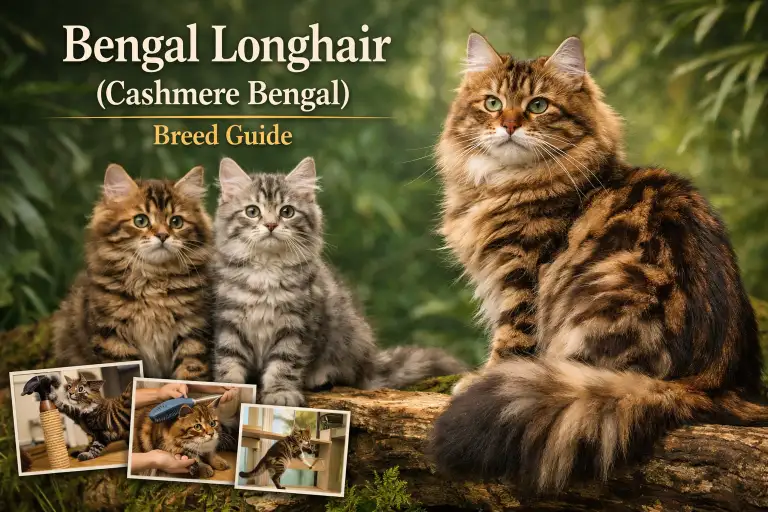
A Bengal Longhair, often called a Cashmere Bengal, is a Bengal cat that carries a recessive longhair gene, resulting in a semi-long to long, silky coat instead of the traditional short coat seen in most Bengals. In every other meaningful way—athletic build, bold rosetted patterns, high intelligence, and energetic personality—this cat is still very much a Bengal.
Recommended Dog Care Products
Based on your dog’s age, these products may help with comfort, health, grooming, and daily care.

Purina Pro Plan Veterinary Supplements
Daily probiotics for dogs to support digestive and gut health.
View on Amazon ↗
Earth Rated Poop Bags for Dogs
Leak-proof, extra thick waste bag refill rolls with lavender scent.
View on Amazon ↗
Greenies Pill Pockets for Dogs
Large dog treats for capsule medication, peanut butter flavor.
View on Amazon ↗
HONEY CARE All-Absorb Dog Wrap
Small male dog wraps, 50 count, useful for daily care support.
View on Amazon ↗
Seresto Flea & Tick Collar
Flea and tick treatment and prevention for dogs over 18 lbs.
View on Amazon ↗
Milk-Bone MaroSnacks
Small dog treats with real bone marrow in a 40 oz canister.
View on Amazon ↗
Vital Essentials Dog Treats
Freeze dried beef liver dog treats, grain free and single ingredient.
View on Amazon ↗
Stain & Odor Eliminator
Enzyme cleaner for pet stains, carpet messes, and strong odors.
View on Amazon ↗
Pur Luv Chicken Jerky Treats
Dog treats made with real chicken breast, high protein and chew-friendly.
View on Amazon ↗
Milk-Bone Flavor Snacks
Mini crunchy dog biscuits in a 36 oz canister for small rewards.
View on Amazon ↗As an Amazon Associate, we may earn from qualifying purchases.
The long coat isn’t the result of crossbreeding with longhaired cats. It appears naturally when two Bengal parents that both carry the hidden longhair gene produce a kitten that inherits the gene from each side. Because the gene is recessive, longhaired Bengals are relatively rare compared to standard Bengals, which is why many people encounter them for the first time and assume they are a separate breed.
You may see these cats referred to by different names depending on the breeder or community:
- Bengal Longhair
- Long-haired Bengal cat
- Cashmere Bengal
All of these describe the same coat variation.
In terms of recognition, longhaired Bengals are generally not shown in championship classes by most major cat registries, which traditionally define the Bengal as a shorthaired breed. However, they are widely accepted as purebred Bengals when their lineage is properly documented. For pet owners, this distinction matters far less than it does in the show world—what you get is the Bengal look and personality paired with a softer, flowing coat.
Many people are drawn to Bengal Longhairs because they combine:
- The wild, rosetted appearance of a Bengal
- A plusher, more dramatic coat
- A slightly softer visual expression that some owners find more “luxurious” or approachable
There’s also a common belief that Bengal Longhairs are calmer or easier than shorthaired Bengals. While individual cats vary, coat length alone does not change the core Bengal temperament. These cats are still active, curious, and mentally demanding—just wrapped in more fur.
In short, a Bengal Longhair isn’t a different breed or a designer hybrid. It’s a naturally occurring, less common expression of the Bengal cat, prized by owners who love Bengal energy and intelligence but prefer a longer, flowing coat.
Appearance, Size, Coat & Physical Traits
At first glance, a Bengal Longhair looks like a regular Bengal with extra fur—but when you spend more time with one, the differences become clearer. The longer coat changes how the cat looks, moves, and even how big it appears.
Recommended Dog Care Products
Based on your dog’s age, these products may help with comfort, health, grooming, and daily care.
Purina Pro Plan Veterinary Supplements
Daily probiotics for dogs to support digestive and gut health.
View on Amazon ↗
Earth Rated Poop Bags for Dogs
Leak-proof, extra thick waste bag refill rolls with lavender scent.
View on Amazon ↗
Greenies Pill Pockets for Dogs
Large dog treats for capsule medication, peanut butter flavor.
View on Amazon ↗
HONEY CARE All-Absorb Dog Wrap
Small male dog wraps, 50 count, useful for daily care support.
View on Amazon ↗
Seresto Flea & Tick Collar
Flea and tick treatment and prevention for dogs over 18 lbs.
View on Amazon ↗
Milk-Bone MaroSnacks
Small dog treats with real bone marrow in a 40 oz canister.
View on Amazon ↗
Vital Essentials Dog Treats
Freeze dried beef liver dog treats, grain free and single ingredient.
View on Amazon ↗
Stain & Odor Eliminator
Enzyme cleaner for pet stains, carpet messes, and strong odors.
View on Amazon ↗
Pur Luv Chicken Jerky Treats
Dog treats made with real chicken breast, high protein and chew-friendly.
View on Amazon ↗
Milk-Bone Flavor Snacks
Mini crunchy dog biscuits in a 36 oz canister for small rewards.
View on Amazon ↗As an Amazon Associate, we may earn from qualifying purchases.
Bengal Longhairs are medium to large cats with a strong, athletic body. They are not fluffy in a round or bulky way. Under the coat, the body is lean, muscular, and built for movement.
Size and weight
- Adult males usually weigh 10–15 pounds
- Adult females are smaller, around 7–12 pounds
- They often look bigger than shorthaired Bengals because of the longer coat, even when the weight is similar
Body shape
- Long, powerful body
- Strong legs and wide shoulders
- Deep chest and solid bone structure
- Smooth, confident movement
These cats are made to jump, climb, and run. The long coat does not slow them down.
Coat type and texture
The coat is semi-long to long, not thick or woolly. Most Bengal Longhairs have:
- Soft, silky fur
- A flowing look along the sides and tail
- Slight feathering on the legs, belly, and chest
- A long, plume-like tail
The coat often feels lighter and smoother than other longhaired cats.
Colors and patterns
Bengal Longhairs come in the same patterns and colors as regular Bengals, including:
- Spotted or rosetted patterns
- Marbled patterns
- Brown, snow, silver, and charcoal colors
The famous Bengal rosettes are still there, but they may look softer or slightly blurred because of the longer fur.
Shedding and seasonal changes
- Shedding is moderate
- Coat may become thicker in cooler months
- Fur often looks lighter and shorter in warmer seasons
Quick overview table
| Feature | What to Expect |
|---|---|
| Size | Medium to large |
| Weight | 7–15 pounds |
| Body type | Athletic and muscular |
| Coat length | Semi-long to long |
| Coat texture | Soft and silky |
| Shedding | Moderate |
| Tail | Long and plume-like |
Overall, the Bengal Longhair keeps the wild, sporty look of a Bengal but adds a softer, more elegant coat that many people find eye-catching and unique.
Temperament, Personality & Behavior
Bengal Longhairs are smart, active, and curious cats. The long coat may make them look calm and gentle, but inside they still have the bold personality of a Bengal.
These cats like to be involved in everything. If you are doing something, they want to see it, touch it, or climb on it.
Recommended Dog Care Products
Based on your dog’s age, these products may help with comfort, health, grooming, and daily care.
Purina Pro Plan Veterinary Supplements
Daily probiotics for dogs to support digestive and gut health.
View on Amazon ↗
Earth Rated Poop Bags for Dogs
Leak-proof, extra thick waste bag refill rolls with lavender scent.
View on Amazon ↗
Greenies Pill Pockets for Dogs
Large dog treats for capsule medication, peanut butter flavor.
View on Amazon ↗
HONEY CARE All-Absorb Dog Wrap
Small male dog wraps, 50 count, useful for daily care support.
View on Amazon ↗
Seresto Flea & Tick Collar
Flea and tick treatment and prevention for dogs over 18 lbs.
View on Amazon ↗
Milk-Bone MaroSnacks
Small dog treats with real bone marrow in a 40 oz canister.
View on Amazon ↗
Vital Essentials Dog Treats
Freeze dried beef liver dog treats, grain free and single ingredient.
View on Amazon ↗
Stain & Odor Eliminator
Enzyme cleaner for pet stains, carpet messes, and strong odors.
View on Amazon ↗
Pur Luv Chicken Jerky Treats
Dog treats made with real chicken breast, high protein and chew-friendly.
View on Amazon ↗
Milk-Bone Flavor Snacks
Mini crunchy dog biscuits in a 36 oz canister for small rewards.
View on Amazon ↗As an Amazon Associate, we may earn from qualifying purchases.
Personality traits you’ll notice
- Very intelligent and quick to learn
- Curious and alert
- Confident, not shy
- Enjoys human company but on their own terms
They often bond closely with one or two people in the home.
Energy level and activity
Bengal Longhairs have high energy.
- They love running, jumping, and climbing
- Tall cat trees and shelves are important
- Short play sessions several times a day work best
If they get bored, they may knock things over or get into trouble.
Affection and independence
- Some enjoy cuddles, some prefer sitting close instead
- Not all are lap cats
- They like attention but also need space
They usually want to be near you, even if they don’t want to be held.
Vocal behavior
- More talkative than many cat breeds
- May chirp, meow, or “talk back”
- Often use sound to ask for play or food
Night activity is common, especially if they don’t get enough play during the day.
Common behavior challenges
- Climbing curtains or furniture
- Opening doors or cabinets
- Getting bored easily
- Demanding attention
These are not bad behaviors—they are signs of a smart cat that needs activity.
Personality snapshot table
| Trait | Level |
|---|---|
| Energy | High |
| Intelligence | Very high |
| Affection | Medium to high |
| Independence | Medium |
| Vocal | Medium to high |
| Boredom tolerance | Low |
| Playfulness | Very high |
Many people ask if Bengal Longhairs are calmer than shorthaired Bengals. The truth is coat length does not change personality. Some individuals may seem calmer, but most still need daily play, mental activity, and attention.
This breed is best for people who enjoy an active, playful, and interactive cat.
Daily Care, Grooming, Health & Lifespan
Caring for a Bengal Longhair is not hard, but it does take time and routine. These cats do best when their daily needs are met in a simple, regular way.
Grooming needs
Bengal Longhairs have a soft, flowing coat that stays in good shape with light care.
Recommended Dog Care Products
Based on your dog’s age, these products may help with comfort, health, grooming, and daily care.
Purina Pro Plan Veterinary Supplements
Daily probiotics for dogs to support digestive and gut health.
View on Amazon ↗
Earth Rated Poop Bags for Dogs
Leak-proof, extra thick waste bag refill rolls with lavender scent.
View on Amazon ↗
Greenies Pill Pockets for Dogs
Large dog treats for capsule medication, peanut butter flavor.
View on Amazon ↗
HONEY CARE All-Absorb Dog Wrap
Small male dog wraps, 50 count, useful for daily care support.
View on Amazon ↗
Seresto Flea & Tick Collar
Flea and tick treatment and prevention for dogs over 18 lbs.
View on Amazon ↗
Milk-Bone MaroSnacks
Small dog treats with real bone marrow in a 40 oz canister.
View on Amazon ↗
Vital Essentials Dog Treats
Freeze dried beef liver dog treats, grain free and single ingredient.
View on Amazon ↗
Stain & Odor Eliminator
Enzyme cleaner for pet stains, carpet messes, and strong odors.
View on Amazon ↗
Pur Luv Chicken Jerky Treats
Dog treats made with real chicken breast, high protein and chew-friendly.
View on Amazon ↗
Milk-Bone Flavor Snacks
Mini crunchy dog biscuits in a 36 oz canister for small rewards.
View on Amazon ↗As an Amazon Associate, we may earn from qualifying purchases.
- Brush 2–3 times a week to remove loose hair
- Extra brushing during shedding seasons
- Mats are uncommon but may form behind the ears or under the legs
- Most tolerate brushing well if started young
Baths are usually not needed often. Some Bengals enjoy water, but many do fine with brushing alone.
Shedding level
- Shedding is moderate
- More shedding in spring and fall
- Less fur around the house than many thick-coated longhair cats
Basic care tasks
- Trim nails every few weeks
- Check ears for dirt or wax
- Brush teeth if possible, or use dental treats
- Keep litter boxes very clean (they notice!)
Health overview
Bengal Longhairs are generally healthy cats, but they share the same health risks as other Bengals.
- Some lines may have heart or genetic issues
- Responsible breeders test their cats
- Regular vet checkups are important
The long coat itself does not cause extra health problems.
Lifespan
- Average lifespan is 12–16 years
- Good diet, indoor living, and regular care can help them live longer
Care summary table
| Care Area | What to Expect |
|---|---|
| Grooming | Moderate |
| Brushing | 2–3 times per week |
| Shedding | Moderate |
| Health level | Generally healthy |
| Lifespan | 12–16 years |
| Vet visits | Yearly or as advised |
With regular grooming, daily play, and good health care, Bengal Longhairs can live long, active, and happy lives.
Cost, Suitability & Comparisons (Is This the Right Cat for You?)
Before choosing a Bengal Longhair, it’s important to understand how much they cost and what kind of home they do best in. This breed is beautiful and fun, but not the best match for everyone.
Cost to own a Bengal Longhair
Bengal Longhairs usually cost more than regular Bengals because they are rare.
- Kitten price often ranges from $1,500 to $3,500
- Prices depend on breeder, coat quality, and location
- Longhair does not mean better health, just rarity
Ongoing costs include:
- Quality food
- Toys and climbing furniture
- Grooming tools
- Regular vet visits
- Possible pet insurance
They are not a low-cost breed, especially in the first year.
Is this breed right for your home?
Bengal Longhairs do best with owners who understand active cats.
They may be a good fit if you:
- Want a playful, smart cat
- Can spend time playing every day
- Enjoy interactive pets
- Can provide climbing space
They may not be a good fit if you:
- Want a quiet, lazy cat
- Are away from home most of the day
- Prefer a low-energy lap cat
- Don’t want grooming at all
Living situation
- Apartments: Possible, but only with toys and vertical space
- Families with kids: Best with older children who respect cats
- First-time owners: Can be challenging but not impossible
- Multi-pet homes: Often fine with proper introductions
- Indoor vs outdoor: Safer as indoor-only cats
Comparison table
| Breed | Energy Level | Grooming Needs | Cost | Best For |
|---|---|---|---|---|
| Bengal Longhair | High | Moderate | High | Active homes |
| Bengal (short hair) | Very high | Low | High | Very active owners |
| Maine Coon | Medium | High | High | Calm families |
| Siberian | Medium | Moderate | Medium–high | Balanced homes |
Final thoughts
A Bengal Longhair is a beautiful, intelligent, and active cat. They are best for people who enjoy playful pets and can meet their daily needs. If you want a calm or low-effort cat, this may not be the right choice.
For official information about Bengal breed standards and registration, you can visit the The International Cat Association, which provides detailed, authoritative resources on Bengals and their recognized traits.

Ata Ur Rehman is the founder of Pet Age in Human Years Calculator, an educational platform that provides age conversion charts and lifespan guides for dogs, cats, birds, and other companion animals. His work focuses on helping pet owners understand how animal ages translate into human years using commonly accepted age conversion formulas and published lifespan averages.
The website compiles breed and species lifespan data from kennel clubs, breed organizations, and general animal lifespan studies to present simple and easy-to-understand guides for pet owners worldwide.
This website was created to centralize animal age conversion charts into one easy reference platform for pet owners.