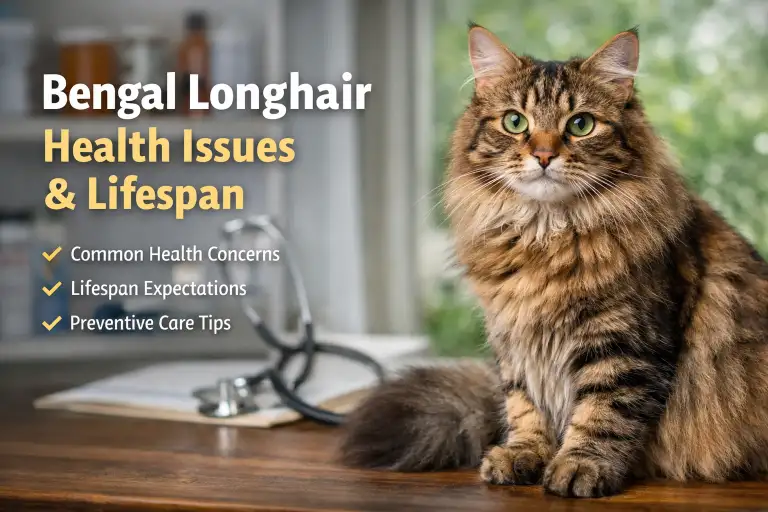
Bengal Longhair Health Issues and Lifespan: What Owners Should Know
Bengal Longhair cats generally enjoy a long, active lifespan, especially when kept indoors and supported with consistent preventive care. While every cat is an individual, most Bengal Longhairs live around 12 to 16 years, with many reaching their late teens under favorable conditions.
Recommended Dog Care Products
Based on your dog’s age, these products may help with comfort, health, grooming, and daily care.

Purina Pro Plan Veterinary Supplements
Daily probiotics for dogs to support digestive and gut health.
View on Amazon ↗
Earth Rated Poop Bags for Dogs
Leak-proof, extra thick waste bag refill rolls with lavender scent.
View on Amazon ↗
Greenies Pill Pockets for Dogs
Large dog treats for capsule medication, peanut butter flavor.
View on Amazon ↗
HONEY CARE All-Absorb Dog Wrap
Small male dog wraps, 50 count, useful for daily care support.
View on Amazon ↗
Seresto Flea & Tick Collar
Flea and tick treatment and prevention for dogs over 18 lbs.
View on Amazon ↗
Milk-Bone MaroSnacks
Small dog treats with real bone marrow in a 40 oz canister.
View on Amazon ↗
Vital Essentials Dog Treats
Freeze dried beef liver dog treats, grain free and single ingredient.
View on Amazon ↗
Stain & Odor Eliminator
Enzyme cleaner for pet stains, carpet messes, and strong odors.
View on Amazon ↗
Pur Luv Chicken Jerky Treats
Dog treats made with real chicken breast, high protein and chew-friendly.
View on Amazon ↗
Milk-Bone Flavor Snacks
Mini crunchy dog biscuits in a 36 oz canister for small rewards.
View on Amazon ↗As an Amazon Associate, we may earn from qualifying purchases.
Their lifespan is broadly similar to that of standard Bengal cats, as coat length alone does not determine longevity. What matters far more is genetics, lifestyle, environment, and long-term health monitoring. Well-bred Bengal Longhairs raised indoors, fed appropriately, mentally stimulated, and seen regularly by a veterinarian often live longer than average.
One of the biggest influences on lifespan is whether a Bengal Longhair lives indoors or outdoors. Outdoor access increases exposure to accidents, infectious diseases, parasites, and environmental stressors, which can shorten life expectancy. Indoor cats, by contrast, benefit from controlled surroundings and earlier detection of subtle health changes.
The table below offers a quick, realistic snapshot of lifespan expectations based on lifestyle, not guarantees.
| Lifestyle | Typical Lifespan Range | Key Influencing Factors |
|---|---|---|
| Indoor only | 14–18 years | Reduced injury risk, controlled diet, routine vet care |
| Mostly indoor with limited outdoor access | 12–15 years | Supervised exposure, parasite prevention, environment safety |
| Free-roaming outdoor | 8–12 years | Traffic, fights, infections, limited health monitoring |
It’s important to view these ranges as contextual averages, not predictions. Some Bengal Longhairs exceed expectations, while others may face health challenges earlier despite excellent care. Longevity is best understood as the result of many small, consistent choices over time, rather than a single defining factor.
In the next section, we’ll look more closely at what influences a Bengal Longhair’s health and longevity, and how owners can support a longer, healthier life without overmedicalizing or creating unnecessary worry.
What Affects a Bengal Longhair’s Health and Longevity
A Bengal Longhair’s health is shaped by many everyday factors, not just genetics. While good breeding matters, daily care and environment play a much bigger role in how long and how well these cats live.
One important factor is genetics. Cats from responsible breeders are more likely to have fewer inherited health risks. Still, even well-bred cats can develop health problems, which is why ongoing care matters.
Diet and body weight also affect long-term health. Cats that maintain a healthy weight tend to have fewer joint, heart, and metabolic problems as they age. Overfeeding or poor-quality food can slowly impact health over time, even if problems are not obvious at first.
Bengal Longhairs are known for being active and intelligent. Regular play helps keep their muscles strong, supports heart health, and prevents boredom-related stress. Mental stimulation is just as important as physical activity for this breed.
Recommended Dog Care Products
Based on your dog’s age, these products may help with comfort, health, grooming, and daily care.
Purina Pro Plan Veterinary Supplements
Daily probiotics for dogs to support digestive and gut health.
View on Amazon ↗
Earth Rated Poop Bags for Dogs
Leak-proof, extra thick waste bag refill rolls with lavender scent.
View on Amazon ↗
Greenies Pill Pockets for Dogs
Large dog treats for capsule medication, peanut butter flavor.
View on Amazon ↗
HONEY CARE All-Absorb Dog Wrap
Small male dog wraps, 50 count, useful for daily care support.
View on Amazon ↗
Seresto Flea & Tick Collar
Flea and tick treatment and prevention for dogs over 18 lbs.
View on Amazon ↗
Milk-Bone MaroSnacks
Small dog treats with real bone marrow in a 40 oz canister.
View on Amazon ↗
Vital Essentials Dog Treats
Freeze dried beef liver dog treats, grain free and single ingredient.
View on Amazon ↗
Stain & Odor Eliminator
Enzyme cleaner for pet stains, carpet messes, and strong odors.
View on Amazon ↗
Pur Luv Chicken Jerky Treats
Dog treats made with real chicken breast, high protein and chew-friendly.
View on Amazon ↗
Milk-Bone Flavor Snacks
Mini crunchy dog biscuits in a 36 oz canister for small rewards.
View on Amazon ↗As an Amazon Associate, we may earn from qualifying purchases.
The home environment matters more than many owners realize. Calm, predictable spaces help reduce stress, especially in busy households. Chronic stress can affect digestion, immune health, and behavior over time.
Because Bengal Longhairs have a longer coat, grooming and skin care play a role in overall health. Regular brushing helps prevent matting, reduces hair ingestion, and allows owners to notice skin changes early.
Finally, routine veterinary care supports early detection. Regular checkups help catch small changes before they turn into bigger concerns. This does not mean frequent testing, but rather steady, preventive monitoring throughout life.
Together, these factors shape health gradually. No single choice determines a cat’s future, but consistent, balanced care makes a real difference.
Common Health Issues Seen in Bengal Longhair Cats
Bengal Longhair cats are often strong and active, but like all breeds, they can be more likely to face certain health concerns. This does not mean every cat will develop these problems. It simply helps owners know what to watch for over time.
Most health issues linked to Bengal Longhairs are shared with other Bengal cats, since coat length does not change the breed’s genetics. Many cats live full lives without serious illness, especially with early care and regular checkups.
Some health areas that may need attention include:
- Heart health
Some Bengal lines have a higher risk of heart-related conditions. These issues often develop slowly and may not show clear signs early on, which is why routine vet visits are important. - Digestive sensitivity
Bengals can have sensitive stomachs. Changes in appetite, stool, or frequent vomiting should never be ignored, even if the cat seems active otherwise. - Dental and oral health
Dental disease is common in many cats, including Bengal Longhairs. Poor dental health can affect eating, comfort, and overall health if left unnoticed. - Urinary tract health
Some cats may be prone to urinary issues, especially if they do not drink enough water or experience stress. - Skin and coat concerns
The longer coat can trap dirt or hide skin problems. Regular brushing helps owners notice changes early. - Weight and metabolism
Even active cats can gain weight as they age. Extra weight can place stress on joints and internal organs over time.
The table below gives a simple overview of these health areas and how owners can focus on prevention rather than worry.
| Health Area | What It Usually Involves | Preventive Focus |
|---|---|---|
| Heart | Changes that may develop quietly | Routine vet checks, early monitoring |
| Digestion | Sensitive stomach or food reactions | Consistent diet, watching appetite and stool |
| Dental | Tartar, gum problems | Regular oral checks and cleanings |
| Urinary | Litter box changes or discomfort | Hydration, stress reduction |
| Skin & coat | Matting or hidden irritation | Regular brushing and skin checks |
| Weight | Gradual weight gain | Balanced feeding and daily activity |
It’s important to remember that risk does not equal destiny. Many Bengal Longhair cats never experience serious health problems and stay energetic well into old age.
Preventive Care, Early Detection, and Aging Considerations
Preventive care means supporting health before problems grow, not waiting until a cat seems sick. For Bengal Longhairs, this steady approach can make a big difference over time.
Recommended Dog Care Products
Based on your dog’s age, these products may help with comfort, health, grooming, and daily care.
Purina Pro Plan Veterinary Supplements
Daily probiotics for dogs to support digestive and gut health.
View on Amazon ↗
Earth Rated Poop Bags for Dogs
Leak-proof, extra thick waste bag refill rolls with lavender scent.
View on Amazon ↗
Greenies Pill Pockets for Dogs
Large dog treats for capsule medication, peanut butter flavor.
View on Amazon ↗
HONEY CARE All-Absorb Dog Wrap
Small male dog wraps, 50 count, useful for daily care support.
View on Amazon ↗
Seresto Flea & Tick Collar
Flea and tick treatment and prevention for dogs over 18 lbs.
View on Amazon ↗
Milk-Bone MaroSnacks
Small dog treats with real bone marrow in a 40 oz canister.
View on Amazon ↗
Vital Essentials Dog Treats
Freeze dried beef liver dog treats, grain free and single ingredient.
View on Amazon ↗
Stain & Odor Eliminator
Enzyme cleaner for pet stains, carpet messes, and strong odors.
View on Amazon ↗
Pur Luv Chicken Jerky Treats
Dog treats made with real chicken breast, high protein and chew-friendly.
View on Amazon ↗
Milk-Bone Flavor Snacks
Mini crunchy dog biscuits in a 36 oz canister for small rewards.
View on Amazon ↗As an Amazon Associate, we may earn from qualifying purchases.
Regular veterinary checkups help spot small changes early. Many health issues are easier to manage when they are noticed sooner rather than later. Even when a cat looks healthy, routine visits help create a clear health baseline.
Watching daily habits is just as important as vet visits. Small changes often appear first at home. These may include eating less, sleeping more, drinking more water, or changes in litter box use. Noticing these signs early helps owners act calmly and responsibly.
As Bengal Longhairs get older, their needs slowly change. They may still be playful, but energy levels can drop with age. Weight can increase more easily, and joints may feel stiffer over time. Grooming also becomes more important, as older cats may groom themselves less.
The table below shows how health focus can shift as a Bengal Longhair moves through different life stages.
| Life Stage | Main Health Focus | What Owners Should Watch |
|---|---|---|
| Kitten | Growth and development | Appetite, energy, proper weight gain |
| Adult | Long-term balance | Activity level, weight, coat condition |
| Senior | Comfort and quality of life | Mobility, behavior changes, grooming needs |
Preventive care is not about doing everything at once. It is about consistent attention, calm observation, and working with a veterinarian over time.
Is the Bengal Longhair a Healthy Breed? (FAQs and Final Summary)
Many people wonder if Bengal Longhair cats are healthy. The short answer is yes, many of them are. Like all cats, they can have health risks, but most live long and active lives when they receive good care.
Here are clear answers to common owner questions.
Are Bengal Longhair cats healthy?
In general, Bengal Longhairs are strong, active cats. Good breeding, a safe home, and regular care all help support good health.
Do Bengal Longhair cats live long lives?
Many Bengal Longhairs live into their mid to late teens, especially when kept indoors and monitored closely as they age.
Are health issues guaranteed?
No. Being aware of possible health concerns does not mean a cat will develop them. Many never do.
Recommended Dog Care Products
Based on your dog’s age, these products may help with comfort, health, grooming, and daily care.
Purina Pro Plan Veterinary Supplements
Daily probiotics for dogs to support digestive and gut health.
View on Amazon ↗
Earth Rated Poop Bags for Dogs
Leak-proof, extra thick waste bag refill rolls with lavender scent.
View on Amazon ↗
Greenies Pill Pockets for Dogs
Large dog treats for capsule medication, peanut butter flavor.
View on Amazon ↗
HONEY CARE All-Absorb Dog Wrap
Small male dog wraps, 50 count, useful for daily care support.
View on Amazon ↗
Seresto Flea & Tick Collar
Flea and tick treatment and prevention for dogs over 18 lbs.
View on Amazon ↗
Milk-Bone MaroSnacks
Small dog treats with real bone marrow in a 40 oz canister.
View on Amazon ↗
Vital Essentials Dog Treats
Freeze dried beef liver dog treats, grain free and single ingredient.
View on Amazon ↗
Stain & Odor Eliminator
Enzyme cleaner for pet stains, carpet messes, and strong odors.
View on Amazon ↗
Pur Luv Chicken Jerky Treats
Dog treats made with real chicken breast, high protein and chew-friendly.
View on Amazon ↗
Milk-Bone Flavor Snacks
Mini crunchy dog biscuits in a 36 oz canister for small rewards.
View on Amazon ↗As an Amazon Associate, we may earn from qualifying purchases.
Do long-haired Bengals need more care?
They usually need more brushing, but their health needs are very similar to short-haired Bengals.
Do indoor Bengal Longhairs live longer?
Indoor cats often live longer because they face fewer dangers, such as accidents and infections.
Is preventive care really that important?
Yes. Regular checkups and daily observation help catch small changes early, which can make a big difference over time.
Final Summary for Owners
Bengal Longhair cats are known for their energy, intelligence, and strong bond with their families. Their health and lifespan depend less on coat length and more on daily care, a calm environment, and early attention to changes.
No cat is perfect, and no breed comes with guarantees. Still, with steady preventive care and realistic expectations, many Bengal Longhairs enjoy long, comfortable, and happy lives.
For further, trustworthy information on feline health and preventive care, you can explore educational resources from the American Association of Feline Practitioners, which focuses on evidence-based care and lifelong health for cats.

Ata Ur Rehman is the founder of Pet Age in Human Years Calculator, an educational platform that provides age conversion charts and lifespan guides for dogs, cats, birds, and other companion animals. His work focuses on helping pet owners understand how animal ages translate into human years using commonly accepted age conversion formulas and published lifespan averages.
The website compiles breed and species lifespan data from kennel clubs, breed organizations, and general animal lifespan studies to present simple and easy-to-understand guides for pet owners worldwide.
This website was created to centralize animal age conversion charts into one easy reference platform for pet owners.