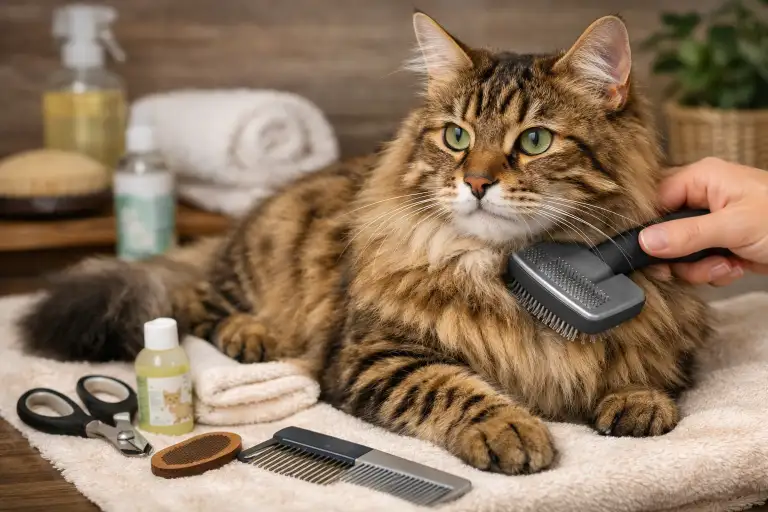
Bengal Longhair Grooming Basics: A Simple, Stress-Safe Guide for Owners
Bengal Longhairs have a coat that looks soft and flowing, but it behaves very differently from the dense coats of many traditional long-haired cats. Understanding how this coat works is the foundation of stress-free grooming. When owners skip this step, grooming often turns into a cycle of resistance, missed mats, and frustration on both sides.
Recommended Dog Care Products
Based on your dog’s age, these products may help with comfort, health, grooming, and daily care.

Purina Pro Plan Veterinary Supplements
Daily probiotics for dogs to support digestive and gut health.
View on Amazon ↗
Earth Rated Poop Bags for Dogs
Leak-proof, extra thick waste bag refill rolls with lavender scent.
View on Amazon ↗
Greenies Pill Pockets for Dogs
Large dog treats for capsule medication, peanut butter flavor.
View on Amazon ↗
HONEY CARE All-Absorb Dog Wrap
Small male dog wraps, 50 count, useful for daily care support.
View on Amazon ↗
Seresto Flea & Tick Collar
Flea and tick treatment and prevention for dogs over 18 lbs.
View on Amazon ↗
Milk-Bone MaroSnacks
Small dog treats with real bone marrow in a 40 oz canister.
View on Amazon ↗
Vital Essentials Dog Treats
Freeze dried beef liver dog treats, grain free and single ingredient.
View on Amazon ↗
Stain & Odor Eliminator
Enzyme cleaner for pet stains, carpet messes, and strong odors.
View on Amazon ↗
Pur Luv Chicken Jerky Treats
Dog treats made with real chicken breast, high protein and chew-friendly.
View on Amazon ↗
Milk-Bone Flavor Snacks
Mini crunchy dog biscuits in a 36 oz canister for small rewards.
View on Amazon ↗As an Amazon Associate, we may earn from qualifying purchases.
The Bengal Longhair coat is usually fine to medium in texture, with less undercoat than breeds like Persians or Maine Coons. This means it tangles more easily in high-movement areas, even if the cat doesn’t look “fluffy” or thick-coated. Because Bengals are active, athletic, and constantly in motion, friction plays a major role in mat formation.
Shedding patterns also surprise many owners. Bengal Longhairs do shed seasonally, but shedding often shows up as loose hair trapped in the coat rather than obvious clumps on furniture. Without regular brushing, this loose hair knots against itself and forms mats close to the skin, especially in warm or humid conditions.
Lifestyle matters as well. Indoor Bengal Longhairs usually develop fewer debris-related tangles but may mat faster due to constant contact with soft surfaces like blankets and sofas. Outdoor or partially outdoor cats are more prone to dirt buildup, moisture exposure, and sudden matting after weather changes.
Age changes grooming needs too. Kittens have lighter coats that mat less but need early grooming exposure to prevent resistance later. Adult Bengal Longhairs require consistent maintenance to control shedding and friction mats. Seniors often groom themselves less thoroughly, making gentle human assistance more important while also shortening sessions to respect reduced tolerance.
To make this easier to scan, here’s how common Bengal Longhair coat traits directly affect grooming:
| Coat Trait | What It Means for Grooming |
|---|---|
| Fine to medium hair texture | Tangles form quickly if brushing is skipped |
| Lower undercoat density | Mats are often hidden near the skin |
| High activity level | Friction mats develop in moving areas |
| Seasonal shedding | Loose hair must be removed manually |
| Reduced self-grooming with age | Owners must assist more consistently |
Once you understand these coat behaviors, grooming stops feeling random. Brushing frequency, session length, and problem areas all start to make sense — and that’s what allows grooming to stay calm, predictable, and manageable for both you and your Bengal Longhair.
Brushing and Coat Care: How to Groom a Bengal Longhair Safely
Brushing is the most important part of grooming a Bengal Longhair. If you get brushing right, many other grooming problems never start. The goal is not to make the coat look perfect. The goal is to remove loose hair, stop mats early, and keep your cat calm during grooming.
Most Bengal Longhairs need brushing several times a week. During heavy shedding seasons, daily brushing may be needed for short sessions. Skipping brushing for too long allows loose hair to twist together, which can turn into tight mats close to the skin.
Always brush gently and slowly. Start with light strokes and let your cat relax before brushing sensitive areas. Focus first on easy spots like the back and sides. Areas with more movement, such as under the legs, around the chest, behind the ears, and along the belly, need extra care. These are the places where mats form most often.
Recommended Dog Care Products
Based on your dog’s age, these products may help with comfort, health, grooming, and daily care.
Purina Pro Plan Veterinary Supplements
Daily probiotics for dogs to support digestive and gut health.
View on Amazon ↗
Earth Rated Poop Bags for Dogs
Leak-proof, extra thick waste bag refill rolls with lavender scent.
View on Amazon ↗
Greenies Pill Pockets for Dogs
Large dog treats for capsule medication, peanut butter flavor.
View on Amazon ↗
HONEY CARE All-Absorb Dog Wrap
Small male dog wraps, 50 count, useful for daily care support.
View on Amazon ↗
Seresto Flea & Tick Collar
Flea and tick treatment and prevention for dogs over 18 lbs.
View on Amazon ↗
Milk-Bone MaroSnacks
Small dog treats with real bone marrow in a 40 oz canister.
View on Amazon ↗
Vital Essentials Dog Treats
Freeze dried beef liver dog treats, grain free and single ingredient.
View on Amazon ↗
Stain & Odor Eliminator
Enzyme cleaner for pet stains, carpet messes, and strong odors.
View on Amazon ↗
Pur Luv Chicken Jerky Treats
Dog treats made with real chicken breast, high protein and chew-friendly.
View on Amazon ↗
Milk-Bone Flavor Snacks
Mini crunchy dog biscuits in a 36 oz canister for small rewards.
View on Amazon ↗As an Amazon Associate, we may earn from qualifying purchases.
Never pull through tangles or mats. Pulling hurts and quickly teaches your cat to fear grooming. If you feel resistance, stop brushing that area. Many small tangles can be loosened over time with short, calm sessions. Tight or hard mats should not be cut out at home, as the skin under mats is very thin and easy to injure.
Brushing should be kept short and positive. Five to ten minutes is enough for most sessions. Ending the session early is better than pushing too long and causing stress. Over time, regular short sessions build trust and make grooming easier.
Here is a simple brushing guide that makes this section easier to scan:
| Situation | How Often to Brush |
|---|---|
| Normal weeks | 3–4 times per week |
| Heavy shedding seasons | Daily short sessions |
| Early small tangles | Gentle brushing over several days |
| Visible tight mats | Stop and seek professional help |
Brushing a Bengal Longhair is not about force or speed. Calm handling, gentle pressure, and consistency matter far more than how long you brush.
Nail, Bathing, and Hygiene Basics for Bengal Longhairs
Nail care and basic hygiene are simple but often misunderstood parts of grooming. Bengal Longhairs are active cats, but that does not mean their nails care for themselves. Scratching posts help, but they do not keep nails short enough on their own.
Most Bengal Longhairs need nail trimming every two to four weeks. Only the sharp tip should be trimmed. Never cut deep into the nail, as this can cause pain and bleeding. If your cat becomes upset, stop and try again another day. Short, calm sessions work best.
Bathing is another area where many owners feel confused. Bengal Longhairs do not need regular baths. In most cases, bathing removes natural oils and causes stress. Baths should only be used when the coat is very dirty, sticky, or contaminated with something unsafe. If your cat stays clean indoors, brushing is usually enough.
When a bath is needed, it should be gentle and quick. Loud water, strong sprays, and long washing times increase fear. Bathing too often can make grooming problems worse, not better.
Basic hygiene also includes ear, eye, and dental checks. Ears should be looked at regularly, not cleaned deeply. A small amount of wax is normal. Redness, bad smell, or thick discharge means a vet visit is needed. Eyes may have small crusts that can be wiped gently with a soft, damp cloth. Teeth care is important, but grooming at home cannot replace veterinary dental care.
This table shows what is safe to do at home and when to stop:
Recommended Dog Care Products
Based on your dog’s age, these products may help with comfort, health, grooming, and daily care.
Purina Pro Plan Veterinary Supplements
Daily probiotics for dogs to support digestive and gut health.
View on Amazon ↗
Earth Rated Poop Bags for Dogs
Leak-proof, extra thick waste bag refill rolls with lavender scent.
View on Amazon ↗
Greenies Pill Pockets for Dogs
Large dog treats for capsule medication, peanut butter flavor.
View on Amazon ↗
HONEY CARE All-Absorb Dog Wrap
Small male dog wraps, 50 count, useful for daily care support.
View on Amazon ↗
Seresto Flea & Tick Collar
Flea and tick treatment and prevention for dogs over 18 lbs.
View on Amazon ↗
Milk-Bone MaroSnacks
Small dog treats with real bone marrow in a 40 oz canister.
View on Amazon ↗
Vital Essentials Dog Treats
Freeze dried beef liver dog treats, grain free and single ingredient.
View on Amazon ↗
Stain & Odor Eliminator
Enzyme cleaner for pet stains, carpet messes, and strong odors.
View on Amazon ↗
Pur Luv Chicken Jerky Treats
Dog treats made with real chicken breast, high protein and chew-friendly.
View on Amazon ↗
Milk-Bone Flavor Snacks
Mini crunchy dog biscuits in a 36 oz canister for small rewards.
View on Amazon ↗As an Amazon Associate, we may earn from qualifying purchases.
| Grooming Task | How Often | Safe at Home | When to Stop |
|---|---|---|---|
| Nail trimming | Every 2–4 weeks | Yes | Cat becomes stressed or pulls away |
| Bathing | Rare, only when needed | Sometimes | Cat panics or coat is not dirty |
| Ear checking | Weekly | Yes | Redness, smell, or pain |
| Eye cleaning | As needed | Yes | Thick discharge or swelling |
| Dental care | Ongoing habit | Limited | Signs of pain or bad breath |
Good grooming is about knowing limits. Doing less, but doing it safely, protects both your cat and your bond.
Grooming Frequency, Stress Signals, and When to Get Help
Knowing how often to groom is important, but knowing when to stop is even more important. Bengal Longhairs are smart and sensitive cats. If grooming becomes stressful, they will remember it and resist next time.
Most grooming tasks do not need to be done every day. Brushing a few times a week, trimming nails every few weeks, and checking ears and eyes regularly is enough for most cats. Short sessions are better than long ones. Even five minutes can make a big difference.
Watch your cat closely during grooming. Cats show stress in quiet ways. Many owners miss the early signs and only notice when the cat tries to escape or scratch. Stopping early keeps grooming safe and builds trust.
Here are common stress signals and what they mean:
| Stress Signal | What It Means | What to Do |
|---|---|---|
| Ears flat or turned sideways | Cat feels unsafe | Stop grooming and give space |
| Tail flicking fast | Cat is getting upset | End the session calmly |
| Growling or hissing | Cat is scared or angry | Stop immediately |
| Trying to bite or swat | Cat is overwhelmed | Do not continue grooming |
| Body stiff or frozen | Cat feels trapped | Let the cat move away |
If grooming is always difficult, help may be needed. Professional groomers are trained to handle mats and difficult coats safely. A vet should be involved if your cat shows pain, skin problems, or sudden changes in grooming tolerance.
Never force grooming. Holding a cat down or pushing through stress makes future grooming harder and can cause injury.
For more general guidance on safe, humane cat grooming practices, you can also refer to the ASPCA cat grooming guide, which explains basic brushing, bathing, and handling principles that apply to most cats, including long-haired types.

Ata Ur Rehman is the founder of Pet Age in Human Years Calculator, an educational platform that provides age conversion charts and lifespan guides for dogs, cats, birds, and other companion animals. His work focuses on helping pet owners understand how animal ages translate into human years using commonly accepted age conversion formulas and published lifespan averages.
The website compiles breed and species lifespan data from kennel clubs, breed organizations, and general animal lifespan studies to present simple and easy-to-understand guides for pet owners worldwide.
Recommended Dog Care Products
Based on your dog’s age, these products may help with comfort, health, grooming, and daily care.
Purina Pro Plan Veterinary Supplements
Daily probiotics for dogs to support digestive and gut health.
View on Amazon ↗
Earth Rated Poop Bags for Dogs
Leak-proof, extra thick waste bag refill rolls with lavender scent.
View on Amazon ↗
Greenies Pill Pockets for Dogs
Large dog treats for capsule medication, peanut butter flavor.
View on Amazon ↗
HONEY CARE All-Absorb Dog Wrap
Small male dog wraps, 50 count, useful for daily care support.
View on Amazon ↗
Seresto Flea & Tick Collar
Flea and tick treatment and prevention for dogs over 18 lbs.
View on Amazon ↗
Milk-Bone MaroSnacks
Small dog treats with real bone marrow in a 40 oz canister.
View on Amazon ↗
Vital Essentials Dog Treats
Freeze dried beef liver dog treats, grain free and single ingredient.
View on Amazon ↗
Stain & Odor Eliminator
Enzyme cleaner for pet stains, carpet messes, and strong odors.
View on Amazon ↗
Pur Luv Chicken Jerky Treats
Dog treats made with real chicken breast, high protein and chew-friendly.
View on Amazon ↗
Milk-Bone Flavor Snacks
Mini crunchy dog biscuits in a 36 oz canister for small rewards.
View on Amazon ↗As an Amazon Associate, we may earn from qualifying purchases.
This website was created to centralize animal age conversion charts into one easy reference platform for pet owners.