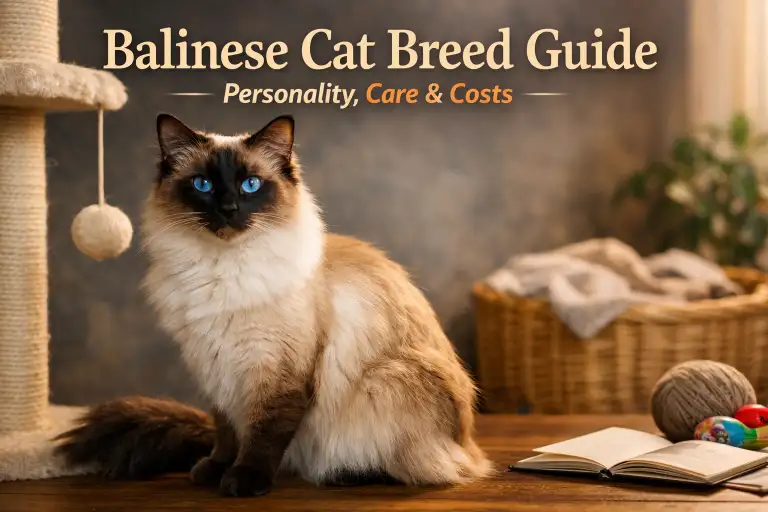
Balinese Cat: Complete Breed Guide to Personality, Care, and Cost
The Balinese cat is often described as a long-haired Siamese, but that oversimplification misses what truly defines this breed. While the Balinese shares ancestry, blue eyes, and an elegant body type with the Siamese, living with one feels distinctly different. This is a cat known not just for beauty, but for intense emotional connection, intelligence, and a near-constant desire to be involved in human life.
Recommended Dog Care Products
Based on your dog’s age, these products may help with comfort, health, grooming, and daily care.

Purina Pro Plan Veterinary Supplements
Daily probiotics for dogs to support digestive and gut health.
View on Amazon ↗
Earth Rated Poop Bags for Dogs
Leak-proof, extra thick waste bag refill rolls with lavender scent.
View on Amazon ↗
Greenies Pill Pockets for Dogs
Large dog treats for capsule medication, peanut butter flavor.
View on Amazon ↗
HONEY CARE All-Absorb Dog Wrap
Small male dog wraps, 50 count, useful for daily care support.
View on Amazon ↗
Seresto Flea & Tick Collar
Flea and tick treatment and prevention for dogs over 18 lbs.
View on Amazon ↗
Milk-Bone MaroSnacks
Small dog treats with real bone marrow in a 40 oz canister.
View on Amazon ↗
Vital Essentials Dog Treats
Freeze dried beef liver dog treats, grain free and single ingredient.
View on Amazon ↗
Stain & Odor Eliminator
Enzyme cleaner for pet stains, carpet messes, and strong odors.
View on Amazon ↗
Pur Luv Chicken Jerky Treats
Dog treats made with real chicken breast, high protein and chew-friendly.
View on Amazon ↗
Milk-Bone Flavor Snacks
Mini crunchy dog biscuits in a 36 oz canister for small rewards.
View on Amazon ↗As an Amazon Associate, we may earn from qualifying purchases.
Balinese cats are highly people-oriented. They don’t simply live in a home — they participate in it. Owners frequently describe them as shadow-like companions that follow from room to room, supervise daily tasks, and actively seek conversation, play, and affection. This makes the breed deeply rewarding for engaged households, but challenging for owners who expect a quiet, independent cat.
This guide is written to help you understand what life with a Balinese is really like. Beyond appearance, we’ll explore their personality, behavior, care needs, health considerations, and costs — with an honest look at who thrives with this breed and who may struggle. If you’re considering a Balinese, this section will help you decide whether their intelligence, sensitivity, and social nature align with your lifestyle.
History, Appearance, and Physical Traits
The Balinese cat did not come from Bali. The name was chosen because breeders felt the cat’s smooth movement and elegant body looked like a Balinese dancer. In reality, this breed began as a natural long-haired variation of the Siamese cat. When Siamese cats with longer coats appeared in litters, breeders decided to develop them into a separate breed.
Over time, these cats were carefully bred to keep the slim body, blue eyes, and pointed coloring of the Siamese, while adding a soft, flowing coat. Today, the Balinese is recognized by major cat organizations and is known for its graceful look and athletic build.
Balinese cats may look delicate, but they are strong and muscular under their fine frame. They are built for jumping, climbing, and constant movement.
Here is a quick overview of the Balinese cat’s physical traits:
| Trait | Description |
|---|---|
| Adult Weight | Males: about 8–12 pounds, Females: about 6–10 pounds |
| Body Type | Long, slim, and muscular |
| Coat Type | Medium-long, silky, single coat (no thick undercoat) |
| Shedding | Low to moderate |
| Eye Color | Bright blue |
| Lifespan | Around 15–20 years |
The coat of a Balinese cat feels soft and light. Because there is no heavy undercoat, the fur does not mat easily and does not shed as much as many long-haired breeds. Their color appears darker on the face, ears, legs, and tail, while the body stays lighter. These color points slowly develop as the cat grows.
One of the most noticeable features is the tail. It is long and feather-like, often called a plumed tail. Combined with large ears and almond-shaped eyes, the Balinese has a very alert and expressive face.
Balinese Cat Personality, Behavior, and Vocalization
The Balinese cat is known for its strong personality. This is not a quiet or distant breed. Balinese cats love people and want to be part of everything happening in the home. Many owners say their Balinese acts more like a friend than a pet.
Recommended Dog Care Products
Based on your dog’s age, these products may help with comfort, health, grooming, and daily care.
Purina Pro Plan Veterinary Supplements
Daily probiotics for dogs to support digestive and gut health.
View on Amazon ↗
Earth Rated Poop Bags for Dogs
Leak-proof, extra thick waste bag refill rolls with lavender scent.
View on Amazon ↗
Greenies Pill Pockets for Dogs
Large dog treats for capsule medication, peanut butter flavor.
View on Amazon ↗
HONEY CARE All-Absorb Dog Wrap
Small male dog wraps, 50 count, useful for daily care support.
View on Amazon ↗
Seresto Flea & Tick Collar
Flea and tick treatment and prevention for dogs over 18 lbs.
View on Amazon ↗
Milk-Bone MaroSnacks
Small dog treats with real bone marrow in a 40 oz canister.
View on Amazon ↗
Vital Essentials Dog Treats
Freeze dried beef liver dog treats, grain free and single ingredient.
View on Amazon ↗
Stain & Odor Eliminator
Enzyme cleaner for pet stains, carpet messes, and strong odors.
View on Amazon ↗
Pur Luv Chicken Jerky Treats
Dog treats made with real chicken breast, high protein and chew-friendly.
View on Amazon ↗
Milk-Bone Flavor Snacks
Mini crunchy dog biscuits in a 36 oz canister for small rewards.
View on Amazon ↗As an Amazon Associate, we may earn from qualifying purchases.
These cats form deep bonds with their owners. They enjoy sitting close, sleeping near you, and following you from room to room. Some Balinese choose one favorite person, while others spread their affection across the whole family. They are not true lap cats all the time, but they show love by staying close and asking for attention.
Balinese cats are very smart. They learn routines quickly and can figure out how to open doors, drawers, or cabinets. Because of this, they need daily play and mental challenges. Without enough activity, they may become bored and get into trouble, such as knocking things over or climbing where they should not.
Here is a quick look at the Balinese cat’s personality traits:
| Trait | Level |
|---|---|
| Affection | Very high |
| Intelligence | Very high |
| Energy | High |
| Independence | Low |
| Sociability | Very high |
| Vocalization | Medium to high |
Balinese cats are talkative, but their voice is usually softer than a Siamese. They use sounds to get attention, greet you, or tell you what they want. If a Balinese is meowing a lot, it often means they are bored, lonely, or asking for interaction.
This breed usually does well with respectful children, other cats, and even dogs, as long as they are introduced slowly. They enjoy company and do not like being alone for long hours. Homes where someone is often present, or where there is another friendly pet, are usually a better match.
Living With a Balinese: Care, Health, and Daily Needs
Living with a Balinese cat means daily interaction and shared routines. This breed needs more attention than many other cats. They enjoy being indoors, where they feel safe and close to their people. Most Balinese do best as indoor-only cats because they are trusting and not very street-smart.
Balinese cats are active and need daily play. Short play sessions spread through the day work best. They enjoy chasing toys, climbing cat trees, and playing games that involve their owners. Mental play, such as puzzle toys or learning simple tricks, is just as important as physical exercise.
Here is a simple overview of daily care and health needs:
| Care Area | What to Expect |
|---|---|
| Exercise | Daily interactive play |
| Mental Needs | Puzzle toys and human interaction |
| Grooming | Light brushing once a week |
| Shedding | Low to moderate |
| Climate Needs | Prefers warm indoor spaces |
| Average Lifespan | About 15–20 years |
Grooming a Balinese cat is usually easy. Their single-layer coat does not tangle much, so brushing once a week is often enough. Regular nail trimming, ear checks, and dental care help keep them healthy.
Balinese cats are generally healthy, but some can have inherited health issues. These may include kidney-related problems, eye conditions, and dental disease. Reputable breeders often test for known genetic risks. Regular vet visits and early care can help many Balinese live long, healthy lives.
Recommended Dog Care Products
Based on your dog’s age, these products may help with comfort, health, grooming, and daily care.
Purina Pro Plan Veterinary Supplements
Daily probiotics for dogs to support digestive and gut health.
View on Amazon ↗
Earth Rated Poop Bags for Dogs
Leak-proof, extra thick waste bag refill rolls with lavender scent.
View on Amazon ↗
Greenies Pill Pockets for Dogs
Large dog treats for capsule medication, peanut butter flavor.
View on Amazon ↗
HONEY CARE All-Absorb Dog Wrap
Small male dog wraps, 50 count, useful for daily care support.
View on Amazon ↗
Seresto Flea & Tick Collar
Flea and tick treatment and prevention for dogs over 18 lbs.
View on Amazon ↗
Milk-Bone MaroSnacks
Small dog treats with real bone marrow in a 40 oz canister.
View on Amazon ↗
Vital Essentials Dog Treats
Freeze dried beef liver dog treats, grain free and single ingredient.
View on Amazon ↗
Stain & Odor Eliminator
Enzyme cleaner for pet stains, carpet messes, and strong odors.
View on Amazon ↗
Pur Luv Chicken Jerky Treats
Dog treats made with real chicken breast, high protein and chew-friendly.
View on Amazon ↗
Milk-Bone Flavor Snacks
Mini crunchy dog biscuits in a 36 oz canister for small rewards.
View on Amazon ↗As an Amazon Associate, we may earn from qualifying purchases.
Owning a Balinese can cost more than owning a low-energy breed. They may need more toys, dental care, and vet monitoring over time. Pet insurance is often helpful for this breed, especially as they age.
Is the Balinese Right for You? (Pros, Cons, and Comparisons)
The Balinese cat can be a wonderful companion, but it is not the right choice for every home. This breed needs time, attention, and daily interaction. Before choosing a Balinese, it is important to understand both the good and the challenging parts of living with one.
Here is a clear look at the pros and cons of the Balinese cat:
| Pros | Cons |
|---|---|
| Very loving and people-focused | Does not like being alone |
| Highly intelligent and curious | Can get bored easily |
| Low shedding coat | May be talkative |
| Learns routines quickly | Needs daily play and attention |
| Strong family bonds | Not ideal for very busy homes |
Balinese cats do best in homes where someone is around often. They are a great fit for families with older children, work-from-home owners, and multi-pet homes with friendly animals. They enjoy having a companion, either human or animal.
Some people compare the Balinese to other similar breeds. Here is a simple comparison:
| Breed | Energy Level | Vocal Style | Affection |
|---|---|---|---|
| Balinese | High | Medium to high | Very high |
| Siamese | Very high | Very loud | High |
| Oriental Longhair | High | Loud | High |
| Tonkinese | Medium | Medium | High |
If you want a cat that is calm, quiet, and happy being alone, the Balinese may not be the best choice. But if you enjoy a social, playful, and loving cat that wants to be part of your daily life, the Balinese can be deeply rewarding.
For a trusted and official breed standard, visit The Cat Fanciers’ Association’s page on the Balinese cat: https://cfa.org/breed/balinese/

Ata Ur Rehman is the founder of Pet Age in Human Years Calculator, an educational platform that provides age conversion charts and lifespan guides for dogs, cats, birds, and other companion animals. His work focuses on helping pet owners understand how animal ages translate into human years using commonly accepted age conversion formulas and published lifespan averages.
The website compiles breed and species lifespan data from kennel clubs, breed organizations, and general animal lifespan studies to present simple and easy-to-understand guides for pet owners worldwide.
This website was created to centralize animal age conversion charts into one easy reference platform for pet owners.
Recommended Dog Care Products
Based on your dog’s age, these products may help with comfort, health, grooming, and daily care.
Purina Pro Plan Veterinary Supplements
Daily probiotics for dogs to support digestive and gut health.
View on Amazon ↗
Earth Rated Poop Bags for Dogs
Leak-proof, extra thick waste bag refill rolls with lavender scent.
View on Amazon ↗
Greenies Pill Pockets for Dogs
Large dog treats for capsule medication, peanut butter flavor.
View on Amazon ↗
HONEY CARE All-Absorb Dog Wrap
Small male dog wraps, 50 count, useful for daily care support.
View on Amazon ↗
Seresto Flea & Tick Collar
Flea and tick treatment and prevention for dogs over 18 lbs.
View on Amazon ↗
Milk-Bone MaroSnacks
Small dog treats with real bone marrow in a 40 oz canister.
View on Amazon ↗
Vital Essentials Dog Treats
Freeze dried beef liver dog treats, grain free and single ingredient.
View on Amazon ↗
Stain & Odor Eliminator
Enzyme cleaner for pet stains, carpet messes, and strong odors.
View on Amazon ↗
Pur Luv Chicken Jerky Treats
Dog treats made with real chicken breast, high protein and chew-friendly.
View on Amazon ↗
Milk-Bone Flavor Snacks
Mini crunchy dog biscuits in a 36 oz canister for small rewards.
View on Amazon ↗As an Amazon Associate, we may earn from qualifying purchases.