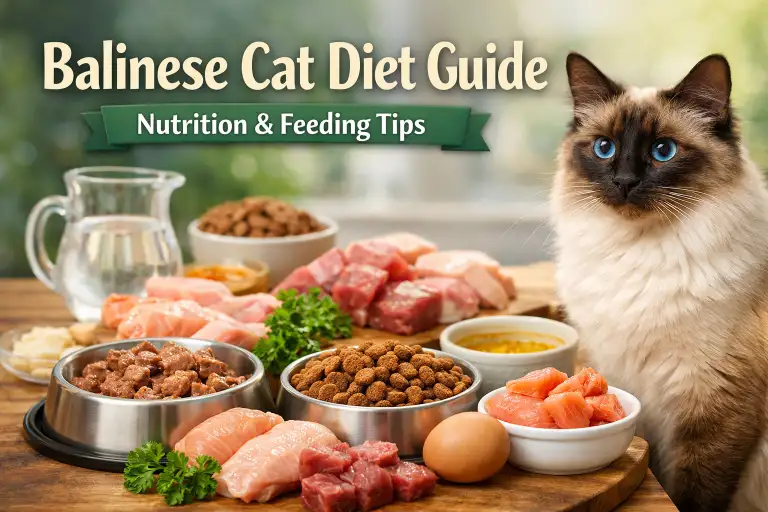
Balinese Cat Diet: Nutrition & Feeding Guide for Healthy Cats
Balinese Cat Nutritional Needs Explained
Balinese cats may look delicate, but nutritionally they are high-energy, lean, and metabolically demanding cats. Their diet needs to support muscle maintenance, steady energy, digestion, and coat health—not just keep them full.
Recommended Dog Care Products
Based on your dog’s age, these products may help with comfort, health, grooming, and daily care.

Purina Pro Plan Veterinary Supplements
Daily probiotics for dogs to support digestive and gut health.
View on Amazon ↗
Earth Rated Poop Bags for Dogs
Leak-proof, extra thick waste bag refill rolls with lavender scent.
View on Amazon ↗
Greenies Pill Pockets for Dogs
Large dog treats for capsule medication, peanut butter flavor.
View on Amazon ↗
HONEY CARE All-Absorb Dog Wrap
Small male dog wraps, 50 count, useful for daily care support.
View on Amazon ↗
Seresto Flea & Tick Collar
Flea and tick treatment and prevention for dogs over 18 lbs.
View on Amazon ↗
Milk-Bone MaroSnacks
Small dog treats with real bone marrow in a 40 oz canister.
View on Amazon ↗
Vital Essentials Dog Treats
Freeze dried beef liver dog treats, grain free and single ingredient.
View on Amazon ↗
Stain & Odor Eliminator
Enzyme cleaner for pet stains, carpet messes, and strong odors.
View on Amazon ↗
Pur Luv Chicken Jerky Treats
Dog treats made with real chicken breast, high protein and chew-friendly.
View on Amazon ↗
Milk-Bone Flavor Snacks
Mini crunchy dog biscuits in a 36 oz canister for small rewards.
View on Amazon ↗As an Amazon Associate, we may earn from qualifying purchases.
Like all cats, Balinese are obligate carnivores. This means their bodies are designed to get nutrition from animal-based foods, not plants or carbohydrates. Protein is not optional for them—it is the foundation of every healthy body system, from muscles and organs to the immune system.
Because Balinese cats are typically more active and vocal than many other breeds, they often burn calories faster. A diet that is too low in protein or overly diluted with fillers can lead to:
- Gradual weight loss despite normal eating
- Reduced muscle tone
- Increased hunger or food-seeking behavior
- Dull or thinning coat
- Digestive upset such as loose stools
Moisture is another critical nutritional need. Balinese cats, like most cats, do not naturally drink enough water to compensate for dry diets alone. Diets low in moisture can quietly contribute to dehydration and urinary stress over time, especially in indoor cats.
Key nutritional priorities for a healthy Balinese cat include:
- High-quality animal protein to support lean muscle
- Adequate fats for energy, skin, and coat health
- Sufficient moisture to support hydration and urinary function
- Essential nutrients like taurine, which cats cannot produce themselves
When nutrition is balanced correctly, Balinese cats tend to maintain a slim but strong body, a soft silky coat, and stable energy levels. When it is not, early signs often show up subtly—through coat changes, appetite shifts, or digestion—long before serious health issues appear.
Understanding these baseline nutritional needs makes it much easier to choose appropriate food types and feeding routines, which we’ll cover next.
Best Food Types for Balinese Cats
Choosing the right food for a Balinese cat can feel confusing, but it becomes easier when you focus on food type, not brand names or trends. The main goal is to give your cat food that supports hydration, digestion, and steady energy.
Most Balinese cats do best on diets that are rich in animal protein and moisture. This helps protect their muscles, kidneys, and urinary system.
Here are the main food types owners usually choose from:
Recommended Dog Care Products
Based on your dog’s age, these products may help with comfort, health, grooming, and daily care.
Purina Pro Plan Veterinary Supplements
Daily probiotics for dogs to support digestive and gut health.
View on Amazon ↗
Earth Rated Poop Bags for Dogs
Leak-proof, extra thick waste bag refill rolls with lavender scent.
View on Amazon ↗
Greenies Pill Pockets for Dogs
Large dog treats for capsule medication, peanut butter flavor.
View on Amazon ↗
HONEY CARE All-Absorb Dog Wrap
Small male dog wraps, 50 count, useful for daily care support.
View on Amazon ↗
Seresto Flea & Tick Collar
Flea and tick treatment and prevention for dogs over 18 lbs.
View on Amazon ↗
Milk-Bone MaroSnacks
Small dog treats with real bone marrow in a 40 oz canister.
View on Amazon ↗
Vital Essentials Dog Treats
Freeze dried beef liver dog treats, grain free and single ingredient.
View on Amazon ↗
Stain & Odor Eliminator
Enzyme cleaner for pet stains, carpet messes, and strong odors.
View on Amazon ↗
Pur Luv Chicken Jerky Treats
Dog treats made with real chicken breast, high protein and chew-friendly.
View on Amazon ↗
Milk-Bone Flavor Snacks
Mini crunchy dog biscuits in a 36 oz canister for small rewards.
View on Amazon ↗As an Amazon Associate, we may earn from qualifying purchases.
Wet food
Wet food contains a lot of moisture, which helps keep Balinese cats hydrated. It is often easier to digest and can support healthy urine and kidney function. Many owners find wet food works well for picky eaters and cats that do not drink much water.
Dry food
Dry food is convenient and easy to store, but it contains very little moisture. Some Balinese cats can eat dry food without problems, but it should not be the only source of nutrition for cats that already drink very little water. Portion control is important, because dry food is easy to overfeed.
Fresh or homemade-style food
Some owners are interested in fresh or homemade diets. These can sound healthy, but they must be carefully balanced. Feeding unbalanced homemade food can lead to serious nutrient problems. If fresh food is used, it should be complete and properly formulated for cats, not made from random human foods.
No matter the food type, a good Balinese diet should:
- List animal protein as the main ingredient
- Provide enough moisture each day
- Be complete and balanced for cats
- Match your cat’s age and activity level
Avoid switching foods too often or choosing food only because it is popular online. Sudden changes can upset a Balinese cat’s stomach and cause vomiting or loose stool.
How Much and How Often to Feed a Balinese Cat
Many Balinese cat owners worry about feeding the “right amount.” This is normal, because Balinese cats are active, curious, and often act hungry even when they are well fed.
There is no single perfect amount of food for every Balinese cat. The right portion depends on age, body size, activity level, and health.
In general:
- Kittens need to eat more often because they are growing fast
- Adult Balinese cats usually do well with set meals each day
- Senior cats may need smaller portions but still need good protein
Most Balinese cats do best when fed two to three meals a day. This helps control hunger, keeps energy steady, and prevents overeating. Free feeding (leaving food out all day) can make it easy to overfeed, especially with dry food.
Instead of counting exact calories, owners should watch their cat’s body shape and behavior. A healthy Balinese cat should:
Recommended Dog Care Products
Based on your dog’s age, these products may help with comfort, health, grooming, and daily care.
Purina Pro Plan Veterinary Supplements
Daily probiotics for dogs to support digestive and gut health.
View on Amazon ↗
Earth Rated Poop Bags for Dogs
Leak-proof, extra thick waste bag refill rolls with lavender scent.
View on Amazon ↗
Greenies Pill Pockets for Dogs
Large dog treats for capsule medication, peanut butter flavor.
View on Amazon ↗
HONEY CARE All-Absorb Dog Wrap
Small male dog wraps, 50 count, useful for daily care support.
View on Amazon ↗
Seresto Flea & Tick Collar
Flea and tick treatment and prevention for dogs over 18 lbs.
View on Amazon ↗
Milk-Bone MaroSnacks
Small dog treats with real bone marrow in a 40 oz canister.
View on Amazon ↗
Vital Essentials Dog Treats
Freeze dried beef liver dog treats, grain free and single ingredient.
View on Amazon ↗
Stain & Odor Eliminator
Enzyme cleaner for pet stains, carpet messes, and strong odors.
View on Amazon ↗
Pur Luv Chicken Jerky Treats
Dog treats made with real chicken breast, high protein and chew-friendly.
View on Amazon ↗
Milk-Bone Flavor Snacks
Mini crunchy dog biscuits in a 36 oz canister for small rewards.
View on Amazon ↗As an Amazon Associate, we may earn from qualifying purchases.
- Feel firm but not bony when you touch their sides
- Have a visible waist when viewed from above
- Stay playful and active without acting weak or tired
Signs your Balinese cat may be eating too much include:
- Weight gain
- Less movement or play
- Always leaving food in the bowl
Signs your cat may not be eating enough include:
- Visible ribs or spine
- Low energy
- Constant begging or food stealing
Always make food changes slowly over several days. Sudden changes can upset your cat’s stomach and cause vomiting or diarrhea.
Foods to Avoid and Common Feeding Mistakes
Some foods that are safe for people can be very harmful to Balinese cats. Knowing what to avoid is just as important as knowing what to feed.
Foods Balinese cats should never eat include:
- Chocolate, caffeine, and alcohol
- Onions, garlic, and foods made with them
- Grapes and raisins
- Cooked bones or raw bones
- Spicy, salty, or seasoned foods
Many people think cats should drink milk. Most Balinese cats cannot digest dairy well. Milk, cheese, and cream can cause stomach pain, gas, or diarrhea.
Common feeding mistakes owners make:
- Giving too many treats each day
- Feeding table scraps as meals
- Switching foods too often or too quickly
- Overfeeding because the cat looks slim
- Using food to stop every behavior problem
Treats should only make up a small part of the diet. They are not meant to replace balanced meals. Even healthy treats can cause weight gain if given too often.
Another mistake is changing food suddenly. Balinese cats often have sensitive stomachs. New food should be mixed slowly with the old food over several days.
Avoid adding vitamins, oils, or supplements unless a veterinarian tells you to. Too much of certain nutrients can be harmful, even if they sound healthy.
Recommended Dog Care Products
Based on your dog’s age, these products may help with comfort, health, grooming, and daily care.
Purina Pro Plan Veterinary Supplements
Daily probiotics for dogs to support digestive and gut health.
View on Amazon ↗
Earth Rated Poop Bags for Dogs
Leak-proof, extra thick waste bag refill rolls with lavender scent.
View on Amazon ↗
Greenies Pill Pockets for Dogs
Large dog treats for capsule medication, peanut butter flavor.
View on Amazon ↗
HONEY CARE All-Absorb Dog Wrap
Small male dog wraps, 50 count, useful for daily care support.
View on Amazon ↗
Seresto Flea & Tick Collar
Flea and tick treatment and prevention for dogs over 18 lbs.
View on Amazon ↗
Milk-Bone MaroSnacks
Small dog treats with real bone marrow in a 40 oz canister.
View on Amazon ↗
Vital Essentials Dog Treats
Freeze dried beef liver dog treats, grain free and single ingredient.
View on Amazon ↗
Stain & Odor Eliminator
Enzyme cleaner for pet stains, carpet messes, and strong odors.
View on Amazon ↗
Pur Luv Chicken Jerky Treats
Dog treats made with real chicken breast, high protein and chew-friendly.
View on Amazon ↗
Milk-Bone Flavor Snacks
Mini crunchy dog biscuits in a 36 oz canister for small rewards.
View on Amazon ↗As an Amazon Associate, we may earn from qualifying purchases.
Feeding Problems, Sensitivities & When to See a Vet
Even with good food, some Balinese cats can have feeding problems. These issues are often mild at first, but they should not be ignored.
Common feeding-related problems include:
- Vomiting soon after eating
- Loose stool or diarrhea
- Gas or stomach noise
- Poor appetite or sudden hunger changes
- Dull coat or hair loss
Hairballs are common in Balinese cats because of their fine coat. Occasional hairballs are normal, but frequent vomiting can be a sign of diet trouble or eating too fast.
Some Balinese cats are sensitive to certain foods. Food sensitivity may show up as:
- Ongoing stomach upset
- Skin itching or excessive grooming
- Repeated vomiting
If you need to change your cat’s food, do it slowly. Mix a small amount of the new food with the old food and increase it over 7 to 10 days. This helps protect your cat’s stomach.
You should contact a veterinarian if you notice:
- Weight loss or weight gain without reason
- Refusing food for more than one day
- Vomiting or diarrhea that lasts longer than a day
- Blood in stool or vomit
- Low energy or sudden behavior changes
A vet can help rule out illness and suggest safe diet changes if needed. Do not try special diets or supplements on your own when problems last more than a short time.
For trusted, science-based guidance on feeding and nutrition for cats, check out the “Feeding Your Cat” resources on the Cornell Feline Health Center website: https://www.vet.cornell.edu/departments-centers-and-institutes/cornell-feline-health-center/health-information/feline-health-topics/feeding-your-cat

Ata Ur Rehman is the founder of Pet Age in Human Years Calculator, an educational platform that provides age conversion charts and lifespan guides for dogs, cats, birds, and other companion animals. His work focuses on helping pet owners understand how animal ages translate into human years using commonly accepted age conversion formulas and published lifespan averages.
The website compiles breed and species lifespan data from kennel clubs, breed organizations, and general animal lifespan studies to present simple and easy-to-understand guides for pet owners worldwide.
This website was created to centralize animal age conversion charts into one easy reference platform for pet owners.