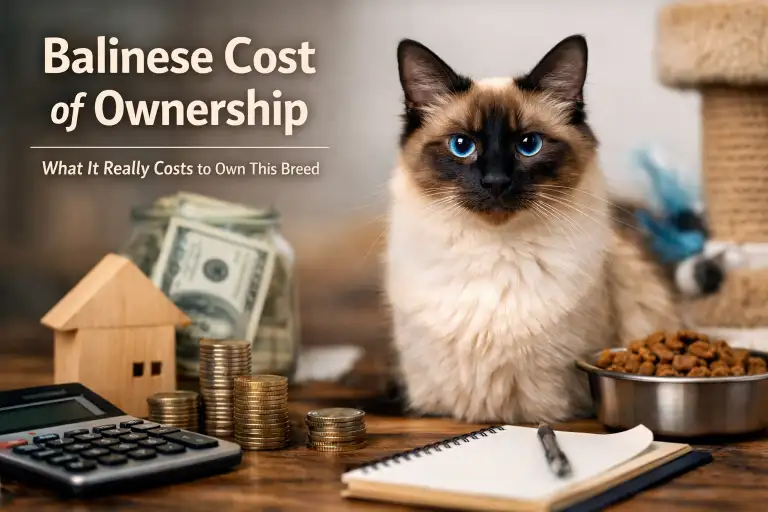
Balinese Cost of Ownership: What It Really Costs to Own This Breed
One-Time Costs of Owning a Balinese Cat
One-time costs are the expenses you face before your Balinese settles into a predictable monthly routine. These are often underestimated because they’re spread across adoption, veterinary care, and home setup—but together, they create the largest financial spike at the start of ownership.
Recommended Dog Care Products
Based on your dog’s age, these products may help with comfort, health, grooming, and daily care.

Purina Pro Plan Veterinary Supplements
Daily probiotics for dogs to support digestive and gut health.
View on Amazon ↗
Earth Rated Poop Bags for Dogs
Leak-proof, extra thick waste bag refill rolls with lavender scent.
View on Amazon ↗
Greenies Pill Pockets for Dogs
Large dog treats for capsule medication, peanut butter flavor.
View on Amazon ↗
HONEY CARE All-Absorb Dog Wrap
Small male dog wraps, 50 count, useful for daily care support.
View on Amazon ↗
Seresto Flea & Tick Collar
Flea and tick treatment and prevention for dogs over 18 lbs.
View on Amazon ↗
Milk-Bone MaroSnacks
Small dog treats with real bone marrow in a 40 oz canister.
View on Amazon ↗
Vital Essentials Dog Treats
Freeze dried beef liver dog treats, grain free and single ingredient.
View on Amazon ↗
Stain & Odor Eliminator
Enzyme cleaner for pet stains, carpet messes, and strong odors.
View on Amazon ↗
Pur Luv Chicken Jerky Treats
Dog treats made with real chicken breast, high protein and chew-friendly.
View on Amazon ↗
Milk-Bone Flavor Snacks
Mini crunchy dog biscuits in a 36 oz canister for small rewards.
View on Amazon ↗As an Amazon Associate, we may earn from qualifying purchases.
Unlike many low-maintenance cats, Balinese cats are typically indoor-focused, people-oriented, and highly active, which affects how much owners realistically spend during the first few weeks.
One-Time Balinese Cat Costs Overview
| Cost Category | What It Covers | Typical Cost Level | Notes for Balinese Owners |
|---|---|---|---|
| Acquisition (adoption or purchase) | Adoption fees or ethical breeder pricing | Low → High | Wide variation depending on source; price does not reflect lifetime cost |
| Initial veterinary care | First exam, core vaccinations, baseline health checks | Low → Moderate | Establishes medical history early |
| Spay/neuter | Surgical sterilization if not already completed | Moderate | Timing may vary based on age and vet guidance |
| Home setup supplies | Litter boxes, carriers, bowls, scratching posts | Low → Moderate | Balinese cats benefit from sturdy, interactive items |
| Vertical and enrichment setup | Cat trees, shelves, interactive toys | Moderate | Often underestimated but important for behavior and wellbeing |
| Grooming tools | Brushes, nail clippers, hygiene basics | Low | Fine coats still need regular upkeep |
Why these costs matter more than they seem
For many owners, the mistake isn’t overspending—it’s under-planning. Skipping enrichment, buying undersized scratchers, or delaying early veterinary care often leads to higher costs later through behavior issues, replacements, or medical surprises.
Balinese cats are intelligent and social. Owners frequently discover that “basic” setups aren’t enough, especially in indoor-only homes. Investing thoughtfully at the beginning often reduces stress-related expenses down the line.
Common first-time budgeting mistakes
- Treating adoption or purchase price as the main cost
- Underestimating enrichment and vertical space needs
- Buying low-quality starter items that need quick replacement
- Delaying preventive veterinary care to “save money”
A realistic one-time budget sets the tone for the entire ownership experience. Once these initial expenses are handled, Balinese ownership becomes far more predictable—and easier to manage responsibly.
Monthly and Annual Balinese Cat Expenses
After the first setup costs, Balinese ownership moves into regular monthly and yearly spending. This is the part of the budget that matters most long term, because these costs repeat for many years.
Balinese cats are active, social, and usually kept indoors. This affects how much owners spend each month compared to more independent or low-energy cats.
Monthly costs you should expect
These are the expenses you’ll see almost every month:
| Expense Type | What It Includes | Cost Level | Why It Matters |
|---|---|---|---|
| Food | Daily meals and treats | Low → Moderate | Active cats often eat slightly more |
| Litter | Clumping or standard litter | Low → Moderate | Indoor cats use litter full-time |
| Routine care items | Nail trims, cleaning supplies, toys | Low | Small costs that add up |
| Enrichment | Toy rotation, puzzle toys | Low → Moderate | Helps prevent boredom and stress |
| Time commitment | Daily play and interaction | Ongoing | Balinese cats need attention |
Most owners find that food, litter, and enrichment make up the core monthly costs. These are usually predictable, which makes budgeting easier once you settle into a routine.
Annual and periodic expenses
Some costs don’t show up every month, but they are just as important to plan for:
Recommended Dog Care Products
Based on your dog’s age, these products may help with comfort, health, grooming, and daily care.
Purina Pro Plan Veterinary Supplements
Daily probiotics for dogs to support digestive and gut health.
View on Amazon ↗
Earth Rated Poop Bags for Dogs
Leak-proof, extra thick waste bag refill rolls with lavender scent.
View on Amazon ↗
Greenies Pill Pockets for Dogs
Large dog treats for capsule medication, peanut butter flavor.
View on Amazon ↗
HONEY CARE All-Absorb Dog Wrap
Small male dog wraps, 50 count, useful for daily care support.
View on Amazon ↗
Seresto Flea & Tick Collar
Flea and tick treatment and prevention for dogs over 18 lbs.
View on Amazon ↗
Milk-Bone MaroSnacks
Small dog treats with real bone marrow in a 40 oz canister.
View on Amazon ↗
Vital Essentials Dog Treats
Freeze dried beef liver dog treats, grain free and single ingredient.
View on Amazon ↗
Stain & Odor Eliminator
Enzyme cleaner for pet stains, carpet messes, and strong odors.
View on Amazon ↗
Pur Luv Chicken Jerky Treats
Dog treats made with real chicken breast, high protein and chew-friendly.
View on Amazon ↗
Milk-Bone Flavor Snacks
Mini crunchy dog biscuits in a 36 oz canister for small rewards.
View on Amazon ↗As an Amazon Associate, we may earn from qualifying purchases.
| Expense Type | What It Covers | Cost Level | Planning Tip |
|---|---|---|---|
| Routine vet visits | Wellness exams and checkups | Moderate | Spread the cost across the year |
| Vaccinations | Core vaccines as recommended | Low → Moderate | Timing varies by vet |
| Preventive care | Parasite prevention and testing | Low → Moderate | Often forgotten in budgets |
| Dental care | Cleanings or oral checks | Moderate | Commonly underestimated |
| Replacement items | Scratchers, beds, carriers | Low → Moderate | Wear happens faster with active cats |
| Travel or pet care | Pet sitting or boarding | Situational | Depends on your lifestyle |
Why these costs feel higher than expected
Many new owners plan only for food and litter. Over time, vet care, dental needs, and replacing worn items become the bigger expenses. Balinese cats also tend to use their toys and furniture more because they are playful and curious.
Planning for these costs early helps avoid stress later.
Unexpected, Emergency, and Long-Term Costs
Some costs do not happen often, but when they do, they can be hard on your budget. These are the expenses many people forget to plan for when thinking about the cost of owning a Balinese cat.
Balinese cats are generally healthy, but no cat is risk-free. Accidents, illness, and aging can change costs quickly.
Emergency and surprise expenses
These costs can happen at any age:
| Situation | What It May Involve | Cost Impact | Why It Matters |
|---|---|---|---|
| Sudden illness | Tests, medicines, follow-up visits | Moderate → High | Often comes without warning |
| Accidents | Injuries from falls or household hazards | Moderate → High | Indoor cats are not fully risk-free |
| After-hours vet visits | Nights, weekends, emergencies | High | Fees are usually higher |
| Behavior problems | Stress, anxiety, destructive behavior | Low → Moderate | Often linked to boredom or routine changes |
These situations are stressful because they happen outside normal budgets. Even careful owners can be caught off guard.
Long-term and aging-related costs
As Balinese cats grow older, care usually becomes more expensive:
| Life Stage | Common Needs | Cost Trend |
|---|---|---|
| Adult years | Stable routine care | Predictable |
| Senior years | More vet visits and testing | Increasing |
| Late life | Comfort care and special needs | Higher |
Older cats may need more checkups, special diets, or ongoing medicine. These costs often rise slowly, which is why planning ahead helps.
Why planning matters
You don’t need to expect the worst, but it helps to be ready. Owners who plan for emergencies feel less stress and can make better decisions for their cat when something goes wrong.
This section is not meant to scare you. It’s meant to remind you that unexpected costs are part of responsible ownership.
Recommended Dog Care Products
Based on your dog’s age, these products may help with comfort, health, grooming, and daily care.
Purina Pro Plan Veterinary Supplements
Daily probiotics for dogs to support digestive and gut health.
View on Amazon ↗
Earth Rated Poop Bags for Dogs
Leak-proof, extra thick waste bag refill rolls with lavender scent.
View on Amazon ↗
Greenies Pill Pockets for Dogs
Large dog treats for capsule medication, peanut butter flavor.
View on Amazon ↗
HONEY CARE All-Absorb Dog Wrap
Small male dog wraps, 50 count, useful for daily care support.
View on Amazon ↗
Seresto Flea & Tick Collar
Flea and tick treatment and prevention for dogs over 18 lbs.
View on Amazon ↗
Milk-Bone MaroSnacks
Small dog treats with real bone marrow in a 40 oz canister.
View on Amazon ↗
Vital Essentials Dog Treats
Freeze dried beef liver dog treats, grain free and single ingredient.
View on Amazon ↗
Stain & Odor Eliminator
Enzyme cleaner for pet stains, carpet messes, and strong odors.
View on Amazon ↗
Pur Luv Chicken Jerky Treats
Dog treats made with real chicken breast, high protein and chew-friendly.
View on Amazon ↗
Milk-Bone Flavor Snacks
Mini crunchy dog biscuits in a 36 oz canister for small rewards.
View on Amazon ↗As an Amazon Associate, we may earn from qualifying purchases.
Can You Afford a Balinese Cat? Lifetime Cost and Practical Guidance
When people ask about the Balinese cost of ownership, what they usually mean is: Can I afford this cat over many years, not just at the start?
Balinese cats often live a long time. Because of this, even small monthly costs can turn into a large lifetime expense.
Lifetime cost explained in simple terms
The total cost of owning a Balinese cat depends on how you care for them and the life you live with them.
| Cost Level | What This Usually Looks Like | Lifetime Cost Pattern |
|---|---|---|
| Lower-cost care | Basic food, routine vet care, simple setup | Lower end but still steady |
| Average care | Balanced food, regular vet visits, good enrichment | Most common situation |
| Higher-cost care | Premium food, frequent vet care, aging support | Highest long-term cost |
Even a small increase in monthly spending can add up over 15 to 20 years.
Lifestyle choices that change costs
Some choices affect your budget more than people expect:
- Indoor-only cats usually cost more in litter and enrichment
- Single cats may need more toys and attention
- Multi-cat homes may save time but raise total costs
- Busy households may need pet sitters or boarding
There is no “right” choice. The key is knowing how these choices affect spending.
Signs you may need to plan more before owning a Balinese
- You struggle to cover surprise expenses
- Monthly budgets are already very tight
- Vet emergencies would cause major stress
- You have little time for daily interaction
Waiting until your budget is more comfortable is often the kindest choice for both you and the cat.
Final thoughts
Balinese cats are loving, smart, and very social. They do best with owners who are financially prepared and emotionally ready for long-term care.
Final Summary: Balinese Cost of Ownership at a Glance
Owning a Balinese cat is a long-term responsibility, not just a one-time choice. The costs come in stages, and each stage matters.
Here is a simple recap to help everything make sense:
Recommended Dog Care Products
Based on your dog’s age, these products may help with comfort, health, grooming, and daily care.
Purina Pro Plan Veterinary Supplements
Daily probiotics for dogs to support digestive and gut health.
View on Amazon ↗
Earth Rated Poop Bags for Dogs
Leak-proof, extra thick waste bag refill rolls with lavender scent.
View on Amazon ↗
Greenies Pill Pockets for Dogs
Large dog treats for capsule medication, peanut butter flavor.
View on Amazon ↗
HONEY CARE All-Absorb Dog Wrap
Small male dog wraps, 50 count, useful for daily care support.
View on Amazon ↗
Seresto Flea & Tick Collar
Flea and tick treatment and prevention for dogs over 18 lbs.
View on Amazon ↗
Milk-Bone MaroSnacks
Small dog treats with real bone marrow in a 40 oz canister.
View on Amazon ↗
Vital Essentials Dog Treats
Freeze dried beef liver dog treats, grain free and single ingredient.
View on Amazon ↗
Stain & Odor Eliminator
Enzyme cleaner for pet stains, carpet messes, and strong odors.
View on Amazon ↗
Pur Luv Chicken Jerky Treats
Dog treats made with real chicken breast, high protein and chew-friendly.
View on Amazon ↗
Milk-Bone Flavor Snacks
Mini crunchy dog biscuits in a 36 oz canister for small rewards.
View on Amazon ↗As an Amazon Associate, we may earn from qualifying purchases.
- One-time costs are highest at the start and include adoption, vet care, and home setup
- Monthly costs usually include food, litter, toys, and daily care
- Annual costs often surprise owners and include vet visits and replacements
- Unexpected costs can happen at any time and are often the hardest to manage
- Lifetime costs grow slowly but steadily over many years
Balinese cats are loving, smart, and very social. They do best with owners who can plan ahead, stay calm about money, and give them daily attention.
If you can budget for both regular care and surprises, a Balinese cat can be a joyful and rewarding companion.
For more general guidance on responsible cat care and long-term ownership planning, you can also review the American Society for the Prevention of Cruelty to Animals’ overview of cat care and responsibilities here: https://www.aspca.org/pet-care/cat-care

Ata Ur Rehman is the founder of Pet Age in Human Years Calculator, an educational platform that provides age conversion charts and lifespan guides for dogs, cats, birds, and other companion animals. His work focuses on helping pet owners understand how animal ages translate into human years using commonly accepted age conversion formulas and published lifespan averages.
The website compiles breed and species lifespan data from kennel clubs, breed organizations, and general animal lifespan studies to present simple and easy-to-understand guides for pet owners worldwide.
This website was created to centralize animal age conversion charts into one easy reference platform for pet owners.