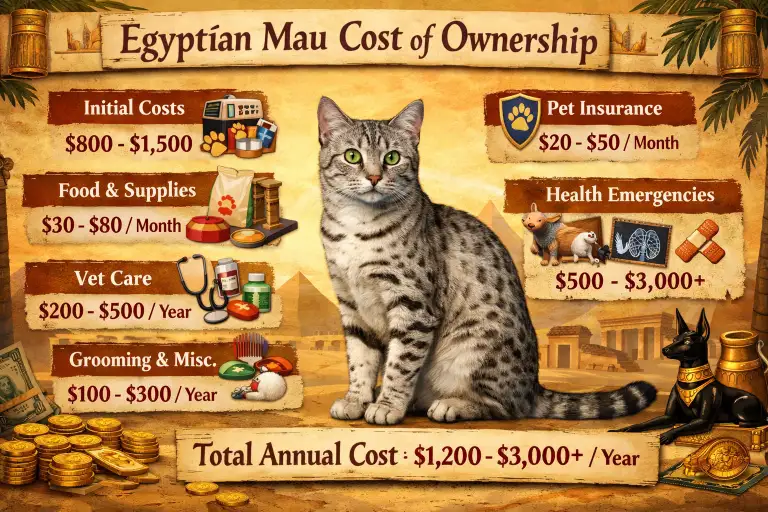
When you first bring an Egyptian Mau into your home, there are several one-time costs you need to plan for. These are expenses that only happen once, but they can add up quickly. The first big cost is adoption or purchase. Buying from a breeder is more expensive than adopting from a shelter, and prices vary depending on pedigree, age, and location. Egyptian Maus are rare, so expect higher initial costs than common cat breeds.
The next set of costs comes from veterinary care. Your cat will need vaccines, a microchip, and spaying or neutering if it hasn’t already been done. These procedures help prevent future health problems and are important for responsible pet ownership. The initial vet visit may also include a basic health check and parasite prevention.
You also need to prepare your home with basic supplies. Litter boxes, litter, a comfortable bed, food and water bowls, toys, scratching posts, and a carrier are all necessary for your cat’s comfort and safety. You might also consider small extras like pheromone diffusers to help your cat adjust to the new environment. While these aren’t required, they can make life easier for both you and your cat.
Some optional setup costs include cat-proofing your home. Egyptian Maus are active and curious cats, so it’s wise to secure cords, fragile items, and areas where they might get stuck. This is a one-time cost but can prevent accidents or damage. By planning for these initial expenses, you set a solid foundation for your cat’s health and happiness.
Monthly & Recurring Expenses
Egyptian Maus have ongoing costs that repeat every month. The biggest monthly expense is food. High-quality wet or dry food is recommended for their health, and portion control matters to avoid obesity. Treats and snacks are optional but should be included in your monthly budget.
Litter is another recurring cost. You’ll need to replace litter regularly to keep your cat’s space clean and odor-free. Prices vary depending on the type of litter you choose, but this is a monthly must-have.
Routine preventive care also falls under monthly expenses. This includes flea, tick, and parasite prevention medications. Even indoor cats need these treatments, as pests can find their way inside. You may also replace grooming tools or minor toys monthly to keep your cat entertained and well-groomed.
Here’s a simple table showing typical monthly costs for an Egyptian Mau:
| Expense Category | Low Budget | Average Budget | High Budget |
|---|---|---|---|
| Food | $25 | $40 | $70 |
| Litter | $10 | $20 | $35 |
| Preventive care | $5 | $15 | $30 |
| Toys & enrichment | $0 | $10 | $25 |
| Grooming supplies | $0 | $5 | $15 |
| Total per Month | $40 | $90 | $175 |
Annual, Periodic & Unexpected Costs
Some costs don’t happen every month but are important to plan for each year. Routine veterinary visits, booster vaccines, and dental care fall into this category. These visits help catch health problems early and prevent expensive treatments later.
Boarding or pet sitting costs are also periodic expenses. If you travel, you may need someone to care for your cat, and costs can vary depending on services and location. Grooming services, if used, are another annual cost, especially for cats that shed a lot or have long fur.
Unexpected costs are also important to consider. Egyptian Maus are generally healthy but can have emergencies such as injuries, sudden illness, or chronic conditions like urinary problems. Emergency vet visits can be expensive, so having a plan or a financial cushion is essential. Home repairs for damage caused by curious cats are sometimes overlooked but can also add to unexpected costs.
Here’s an example of annual and potential unexpected costs:
| Expense Category | Low Budget | Average Budget | High Budget |
|---|---|---|---|
| Routine vet visits | $50 | $100 | $200 |
| Vaccines & preventive care | $50 | $100 | $200 |
| Boarding / pet sitting | $0 | $100 | $300 |
| Emergency medical care | $0 | $200 | $1000 |
| Grooming services | $0 | $50 | $150 |
| Total per Year | $100 | $550 | $1850 |
Lifetime Cost Estimates & Budget Scenarios
Egyptian Maus can live 12–15 years, so understanding lifetime costs is important. Lifetime expenses include one-time costs, monthly costs multiplied by years, annual costs, and potential emergencies. By planning ahead, you can avoid financial surprises.
Here’s a simplified lifetime cost table for an Egyptian Mau:
| Cost Type | Low Budget | Average Budget | High Budget |
|---|---|---|---|
| One-time initial costs | $300 | $700 | $1,500 |
| Monthly costs (12 yrs) | $5,760 | $12,960 | $25,200 |
| Annual & periodic (12 yrs) | $1,200 | $6,600 | $22,200 |
| Emergencies & unexpected | $0 | $2,400 | $12,000 |
| Total Lifetime Cost | $7,260 | $22,660 | $60,900 |
Costs vary based on lifestyle choices. Indoor cats tend to have lower medical and emergency costs, while outdoor cats face higher risk of injury or illness. Multi-cat households increase food, litter, and vet bills proportionally.
Practical Cost Management & Owner Guidance
Owning an Egyptian Mau is rewarding, but it requires planning. Start by creating a monthly and annual budget for food, litter, preventive care, and vet visits. Tracking expenses helps you adjust if costs rise unexpectedly.
Preventive care is one of the best ways to reduce long-term costs. Regular vet visits, proper nutrition, and safe play reduce the chance of emergencies. Also, choose quality food and litter that balance cost and cat health.
If costs become overwhelming, it’s okay to re-evaluate your cat’s lifestyle. Options like automatic feeders, subscription litter services, and home grooming tools can save money without sacrificing care.
Always plan for emergencies. Even healthy cats can have sudden medical issues, so having a financial cushion or savings fund is wise. With careful budgeting and preparation, Egyptian Maus can live happy, healthy lives without financial stress.
For more detailed pet care tips and budgeting advice, visit ASPCA Pet Care Resources.

Ata Ur Rehman is the founder of Pet Age in Human Years Calculator, an educational platform that provides age conversion charts and lifespan guides for dogs, cats, birds, and other companion animals. His work focuses on helping pet owners understand how animal ages translate into human years using commonly accepted age conversion formulas and published lifespan averages.
The website compiles breed and species lifespan data from kennel clubs, breed organizations, and general animal lifespan studies to present simple and easy-to-understand guides for pet owners worldwide.
This website was created to centralize animal age conversion charts into one easy reference platform for pet owners.