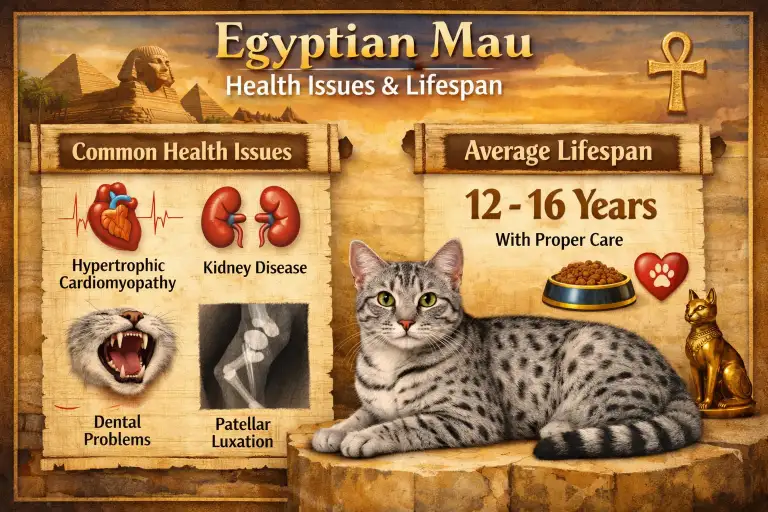
The Egyptian Mau is a unique and beautiful cat breed, known for its spotted coat and energetic personality. Many owners wonder how long these cats live and what health problems they might face. This guide is designed to give you clear, easy-to-understand information about the lifespan and general health of Egyptian Maus. It focuses on what owners can observe, how to keep cats healthy, and what to watch for as they age.
It’s important to remember that every cat is different. Lifespan and health can vary depending on genetics, diet, lifestyle, and veterinary care. Some Egyptian Maus may live well into their late teens, while others may face health challenges earlier. The key is to provide preventive care, a safe environment, and regular checkups.
This guide does not replace veterinary advice. If you notice unusual signs, it’s always safest to contact a veterinarian. Instead, this article is a roadmap to help you understand the typical patterns of health and aging for this breed and give practical tips for everyday care.
Egyptian Maus are active, intelligent cats. They enjoy climbing, chasing, and exploring their environment. Keeping them mentally and physically stimulated can positively affect their overall health and lifespan. Owners who provide enrichment and attentive care often find their cats remain playful and healthy well into their senior years.
Quick Egyptian Mau Overview
| Trait | Description | Health Notes |
|---|---|---|
| Coat | Spotted, short hair | Minimal grooming required |
| Personality | Active, intelligent, alert | Needs mental & physical stimulation |
| Typical Lifespan | 12–16 years | Can vary based on care & environment |
| Common Health Focus | Heart, kidney, dental, weight | Early detection improves quality of life |
| Living Environment | Indoor preferred, supervised outdoor optional | Indoor cats often live longer |
Typical Lifespan of Egyptian Maus (Expectations & Ranges)
Egyptian Maus generally have a lifespan of 12 to 16 years, though some cats may live into their late teens with proper care. Indoor cats usually live longer than outdoor cats because they are protected from accidents, predators, and infectious diseases. Outdoor access can be safe if it is supervised or in a secure area, but indoor living is generally the healthiest choice.
Several factors influence lifespan. Genetics plays a major role, but nutrition, exercise, and veterinary care are equally important. A balanced diet, regular checkups, and maintaining a healthy weight can all help a Mau live longer. Stress levels, social interaction, and a safe environment also play a significant part in overall well-being.
Even within the breed, there can be variation. Some Egyptian Maus experience few health problems, while others may develop issues that require monitoring. Observant owners who notice early signs of illness can often help their cat stay healthy and comfortable for more years.
Lifespan Comparison
| Cat Type | Typical Lifespan | Notes |
|---|---|---|
| Indoor Egyptian Mau | 13–16 years | Protected from outdoor hazards |
| Outdoor Egyptian Mau | 10–14 years | Risk of accidents & infections |
| Average Domestic Cat | 12–15 years | Varies by breed & care |
Common Egyptian Mau Health Issues (High-Level Overview)
While Egyptian Maus are generally healthy cats, there are some health issues that owners should be aware of. Most of these conditions can be monitored with routine checkups and early detection. Understanding what to watch for helps owners prevent serious problems before they become life-threatening.
Heart and kidney health are often important areas for this breed. Kidney function naturally declines with age, and heart problems, while less common, can appear in adult cats. Regular veterinary screenings can detect these conditions early.
Dental health is another area that is sometimes overlooked. Egyptian Maus, like many cats, can develop dental disease that affects appetite, weight, and overall comfort. Daily observation and professional cleaning when recommended can help maintain oral health.
Weight management is crucial. Obesity can lead to metabolic problems such as diabetes, joint stress, and liver issues. Keeping your Mau active with play and exercise, along with portion-controlled feeding, can reduce these risks.
Common Health Issues in Egyptian Maus
| Condition | Typical Age | Signs to Watch |
|---|---|---|
| Kidney issues | 7+ years | Increased drinking/urination, lethargy |
| Heart problems | 5+ years | Coughing, rapid breathing, fatigue |
| Dental disease | Any age | Bad breath, difficulty eating |
| Obesity & metabolic issues | 2+ years | Weight gain, low activity, overeating |
| Urinary issues | 2+ years | Straining to urinate, frequent trips to litter box |
Preventive Care & Early Detection for a Long, Healthy Life
Preventive care is one of the most effective ways to keep your Egyptian Mau healthy. Regular veterinary visits allow for early detection of potential health problems. Annual checkups are important for adult cats, while seniors may benefit from twice-yearly visits.
Vaccinations and parasite prevention are essential. Flea, tick, and worm treatments protect your cat from common infections. Maintaining a healthy diet and controlling portion sizes help prevent obesity and associated health issues.
Owner observation is key. Changes in eating habits, activity levels, grooming, or litter box behavior can indicate that something is off. Recording these changes and sharing them with your veterinarian helps catch problems early.
Routine grooming, including brushing and checking teeth, ears, and nails, also supports good health. Even short-haired breeds like Egyptian Maus benefit from regular attention, which can also strengthen the human-cat bond.
Preventive Care Checklist
| Life Stage | Recommended Checkups | Key Preventive Actions |
|---|---|---|
| Kitten (0–1 yr) | Vet exams every 2–3 months | Vaccinations, parasite prevention, socialization |
| Adult (1–7 yrs) | Annual vet visits | Weight check, dental care, vaccinations, wellness screening |
| Senior (7+ yrs) | Twice yearly | Kidney & heart screening, dental check, mobility monitoring |
Aging, Warning Signs & Quality of Life Tips
As Egyptian Maus age, some changes are natural, but certain signs should never be ignored. Older cats may move more slowly, sleep more, or become less active, but sudden changes in behavior, appetite, or elimination can signal health problems.
Providing a comfortable environment helps older cats maintain quality of life. Soft bedding, easy access to food, water, and litter boxes, and safe climbing spaces reduce stress. Mental stimulation with interactive toys and gentle play keeps them engaged and happy.
Watching for early warning signs is essential. Loss of appetite, sudden weight change, difficulty walking, or frequent vomiting are signals to contact your veterinarian promptly. Early detection can significantly improve outcomes for age-related conditions.
Maintaining a balanced routine, proper diet, and regular veterinary monitoring can help senior Egyptian Maus stay healthy and comfortable. Quality of life is just as important as longevity, and small adjustments can make a big difference for your cat.
Warning Signs to Watch in Aging Egyptian Maus
| Sign Category | Example Changes | Action |
|---|---|---|
| Appetite & Weight | Loss of appetite, sudden weight loss/gain | Monitor closely, consult vet if persistent |
| Activity & Mobility | Slower movement, reluctance to jump | Encourage gentle play, vet check if worsening |
| Behavior | Hiding, aggression, vocalization | Track changes, discuss with vet |
| Elimination | Straining to urinate/defecate, accidents | Vet consultation required |
Egyptian Maus are intelligent, active, and affectionate cats that can live long, healthy lives with attentive care. Understanding typical lifespan ranges, common health concerns, preventive measures, and aging signs can help owners make informed decisions for their cat’s well-being. Regular veterinary checkups, mental and physical stimulation, and early detection of health changes are the keys to a happy, thriving Egyptian Mau.
For more expert guidance on feline health and preventive care, visit the American Association of Feline Practitioners.

Ata Ur Rehman is the founder of Pet Age in Human Years Calculator, an educational platform that provides age conversion charts and lifespan guides for dogs, cats, birds, and other companion animals. His work focuses on helping pet owners understand how animal ages translate into human years using commonly accepted age conversion formulas and published lifespan averages.
The website compiles breed and species lifespan data from kennel clubs, breed organizations, and general animal lifespan studies to present simple and easy-to-understand guides for pet owners worldwide.
This website was created to centralize animal age conversion charts into one easy reference platform for pet owners.