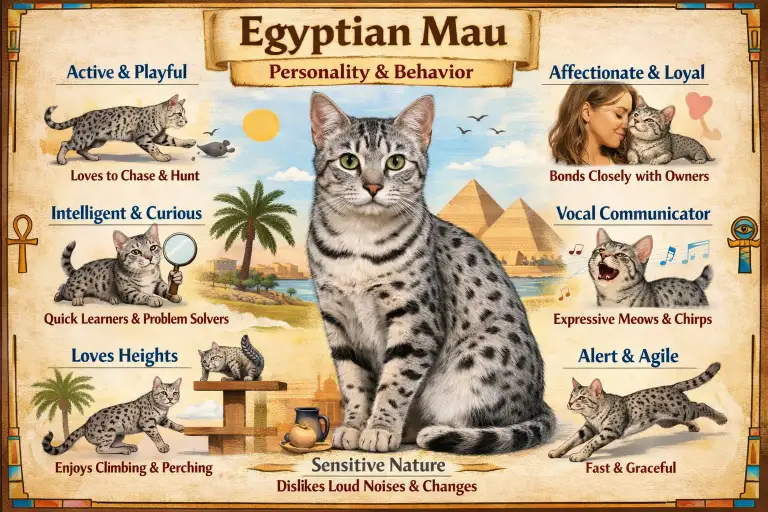
The Egyptian Mau is a fascinating cat breed known for its unique personality. These cats are naturally curious and intelligent. Unlike some cats that prefer quiet and calm environments, Egyptian Maus are alert and love to explore. They notice even small changes in their surroundings, which makes them quick learners. Their personality can be playful one moment and quietly affectionate the next.
These cats are also very agile and athletic. They enjoy climbing, jumping, and running, which shows their energetic side. However, their intelligence means they also enjoy puzzles and games that challenge their mind. Egyptian Maus often form strong bonds with their owners, but they tend to be selective about who they trust.
Affection in an Egyptian Mau is not always about sitting on your lap. Many Maus prefer to be near you, watch you, or play interactive games. They can show love through gentle head bumps, soft chirps, and following you around the house. This breed is highly social but likes to decide when and how to engage.
Every Egyptian Mau is different, and personality can vary. Some may be shy at first, needing time to warm up, while others are confident explorers from the start. Understanding each Mau’s personality helps owners provide the right mix of play, attention, and safe space for comfort.
Understanding Egyptian Mau Behavior
Egyptian Maus have clear and interesting behaviors. One of the most noticeable is their vocalization. They often make chirps, trills, and soft meows that sound almost like bird calls. These sounds can mean they are excited, curious, or trying to communicate with you. Paying attention to these sounds helps you understand what your cat wants or feels.
Daily activity is also important. Egyptian Maus are very active, especially during morning and evening hours. They love running, jumping, and exploring new spaces. Providing climbing shelves, interactive toys, and safe areas to explore helps them use their energy in healthy ways.
Maus are intelligent cats, and they enjoy problem-solving. Puzzle feeders, hidden treats, and small games can keep their minds engaged. Without mental stimulation, some Maus may become bored, which can lead to extra meowing or restless behavior.
They also notice household routines and can quickly adapt to them. For example, they may follow you to the kitchen at the same time every day or expect playtime before bed. Understanding these habits helps owners build a bond based on trust and predictability.
Social Behavior — With People and Other Animals
Egyptian Maus form close bonds with their owners, but they are selective about who they trust. They often prefer one or two people to interact with most closely, although they can be friendly with everyone in the household. Maus can show affection by following you around, rubbing against your legs, or sitting nearby while you read or work.
With children, Egyptian Maus are gentle and playful, enjoying interactive games. They usually tolerate careful handling but may become shy if a child is too rough. Teaching kids how to interact respectfully with a Mau ensures a happy relationship.
When it comes to other pets, Maus can get along with other cats and even dogs if introductions are gradual. They respect boundaries and often communicate clearly with other animals using body language and chirps. Their social behavior is based on trust and comfort, rather than dominance.
These cats enjoy company but also value their independence. They may want attention at certain times and prefer to be alone at others. Recognizing these patterns allows owners to create a balanced environment where the Mau feels safe and loved.
Play, Energy & Natural Instincts
Egyptian Maus are highly energetic and playful. They enjoy chasing toys, climbing shelves, and performing agile jumps. Their athletic abilities are not just for fun—they also help satisfy their natural hunting instincts. Watching a Mau stalk a toy or leap to catch it is a glimpse into their instinctual behavior.
Interactive play is important for this breed. Toys that move or challenge them mentally, like puzzle feeders or dangling toys, keep them engaged. Without proper play, Maus can get bored and become restless or vocal.
Here is a quick reference table for Egyptian Mau activity and behavior traits:
| Trait / Behavior | Typical Expression | What It Means to You |
|---|---|---|
| High energy | Running, jumping, climbing | Needs exercise and play daily |
| Intelligent | Puzzle solving, learning tricks | Requires mental stimulation |
| Affectionate | Rubbing, chirping, following | Shows love in subtle ways |
| Playful | Chasing toys, stalking movements | Enjoys interactive games |
| Vocal | Chirps, trills, soft meows | Communicating excitement or attention |
Egyptian Maus also enjoy observing their environment. They can watch birds, people, or other pets for long periods. This curiosity helps keep their minds active and satisfies their natural alertness.
Egyptian Mau Behavior Insights & FAQs
Many Egyptian Mau behaviors are normal but misunderstood. For example, their chirping or trilling is not a problem—it’s their way of talking to you. Their independence does not mean they are unfriendly; they just choose when and how to show affection.
Some common questions include:
- Why does my Mau chirp at me? They are communicating excitement or attention.
- Is my Mau too independent? Most are naturally selective in bonding.
- How can I encourage healthy play? Use interactive toys and climbing areas.
- Will my Mau get along with dogs? Usually yes, with gradual introductions.
- Why does my Mau hide sometimes? It’s normal—they seek safe spaces when resting.
Understanding these behaviors helps owners provide the right environment. Observing, offering play, and respecting their independence keeps your Mau happy and healthy.
For more detailed information about Egyptian Mau behavior and temperament, you can visit The Cat Fanciers’ Association.

Ata Ur Rehman is the founder of Pet Age in Human Years Calculator, an educational platform that provides age conversion charts and lifespan guides for dogs, cats, birds, and other companion animals. His work focuses on helping pet owners understand how animal ages translate into human years using commonly accepted age conversion formulas and published lifespan averages.
The website compiles breed and species lifespan data from kennel clubs, breed organizations, and general animal lifespan studies to present simple and easy-to-understand guides for pet owners worldwide.
This website was created to centralize animal age conversion charts into one easy reference platform for pet owners.