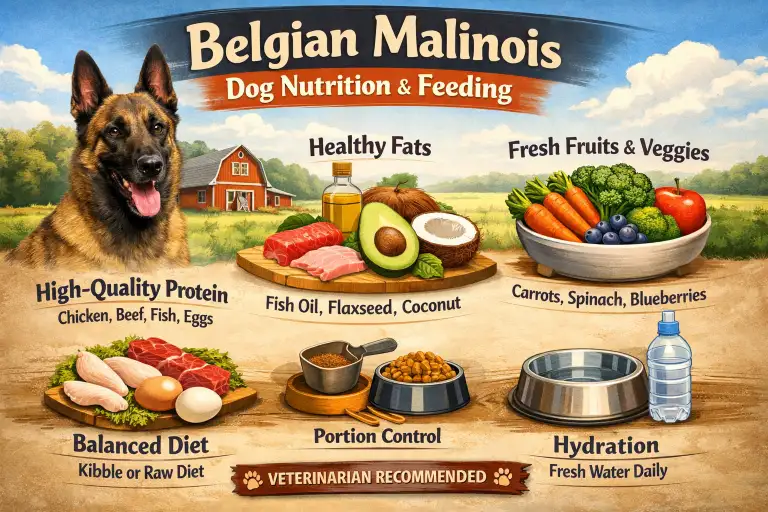
Belgian Malinois are not average dogs, and feeding them like one is one of the most common mistakes owners make. This breed was developed for demanding work requiring speed, endurance, focus, and rapid recovery. Whether your Malinois is a working dog, sport competitor, or highly active companion, nutrition directly affects physical performance, mental stability, joint health, digestion, and long-term soundness.
This guide helps you make practical, evidence-based feeding decisions for a Belgian Malinois at any life stage. It focuses on real-world ownership rather than trends or marketing claims and follows veterinary nutrition principles used for high-energy and working breeds.
A properly fed Belgian Malinois is easier to train, maintains lean muscle mass, recovers faster from exercise, and shows steadier energy and focus. Good nutrition also reduces the risk of soft stool, erratic energy, joint stress, dull coat quality, and “skinny-fat” body condition. Poor nutrition commonly appears as restlessness, excessive hunger, inconsistent stools, poor focus, or gradual weight changes that owners often miss.
Belgian Malinois have fast metabolisms and place heavy demands on muscles, joints, and the nervous system. A daily-trained pet, a sport dog, and a full working Malinois all need different nutrition even at the same weight. Feeding only by cups instead of calories and workload often leads to imbalance.
Nutrition also affects injury risk and longevity. Proper protein supports muscle repair, fat fuels sustained work and mental clarity, and balanced micronutrients support joints, immune health, and recovery. Long-term poor feeding increases the risk of digestive sensitivity, joint wear, chronic inflammation, and early burnout in this breed.
The goal of this article is not to promote a specific diet style but to help you evaluate what goes into your dog’s bowl and adjust feeding based on age, activity, and individual needs.
What to Feed a Belgian Malinois: Nutritional Requirements Explained
Belgian Malinois need diets that prioritize muscle support, energy, and recovery. Low-quality or poorly balanced food often leads to low stamina, loose stool, constant hunger, poor focus, and difficulty maintaining lean mass.
Protein supports muscle development and repair. This breed typically needs more protein than average pet dogs, especially when training or working.
Fat is the primary fuel source, supporting endurance, brain function, hormone balance, and coat health.
Carbohydrates and fiber support digestion and steady energy but should not replace protein or fat.
Vitamins and minerals support joints, bones, immune function, and recovery.
| Nutrient | Recommended Range | Why It Matters |
|---|---|---|
| Protein | 26–32% (dry matter) | Muscle strength and recovery |
| Fat | 14–22% | Energy and mental focus |
| Fiber | 3–6% | Digestion and stool quality |
| Carbohydrates | Moderate | Gut health and steady energy |
Active and working Malinois usually perform best at the higher end of protein and fat ranges.
How Much to Feed a Belgian Malinois and How Often
There is no single feeding amount for all Belgian Malinois. Proper intake depends on body weight, age, metabolism, and daily workload. Calories and body condition matter more than scoop size.
| Weight | Low Activity | Moderate Activity | High / Working |
|---|---|---|---|
| 50 lbs | 1,200 kcal | 1,500 kcal | 1,900+ kcal |
| 60 lbs | 1,400 kcal | 1,700 kcal | 2,100+ kcal |
| 70 lbs | 1,600 kcal | 2,000 kcal | 2,400+ kcal |
These values are starting points and should be adjusted based on body condition and performance.
Most adults do best on two meals per day. Puppies require more frequent meals, while seniors benefit from smaller, easier-to-digest portions. A healthy Belgian Malinois should appear lean and athletic, with a visible waist and easily felt ribs. Fresh water should always be available, especially after exercise.
Best Food Types for Belgian Malinois
There is no single best food type for every Belgian Malinois. The ideal choice depends on lifestyle, budget, and your ability to manage food safely and consistently.
| Food Type | Pros | Cons | Best For |
|---|---|---|---|
| Kibble | Balanced, affordable | Lower moisture | Most owners |
| Raw | High protein, palatable | Safety risks | Experienced handlers |
| Fresh | Highly digestible | Expensive | Sensitive dogs |
| Canned | High moisture | Dental concerns | Poor drinkers |
| Freeze-dried | Portable, dense | High cost | Travel and training |
| Homemade | Full control | Hard to balance | Vet-guided only |
Regardless of food type, nutritional balance matters more than format.
Treats, Feeding Mistakes, and Special Situations
Belgian Malinois frequently show feeding-related issues due to high drive and fast metabolism. Many problems come from over-treating, low-fat diets, or rapid food changes.
| Issue or Situation | Likely Cause | Practical Fix |
|---|---|---|
| Loose stool | Fast food switch | Slow transition |
| Constant hunger | Low fat intake | Increase fat slightly |
| Poor appetite | Too many treats | Set meal schedule |
| Weight loss | Underfeeding | Increase calories |
| Puppy growth | Excess calories | Controlled portions |
| Injury recovery | Higher demand | Extra protein and omega-3s |
Treats should stay under 10% of daily calories and be counted as part of total intake. Most feeding issues improve once calories, fat levels, and consistency are corrected.
For official nutrition standards and how complete dog foods are formulated, you can review the Association of American Feed Control Officials (AAFCO) dog food nutrient profiles, which outline the minimum nutritional requirements used by reputable pet food manufacturers worldwide.

Ata Ur Rehman is the founder of Pet Age in Human Years Calculator, an educational platform that provides age conversion charts and lifespan guides for dogs, cats, birds, and other companion animals. His work focuses on helping pet owners understand how animal ages translate into human years using commonly accepted age conversion formulas and published lifespan averages.
The website compiles breed and species lifespan data from kennel clubs, breed organizations, and general animal lifespan studies to present simple and easy-to-understand guides for pet owners worldwide.
This website was created to centralize animal age conversion charts into one easy reference platform for pet owners.