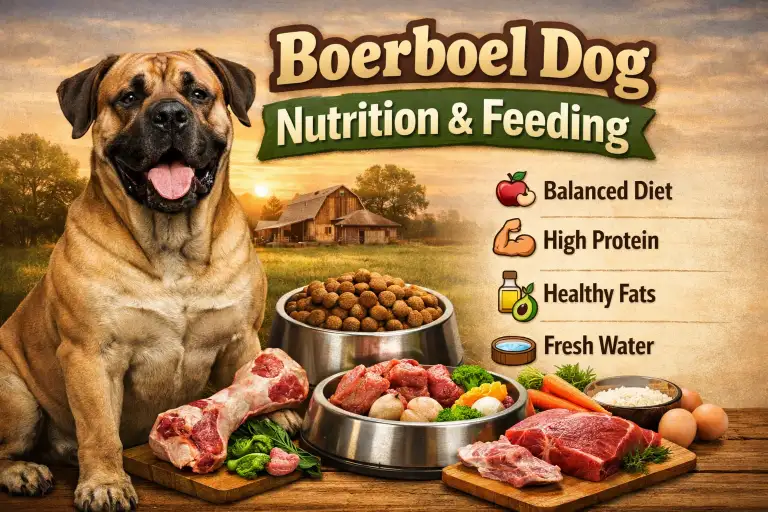
Boerboels are powerful, large-framed guardian dogs with heavy bone structure, dense muscle mass, and a naturally slow maturation rate. Because of this, nutrition plays a far bigger role in their long-term health than it does for many average-sized breeds. Feeding a Boerboel “like any other dog” is one of the most common mistakes owners make—and it often shows up later as joint disease, excess weight, low stamina, or digestive issues.
This guide is designed to help you understand what a Boerboel actually needs in the bowl, not what dog-food marketing claims suggest. Whether you’re raising a fast-growing Boerboel puppy, feeding an adult family guardian, or managing a slower senior, the right diet directly affects strength, mobility, behavior, and lifespan.
Why Boerboel Nutrition Is Different From Other Breeds
Boerboels are classified as large to giant-breed dogs, and that alone changes their nutritional priorities. Their bones and joints take longer to develop, their caloric needs can swing widely based on activity level, and excess weight places significant stress on hips, elbows, and the spine. Feeding too much—or the wrong balance of nutrients—can be just as harmful as feeding too little.
For Boerboels, nutrition must support:
- Controlled growth during puppyhood to protect developing joints
- Lean muscle maintenance without excessive fat gain
- Strong bones and connective tissue under heavy body weight
- Stable energy levels for guarding, training, and daily life
- Digestive tolerance in a breed prone to large-meal issues
How Diet Impacts Health, Behavior, and Longevity
A well-fed Boerboel is not just heavier or more muscular—it is more balanced overall. Proper nutrition helps regulate appetite, reduces the risk of obesity, supports calm but alert behavior, and lowers the chance of chronic conditions commonly seen in large breeds.
Poor feeding choices, on the other hand, often lead to:
- Rapid growth and early joint degeneration
- Excess weight despite “normal” portion sizes
- Frequent loose stool or gas from inappropriate diets
- Low endurance or lethargy
- Increased risk of bloat when feeding habits are unmanaged
How Boerboel Nutrition Impacts Health
| Nutrition Area | Why It Matters for Boerboels |
|---|---|
| Growth control | Prevents joint damage and skeletal stress during puppyhood |
| Muscle support | Maintains strength without unnecessary weight gain |
| Joint health | Reduces strain on hips, elbows, and spine |
| Weight management | Lowers risk of obesity-related disease |
| Energy balance | Supports guarding, training, and daily activity |
| Longevity | Helps preserve mobility and quality of life as the dog ages |
What This Guide Will Help You Do
By the end of this guide, you’ll be able to:
- Understand your Boerboel’s true nutritional requirements
- Choose appropriate food types for each life stage
- Feed the correct amount based on weight and activity level
- Avoid common large-breed feeding mistakes
- Recognize when diet changes or veterinary guidance are needed
Everything that follows is grounded in large-breed nutrition principles, real-world feeding experience, and veterinary-aligned recommendations—so you can feed your Boerboel with confidence, not guesswork.
Boerboel Nutritional Requirements Explained
Boerboels need food that supports strong muscles, heavy bones, and steady growth without pushing the body too fast. Because they are large dogs, their nutrition must be balanced very carefully. Too much of one nutrient—especially during puppyhood—can cause long-term health problems.
Protein, Fat, and Carbohydrates for Boerboels
Protein is the most important nutrient for a Boerboel. It helps build and maintain muscle, supports the immune system, and keeps the dog strong and active. Boerboels do best with moderate to high-quality protein, not extremely high levels that force rapid growth.
Fat provides energy and helps keep the skin and coat healthy. Because Boerboels are heavy dogs, fat levels should support activity without leading to weight gain.
Carbohydrates are not required, but they can provide energy and fiber when they come from good sources like rice, oats, or vegetables. Poor-quality fillers can cause digestive problems.
| Nutrient | Recommended Range for Boerboels | Why It Matters |
|---|---|---|
| Protein | 22–28% (dry matter) | Builds muscle without forcing fast growth |
| Fat | 10–16% | Provides energy and supports joints and skin |
| Carbohydrates | Varies | Adds energy and fiber when from quality sources |
Vitamins and Minerals Boerboels Need
Large breeds like Boerboels are very sensitive to mineral balance, especially calcium and phosphorus. Too much calcium during growth can damage joints and bones. This is why large-breed formulas are strongly recommended.
Other vitamins and minerals support joints, immunity, and skin health.
| Nutrient | Why It Is Important for Boerboels |
|---|---|
| Calcium & Phosphorus | Supports bone growth when properly balanced |
| Omega-3 fatty acids | Helps joints, skin, and inflammation control |
| Zinc | Supports skin, coat, and immune health |
| Vitamin E | Protects cells and supports muscle recovery |
Supplements: Helpful or Harmful?
Many owners believe adding supplements will make their Boerboel stronger or grow faster. In reality, adding supplements without guidance can be dangerous, especially calcium products for puppies.
If your Boerboel eats a complete and balanced dog food made for large breeds, supplements are usually not needed. Supplements should only be added when recommended by a veterinarian.
Common supplement mistakes include:
- Adding calcium to puppy food
- Overusing joint supplements in young dogs
- Using human vitamins
How to Read Dog Food Labels for Boerboels
Understanding dog food labels helps you avoid marketing tricks and choose the right food. The most important part is not the brand name—it’s whether the food meets large-breed standards.
| Label Section | What to Look For |
|---|---|
| Ingredient list | Named animal proteins listed first |
| Guaranteed analysis | Protein and fat within large-breed ranges |
| AAFCO statement | Says “complete and balanced” |
| Breed claim | Mentions large-breed or growth control |
Avoid foods that promise “extra fast growth,” “extreme protein,” or “miracle muscle building.” These claims often cause more harm than good in large dogs.
Feeding a Boerboel is about balance, not excess. When nutrients are in the right range, the dog grows steady, stays lean, and moves better for years to come.
How Much to Feed a Boerboel (By Age, Weight, and Activity Level)
Knowing how much to feed a Boerboel is one of the hardest parts of ownership. These dogs are large, heavy, and very strong, but they do not need endless food. Feeding too much is just as harmful as feeding too little, especially for joints and long-term health.
The right amount depends on age, body weight, and daily activity, not just what the food bag suggests.
Daily Calorie Needs for Boerboels
Boerboels vary widely in size. Some are active guard or working dogs, while others live a calm family life. Use calories as a guide, then adjust based on body shape and energy level.
| Boerboel Weight | Daily Calories (Low Activity) | Daily Calories (Active) |
|---|---|---|
| 45 kg (100 lb) | 1,900–2,100 | 2,300–2,600 |
| 55 kg (120 lb) | 2,100–2,400 | 2,600–2,900 |
| 65 kg (145 lb) | 2,300–2,600 | 2,900–3,300 |
| 75 kg (165 lb) | 2,500–2,900 | 3,200–3,700 |
These numbers are starting points. Always adjust based on body condition, not hunger behavior.
Feeding Boerboel Puppies
Boerboel puppies grow fast but should not grow too fast. Overfeeding causes stress on bones and joints that can last a lifetime.
| Puppy Age | Meals Per Day | Key Feeding Focus |
|---|---|---|
| 8–16 weeks | 3–4 | Controlled growth, not size |
| 4–6 months | 3 | Balanced calories and minerals |
| 6–12 months | 2–3 | Lean growth, joint protection |
Puppy food must be labeled for large-breed growth. Do not add calcium or extra meat.
Feeding Adult Boerboels
| Lifestyle | Feeding Notes |
|---|---|
| Family pet | Moderate calories, strict portions |
| Guard or working dog | Higher calories, steady protein |
| Neutered dog | Lower calories to avoid weight gain |
Avoid free-feeding. Boerboels are strong dogs but poor self-regulators when food is always available.
Feeding Senior Boerboels
| Senior Change | Feeding Adjustment |
|---|---|
| Less activity | Reduce calories |
| Stiff joints | Add vet-approved joint support |
| Weight gain | Smaller portions, same protein |
Do not cut protein too low. Seniors still need muscle support.
Feeding Frequency and Bloat Prevention
| Best Practice | Why It Helps |
|---|---|
| 2 meals per day | Reduces stomach load |
| No exercise 1 hour before/after meals | Lowers bloat risk |
| Slow feeder bowls | Prevents fast eating |
Using Body Condition Score at Home
| Body Area | What You Should See or Feel |
|---|---|
| Ribs | Easy to feel, not sticking out |
| Waist | Visible from above |
| Belly | Slight tuck from the side |
If ribs are hidden or the waist disappears, reduce food. If ribs are sharp and visible, increase food slowly.
Feeding a Boerboel correctly is about steady balance, not maximum size. A lean Boerboel moves better, lives longer, and stays healthier.
Best Food Choices for Boerboels
Boerboels do not need fancy or extreme diets. They need safe, balanced food that supports large bones, strong muscles, and steady energy. The best food is one that fits your dog’s age, health, activity level, and your ability to feed it correctly every day.
Below are the main food options Boerboel owners use, with clear pros and cons.
Common Dog Food Types for Boerboels
| Food Type | Why Owners Choose It | What to Watch Out For |
|---|---|---|
| Dry kibble | Easy to store, balanced, affordable | Choose large-breed formulas only |
| Raw food | High meat content, very appealing | Bacteria risk, needs strict handling |
| Fresh cooked | Easy to digest, good ingredient control | Higher cost, must be balanced |
| Canned food | Soft texture, good for seniors | High calories, smaller portions |
| Freeze-dried | Long shelf life, nutrient-dense | Can be expensive |
Large-breed labeled foods are safer because they control calcium and calorie density.
Pros and Cons of Each Feeding Style
| Feeding Style | Main Benefits | Main Risks |
|---|---|---|
| Kibble | Complete nutrition, vet-recommended | Poor brands use fillers |
| Raw | High protein, shiny coat | Unsafe if unbalanced |
| Fresh cooked | Gentle on digestion | Needs proper formulation |
| Homemade | Full control of ingredients | Very easy to do wrong |
Homemade diets should never be fed without guidance from a veterinary nutritionist.
Grain-Free Diets: Facts vs Myths
Grain-free food is not required for Boerboels. Most dogs digest grains like rice and oats very well. Grain-free diets should only be used if your dog has a confirmed allergy.
Unnecessary grain-free feeding has been linked to heart problems in some dogs. Always speak with a vet before switching.
Large dogs need plenty of water every day, especially when eating dry food.
| Boerboel Weight | Daily Water Intake |
|---|---|
| 45–55 kg | 3–4 liters |
| 56–65 kg | 4–5 liters |
| 66–75 kg | 5–6 liters |
Fresh water should always be available. Clean bowls daily.
Simple Feeding Tips That Work
- Feed the same food at the same times each day
- Avoid mixing many food types suddenly
- Measure food with a cup or scale
- Watch your dog’s body shape, not just hunger
The best food for a Boerboel is one that keeps them lean, active, and comfortable, not the one with the loudest marketing claims.
Common Boerboel Feeding Problems, Special Diets, and FAQs
Even with good food, many Boerboel owners face feeding problems at some point. These issues are usually fixable with small changes, not drastic diets. Because Boerboels are large dogs, feeding mistakes show faster and can cause bigger health problems if ignored.
Common Feeding Problems and Simple Solutions
| Problem | What Owners Often See | What Usually Helps |
|---|---|---|
| Picky eating | Skips meals, eats only at night | Set meal times, stop free-feeding |
| Weight gain | Heavy body, low energy | Measure food, reduce treats |
| Loose stool | Soft or runny poop | Slow food changes, simpler diet |
| Always hungry | Begging, food obsession | Check portions, add fiber |
| Fast eating | Swallows food quickly | Use slow feeder bowls |
Most problems are caused by overfeeding, too many treats, or fast food changes.
Special Diet Needs for Boerboels
| Situation | Diet Focus |
|---|---|
| Food allergies | Limited ingredients, vet testing |
| Sensitive stomach | Easy-to-digest foods, slow changes |
| Overweight dog | Lower calories, same protein |
| Working or guard dog | Higher calories, steady energy |
| Low-activity dog | Strict portion control |
Never guess with special diets. A vet should guide long-term changes.
Safe and Unsafe Human Foods for Boerboels
| Safe in Small Amounts | Unsafe or Toxic |
|---|---|
| Cooked chicken | Chocolate |
| Plain rice | Grapes and raisins |
| Carrots | Onions and garlic |
| Apples (no seeds) | Xylitol (sweetener) |
| Pumpkin | Alcohol |
Human food should never replace a balanced dog diet.
Treat Rules That Prevent Problems
| Treat Rule | Why It Matters |
|---|---|
| Treats under 10% of calories | Prevents weight gain |
| Use small treats | Better for training |
| Avoid table scraps | Stops begging habits |
| Count treats daily | Keeps portions balanced |
When to See a Vet or Nutrition Expert
Contact a professional if your Boerboel:
- Loses weight without reason
- Gains weight despite strict feeding
- Has long-term diarrhea or vomiting
- Refuses food for more than 48 hours
- Needs a homemade or medical diet
Large dogs hide problems well. Early help prevents long-term damage.
Final Feeding Checklist for Boerboel Owners
| Check | Yes / No |
|---|---|
| Food labeled complete and balanced | ☐ |
| Correct portions measured | ☐ |
| Body shape checked monthly | ☐ |
| Treats limited | ☐ |
| Water always available | ☐ |
Feeding a Boerboel is about consistency, balance, and patience. When the diet is right, these dogs stay strong, calm, and healthy for many years.
For more guidance on large-breed dog nutrition, you can visit the American Kennel Club’s comprehensive guide here.

Ata Ur Rehman is the founder of Pet Age in Human Years Calculator, an educational platform that provides age conversion charts and lifespan guides for dogs, cats, birds, and other companion animals. His work focuses on helping pet owners understand how animal ages translate into human years using commonly accepted age conversion formulas and published lifespan averages.
The website compiles breed and species lifespan data from kennel clubs, breed organizations, and general animal lifespan studies to present simple and easy-to-understand guides for pet owners worldwide.
This website was created to centralize animal age conversion charts into one easy reference platform for pet owners.