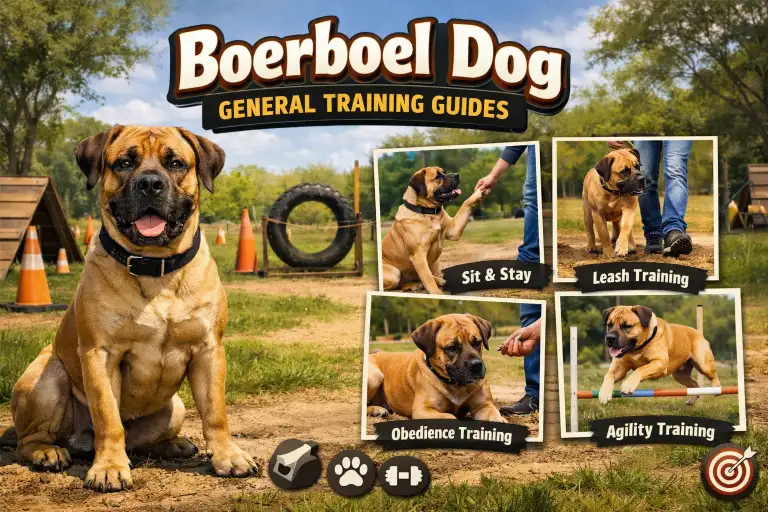
Boerboels are not average family dogs, and they should never be trained like one. Developed as South African farm guardians, the Boerboel was bred to think independently, assess threats calmly, and protect without constant human direction. That background matters, because many training problems seen in this breed are not the result of “stubbornness” or “dominance,” but of owners applying generic dog-training advice to a powerful guardian dog with very different instincts.
This guide is designed for owners who want a safe, well-mannered, and confident Boerboel, not a robot that obeys blindly or a fearful dog that reacts unpredictably. Whether you are raising a Boerboel puppy or working with an adolescent or adult dog, proper training is about structure, consistency, and trust—not force, intimidation, or outdated dominance techniques.
You will learn how Boerboels think, why early and ongoing training is non-negotiable for this breed, and how to build reliable obedience while respecting their natural protective instincts. The goal is practical control in real life: calm leash walking, appropriate responses to strangers, reliable recall, and a dog that can live safely in a family and community setting.
This article focuses on general Boerboel training, not protection work or guard-dog bite training. Those specialized activities require professional oversight and are not suitable for most households. What follows is a responsible, experience-based approach that helps owners raise a balanced guardian—confident without being aggressive, protective without being reactive, and obedient without being suppressed.
When trained correctly, a Boerboel is steady, discerning, and deeply loyal. This guide shows you how to build that outcome from the very beginning.
Why Boerboel Training Is Non-Negotiable
Training a Boerboel is not optional, and it is not something you can “fix later.” This breed grows fast, becomes very strong, and develops guarding instincts early. A poorly trained small dog is an inconvenience. A poorly trained Boerboel is a serious safety risk.
Boerboels were bred to protect property and people. If they are not taught how to behave around family members, visitors, children, and strangers, they will make their own decisions. Those decisions may be wrong, even if the dog is not aggressive by nature. Training gives your Boerboel clear rules, clear boundaries, and clear guidance on what is normal and what is not.
Good training also protects the dog. Many Boerboels end up rehomed, restricted, or euthanized not because they are “bad dogs,” but because owners underestimated the breed and delayed training. Early structure prevents fear, confusion, and stress, which are common causes of behavior problems in large guardian breeds.
Below is a simple comparison that shows why training matters so much for this breed.
Untrained vs Properly Trained Boerboel Outcomes
| Area | Untrained Boerboel | Properly Trained Boerboel |
|---|---|---|
| Leash behavior | Pulls hard, difficult to control | Walks calmly with handler |
| Strangers | Overreacts or becomes suspicious | Observes calmly, waits for cues |
| Family safety | Jumps, knocks over people | Respects space and rules |
| Guarding instincts | Acts on instinct alone | Responds to owner guidance |
| Stress level | Easily overwhelmed or reactive | Confident and emotionally stable |
| Owner risk | High liability and safety concerns | Safe, predictable companion |
Training is not about breaking a Boerboel’s spirit. It is about teaching self-control. A well-trained Boerboel is calm, confident, and easier to manage in real life situations like vet visits, walks, guests coming over, or living in a busy household.
If you delay training, problems often appear during adolescence, when the dog is already large and powerful. Starting early and staying consistent makes training easier, safer, and more successful.
Understanding Boerboel Behavior and Temperament
To train a Boerboel well, you must first understand how this breed thinks. Boerboels are calm, confident, and naturally protective. They were bred to watch, assess, and act only when needed. This is very different from high-energy or people-pleasing breeds.
A Boerboel is not trying to “dominate” you. Most training problems happen because the dog is unsure, under-trained, or given mixed rules. When a Boerboel does not know what is expected, it will rely on instinct. For a guardian breed, that instinct is to protect first and ask questions later.
Boerboels mature slowly in the mind, even though their body grows fast. A young Boerboel may look like an adult dog but still think like a puppy. This mismatch often leads owners to expect too much, too soon. Patience and steady training are very important.
They are also very aware of their home and family. This makes them loyal, but it also means they notice changes, new people, and new situations quickly. Proper training teaches the dog how to stay calm and look to the owner for guidance instead of reacting on its own.
The table below explains common Boerboel traits and how training should respond to them.
Boerboel Traits and What They Mean for Training
| Natural Trait | What Owners Often Think | What the Dog Really Needs |
|---|---|---|
| Protective | “My dog is aggressive” | Calm rules and clear guidance |
| Confident | “My dog is stubborn” | Consistent training and patience |
| Independent | “My dog ignores me” | Motivation and clear rewards |
| Reserved with strangers | “My dog is not social” | Safe, controlled social exposure |
| Strong and powerful | “My dog will grow out of it” | Early leash and impulse training |
Understanding these traits helps you train smarter, not harder. When training matches the breed’s nature, Boerboels learn faster and show fewer behavior problems. Calm leadership, clear rules, and steady routines work better than force or harsh corrections.
Step-by-Step Boerboel Training Method (Puppies & Adults)
Training a Boerboel works best when it is calm, clear, and consistent. This breed does not respond well to shouting, rough handling, or confusing rules. Short daily sessions, clear rewards, and steady leadership are more effective than long or harsh training.
Always train in a quiet place first. As your dog improves, slowly add distractions like people, sounds, and new locations. Move forward only when your Boerboel is calm and focused at the current level.
Training should cover basic control skills early. These include walking on a loose leash, sitting on command, staying calm around people, and coming when called. These skills keep everyone safe and help your dog understand your guidance.
Use rewards your Boerboel values. For most dogs, this means food, praise, and calm physical affection. Reward the correct behavior right away so the dog clearly connects the action with the reward.
The table below shows how training focus changes as your Boerboel grows.
Boerboel Training Timeline (Puppy to Adult)
| Age Stage | Main Training Focus | Owner Priority | Common Mistake |
|---|---|---|---|
| 8–16 weeks | Social exposure and basic rules | Build trust and calm confidence | Too little social experience |
| 4–6 months | Leash skills and simple commands | Consistency every day | Expecting perfect obedience |
| 6–12 months | Impulse control and boundaries | Calm leadership | Skipping training due to size |
| Adult | Reliability and real-life practice | Maintain structure | Stopping training too early |
Training sessions should be short but regular. Boerboels learn best when training feels routine, not stressful.
Daily Boerboel Training Session Structure
| Training Element | Recommendation |
|---|---|
| Session length | 10–15 minutes |
| Sessions per day | 1–2 short sessions |
| Mental work | Commands, focus games |
| Physical work | Walks, controlled play |
| Best environment | Quiet at first, then gradual distractions |
Training should always end on a positive note. If your Boerboel becomes tired or distracted, stop and try again later. Progress comes from steady practice over time, not from pushing too hard in one session.
This method works for puppies and adult dogs, but older dogs may need more patience and slower steps. With consistency, most Boerboels become reliable and calm companions.
Common Boerboel Training Problems and When to Get Help
Even with good training, Boerboels can show problem behaviors. This does not mean you have failed. It usually means the dog needs clearer rules, better timing, or more guidance. The key is to notice problems early and respond the right way.
One common issue is leash pulling. Because Boerboels are strong, pulling can quickly become unsafe. This usually happens when leash training starts too late or is not practiced often enough. Another common problem is ignoring commands, especially around new people or places. This often means the dog has not learned to focus under distractions yet.
Some Boerboels become overprotective. They may block guests, bark deeply, or watch strangers closely. This behavior can turn into reactivity if not managed. Training should teach the dog to stay calm and look to the owner for direction instead of acting on instinct.
The table below shows common problems, why they happen, and what owners should do.
Boerboel Training Problems and Practical Fixes
| Problem Behavior | Likely Cause | Correct Action |
|---|---|---|
| Pulling on leash | Poor leash foundation | Restart leash training in quiet areas |
| Ignoring commands | Too many distractions | Train in low-distraction settings first |
| Overprotective behavior | Unclear rules | Teach calm greetings and place commands |
| Reacting to strangers | Lack of social practice | Controlled exposure with rewards |
| Growling or snapping | Fear or stress | Stop training and seek professional help |
Some behaviors need professional support. If your Boerboel shows repeated aggression, fear-based biting, or sudden behavior changes, do not try to fix it alone. A qualified trainer or veterinary behavior expert can assess the situation safely.
Getting help early is a sign of responsible ownership, not failure. With the right guidance, many serious problems can be managed or improved.
For science-based guidance on humane, effective dog training methods, see the American Veterinary Society of Animal Behavior’s position on positive reinforcement training: https://avsab.org/resources/position-statements/

Ata Ur Rehman is the founder of Pet Age in Human Years Calculator, an educational platform that provides age conversion charts and lifespan guides for dogs, cats, birds, and other companion animals. His work focuses on helping pet owners understand how animal ages translate into human years using commonly accepted age conversion formulas and published lifespan averages.
The website compiles breed and species lifespan data from kennel clubs, breed organizations, and general animal lifespan studies to present simple and easy-to-understand guides for pet owners worldwide.
This website was created to centralize animal age conversion charts into one easy reference platform for pet owners.