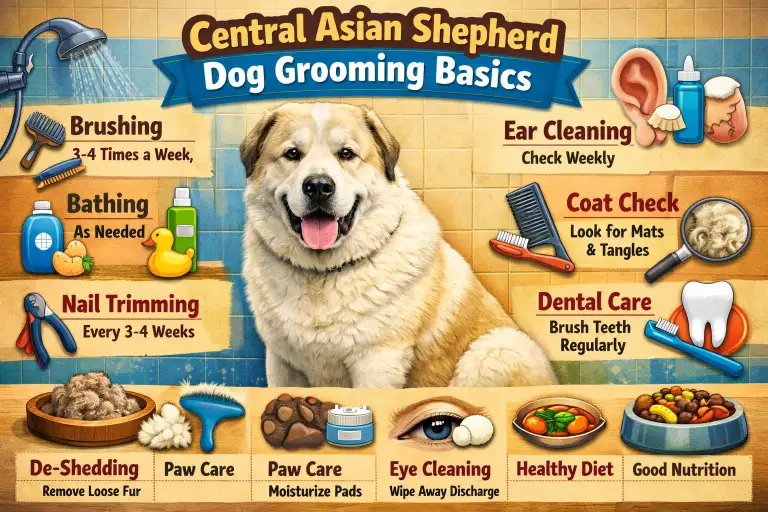
Central Asian Shepherd Dog grooming is often misunderstood. Because this breed is rugged, outdoor-capable, and naturally clean, many owners assume grooming is optional. In reality, proper grooming is essential for coat health, skin protection, comfort, and early problem detection, even though the routine is simpler than for many long-coated breeds.
This guide is designed to help you understand what grooming this breed actually needs—and just as importantly, what it does not need. Central Asian Shepherd Dogs have a functional working coat developed to protect them from extreme cold, heat, wind, dirt, and moisture. Grooming should support that natural design, not interfere with it.
When grooming is done correctly:
- The coat insulates properly in both hot and cold weather
- Seasonal shedding is manageable instead of overwhelming
- Skin stays healthy and resistant to infection
- Issues like parasites, pressure sores, or irritation are noticed early
When grooming is ignored or done incorrectly, problems tend to show up slowly—excessive shedding indoors, persistent odor, dry or flaky skin, hidden wounds, and coat damage that takes months to recover.
Grooming Overview at a Glance
| Grooming Area | Effort Level | What Owners Should Expect |
|---|---|---|
| Brushing | Moderate | Weekly maintenance, daily during shedding seasons |
| Bathing | Low | Only when dirty or smelly |
| Shedding | High (seasonal) | Heavy coat blow 1–2 times per year |
| Haircuts | Not needed | Shaving or trimming is harmful |
| Professional grooming | Occasional | Mainly for heavy deshedding or nail care |
One important thing to understand early: this breed does not need frequent baths or haircuts, and attempting to groom them like a salon-styled dog often causes more harm than good. The goal is not appearance—it’s coat function, skin health, and comfort.
Central Asian Shepherd Dog Coat Type and Shedding Explained
The Central Asian Shepherd Dog has a thick double coat made for hard outdoor work. This coat is not for looks. It protects the dog from heat, cold, rain, snow, dirt, and wind. Once you understand how this coat works, grooming becomes much easier and safer.
This breed has two layers of fur:
- A top coat (also called guard hair) that is long, rough, and water-resistant
- A soft undercoat that keeps the dog warm in winter and sheds heavily when seasons change
Because of this coat type, Central Asian Shepherd Dogs shed a lot at certain times of year, but they usually do not mat like curly or fine-haired breeds.
Central Asian Shepherd Dog Coat Characteristics
| Coat Feature | What It Means for Grooming |
|---|---|
| Coat type | Thick double coat |
| Top coat | Coarse, straight, weather-resistant |
| Undercoat | Dense, soft, sheds seasonally |
| Matting risk | Low |
| Odor | Usually low unless skin issues exist |
| Haircuts | Not needed or recommended |
Many owners worry when they see large amounts of fur coming out during brushing. This is normal. It does not mean the dog is unhealthy or poorly groomed. It means the undercoat is releasing old fur so new coat can grow.
Seasonal Shedding and What to Expect
| Season | What Happens | What Owners Should Do |
|---|---|---|
| Spring | Heavy shedding | Brush daily to remove loose undercoat |
| Summer | Lighter coat | Brush 1–2 times per week |
| Fall | Moderate shedding | Increase brushing as needed |
| Winter | Thick coat | Minimal shedding |
One common mistake is shaving the coat to reduce shedding or keep the dog cool. Shaving a double-coated dog damages the coat and removes its natural protection. It can lead to sunburn, overheating, skin infections, and uneven regrowth.
Instead of cutting the coat, proper brushing removes loose undercoat and allows air to move through the fur naturally. This keeps the dog more comfortable than shaving ever would.
How to Groom a Central Asian Shepherd Dog at Home
Grooming a Central Asian Shepherd Dog at home is mostly about brushing and basic care, not styling. Their coat is made to protect them, so your job is to keep it clean, loose, and healthy without overdoing it.
Most owners can handle regular grooming at home with the right tools and a simple routine.
Brushing and Bathing Frequency
| Grooming Task | How Often |
|---|---|
| Brushing (normal weeks) | 1–2 times per week |
| Brushing (shedding season) | Daily |
| Bathing | Every 2–4 months or when dirty |
| Drying after baths | Always and completely |
Brushing is the most important part of grooming for this breed. Regular brushing removes loose undercoat, dirt, and dead hair. It also lets air reach the skin, which helps prevent odor and skin problems.
During spring and fall shedding, brushing every day keeps fur from building up in the coat and all over your home. Short, calm brushing sessions work better than long ones.
Bathing should be done only when needed. Too many baths can dry out the skin and remove natural oils that protect the coat.
Grooming Tools That Work Best
| Tool | What It’s Used For | Why It Helps |
|---|---|---|
| Slicker brush | Surface brushing | Removes loose hair gently |
| Undercoat rake | Thick undercoat | Best for shedding seasons |
| Metal comb | Final check | Finds hidden loose fur |
| Gentle dog shampoo | Bathing | Protects skin oils |
| Towel or dog dryer | Drying | Prevents damp skin issues |
Avoid human shampoos, strong scents, or harsh soaps. Dogs have different skin needs, and the wrong product can cause itching or dryness.
When bathing, rinse very well. Soap left in the coat can cause skin irritation. Dry the coat fully, especially around the neck, chest, and legs where thick fur holds moisture.
If your dog spends a lot of time outdoors, brushing before bathing helps remove dirt and loose hair so the bath works better.
Skin, Nails, Ears, and Overall Coat Health Care
Good grooming is not only about fur. It also helps protect your dog’s skin, nails, ears, and overall health. Checking these areas during grooming helps you catch problems early, before they become serious.
Common Grooming-Related Health Warning Signs
| Sign You Notice | What It May Mean |
|---|---|
| Strong or bad smell | Skin infection or trapped moisture |
| Constant scratching | Allergies, fleas, or dry skin |
| Red or sore spots | Hot spots or irritation |
| Flaky skin | Over-bathing or poor coat care |
| Head shaking | Ear irritation or infection |
If you see any of these signs and they do not improve, it is best to talk to a veterinarian.
Nail and Ear Care Frequency
| Care Area | How Often |
|---|---|
| Nail trimming | Every 3–4 weeks |
| Nail length check | Weekly |
| Ear check | Weekly |
| Ear cleaning | Only if dirty or advised by a vet |
Long nails are a common problem in large dogs. When nails get too long, they can affect how your dog stands and walks. This can lead to joint pain over time. If you hear nails clicking on the floor, they are usually too long.
Ears should look clean and smell normal. Do not clean ears too often. Cleaning when it is not needed can cause irritation. Never push anything deep into the ear.
During brushing, always take a moment to feel the skin under the coat. Look for bumps, sores, ticks, or areas that feel warmer than normal. Thick fur can hide problems easily in this breed.
Grooming Mistakes, Seasonal Care, and Professional Grooming
Many grooming problems with Central Asian Shepherd Dogs come from good intentions but wrong methods. This breed needs simple, correct care. Doing too much can be just as harmful as doing too little.
Common Grooming Mistakes and Why They Are Harmful
| Mistake | Why It Causes Problems |
|---|---|
| Shaving the coat | Removes natural protection and can cause skin damage |
| Bathing too often | Dries out skin and removes natural oils |
| Skipping brushing | Leads to heavy shedding buildup and skin issues |
| Using human shampoo | Can cause itching and irritation |
| Ignoring nails | Affects posture and joint health |
One of the biggest myths is that shaving helps keep dogs cool. For double-coated breeds, this is not true. The coat helps control body temperature and protect the skin. Removing it can make the dog less comfortable, not more.
Seasonal Grooming Adjustments
Central Asian Shepherd Dogs need more brushing during shedding seasons, usually in spring and fall. During these times, loose undercoat comes out in large amounts. Daily brushing for short sessions works best.
In winter, the coat is thick and shedding is low. Grooming can be lighter, but skin checks are still important. In summer, brushing helps airflow through the coat and keeps the dog comfortable without cutting the hair.
Home Grooming vs Professional Grooming
| Grooming Task | At Home | Professional Groomer |
|---|---|---|
| Regular brushing | Yes | Optional |
| Bathing | Yes | Optional |
| Heavy deshedding | Difficult | Recommended |
| Nail trimming | Yes (with care) | Often safer |
| Skin problems | No | Vet-guided only |
Most owners can manage regular brushing and basic care at home. A professional groomer is helpful during heavy shedding seasons or if you are not comfortable trimming nails on a large dog.
For more detailed information on double-coated dogs and why shaving can damage their coat and skin, the American Kennel Club (AKC) explains how double coats work and how to care for them properly.

Ata Ur Rehman is the founder of Pet Age in Human Years Calculator, an educational platform that provides age conversion charts and lifespan guides for dogs, cats, birds, and other companion animals. His work focuses on helping pet owners understand how animal ages translate into human years using commonly accepted age conversion formulas and published lifespan averages.
The website compiles breed and species lifespan data from kennel clubs, breed organizations, and general animal lifespan studies to present simple and easy-to-understand guides for pet owners worldwide.
This website was created to centralize animal age conversion charts into one easy reference platform for pet owners.