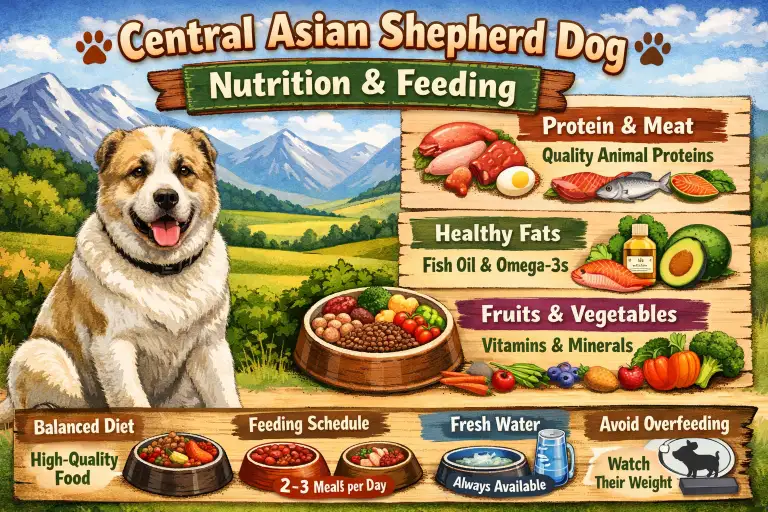
The Central Asian Shepherd Dog (also known as the Alabai) is not a typical large dog—it is a slow-maturing, giant livestock guardian breed with a metabolism, growth pattern, and lifestyle that make nutrition especially important. Feeding this breed “like any other big dog” is one of the most common reasons owners run into problems such as joint issues, excess weight, digestive upset, or low stamina.
This guide is designed to help you understand why diet matters so much for Central Asian Shepherd Dogs, before we get into what to feed and how much. When owners understand the why, they make better feeding decisions long term.
Why nutrition is different for Central Asian Shepherd Dogs
Central Asian Shepherd Dogs were developed to guard livestock in harsh environments, often with:
- Long periods of low activity
- Short bursts of intense work
- Limited but nutrient-dense food availability
As a result, this breed tends to:
- Mature slowly, especially in bone and joint development
- Maintain muscle and strength without needing excessive calories
- Gain weight easily if overfed or fed overly rich diets
- Tolerate simpler, balanced diets better than constantly changing foods
Overfeeding, excessive protein during growth, or poorly balanced homemade or raw diets can put unnecessary stress on developing joints and large frames.
The role of proper nutrition in long-term health
A well-planned diet directly affects:
- Joint health and mobility (especially hips, elbows, and spine)
- Body condition and weight stability
- Digestive health and stool quality
- Energy levels for guarding or daily activity
- Longevity and quality of life
For this breed, more food is not better food. Consistency, balance, and portion control matter more than trendy ingredients or extreme feeding styles.
Common feeding mistakes owners make early on
Many Central Asian Shepherd Dogs develop nutrition-related issues not because owners don’t care—but because they:
- Feed too much during puppyhood, trying to “help them grow big”
- Choose high-calorie or ultra-rich foods meant for active sporting dogs
- Overuse treats and table scraps with a naturally food-motivated breed
- Switch foods too often, leading to digestive instability
Understanding these risks early allows you to avoid problems rather than correct them later.
What this nutrition guide will help you do
By the end of this guide, you’ll be able to:
- Choose food that fits your dog’s size, age, and activity level
- Feed appropriate portions without relying on guesswork
- Support healthy growth in puppies and joint protection in adults
- Adjust feeding for working guardians vs low-activity companions
- Recognize when diet-related issues require veterinary input
What to Feed a Central Asian Shepherd Dog: Best Diet Options Explained
Choosing the right food for a Central Asian Shepherd Dog is about balance, safety, and consistency, not trends. This breed does best on food that supports steady energy, strong joints, and good digestion, without being too rich or heavy.
Below, we break this down in a simple and clear way.
Main diet options for Central Asian Shepherd Dogs
| Food Type | Good For | Pros | Cons |
|---|---|---|---|
| Dry kibble | Most owners | Easy to store, affordable, balanced when high quality | Quality varies a lot between brands |
| Fresh cooked food | Health-focused owners | High moisture, easy to digest | Expensive, needs portion control |
| Raw diet | Experienced feeders | High protein, fewer fillers | Risky if unbalanced or unsafe handling |
| Canned food | Picky eaters | Very tasty, high moisture | High calories, can cause weight gain |
| Freeze-dried | Travel or backup | Lightweight, long shelf life | Costly, must be rehydrated |
| Homemade diet | Special cases | Full control over ingredients | Unsafe without vet formulation |
For most homes, a high-quality large or giant breed kibble or a balanced fresh food diet is the safest and easiest choice.
What to look for on a dog food label
| Label Item | What It Means | What to Aim For |
|---|---|---|
| Protein | Builds muscle and supports strength | Moderate to high, not extreme |
| Fat | Energy and coat health | Moderate, not very high |
| Calcium & Phosphorus | Bone and joint growth | Balanced for large breeds |
| AAFCO statement | Shows the food is complete | “Complete and balanced” |
| Life stage | Who the food is made for | Large or giant breed formula |
Avoid foods that promise “extreme protein,” “rapid growth,” or “bulking”, especially for puppies.
Grain-free, high-protein, and trendy diets
Many owners ask about grain-free or very high-protein foods. For this breed:
- Grains are not bad unless your dog has a proven allergy
- Very high protein is not needed for most adult dogs
- Rich foods can lead to weight gain and loose stool
Simple, balanced diets usually work best.
Treats and extras
Treats should make up less than 10% of daily calories.
Safe treat ideas:
- Small pieces of cooked meat (no salt or spice)
- Plain boiled eggs
- Dog-specific joint or training treats
Avoid:
- Fatty table scraps
- Cooked bones
- Sugary or salty human snacks
Treats should reward behavior, not replace meals.
How Much to Feed a Central Asian Shepherd Dog (By Age, Weight, and Activity Level)
Feeding the right amount is just as important as choosing the right food. Central Asian Shepherd Dogs are large, slow-growing, and can gain weight easily if portions are too big. Using a bowl size or guessing often leads to overfeeding.
Daily calorie needs by weight and activity
| Adult Weight | Low Activity (calm/home) | Moderate Activity | Working / Guarding |
|---|---|---|---|
| 40 kg (88 lb) | 1,600–1,800 kcal | 1,900–2,100 kcal | 2,300–2,500 kcal |
| 50 kg (110 lb) | 1,800–2,000 kcal | 2,100–2,300 kcal | 2,500–2,800 kcal |
| 60 kg (132 lb) | 2,000–2,200 kcal | 2,300–2,600 kcal | 2,800–3,100 kcal |
| 70 kg (154 lb) | 2,200–2,400 kcal | 2,600–2,900 kcal | 3,100–3,400 kcal |
These are starting ranges, not exact rules. Always adjust based on body shape and weight changes.
Feeding amounts by life stage
| Life Stage | Key Feeding Focus | General Guidance |
|---|---|---|
| Puppy | Slow, steady growth | Do not overfeed; avoid rich foods |
| Adult | Weight and muscle balance | Maintain lean body shape |
| Senior | Joint and weight support | Slightly fewer calories, high-quality protein |
Puppies should grow slowly, not quickly. Fast growth increases joint stress in giant breeds.
How often to feed
| Age | Meals Per Day | Why |
|---|---|---|
| Puppy (under 6 months) | 3 meals | Supports digestion and growth |
| Adult | 2 meals | Helps control hunger and weight |
| Senior | 2 smaller meals | Easier digestion, steady energy |
Avoid feeding one very large meal per day. Splitting food into meals helps reduce bloat risk, which is important for large dogs.
Use body shape, not the bowl, to adjust portions
Instead of focusing only on food cups:
- You should feel ribs easily, but not see them
- The waist should be visible from above
- The belly should tuck up when viewed from the side
If your dog is gaining weight, reduce food slightly. If ribs are hard to feel, cut back before problems start.
Special Feeding Needs, Common Problems, and Real-Life Scenarios
Even with good food and correct portions, some Central Asian Shepherd Dogs still face feeding challenges. This breed can be sensitive to overfeeding, sudden diet changes, and rich foods, especially as puppies or low-activity adults.
Feeding Central Asian Shepherd puppies safely
Puppies of this breed should grow slow and steady.
Common puppy feeding mistakes:
- Feeding too much to “help them grow big”
- Using very high-protein or high-calorie food
- Adding extra supplements without vet advice
What works best:
- Large or giant breed puppy food
- Measured meals, not free feeding
- Watching body shape every few weeks
Slow growth protects joints, hips, and elbows.
Weight gain and obesity
This breed gains weight easily, especially when:
- Activity drops
- Portions stay the same
- Treats are given too often
| Problem | Common Cause | Simple Fix |
|---|---|---|
| Weight gain | Too many calories | Reduce portions by 10–15% |
| Constant hunger | Boredom or habit | Use toys or split meals |
| Heavy body shape | Low activity | Increase gentle daily walks |
Small changes over time work better than big cuts.
Digestive issues and loose stool
Loose stool often comes from:
- Sudden food changes
- Very rich or fatty food
- Too many treats
| Symptom | Likely Reason | What to Do |
|---|---|---|
| Soft stool | Food switch too fast | Slow transition over 7 days |
| Gas or bloating | Rich food | Choose simpler diet |
| Irregular stool | Overfeeding | Measure portions carefully |
If loose stool lasts more than a few days, contact your vet.
Picky eating and skipped meals
Some Central Asian Shepherd Dogs:
- Skip breakfast
- Eat better at night
- Lose interest if food changes often
This is normal for the breed.
Helpful tips:
- Stick to a feeding schedule
- Remove uneaten food after 15–20 minutes
- Avoid adding toppings daily
Healthy dogs will not starve themselves.
Safe foods and foods to avoid
| Safe Foods (Plain) | Unsafe Foods |
|---|---|
| Cooked chicken or beef | Onions and garlic |
| Plain rice or potatoes | Grapes and raisins |
| Carrots and green beans | Chocolate |
| Eggs | Cooked bones |
When in doubt, skip human food.
Practical Feeding Tips, FAQs, and When to See a Vet or Nutritionist
This final section helps you turn everything in this guide into daily habits that actually work. Central Asian Shepherd Dogs do best with simple routines, steady portions, and early action when something feels off.
Simple daily feeding tips that work
- Feed at the same times every day
- Measure food instead of guessing
- Split food into two meals for adults
- Keep fresh water available at all times
- Avoid frequent food changes
Consistency is more important than fancy ingredients.
How to switch food safely
| Day | Old Food | New Food |
|---|---|---|
| Day 1–2 | 75% | 25% |
| Day 3–4 | 50% | 50% |
| Day 5–6 | 25% | 75% |
| Day 7 | 0% | 100% |
If stool becomes loose, slow down the switch.
Common owner questions
Many owners ask:
- Why does my dog skip meals?
This breed often eats when hungry. If weight and energy are normal, it’s usually fine. - My dog seems hungry all the time. Should I feed more?
Not always. Hunger can come from habit, boredom, or low activity. - Can I mix kibble with fresh or canned food?
Yes, as long as total calories stay controlled. - Do Central Asian Shepherd Dogs need supplements?
Most do not if fed a balanced diet. Extra supplements can cause harm.
When to see a vet or nutritionist
| Sign | What It May Mean | Who to Contact |
|---|---|---|
| Rapid weight gain or loss | Calorie imbalance | Vet |
| Long-term loose stool | Food intolerance or illness | Vet |
| Poor growth in puppies | Nutrition imbalance | Vet |
| Chronic skin or coat issues | Possible allergy | Vet |
| Planning homemade diet | Needs full balance | Nutritionist |
Early advice prevents long-term problems.
Final takeaway for owners
Central Asian Shepherd Dogs thrive on:
- Balanced food
- Controlled portions
- Slow growth in puppies
- Simple routines
- Fewer treats, not more food
For official guidance on balanced dog food standards, you can review the nutritional profiles set by the Association of American Feed Control Officials (AAFCO):

Ata Ur Rehman is the founder of Pet Age in Human Years Calculator, an educational platform that provides age conversion charts and lifespan guides for dogs, cats, birds, and other companion animals. His work focuses on helping pet owners understand how animal ages translate into human years using commonly accepted age conversion formulas and published lifespan averages.
The website compiles breed and species lifespan data from kennel clubs, breed organizations, and general animal lifespan studies to present simple and easy-to-understand guides for pet owners worldwide.
This website was created to centralize animal age conversion charts into one easy reference platform for pet owners.