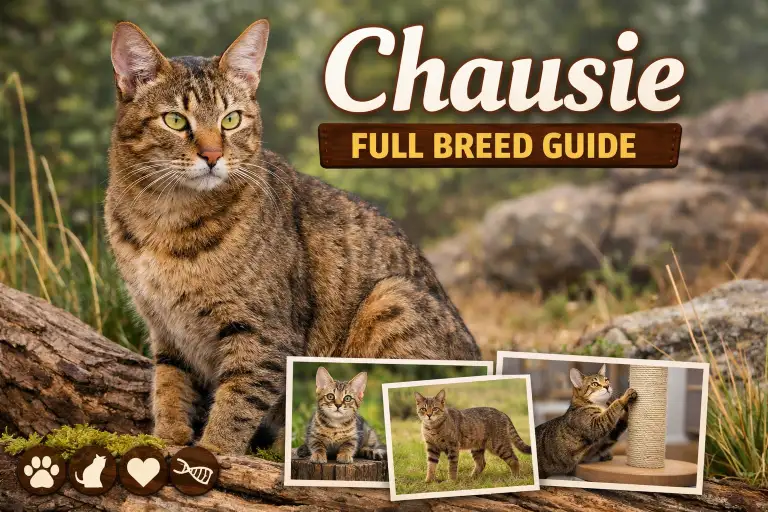
The Chausie cat breed is a rare, athletic, and highly intelligent hybrid breed developed to combine the appearance of a wild cat with the temperament of a domestic companion. Chausies are known for their long legs, lean muscular bodies, and intense energy levels—but understanding what they truly are (and are not) is essential before considering ownership.
Recommended Dog Care Products
Based on your dog’s age, these products may help with comfort, health, grooming, and daily care.

Purina Pro Plan Veterinary Supplements
Daily probiotics for dogs to support digestive and gut health.
View on Amazon ↗
Earth Rated Poop Bags for Dogs
Leak-proof, extra thick waste bag refill rolls with lavender scent.
View on Amazon ↗
Greenies Pill Pockets for Dogs
Large dog treats for capsule medication, peanut butter flavor.
View on Amazon ↗
HONEY CARE All-Absorb Dog Wrap
Small male dog wraps, 50 count, useful for daily care support.
View on Amazon ↗
Seresto Flea & Tick Collar
Flea and tick treatment and prevention for dogs over 18 lbs.
View on Amazon ↗
Milk-Bone MaroSnacks
Small dog treats with real bone marrow in a 40 oz canister.
View on Amazon ↗
Vital Essentials Dog Treats
Freeze dried beef liver dog treats, grain free and single ingredient.
View on Amazon ↗
Stain & Odor Eliminator
Enzyme cleaner for pet stains, carpet messes, and strong odors.
View on Amazon ↗
Pur Luv Chicken Jerky Treats
Dog treats made with real chicken breast, high protein and chew-friendly.
View on Amazon ↗
Milk-Bone Flavor Snacks
Mini crunchy dog biscuits in a 36 oz canister for small rewards.
View on Amazon ↗As an Amazon Associate, we may earn from qualifying purchases.
The breed traces its roots to the Jungle Cat (Felis chaus), a wild feline native to parts of Asia, the Middle East, and Egypt. Early breeders crossed Jungle Cats with carefully selected domestic cats to create a breed that retained a striking, wild look while remaining suitable for life in a human household. The goal was never to create a “tame wild animal,” but rather an active, people-oriented domestic cat with exceptional athleticism and intelligence.
Modern Chausies are several generations removed from their wild ancestors. Most Chausie cats available today are later-generation hybrids (commonly F3, F4, or beyond), meaning they are fully domestic in behavior while still expressing the breed’s distinctive physical and mental traits. However, that hybrid foundation explains why Chausies differ so dramatically from typical domestic cats in their energy, curiosity, and need for engagement.
The breed is recognized by The International Cat Association (TICA), but it is not accepted by all cat registries worldwide. Limited recognition, strict breeding standards, and ethical concerns around early-generation hybrids have kept the Chausie a niche breed, often sought by experienced cat owners rather than the general public.
One of the biggest misconceptions is that Chausies are aggressive or dangerous because of their ancestry. In reality, a well-bred Chausie is not a wild animal and does not behave like one. What they are is exceptionally alert, driven, and interactive. They form strong bonds with their people, thrive on stimulation, and struggle in environments that treat them like low-maintenance pets.
To quickly ground expectations, the table below summarizes what defines the Chausie breed at a glance.
Chausie Breed Snapshot
| Trait | Overview |
|---|---|
| Breed Type | Hybrid domestic cat |
| Ancestry | Jungle Cat (Felis chaus) × domestic cat |
| Energy Level | Very high |
| Intelligence | Extremely high |
| Affection Style | Loyal, interactive, not a lap cat |
| Vocalization | Moderate; chirps and short calls |
| Beginner-Friendly | No |
| Indoor / Outdoor | Indoor-only recommended |
| Registry Status | Recognized by TICA |
Understanding this foundation is critical. The Chausie is not a novelty pet or a decorative “exotic-looking” cat—it is a demanding, intelligent companion best suited to owners who actively want a cat that behaves more like a constant presence than a passive household animal.
When approached with realistic expectations, the Chausie can be an extraordinary companion. When chosen casually, it often becomes overwhelming.
Chausie Cat Appearance, Size & Physical Traits
At first glance, the Chausie cat looks bold, tall, and powerful. Many people think they are bigger than normal cats—and in some ways, they are. Chausies are built for movement. They are long, lean, and very athletic, with bodies made for running and jumping.
A full-grown Chausie is usually larger and taller than an average house cat, especially in leg length. Males are usually bigger than females. While they may not always weigh much more than other cats, their long legs and deep chest make them look much larger.
Recommended Dog Care Products
Based on your dog’s age, these products may help with comfort, health, grooming, and daily care.
Purina Pro Plan Veterinary Supplements
Daily probiotics for dogs to support digestive and gut health.
View on Amazon ↗
Earth Rated Poop Bags for Dogs
Leak-proof, extra thick waste bag refill rolls with lavender scent.
View on Amazon ↗
Greenies Pill Pockets for Dogs
Large dog treats for capsule medication, peanut butter flavor.
View on Amazon ↗
HONEY CARE All-Absorb Dog Wrap
Small male dog wraps, 50 count, useful for daily care support.
View on Amazon ↗
Seresto Flea & Tick Collar
Flea and tick treatment and prevention for dogs over 18 lbs.
View on Amazon ↗
Milk-Bone MaroSnacks
Small dog treats with real bone marrow in a 40 oz canister.
View on Amazon ↗
Vital Essentials Dog Treats
Freeze dried beef liver dog treats, grain free and single ingredient.
View on Amazon ↗
Stain & Odor Eliminator
Enzyme cleaner for pet stains, carpet messes, and strong odors.
View on Amazon ↗
Pur Luv Chicken Jerky Treats
Dog treats made with real chicken breast, high protein and chew-friendly.
View on Amazon ↗
Milk-Bone Flavor Snacks
Mini crunchy dog biscuits in a 36 oz canister for small rewards.
View on Amazon ↗As an Amazon Associate, we may earn from qualifying purchases.
Their body shape is one of their most noticeable features. Chausies have a strong, muscular build, a straight back, and long hind legs that help them jump high and run fast. When a Chausie walks, it often looks smooth and confident, almost like a wild cat moving through tall grass.
The coat of a Chausie is short, dense, and close to the body. It does not mat easily and does not need heavy grooming. Most Chausies have coats that feel firm rather than fluffy.
Only a few coat colors are accepted for the breed. These include black, brown ticked tabby, and black grizzled tabby. The grizzled pattern is rare and gives the coat a slightly wild, salt-and-pepper look.
Chausies also have large, upright ears, which sit high on the head. Their eyes are usually yellow, gold, or green, and their face often looks alert and focused. All of these traits together give the Chausie a wild appearance, even though their behavior is fully domestic.
The table below makes it easy to understand the Chausie’s physical traits at a glance.
| Feature | Description |
|---|---|
| Adult Weight | Medium to large (males heavier than females) |
| Height | Taller than most domestic cats |
| Body Type | Long, lean, muscular |
| Legs | Very long, especially the back legs |
| Coat Length | Short |
| Coat Texture | Dense and firm |
| Accepted Colors | Black, brown ticked tabby, black grizzled tabby |
| Ears | Large and upright |
| Overall Look | Athletic, alert, wild-style appearance |
Even though Chausies may look intense or wild, their appearance does not mean they are aggressive. Their body is simply designed for speed, strength, and activity.
Chausie Cat Personality, Temperament & Behavior
The Chausie cat is very smart, very active, and always alert. This is not a calm cat that sleeps all day. A Chausie wants to explore, play, and be involved in everything around them.
One of the first things owners notice is how intelligent this breed is. Chausies learn fast. They figure out how doors work, how cabinets open, and how to reach high places. Because of this, they need mental challenges every day. If they get bored, they may become destructive.
Chausies are affectionate in an active way, not in a quiet lap-cat way. Many Chausies follow their owner from room to room and like to stay close. They enjoy attention, but they usually prefer play and interaction over sitting still for long cuddles.
Their energy level is very high. A Chausie that does not get enough playtime may climb furniture, knock things over, or try to escape outside. This behavior is not bad manners—it is a sign that the cat needs more activity.
Recommended Dog Care Products
Based on your dog’s age, these products may help with comfort, health, grooming, and daily care.
Purina Pro Plan Veterinary Supplements
Daily probiotics for dogs to support digestive and gut health.
View on Amazon ↗
Earth Rated Poop Bags for Dogs
Leak-proof, extra thick waste bag refill rolls with lavender scent.
View on Amazon ↗
Greenies Pill Pockets for Dogs
Large dog treats for capsule medication, peanut butter flavor.
View on Amazon ↗
HONEY CARE All-Absorb Dog Wrap
Small male dog wraps, 50 count, useful for daily care support.
View on Amazon ↗
Seresto Flea & Tick Collar
Flea and tick treatment and prevention for dogs over 18 lbs.
View on Amazon ↗
Milk-Bone MaroSnacks
Small dog treats with real bone marrow in a 40 oz canister.
View on Amazon ↗
Vital Essentials Dog Treats
Freeze dried beef liver dog treats, grain free and single ingredient.
View on Amazon ↗
Stain & Odor Eliminator
Enzyme cleaner for pet stains, carpet messes, and strong odors.
View on Amazon ↗
Pur Luv Chicken Jerky Treats
Dog treats made with real chicken breast, high protein and chew-friendly.
View on Amazon ↗
Milk-Bone Flavor Snacks
Mini crunchy dog biscuits in a 36 oz canister for small rewards.
View on Amazon ↗As an Amazon Associate, we may earn from qualifying purchases.
Chausies are usually moderately vocal. Instead of loud meowing, they often make chirps, short calls, or soft sounds to get attention or show interest.
When it comes to other people and pets:
- With children, Chausies do best with older kids who understand how to treat cats gently.
- With other cats, they usually prefer cats that are just as active as they are.
- With dogs, they can get along well if the dog is calm and confident.
They may struggle in quiet homes or with pets that do not like rough play.
The table below shows the Chausie’s temperament in a simple way.
| Trait | What It Means |
|---|---|
| Intelligence | Very high, learns quickly |
| Energy Level | Extremely active |
| Affection Style | Loyal and interactive |
| Lap Cat | Rarely |
| Playfulness | Very high |
| Vocalization | Moderate |
| Alone Time Tolerance | Low |
| Boredom Risk | High if under-stimulated |
Overall, the Chausie is not aggressive, but it needs attention, structure, and daily activity. Owners who enjoy training, playing, and interacting with their cat often find the Chausie very rewarding.
Daily Care, Activity Needs & Living Requirements
Living with a Chausie cat takes time and effort. This breed is not low-maintenance. Chausies need daily activity, mental challenges, and space to move in order to stay happy and calm.
A Chausie needs a lot of exercise every day. Short play sessions are not enough. They enjoy running, jumping, climbing, and chasing toys. Many owners use tall cat trees, wall shelves, and interactive toys to keep them busy. Some Chausies even enjoy learning to walk on a leash.
Mental activity is just as important as physical play. Puzzle feeders, training games, and toy rotation help keep their minds busy. Without enough stimulation, a Chausie may chew objects, knock things over, or try to escape.
Chausies do best in homes where they can move freely. A large apartment or a house works better than a small space. They should be kept indoors only, as their curiosity and confidence can put them in danger outside. Some owners build secure outdoor enclosures so the cat can safely enjoy fresh air.
Grooming a Chausie is simple. Their short coat does not tangle or mat. Weekly brushing is usually enough. Nail trimming is important, especially because they climb and jump so much. Basic ear and dental care should also be part of their routine.
Recommended Dog Care Products
Based on your dog’s age, these products may help with comfort, health, grooming, and daily care.
Purina Pro Plan Veterinary Supplements
Daily probiotics for dogs to support digestive and gut health.
View on Amazon ↗
Earth Rated Poop Bags for Dogs
Leak-proof, extra thick waste bag refill rolls with lavender scent.
View on Amazon ↗
Greenies Pill Pockets for Dogs
Large dog treats for capsule medication, peanut butter flavor.
View on Amazon ↗
HONEY CARE All-Absorb Dog Wrap
Small male dog wraps, 50 count, useful for daily care support.
View on Amazon ↗
Seresto Flea & Tick Collar
Flea and tick treatment and prevention for dogs over 18 lbs.
View on Amazon ↗
Milk-Bone MaroSnacks
Small dog treats with real bone marrow in a 40 oz canister.
View on Amazon ↗
Vital Essentials Dog Treats
Freeze dried beef liver dog treats, grain free and single ingredient.
View on Amazon ↗
Stain & Odor Eliminator
Enzyme cleaner for pet stains, carpet messes, and strong odors.
View on Amazon ↗
Pur Luv Chicken Jerky Treats
Dog treats made with real chicken breast, high protein and chew-friendly.
View on Amazon ↗
Milk-Bone Flavor Snacks
Mini crunchy dog biscuits in a 36 oz canister for small rewards.
View on Amazon ↗As an Amazon Associate, we may earn from qualifying purchases.
Most Chausies live a long and healthy life, often reaching their mid to late teens. Some lines may have sensitive stomachs, so quality food and a steady routine matter. Choosing a responsible breeder and regular vet visits are important for long-term health.
The table below shows what daily life with a Chausie usually looks like.
| Care Area | What to Expect |
|---|---|
| Daily Exercise | Very high |
| Mental Stimulation | Required every day |
| Play Style | Running, jumping, chasing, climbing |
| Space Needs | Medium to large |
| Apartment Living | Possible, but challenging |
| Indoor-Only | Strongly recommended |
| Grooming Effort | Low |
| Typical Lifespan | 14–18 years |
This breed thrives with owners who enjoy being active and involved. A bored Chausie is an unhappy Chausie.
Is a Chausie Cat Right for You? Cost, Pros & Owner Suitability
Before choosing a Chausie cat, it is important to be honest about your time, energy, and budget. This breed is rewarding, but it is not easy.
Chausies are not a good choice for most first-time cat owners. They need daily play, mental work, and strong attention. Owners who enjoy training, active play, and spending a lot of time with their cat usually do best.
This breed can work well for:
- Experienced cat owners
- Active adults or families with older children
- Homes where someone is often present
- People who enjoy interactive pets
Chausies may struggle in:
- Very quiet homes
- Homes with long work hours
- Small spaces with little stimulation
- Homes expecting a calm lap cat
The cost of owning a Chausie is also higher than average. The price of a Chausie kitten is high because the breed is rare and carefully bred. Daily life costs can also add up due to enrichment toys, climbing furniture, and regular vet care.
The table below shows the main pros and cons of the breed.
| Pros | Cons |
|---|---|
| Extremely intelligent | Needs constant activity |
| Loyal and people-focused | Not a lap cat |
| Athletic and playful | Can be destructive when bored |
| Striking appearance | High energy all day |
| Strong bond with owners | Not beginner-friendly |
Here is a simple cost overview to set expectations.
| Expense Type | What to Expect |
|---|---|
| Kitten Price | High |
| Monthly Care Costs | Moderate to high |
| Enrichment & Toys | Ongoing need |
| Vet Care | Standard, but important |
| Pet Insurance | Often recommended |
A Chausie is best seen as a full-time companion, not a background pet. When their needs are met, they are loyal, fun, and deeply engaging. When their needs are ignored, they become stressed and difficult to manage.
For official breed standards and registration details, you can learn more about the Chausie cat from The International Cat Association (TICA), which recognizes the Chausie as an established breed and provides guidance on ethical breeding practices.

Ata Ur Rehman is the founder of Pet Age in Human Years Calculator, an educational platform that provides age conversion charts and lifespan guides for dogs, cats, birds, and other companion animals. His work focuses on helping pet owners understand how animal ages translate into human years using commonly accepted age conversion formulas and published lifespan averages.
The website compiles breed and species lifespan data from kennel clubs, breed organizations, and general animal lifespan studies to present simple and easy-to-understand guides for pet owners worldwide.
This website was created to centralize animal age conversion charts into one easy reference platform for pet owners.