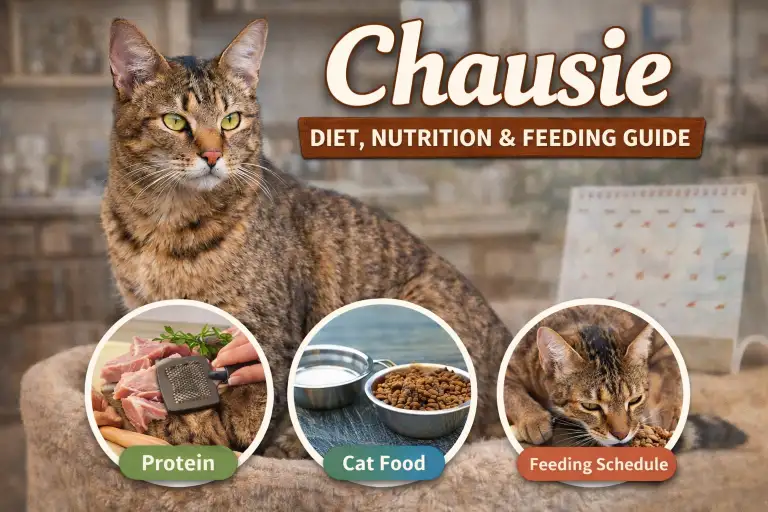
Chausie cats have dietary needs that sit slightly outside the “average house cat” profile. While they are fully domestic in terms of basic nutrition, their typically high activity level, lean build, and strong prey drive mean their diet needs to support muscle, energy, and digestive stability, not just meet minimum requirements.
Recommended Dog Care Products
Based on your dog’s age, these products may help with comfort, health, grooming, and daily care.

Purina Pro Plan Veterinary Supplements
Daily probiotics for dogs to support digestive and gut health.
View on Amazon ↗
Earth Rated Poop Bags for Dogs
Leak-proof, extra thick waste bag refill rolls with lavender scent.
View on Amazon ↗
Greenies Pill Pockets for Dogs
Large dog treats for capsule medication, peanut butter flavor.
View on Amazon ↗
HONEY CARE All-Absorb Dog Wrap
Small male dog wraps, 50 count, useful for daily care support.
View on Amazon ↗
Seresto Flea & Tick Collar
Flea and tick treatment and prevention for dogs over 18 lbs.
View on Amazon ↗
Milk-Bone MaroSnacks
Small dog treats with real bone marrow in a 40 oz canister.
View on Amazon ↗
Vital Essentials Dog Treats
Freeze dried beef liver dog treats, grain free and single ingredient.
View on Amazon ↗
Stain & Odor Eliminator
Enzyme cleaner for pet stains, carpet messes, and strong odors.
View on Amazon ↗
Pur Luv Chicken Jerky Treats
Dog treats made with real chicken breast, high protein and chew-friendly.
View on Amazon ↗
Milk-Bone Flavor Snacks
Mini crunchy dog biscuits in a 36 oz canister for small rewards.
View on Amazon ↗As an Amazon Associate, we may earn from qualifying purchases.
Like all cats, Chausies are obligate carnivores. This means their bodies are biologically adapted to obtain nutrients primarily from animal-based foods. Protein is not optional or interchangeable for cats—it is the foundation of their metabolism. For Chausies, adequate protein quality matters even more than crude protein percentages, because poor digestibility can lead to weight loss, loose stools, or constant hunger signals despite adequate calorie intake.
Fat is the primary energy source in a cat’s diet. Active breeds like the Chausie often rely on fat calories to fuel movement, play, and muscle maintenance. Diets that are too low in fat may leave an active cat appearing restless, overly food-motivated, or unable to maintain lean body condition, even if protein levels look sufficient on paper.
Carbohydrates play a limited role in feline nutrition. While cats can digest some carbohydrates, they do not require them nutritionally. Some Chausies tolerate moderate carbohydrate levels without issue, while others show digestive sensitivity. This variability is why blanket statements like “cats must eat zero carbs” are misleading. Tolerance depends on ingredient quality, processing, and the individual cat.
Certain micronutrients are non-negotiable for cats. Taurine, for example, is an essential amino acid cats cannot synthesize in sufficient amounts. It must come from animal sources and supports heart function, vision, and overall health. Vitamins and minerals must also be present in appropriate balance—both deficiencies and excesses can cause problems over time, which is why nutritionally complete commercial foods are generally safer than improvised feeding approaches.
Hydration is another often underestimated part of feline nutrition. Cats naturally have a low thirst drive and are designed to obtain much of their water from food. Diets that are very dry can increase reliance on voluntary drinking, which not all cats compensate for adequately. For active, lean cats like Chausies, maintaining proper hydration supports digestion, kidney health, and overall metabolic function.
Core Nutritional Priorities for Chausie Cats
| Nutrient | Why It Matters for Chausies | Owner Takeaway |
|---|---|---|
| Protein | Supports lean muscle and tissue repair | Prioritize animal-based, digestible sources |
| Fat | Main energy source for active cats | Helps fuel activity without excessive volume |
| Carbohydrates | Limited nutritional role | Individual tolerance varies |
| Taurine | Essential for heart and eye health | Must come from animal ingredients |
| Moisture | Supports hydration and urinary health | Often improved through wet or mixed feeding |
Understanding these fundamentals helps explain why certain feeding choices work better for Chausies than others. Once the nutritional foundation is clear, it becomes much easier to evaluate different food types and feeding approaches without falling into extreme or misleading diet trends.
What Do Chausie Cats Eat? Wet Food, Dry Food, or Mixed Feeding
Most people searching about the Chausie diet are really asking one simple question: what type of food should I put in the bowl? The short answer is that Chausie cats can eat wet food, dry food, or a mix of both, as long as the food is complete, balanced, and fed in the right amounts.
Wet food is often easier for Chausie cats to digest. It contains much more water, which helps with hydration and supports kidney and urinary health. Many Chausies also find wet food more filling, which can help reduce begging and food-seeking behavior. For cats that are very active or prone to dry stools, wet food can be especially helpful.
Dry food is more convenient for many owners. It is easy to measure, store, and serve. However, dry food is more calorie-dense and contains very little moisture. This means it is easy to overfeed without realizing it. Some Chausies do well on dry food, but portions need to be controlled carefully, and water intake should be watched closely.
Recommended Dog Care Products
Based on your dog’s age, these products may help with comfort, health, grooming, and daily care.
Purina Pro Plan Veterinary Supplements
Daily probiotics for dogs to support digestive and gut health.
View on Amazon ↗
Earth Rated Poop Bags for Dogs
Leak-proof, extra thick waste bag refill rolls with lavender scent.
View on Amazon ↗
Greenies Pill Pockets for Dogs
Large dog treats for capsule medication, peanut butter flavor.
View on Amazon ↗
HONEY CARE All-Absorb Dog Wrap
Small male dog wraps, 50 count, useful for daily care support.
View on Amazon ↗
Seresto Flea & Tick Collar
Flea and tick treatment and prevention for dogs over 18 lbs.
View on Amazon ↗
Milk-Bone MaroSnacks
Small dog treats with real bone marrow in a 40 oz canister.
View on Amazon ↗
Vital Essentials Dog Treats
Freeze dried beef liver dog treats, grain free and single ingredient.
View on Amazon ↗
Stain & Odor Eliminator
Enzyme cleaner for pet stains, carpet messes, and strong odors.
View on Amazon ↗
Pur Luv Chicken Jerky Treats
Dog treats made with real chicken breast, high protein and chew-friendly.
View on Amazon ↗
Milk-Bone Flavor Snacks
Mini crunchy dog biscuits in a 36 oz canister for small rewards.
View on Amazon ↗As an Amazon Associate, we may earn from qualifying purchases.
Mixed feeding is a common and practical option for Chausie cats. This usually means feeding wet food for one or more meals and using dry food in smaller, measured amounts. Mixed feeding can support hydration while still offering convenience. The key is balance. Mixing foods does not mean feeding more food overall.
Many owners assume that a Chausie’s wild ancestry means they need extreme or unusual diets. This is not true. Chausies still have the same basic nutritional needs as other cats. What matters most is food quality, proper portions, and how the cat responds over time.
Wet Food vs Dry Food vs Mixed Feeding for Chausies
| Feeding Style | Benefits | Things to Keep in Mind |
|---|---|---|
| Wet Food | High water content, easier digestion | Higher cost, needs refrigeration |
| Dry Food | Easy to store and measure | Easy to overfeed, low moisture |
| Mixed Feeding | Balance of hydration and convenience | Portions must be managed carefully |
Choosing between wet, dry, or mixed feeding is not about finding one “perfect” answer. It is about finding what works best for your Chausie’s body, activity level, and daily routine.
How Much and How Often to Feed a Chausie Cat
One of the most common feeding mistakes with Chausie cats is giving the right food but the wrong amount. Chausies are active and smart, and they often act hungry even when their body does not need more food.
How much a Chausie should eat depends on a few simple things:
- Age
- Activity level
- Type of food (wet or dry)
- Whether the cat lives indoors or has lots of space to move
Because cat food can be very high in calories, portion size matters more than bowl size. Dry food especially packs many calories into a small amount, so even a little extra can add up fast.
Most adult Chausie cats do best with meal feeding, not free-feeding. This means giving food at set times instead of leaving food out all day. Meal feeding helps control weight and makes it easier to notice changes in appetite.
Kittens need food more often. Their bodies are growing fast, and they burn energy quickly. Senior cats may need smaller meals that are easier to digest, even if they eat the same number of meals per day.
It is also important to understand that behavior does not always mean hunger. Chausies are curious and social. They may ask for food because they are bored, want attention, or enjoy the routine.
Feeding Frequency and Portion Awareness
| Cat Type | Typical Feeding Pattern | Helpful Notes |
|---|---|---|
| Chausie kitten | 3–4 small meals daily | Supports growth and energy |
| Active adult Chausie | 2–3 meals daily | Helps prevent constant hunger |
| Average adult Chausie | 2 meals daily | Easier portion control |
| Senior Chausie | 2 smaller meals daily | Gentler on digestion |
Watch your cat’s body, not just the bowl. A healthy Chausie should feel lean and strong, not bony and not soft or round. Changes in weight, energy, or stool can all be signs that portions need adjusting.
Recommended Dog Care Products
Based on your dog’s age, these products may help with comfort, health, grooming, and daily care.
Purina Pro Plan Veterinary Supplements
Daily probiotics for dogs to support digestive and gut health.
View on Amazon ↗
Earth Rated Poop Bags for Dogs
Leak-proof, extra thick waste bag refill rolls with lavender scent.
View on Amazon ↗
Greenies Pill Pockets for Dogs
Large dog treats for capsule medication, peanut butter flavor.
View on Amazon ↗
HONEY CARE All-Absorb Dog Wrap
Small male dog wraps, 50 count, useful for daily care support.
View on Amazon ↗
Seresto Flea & Tick Collar
Flea and tick treatment and prevention for dogs over 18 lbs.
View on Amazon ↗
Milk-Bone MaroSnacks
Small dog treats with real bone marrow in a 40 oz canister.
View on Amazon ↗
Vital Essentials Dog Treats
Freeze dried beef liver dog treats, grain free and single ingredient.
View on Amazon ↗
Stain & Odor Eliminator
Enzyme cleaner for pet stains, carpet messes, and strong odors.
View on Amazon ↗
Pur Luv Chicken Jerky Treats
Dog treats made with real chicken breast, high protein and chew-friendly.
View on Amazon ↗
Milk-Bone Flavor Snacks
Mini crunchy dog biscuits in a 36 oz canister for small rewards.
View on Amazon ↗As an Amazon Associate, we may earn from qualifying purchases.
Feeding Chausies at Different Life Stages and Lifestyles
Chausie cats do not eat the same way their whole life. Their food needs change as they grow, age, and settle into daily routines. Feeding the right way for your cat’s stage of life helps keep energy, digestion, and body condition steady.
Chausie kittens need more food than adults, but in smaller meals. Their bodies are growing fast, and they burn energy quickly through play and movement. Skipping meals or feeding too little during this stage can slow healthy growth.
Adult Chausies are usually very active and lean. They need enough food to support muscle and movement, but not so much that they gain weight. This is the stage where portion control matters the most, especially for indoor cats.
Senior Chausies may slow down with age. Their digestion can become more sensitive, and their appetite may change. Some seniors eat less at one time but do better with the same number of meals spread through the day.
Lifestyle also plays a big role. An indoor Chausie that spends most of the day inside will usually need fewer calories than one with lots of space to run and climb. Spayed or neutered Chausies often burn calories more slowly, so their portions may need small adjustments over time.
Chausie Feeding Needs by Life Stage and Lifestyle
| Life Stage or Lifestyle | Main Feeding Focus | What Owners Should Watch |
|---|---|---|
| Chausie kitten | Growth and energy | Frequent meals, steady weight gain |
| Adult Chausie | Muscle maintenance | Lean body shape, stable energy |
| Senior Chausie | Easy digestion | Appetite changes, weight loss |
| Indoor Chausie | Lower activity | Avoid boredom overeating |
| Spayed or neutered | Slower metabolism | Gradual weight gain |
Feeding changes should always be slow and gentle. Sudden changes in food amount or type can upset a Chausie’s stomach, even if the food itself is good quality.
Treats, Hydration, and Common Chausie Feeding Mistakes
Treats can be a fun way to bond with your Chausie, but they should never replace balanced meals. Too many treats can lead to weight gain, upset stomachs, or picky eating habits. Stick to small amounts and use them for training or occasional rewards, not daily extras.
Water is very important for Chausie cats. Cats naturally drink less than dogs, and Chausies get most of their hydration from food. Wet food helps, but always make sure your cat has fresh water available. Poor hydration can cause urinary problems, digestion issues, and low energy.
Many owners make simple feeding mistakes without realizing it. Watching out for these problems can keep your Chausie healthy:
Common Feeding Mistakes to Avoid
| Mistake | Why It Can Cause Problems |
|---|---|
| Overfeeding dry food | High calories can cause weight gain |
| Too many treats | Adds extra calories and can spoil appetite |
| Sudden food changes | Can upset digestion |
| Ignoring water intake | Can lead to dehydration and urinary issues |
| Assuming hunger = need | Behavioral cues may not mean the cat is actually hungry |
The key is to feed balanced meals, offer treats sparingly, and provide water at all times. Observing your cat’s body condition, energy, and litter box habits helps you adjust feeding before problems appear.
Recommended Dog Care Products
Based on your dog’s age, these products may help with comfort, health, grooming, and daily care.
Purina Pro Plan Veterinary Supplements
Daily probiotics for dogs to support digestive and gut health.
View on Amazon ↗
Earth Rated Poop Bags for Dogs
Leak-proof, extra thick waste bag refill rolls with lavender scent.
View on Amazon ↗
Greenies Pill Pockets for Dogs
Large dog treats for capsule medication, peanut butter flavor.
View on Amazon ↗
HONEY CARE All-Absorb Dog Wrap
Small male dog wraps, 50 count, useful for daily care support.
View on Amazon ↗
Seresto Flea & Tick Collar
Flea and tick treatment and prevention for dogs over 18 lbs.
View on Amazon ↗
Milk-Bone MaroSnacks
Small dog treats with real bone marrow in a 40 oz canister.
View on Amazon ↗
Vital Essentials Dog Treats
Freeze dried beef liver dog treats, grain free and single ingredient.
View on Amazon ↗
Stain & Odor Eliminator
Enzyme cleaner for pet stains, carpet messes, and strong odors.
View on Amazon ↗
Pur Luv Chicken Jerky Treats
Dog treats made with real chicken breast, high protein and chew-friendly.
View on Amazon ↗
Milk-Bone Flavor Snacks
Mini crunchy dog biscuits in a 36 oz canister for small rewards.
View on Amazon ↗As an Amazon Associate, we may earn from qualifying purchases.
Final Feeding Summary and Owner Advice
Feeding a Chausie cat does not have to be confusing or stressful. The goal is simple: give balanced food, in the right amount, and watch how your cat responds.
Chausies are active cats that do best on diets rich in animal-based protein, with enough fat for energy and enough moisture for hydration. Wet food, dry food, or mixed feeding can all work if portions are controlled and meals are consistent.
Here are the key points to remember:
- Choose complete and balanced cat food
- Feed meals at set times instead of leaving food out all day
- Adjust portions based on age, activity, and lifestyle
- Use treats only in small amounts
- Make sure fresh water is always available
- Watch body shape, energy, and litter box habits
No single feeding style is perfect for every Chausie. What matters most is how your individual cat looks, feels, and behaves over time. Small changes made slowly are safer than big changes made all at once.
If you ever notice ongoing weight loss, weight gain, poor appetite, or stomach problems, a veterinarian can help rule out health issues and guide safe feeding adjustments.
For more general guidance on what makes a cat food nutritionally complete and balanced, you can review the AAFCO guidelines for cat food nutrition, which explain how feline dietary standards are set and evaluated.

Ata Ur Rehman is the founder of Pet Age in Human Years Calculator, an educational platform that provides age conversion charts and lifespan guides for dogs, cats, birds, and other companion animals. His work focuses on helping pet owners understand how animal ages translate into human years using commonly accepted age conversion formulas and published lifespan averages.
The website compiles breed and species lifespan data from kennel clubs, breed organizations, and general animal lifespan studies to present simple and easy-to-understand guides for pet owners worldwide.
This website was created to centralize animal age conversion charts into one easy reference platform for pet owners.