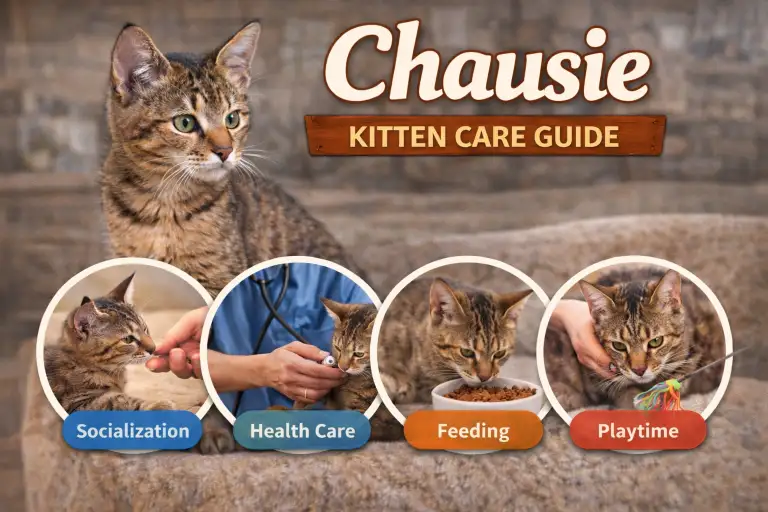
Chausie kittens are often described as “a lot of kitten,” and that description is usually accurate — but it’s not a bad thing. Understanding their temperament early helps prevent confusion, frustration, and unrealistic expectations during the first months at home.
Recommended Dog Care Products
Based on your dog’s age, these products may help with comfort, health, grooming, and daily care.

Purina Pro Plan Veterinary Supplements
Daily probiotics for dogs to support digestive and gut health.
View on Amazon ↗
Earth Rated Poop Bags for Dogs
Leak-proof, extra thick waste bag refill rolls with lavender scent.
View on Amazon ↗
Greenies Pill Pockets for Dogs
Large dog treats for capsule medication, peanut butter flavor.
View on Amazon ↗
HONEY CARE All-Absorb Dog Wrap
Small male dog wraps, 50 count, useful for daily care support.
View on Amazon ↗
Seresto Flea & Tick Collar
Flea and tick treatment and prevention for dogs over 18 lbs.
View on Amazon ↗
Milk-Bone MaroSnacks
Small dog treats with real bone marrow in a 40 oz canister.
View on Amazon ↗
Vital Essentials Dog Treats
Freeze dried beef liver dog treats, grain free and single ingredient.
View on Amazon ↗
Stain & Odor Eliminator
Enzyme cleaner for pet stains, carpet messes, and strong odors.
View on Amazon ↗
Pur Luv Chicken Jerky Treats
Dog treats made with real chicken breast, high protein and chew-friendly.
View on Amazon ↗
Milk-Bone Flavor Snacks
Mini crunchy dog biscuits in a 36 oz canister for small rewards.
View on Amazon ↗As an Amazon Associate, we may earn from qualifying purchases.
Most Chausie kittens are exceptionally energetic, curious, and mentally alert. Compared to an average domestic kitten, they tend to stay active for longer periods, explore more persistently, and become bored more quickly if their environment doesn’t engage them. This doesn’t mean they are aggressive, disobedient, or “too wild.” It means their brains and bodies are working fast, and they need appropriate outlets.
Many first-time owners worry that something is wrong when a Chausie kitten:
- climbs constantly,
- follows people from room to room,
- opens cabinets or investigates everything,
- seems restless even after play.
In most cases, this is completely normal behavior for the breed. Chausie kittens are problem-solvers by nature. If they don’t have enough structured play, vertical space, or mental stimulation, they will create their own activities — which is when owners may interpret curiosity as misbehavior.
It’s also important to understand that Chausie kittens often develop confidence and independence earlier than other kittens. They may not be instant lap cats, and affection is usually shown through proximity, interaction, and play rather than constant cuddling. Many become more physically affectionate as they mature, especially when their energy needs are consistently met.
Normal Chausie kitten behavior typically includes:
- short bursts of intense activity followed by brief rest,
- playful biting or pouncing during excitement,
- strong interest in heights, windows, and movement,
- alertness to sounds and changes in the home.
What’s usually not normal is persistent fear, complete withdrawal, or lethargy. Those signs are less about temperament and more about environment or adjustment and should prompt closer observation rather than panic.
The most helpful mindset for new owners is this: Chausie kittens aren’t difficult — they’re demanding in an intelligent way. When their need for engagement, routine, and exploration is understood, they are confident, engaging companions rather than overwhelming ones.
| Trait | Chausie Kitten | Typical Domestic Kitten |
|---|---|---|
| Energy Level | Very high, persistent | Medium to high, occasional bursts |
| Curiosity | Extreme, investigates everything | Moderate, explores slowly |
| Affection | Shown through interaction and play | Often through cuddling |
| Independence | Confident, problem-solving | Learns slowly, may cling to owner |
| Sleep Patterns | Short naps, high bursts of activity | Longer naps, moderate activity |
Preparing Your Home and Daily Routine for a Chausie Kitten
Before your Chausie kitten comes home, the goal is not to create a perfect space. The goal is to create a safe, simple, and predictable environment. This breed adjusts best when the home feels calm and organized from the start.
Chausie kittens are natural climbers and explorers. They do not just walk around a room — they study it. This means anything loose, fragile, or unsafe will quickly become interesting.
Recommended Dog Care Products
Based on your dog’s age, these products may help with comfort, health, grooming, and daily care.
Purina Pro Plan Veterinary Supplements
Daily probiotics for dogs to support digestive and gut health.
View on Amazon ↗
Earth Rated Poop Bags for Dogs
Leak-proof, extra thick waste bag refill rolls with lavender scent.
View on Amazon ↗
Greenies Pill Pockets for Dogs
Large dog treats for capsule medication, peanut butter flavor.
View on Amazon ↗
HONEY CARE All-Absorb Dog Wrap
Small male dog wraps, 50 count, useful for daily care support.
View on Amazon ↗
Seresto Flea & Tick Collar
Flea and tick treatment and prevention for dogs over 18 lbs.
View on Amazon ↗
Milk-Bone MaroSnacks
Small dog treats with real bone marrow in a 40 oz canister.
View on Amazon ↗
Vital Essentials Dog Treats
Freeze dried beef liver dog treats, grain free and single ingredient.
View on Amazon ↗
Stain & Odor Eliminator
Enzyme cleaner for pet stains, carpet messes, and strong odors.
View on Amazon ↗
Pur Luv Chicken Jerky Treats
Dog treats made with real chicken breast, high protein and chew-friendly.
View on Amazon ↗
Milk-Bone Flavor Snacks
Mini crunchy dog biscuits in a 36 oz canister for small rewards.
View on Amazon ↗As an Amazon Associate, we may earn from qualifying purchases.
To make your home ready, focus on these basics first:
- Secure windows, balconies, and doors so there is no escape risk.
- Keep electrical cords, strings, and small objects out of reach.
- Remove or block access to unsafe plants and breakable items.
- Create safe climbing options like shelves or sturdy furniture.
Many owners make the mistake of giving a Chausie kitten full access to the house right away. A smaller “starter area” works better during the first days. This could be one room with food, water, a litter box, resting space, and toys. A smaller space helps the kitten feel safe and learn routines faster.
Routine is extremely important for Chausie kittens. When things happen at random times, they become restless and bored more easily.
| Priority | Why It Matters | Example |
|---|---|---|
| Safety | Prevent accidents and escapes | Secure windows, remove cords |
| Small Starter Space | Reduces stress | One room with essentials |
| Vertical Space | Supports climbing instincts | Cat shelves, tall scratching posts |
| Consistent Routine | Helps calm and predict behavior | Fixed feeding and play times |
| Toys & Mental Stimulation | Prevents boredom | Puzzle feeders, interactive toys |
A simple daily routine helps a lot:
- Feed meals at the same times each day.
- Schedule play sessions, especially in the morning and evening.
- Allow quiet time after play for rest.
- Keep the litter box in the same location.
Chausie kittens do well in apartments and houses, but space matters less than how the space is used. Vertical areas, window views, and regular interaction are more important than floor size.
If your kitten seems overly active, it often means the routine is unclear, not that the home is too small. When meals, play, and rest happen in a predictable way, behavior usually becomes calmer.
Feeding, Growth, and Litter Training Basics
Chausie kittens grow fast and use a lot of energy every day. Because of this, their care needs can change quickly in the first year. Keeping things simple and consistent helps both the kitten and the owner.
Most Chausie kittens need to eat small meals several times a day. A steady feeding routine supports healthy growth and helps prevent behavior problems caused by hunger or low energy. Sudden changes in appetite can happen during growth phases and are usually normal for active kittens.
| Age | Meals per Day | Notes |
|---|---|---|
| 8–12 weeks | 4–5 | Small portions, high energy |
| 3–6 months | 3–4 | Gradually increase portion size |
| 6–12 months | 2–3 | Transition toward adult food slowly |
| 12+ months | 2 | Regular adult feeding schedule |
As your kitten grows, you may notice:
- strong hunger on some days and less interest in food on others,
- fast growth followed by short rest periods,
- higher energy during growth spurts.
These changes are normal and do not usually mean something is wrong. What matters most is steady growth, normal play, and good energy overall.
Recommended Dog Care Products
Based on your dog’s age, these products may help with comfort, health, grooming, and daily care.
Purina Pro Plan Veterinary Supplements
Daily probiotics for dogs to support digestive and gut health.
View on Amazon ↗
Earth Rated Poop Bags for Dogs
Leak-proof, extra thick waste bag refill rolls with lavender scent.
View on Amazon ↗
Greenies Pill Pockets for Dogs
Large dog treats for capsule medication, peanut butter flavor.
View on Amazon ↗
HONEY CARE All-Absorb Dog Wrap
Small male dog wraps, 50 count, useful for daily care support.
View on Amazon ↗
Seresto Flea & Tick Collar
Flea and tick treatment and prevention for dogs over 18 lbs.
View on Amazon ↗
Milk-Bone MaroSnacks
Small dog treats with real bone marrow in a 40 oz canister.
View on Amazon ↗
Vital Essentials Dog Treats
Freeze dried beef liver dog treats, grain free and single ingredient.
View on Amazon ↗
Stain & Odor Eliminator
Enzyme cleaner for pet stains, carpet messes, and strong odors.
View on Amazon ↗
Pur Luv Chicken Jerky Treats
Dog treats made with real chicken breast, high protein and chew-friendly.
View on Amazon ↗
Milk-Bone Flavor Snacks
Mini crunchy dog biscuits in a 36 oz canister for small rewards.
View on Amazon ↗As an Amazon Associate, we may earn from qualifying purchases.
Litter training is usually easy for Chausie kittens, but their curiosity can slow things down at first. Some kittens play in the litter box, dig too much, or miss the box once in a while.
To support good litter habits:
- Place the litter box in a quiet, easy-to-reach spot.
- Keep the box clean and dry.
- Avoid moving the box often.
- Never punish accidents.
| Step | What to Do | Tip |
|---|---|---|
| Placement | Quiet, accessible spot | Avoid moving frequently |
| Cleanliness | Keep box clean and dry | Scoop daily |
| Encouragement | Reward proper use | Gentle praise works better than scolding |
| Accidents | Calmly clean | Never punish kitten |
Accidents are often caused by a dirty box, poor placement, or stress, not stubborn behavior. Calm cleanup and routine are far more effective than correction.
Most kittens learn quickly when the environment stays the same and expectations are clear.
Play, Sleep, Socialization, and Bonding
Chausie kittens have a lot of energy, but they also need rest. When play and sleep are balanced, behavior becomes easier to manage and the kitten feels more relaxed.
Play is not just for fun. It helps Chausie kittens:
- use extra energy,
- learn how to control biting and jumping,
- stay calm indoors,
- build trust with people.
Short play sessions spread through the day work better than one long session. Many Chausie kittens are most active in the morning and evening. After active play, they usually rest or sleep.
Even very active kittens sleep many hours each day. It is normal for them to:
- sleep deeply after play,
- nap in short breaks,
- wake up suddenly and start moving again.
Socialization means helping your kitten feel safe around people, sounds, and daily activity. This should happen slowly and gently. Talk calmly, move slowly, and let the kitten come to you. Forced handling can make a confident kitten pull away.
| Time of Day | Activity | Notes |
|---|---|---|
| Morning | Active play | Short interactive session |
| Midday | Nap/rest | Quiet space |
| Afternoon | Exploration & solo play | Supervised exploration |
| Evening | Play & interaction | Bonding time with owner |
| Night | Sleep | Quiet, safe area |
Bonding with a Chausie kitten often looks like:
Recommended Dog Care Products
Based on your dog’s age, these products may help with comfort, health, grooming, and daily care.
Purina Pro Plan Veterinary Supplements
Daily probiotics for dogs to support digestive and gut health.
View on Amazon ↗
Earth Rated Poop Bags for Dogs
Leak-proof, extra thick waste bag refill rolls with lavender scent.
View on Amazon ↗
Greenies Pill Pockets for Dogs
Large dog treats for capsule medication, peanut butter flavor.
View on Amazon ↗
HONEY CARE All-Absorb Dog Wrap
Small male dog wraps, 50 count, useful for daily care support.
View on Amazon ↗
Seresto Flea & Tick Collar
Flea and tick treatment and prevention for dogs over 18 lbs.
View on Amazon ↗
Milk-Bone MaroSnacks
Small dog treats with real bone marrow in a 40 oz canister.
View on Amazon ↗
Vital Essentials Dog Treats
Freeze dried beef liver dog treats, grain free and single ingredient.
View on Amazon ↗
Stain & Odor Eliminator
Enzyme cleaner for pet stains, carpet messes, and strong odors.
View on Amazon ↗
Pur Luv Chicken Jerky Treats
Dog treats made with real chicken breast, high protein and chew-friendly.
View on Amazon ↗
Milk-Bone Flavor Snacks
Mini crunchy dog biscuits in a 36 oz canister for small rewards.
View on Amazon ↗As an Amazon Associate, we may earn from qualifying purchases.
- following you around the house,
- sitting nearby instead of on your lap,
- bringing toys to play,
- watching you closely.
This is normal and healthy. Many Chausie kittens show affection through attention and play rather than cuddling. Trust grows over time when the kitten feels respected.
If you have other pets, introductions should be slow and supervised. Rushing this process can cause stress and fear.
| Behavior | Normal | Concern |
|---|---|---|
| Pouncing on toys | ✅ | |
| Gentle nipping during play | ✅ | |
| Climbing shelves | ✅ | Only unsafe heights |
| Excessive biting or scratching people | ⚠️ Needs redirection | |
| Constant meowing or withdrawal | ⚠️ Observe for stress |
When play, rest, and interaction follow a steady routine, Chausie kittens usually become calmer, happier, and easier to live with.
Common Mistakes, FAQs, and Final Reassurance
Taking care of a Chausie kitten can feel overwhelming, but most challenges are normal and easy to handle when you know what to expect. Many first-time owners make small mistakes that can be avoided with simple awareness.
Common mistakes include:
- letting the kitten explore the whole house too soon, which can make them anxious or bored,
- not providing enough play and mental stimulation, which can lead to destructive behavior,
- expecting the kitten to be calm all the time, when high energy is normal,
- changing routines often, which can confuse the kitten.
| Mistake | Why It Happens | How to Fix |
|---|---|---|
| Full house access too soon | Kitten feels overwhelmed | Start in one room |
| Not enough play | Boredom leads to mischief | Short interactive sessions daily |
| Unrealistic calm expectations | Breed is naturally active | Understand energy patterns |
| Changing routines | Confuses kitten | Keep feeding and play consistent |
| Punishing accidents | Litter training setbacks | Calmly clean and reward proper use |
Here are some frequently asked questions:
Are Chausie kittens hard to care for?
They are more active and curious than many kittens, but with routine, play, and safe spaces, they are very manageable.
Do they calm down with age?
Yes, they usually become calmer after their first year, though they remain playful and intelligent.
Are Chausie kittens suitable for first-time owners?
Yes, if you are prepared to provide time, interaction, and consistent routines.
Can they live indoors full-time?
Absolutely. Chausie kittens can thrive indoors if they have vertical spaces, toys, and daily interaction.
Final reassurance:
Chausie kittens are energetic, curious, and smart. These traits can feel demanding at first, but they also make the kitten engaging, affectionate, and fun to live with. Most challenges are normal developmental behaviors and can be managed with patience, simple routines, and safe spaces. With understanding and care, a Chausie kitten grows into a confident and loving companion.
For more expert tips on kitten care, routines, and safety, visit the ASPCA’s Kitten Care Guide.

Ata Ur Rehman is the founder of Pet Age in Human Years Calculator, an educational platform that provides age conversion charts and lifespan guides for dogs, cats, birds, and other companion animals. His work focuses on helping pet owners understand how animal ages translate into human years using commonly accepted age conversion formulas and published lifespan averages.
The website compiles breed and species lifespan data from kennel clubs, breed organizations, and general animal lifespan studies to present simple and easy-to-understand guides for pet owners worldwide.
This website was created to centralize animal age conversion charts into one easy reference platform for pet owners.