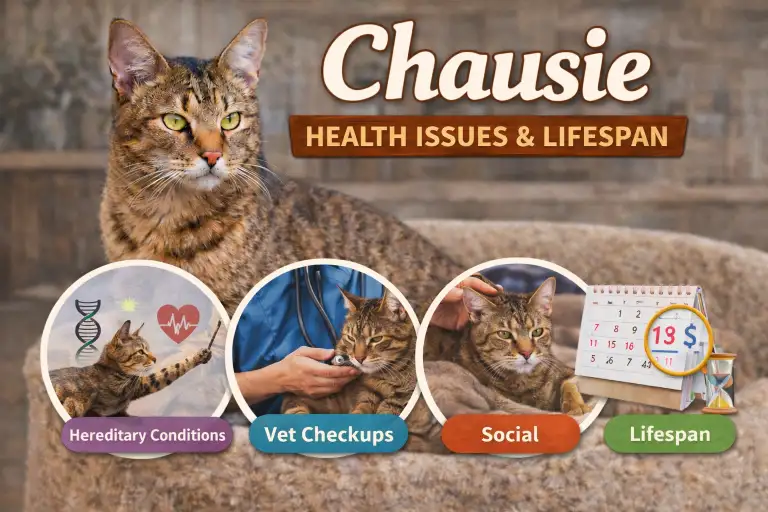
This guide is designed to help you understand Chausie health issues and lifespan in a clear, balanced, and reassuring way. It focuses on what owners most often want to know: how long Chausie cats tend to live, what health concerns are commonly discussed, and how everyday care and observation influence long-term wellbeing.
Recommended Dog Care Products
Based on your dog’s age, these products may help with comfort, health, grooming, and daily care.

Purina Pro Plan Veterinary Supplements
Daily probiotics for dogs to support digestive and gut health.
View on Amazon ↗
Earth Rated Poop Bags for Dogs
Leak-proof, extra thick waste bag refill rolls with lavender scent.
View on Amazon ↗
Greenies Pill Pockets for Dogs
Large dog treats for capsule medication, peanut butter flavor.
View on Amazon ↗
HONEY CARE All-Absorb Dog Wrap
Small male dog wraps, 50 count, useful for daily care support.
View on Amazon ↗
Seresto Flea & Tick Collar
Flea and tick treatment and prevention for dogs over 18 lbs.
View on Amazon ↗
Milk-Bone MaroSnacks
Small dog treats with real bone marrow in a 40 oz canister.
View on Amazon ↗
Vital Essentials Dog Treats
Freeze dried beef liver dog treats, grain free and single ingredient.
View on Amazon ↗
Stain & Odor Eliminator
Enzyme cleaner for pet stains, carpet messes, and strong odors.
View on Amazon ↗
Pur Luv Chicken Jerky Treats
Dog treats made with real chicken breast, high protein and chew-friendly.
View on Amazon ↗
Milk-Bone Flavor Snacks
Mini crunchy dog biscuits in a 36 oz canister for small rewards.
View on Amazon ↗As an Amazon Associate, we may earn from qualifying purchases.
This is an educational overview, not a diagnostic or treatment guide. It does not attempt to predict individual outcomes, identify diseases, or replace professional veterinary care. Instead, it provides context so you can better interpret health information, ask informed questions, and feel more confident as a long-term Chausie owner.
Chausies are often described as athletic, intelligent, and highly active cats. Those traits can influence both their health needs and how owners perceive changes over time. Some health topics come up more frequently in discussions about Chausies, but “common” does not mean “expected,” and it certainly does not mean inevitable. Many Chausie cats live long, stable lives with routine care and attentive ownership.
It’s also important to understand that lifespan and health vary widely between individual cats. Genetics, environment, diet, stress levels, preventive care, and simple chance all play a role. This guide keeps that variability front and center, avoiding fear-based assumptions while still acknowledging realistic health considerations.
Throughout the article, you’ll see an emphasis on:
- long-term patterns rather than isolated symptoms
- prevention and early awareness rather than reaction
- quality of life at every age, not just during senior years
The goal is not to make you worry about your cat’s health, but to help you recognize what’s normal, what deserves attention, and why proactive care matters over a lifetime.
Chausie Lifespan — How Long Do Chausie Cats Live?
Most people searching about Chausie health want a clear answer to one main question: how long do Chausie cats live. While no guide can predict an exact number, Chausies are generally considered a long-living cat breed when they receive consistent care.
On average, many Chausie cats live around 12 to 16 years, and some may live longer. This range is not a promise. It is a general estimate based on indoor living, regular veterinary care, and stable daily routines.
Where and how a Chausie lives makes a big difference.
Chausie lifespan by living environment
| Living environment | Typical lifespan range | Why it matters |
|---|---|---|
| Indoor-only | Longer average lifespan | Fewer accidents, lower disease exposure |
| Indoor with supervised outdoor time | Slightly shorter to similar | Depends on safety and supervision |
| Free-roaming outdoor | Shorter average lifespan | Higher risk from traffic, fights, illness |
Indoor Chausies usually live longer because they are protected from many dangers, such as cars, predators, parasites, and contagious diseases. Outdoor access does not mean a short life, but it does increase risk.
Recommended Dog Care Products
Based on your dog’s age, these products may help with comfort, health, grooming, and daily care.
Purina Pro Plan Veterinary Supplements
Daily probiotics for dogs to support digestive and gut health.
View on Amazon ↗
Earth Rated Poop Bags for Dogs
Leak-proof, extra thick waste bag refill rolls with lavender scent.
View on Amazon ↗
Greenies Pill Pockets for Dogs
Large dog treats for capsule medication, peanut butter flavor.
View on Amazon ↗
HONEY CARE All-Absorb Dog Wrap
Small male dog wraps, 50 count, useful for daily care support.
View on Amazon ↗
Seresto Flea & Tick Collar
Flea and tick treatment and prevention for dogs over 18 lbs.
View on Amazon ↗
Milk-Bone MaroSnacks
Small dog treats with real bone marrow in a 40 oz canister.
View on Amazon ↗
Vital Essentials Dog Treats
Freeze dried beef liver dog treats, grain free and single ingredient.
View on Amazon ↗
Stain & Odor Eliminator
Enzyme cleaner for pet stains, carpet messes, and strong odors.
View on Amazon ↗
Pur Luv Chicken Jerky Treats
Dog treats made with real chicken breast, high protein and chew-friendly.
View on Amazon ↗
Milk-Bone Flavor Snacks
Mini crunchy dog biscuits in a 36 oz canister for small rewards.
View on Amazon ↗As an Amazon Associate, we may earn from qualifying purchases.
It’s also important to understand that lifespan is not only about age. A cat can live many years but struggle with poor quality of life, while another may live slightly fewer years in excellent health and comfort. Longevity and wellbeing are closely connected.
Things that often support a longer, healthier life include:
- steady feeding routines and proper nutrition
- regular play and movement
- mental stimulation and low stress
- routine veterinary checkups
- early attention to small changes
Just as important, some factors are outside an owner’s control. Genetics and natural aging play a role, even with excellent care. A shorter lifespan does not mean failure, and a long lifespan does not mean a cat never had health challenges.
Common Chausie Health Issues (High-Level Overview)
This section gives a simple overview of health issues that are sometimes discussed with Chausie cats. It does not mean every Chausie will face these problems. Many Chausies stay healthy for most of their lives.
The goal here is awareness, not worry.
Common health areas owners hear about
| Health area | What this means in simple words | When it is often noticed |
|---|---|---|
| Digestive sensitivity | Some Chausies may have upset stomachs with sudden diet changes | Young to adult years |
| Dental health | Teeth and gums can build plaque if not checked | Adult and senior years |
| Weight balance | Very active cats can be underfed or, less often, gain weight | Any life stage |
| Urinary health | Litter box habits may change when the urinary system is stressed | Adult years |
| Kidney awareness | Kidneys can slowly change as cats get older | Senior years |
| Parasites | Fleas, worms, and ticks are risks, especially outdoors | Any life stage |
“Common” does not mean “normal” or “guaranteed.” It only means these topics come up more often in general cat health talks. Many cats never experience serious problems in these areas.
Chausies are large, active, and very alert cats. Because of this, small changes can be easier to notice. A tiny drop in energy, a change in appetite, or a shift in litter box habits can stand out more than in a quiet cat.
Some owners also worry because Chausies have hybrid ancestry. In real life, health varies much more by individual cat and care quality than by labels. Regular care, stable routines, and calm observation matter far more than genetics alone.
Watching patterns over time is more useful than focusing on one single day or behavior. A bad day does not mean a health problem.
Factors That Affect a Chausie’s Health and Lifespan
A Chausie’s health and lifespan are shaped by daily life choices and long-term habits. No single factor decides how long a cat will live, but many small things together can make a big difference.
Recommended Dog Care Products
Based on your dog’s age, these products may help with comfort, health, grooming, and daily care.
Purina Pro Plan Veterinary Supplements
Daily probiotics for dogs to support digestive and gut health.
View on Amazon ↗
Earth Rated Poop Bags for Dogs
Leak-proof, extra thick waste bag refill rolls with lavender scent.
View on Amazon ↗
Greenies Pill Pockets for Dogs
Large dog treats for capsule medication, peanut butter flavor.
View on Amazon ↗
HONEY CARE All-Absorb Dog Wrap
Small male dog wraps, 50 count, useful for daily care support.
View on Amazon ↗
Seresto Flea & Tick Collar
Flea and tick treatment and prevention for dogs over 18 lbs.
View on Amazon ↗
Milk-Bone MaroSnacks
Small dog treats with real bone marrow in a 40 oz canister.
View on Amazon ↗
Vital Essentials Dog Treats
Freeze dried beef liver dog treats, grain free and single ingredient.
View on Amazon ↗
Stain & Odor Eliminator
Enzyme cleaner for pet stains, carpet messes, and strong odors.
View on Amazon ↗
Pur Luv Chicken Jerky Treats
Dog treats made with real chicken breast, high protein and chew-friendly.
View on Amazon ↗
Milk-Bone Flavor Snacks
Mini crunchy dog biscuits in a 36 oz canister for small rewards.
View on Amazon ↗As an Amazon Associate, we may earn from qualifying purchases.
Key factors that influence health
| Factor | Why it matters | How much owners can control |
|---|---|---|
| Diet | Supports energy, muscles, and organ health | Mostly controllable |
| Activity | Keeps weight, joints, and mind healthy | Mostly controllable |
| Stress | Affects behavior, digestion, and immunity | Partly controllable |
| Living environment | Changes exposure to risks and illness | Largely controllable |
| Routine vet care | Helps catch problems early | Mostly controllable |
Diet and feeding habits
Chausies are active cats and need steady, balanced feeding. Sudden food changes or irregular meals can upset digestion. Consistency matters more than perfection.
Activity and mental stimulation
These cats enjoy movement, play, and problem-solving. Regular play helps keep muscles strong and prevents boredom. Mental activity is just as important as physical activity.
Stress and routine
Cats feel safer when daily life is predictable. Loud noise, frequent changes, or tension in the home can affect health over time. Calm routines support long-term wellbeing.
Indoor vs outdoor life
Indoor living lowers many risks, such as accidents and disease. Outdoor access increases stimulation but also exposure to dangers. Supervised outdoor time can reduce some risks.
Veterinary care and observation
Regular checkups and watching small changes help catch problems early. Early attention often leads to better outcomes and less stress for both cat and owner.
Even with great care, aging and genetics still play a role. Health is about trends over time, not single events or perfect routines.
Aging, Warning Signs, and Quality of Life in Chausie Cats
As Chausie cats grow older, their bodies and habits change. Not all changes are signs of illness, but knowing what is normal aging versus what needs attention can help you keep your cat comfortable and healthy.
Things to watch as your Chausie ages
| Category | Normal aging signs | Changes to discuss with a vet |
|---|---|---|
| Behavior | Slightly calmer, less jumping | Sudden aggression or hiding |
| Appetite | Minor changes in hunger | Loss of appetite or increased drinking |
| Mobility | Slower climbing or stretching | Limping, stiffness, or difficulty jumping |
| Grooming | Coat may thin or change texture | Matted fur or poor grooming habits |
| Litter box habits | Occasional accidents | Frequent accidents or changes in urination |
Quality of life tips
- Keep food, water, and litter boxes easily accessible.
- Provide soft bedding and low climbing spaces for older joints.
- Maintain gentle play and mental activity to keep the mind sharp.
- Watch for small, gradual changes rather than panicking over one day.
Even as cats age, many Chausies remain active, playful, and affectionate. Aging does not automatically mean poor health. The goal is to support comfort, happiness, and dignity at every stage.
Chausie Health Issues & Lifespan FAQs
This section answers common questions owners ask when learning about Chausie health and lifespan. The answers are simple, general, and meant for learning — not diagnosis or treatment.
Recommended Dog Care Products
Based on your dog’s age, these products may help with comfort, health, grooming, and daily care.
Purina Pro Plan Veterinary Supplements
Daily probiotics for dogs to support digestive and gut health.
View on Amazon ↗
Earth Rated Poop Bags for Dogs
Leak-proof, extra thick waste bag refill rolls with lavender scent.
View on Amazon ↗
Greenies Pill Pockets for Dogs
Large dog treats for capsule medication, peanut butter flavor.
View on Amazon ↗
HONEY CARE All-Absorb Dog Wrap
Small male dog wraps, 50 count, useful for daily care support.
View on Amazon ↗
Seresto Flea & Tick Collar
Flea and tick treatment and prevention for dogs over 18 lbs.
View on Amazon ↗
Milk-Bone MaroSnacks
Small dog treats with real bone marrow in a 40 oz canister.
View on Amazon ↗
Vital Essentials Dog Treats
Freeze dried beef liver dog treats, grain free and single ingredient.
View on Amazon ↗
Stain & Odor Eliminator
Enzyme cleaner for pet stains, carpet messes, and strong odors.
View on Amazon ↗
Pur Luv Chicken Jerky Treats
Dog treats made with real chicken breast, high protein and chew-friendly.
View on Amazon ↗
Milk-Bone Flavor Snacks
Mini crunchy dog biscuits in a 36 oz canister for small rewards.
View on Amazon ↗As an Amazon Associate, we may earn from qualifying purchases.
Do Chausie cats live long lives?
Many Chausie cats live long lives, often into their teens. Lifespan depends on care, lifestyle, and the individual cat.
Are Chausie cats healthy overall?
Yes, many Chausies are healthy cats. Like all cats, they can face health issues, but problems are not guaranteed.
Do Chausies get sick more than other cats?
Not usually. Health risks vary more by care, environment, and genetics than by breed name alone.
Is indoor life better for a Chausie’s health?
Indoor cats usually live longer because they face fewer dangers. Supervised outdoor time can be safe, but free roaming increases risk.
How can I help my Chausie stay healthy?
Consistent feeding, regular play, low stress, routine vet visits, and watching small changes all help support good health.
What signs should I never ignore?
Big changes in eating, drinking, energy, litter box habits, or behavior should always be discussed with a veterinarian.
Do Chausies age faster than other cats?
No clear evidence shows they age faster. Aging speed depends on the individual cat and life conditions.
When should I take my Chausie to the vet?
Routine checkups are important. You should also go if something feels “off,” even if the change seems small.
For more detailed guidance on general cat health and preventive care, you can visit the American Association of Feline Practitioners.

Ata Ur Rehman is the founder of Pet Age in Human Years Calculator, an educational platform that provides age conversion charts and lifespan guides for dogs, cats, birds, and other companion animals. His work focuses on helping pet owners understand how animal ages translate into human years using commonly accepted age conversion formulas and published lifespan averages.
The website compiles breed and species lifespan data from kennel clubs, breed organizations, and general animal lifespan studies to present simple and easy-to-understand guides for pet owners worldwide.
This website was created to centralize animal age conversion charts into one easy reference platform for pet owners.