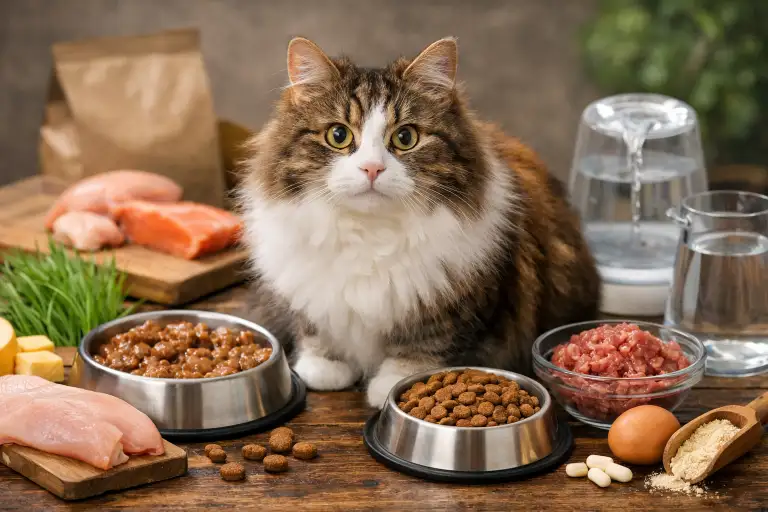
Proper nutrition is the foundation of a Cymric cat’s health, energy, and overall well-being. Like all cats, Cymrics are obligate carnivores, meaning their bodies are designed to thrive on high-quality animal-based proteins and fats. Providing the right diet supports healthy muscle development, maintains a dense, luxurious coat, and ensures your cat has the energy needed for daily activity and play.
Cymrics, the long-haired variant of the Manx breed, have a medium-to-large body and a dense coat that requires adequate protein and fat to maintain. Their unique build and coat type mean that nutritional balance is particularly important to prevent weight gain while supporting hair and skin health.
A well-balanced diet also supports digestive health, proper hydration, and long-term organ function. Feeding a diet tailored to a Cymric’s needs helps reduce the risk of common issues like urinary tract problems, obesity, and coat-related concerns.
For owners, understanding the basics of feline nutrition is the first step in creating a feeding routine that keeps your Cymric healthy and active. This guide is designed to provide evidence-based, practical guidance for daily feeding, life-stage adjustments, and safe dietary choices. It is educational and informational, not a substitute for veterinary advice, so consult a veterinarian if you have concerns about your cat’s specific health needs.
Essential Nutrients for a Balanced Cymric Diet
Cymric cats need a diet that gives them all the nutrients their bodies require. These nutrients can be split into macronutrients and micronutrients, and each one has an important job to keep your cat healthy.
Macronutrients are nutrients your cat needs in large amounts:
- Protein: Helps build muscles, keeps your cat strong, and supports a healthy coat. Good sources are chicken, turkey, fish, and other meats.
- Fat: Provides energy and keeps the skin and fur healthy. Look for animal fats or fish oils.
- Carbohydrates: Cats don’t need a lot, but small amounts from safe sources can give energy.
Micronutrients are nutrients your cat needs in smaller amounts, but they are still very important:
- Taurine: An essential amino acid for heart, eye, and overall health. Must be included in every cat diet.
- Vitamins & Minerals: Vitamins like A, D, and E, and minerals like calcium, phosphorus, and potassium help bones, teeth, and the immune system.
Water and moisture are also critical. Cats naturally drink less water than dogs, so feeding wet food or making sure fresh water is always available helps prevent urinary and kidney problems.
Here’s a quick table for easy reference:
| Nutrient | Role | Sources | Notes for Cymric Cats |
|---|---|---|---|
| Protein | Builds muscles & coat | Chicken, turkey, fish | Important for dense coat |
| Fat | Energy & coat health | Fish oil, poultry fat | Supports shiny, healthy fur |
| Taurine | Heart & eye health | Meat-based foods | Must be in diet |
| Vitamins & Minerals | Bones, immune system | Balanced commercial foods | Avoid too much supplementation |
| Water | Hydration & urinary health | Wet food, fresh water | Long-haired cats benefit from wet food |
Feeding a balanced diet with these nutrients helps your Cymric cat stay energetic, maintain a healthy weight, and have a shiny coat.
Choosing and Feeding Food: Wet, Dry, and Mixed
Cymric cats can eat wet food, dry food, or a mix of both. Each type has benefits and things to watch out for.
Wet Food
- High in water, helps with hydration
- Usually high in protein, good for muscles and coat
- Can spoil if left out too long, so feed fresh portions
Dry Food
- Easy to store and serve
- Helps keep teeth a little cleaner because it’s crunchy
- Has less moisture, so always provide fresh water
Mixed Feeding
- Combines wet and dry food for balance
- Gives hydration from wet food and convenience from dry food
- Helps prevent picky eating if your cat likes both
Feeding Tips
- Feed two meals per day for adult cats
- Kitten meals should be smaller and more frequent
- Measure portions based on your cat’s weight and activity
- Avoid giving too many treats or human food
Here’s a simple table to compare the food types:
| Food Type | Pros | Cons | Best Use for Cymric Cats |
|---|---|---|---|
| Wet Food | Hydrating, high protein | Can spoil quickly | Best for coat and urinary health |
| Dry Food | Convenient, crunchy | Low moisture, higher carbs | Good for portion control and busy owners |
| Mixed Feeding | Balanced, flexible | Requires portion monitoring | Ideal for most Cymrics |
Feeding the right type and amount of food helps your Cymric stay healthy, active, and happy.
Life Stage & Special Feeding Considerations
Cymric cats have different feeding needs at different ages and situations. Adjusting their diet helps keep them healthy and happy.
Kittens
- Need more protein and fat for growth
- Feed 3–4 small meals per day
- Wet food can help with hydration and digestion
Adult Cats
- Feed 2 meals per day
- Maintain a healthy weight with balanced portions
- Mix wet and dry food for hydration and convenience
Senior Cats
- May need fewer calories if less active
- Support joints with high-quality protein and fats
- Monitor weight and coat condition closely
Indoor Cats
- Less active than outdoor cats, so calories may need to be lower
- Encourage play and exercise to prevent weight gain
Spayed/Neutered Cats
- Metabolism can slow after spaying or neutering
- Portion control is important to prevent extra weight
Multi-Cat Households
- Feed in separate bowls or rooms to make sure each cat gets enough food
- Monitor food intake if some cats eat faster or are pickier
Here’s a simple table for life-stage feeding:
| Life Stage | Key Nutritional Needs | Feeding Frequency | Portion Notes |
|---|---|---|---|
| Kitten | High protein & fat | 3–4 meals/day | Small, frequent meals |
| Adult | Maintenance protein & fat | 2 meals/day | Adjust for activity |
| Senior | Lower calories, joint support | 2 meals/day | Monitor weight & hydration |
Feeding your Cymric according to life stage and special needs keeps them healthy, active, and helps prevent weight and health problems.
Owner Guidance, Hydration & Common Feeding Mistakes
Keeping your Cymric cat healthy is not just about food—it’s also about water, proper portions, and safe feeding habits.
Hydration Tips
- Always provide fresh water in a clean bowl
- Wet food helps cats get extra water
- Some cats like water fountains, which can encourage them to drink more
Common Feeding Mistakes to Avoid
- Free-feeding dry food all day can lead to weight gain
- Feeding too many treats or human food can upset digestion and cause obesity
- Relying only on dry food may reduce hydration and urinary health
- Over-supplementing with vitamins or minerals can be harmful
Quick Do / Don’t List
Do
- Measure your cat’s food based on weight and activity
- Provide wet food or water for hydration
- Offer high-quality protein first
Don’t
- Feed unlimited dry food
- Give toxic human foods like chocolate, onions, or garlic
- Skip monitoring weight or body condition
Optional Treat Table
| Treat Type | Safe Limit (grams/day) | Notes |
|---|---|---|
| Commercial cat treats | 5–10% of daily calories | Keep small and occasional |
| Human foods (safe occasional) | Small amounts only | Only plain meat, avoid seasoning |
Following these tips helps your Cymric cat stay active, maintain a healthy weight, and enjoy a shiny coat and good overall health.
or more detailed, official nutrition standards and requirements for complete and balanced cat food, you can visit the Association of American Feed Control Officials (AAFCO) page on their nutrient profiles and pet food guidelines here: https://www.aafco.org/consumers/understanding-pet-food/

Ata Ur Rehman is the founder of Pet Age in Human Years Calculator, an educational platform that provides age conversion charts and lifespan guides for dogs, cats, birds, and other companion animals. His work focuses on helping pet owners understand how animal ages translate into human years using commonly accepted age conversion formulas and published lifespan averages.
The website compiles breed and species lifespan data from kennel clubs, breed organizations, and general animal lifespan studies to present simple and easy-to-understand guides for pet owners worldwide.
This website was created to centralize animal age conversion charts into one easy reference platform for pet owners.