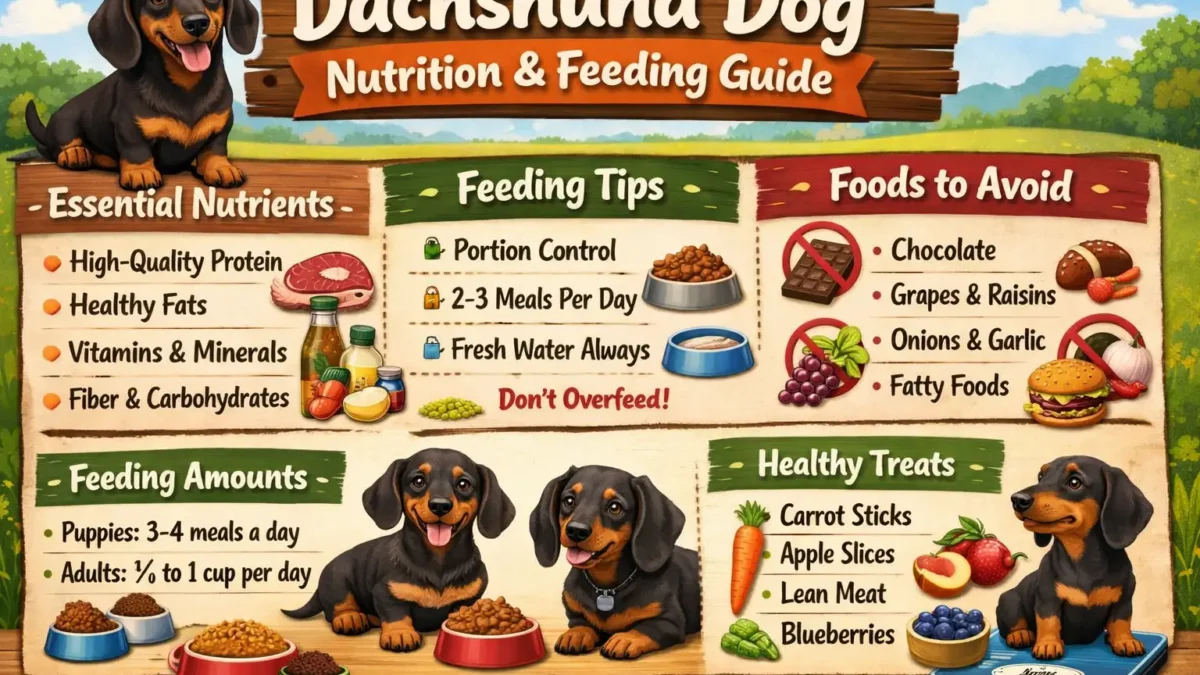
Dachshund Dog Nutrition & Feeding Guide: What to Feed, How Much, and Common Mistakes
Dachshunds are not just “small dogs with big personalities.” Their unique body structure, metabolism, and health risks make nutrition far more important for them than many owners realize. What you feed your Dachshund—and how much—directly affects their weight, spine health, digestion, energy levels, and long-term quality of life.
This guide is designed to help you make confident, practical feeding decisions for your Dachshund, whether you’re raising a puppy, maintaining a healthy adult, or caring for a senior. Instead of vague advice or trendy food claims, the focus is on balanced nutrition, portion control, and real-world feeding habits that actually work.
One of the biggest reasons Dachshund nutrition deserves special attention is their long back and short legs. Even a small amount of excess weight places extra strain on the spine, increasing the risk of back injuries and intervertebral disc disease (IVDD). Many Dachshunds become overweight not because owners are careless, but because this breed is extremely calorie-sensitive. A few extra treats, table scraps, or oversized portions can quietly lead to weight gain over time.
Dachshunds also tend to have a strong appetite and food motivation. Many will act hungry even when they are getting enough calories, which often leads owners to overfeed unintentionally. Combined with a small-breed metabolism and relatively low daily calorie needs, this makes structured feeding and portion awareness essential.
Proper nutrition doesn’t just help prevent obesity. A well-balanced diet supports:
- Strong muscles to stabilize the spine
- Healthy joints and mobility
- Steady energy levels without hyperactivity
- Good digestion and consistent stool quality
- A healthy coat and skin
- Better behavior and focus
On the flip side, poor feeding habits—such as free-feeding, excessive treats, frequent food switching, or relying on low-quality foods—can contribute to digestive issues, chronic weight problems, and increased health risks as your Dachshund ages.
What Should a Dachshund Eat? Nutritional Needs Explained
Feeding a Dachshund is not about finding the “fanciest” dog food. It is about giving the right balance of nutrients in the right amounts for a small dog that gains weight easily.
Dachshunds need food that supports muscle strength, keeps body fat under control, and protects their joints and spine. Too many calories or the wrong balance can slowly lead to weight gain and health problems.
Below is a simple breakdown of what matters most in a Dachshund’s diet.
Core nutrition Dachshunds need
A healthy Dachshund diet should:
- Support lean muscle, not fat gain
- Provide steady energy without making the dog overweight
- Help digestion and reduce stool problems
- Support joints, spine, skin, and coat
Small dogs like Dachshunds burn calories differently than large dogs. That is why small-breed formulas often work better than generic dog food.
Ideal nutrient ranges for Dachshunds
This table shows general nutrition targets for healthy Dachshunds. These are not exact numbers, but safe ranges used by veterinarians and pet nutrition experts.
| Nutrient | Recommended Range | Why It Matters for Dachshunds |
|---|---|---|
| Protein | 22–30% | Builds muscle and supports the spine |
| Fat | 10–15% | Provides energy without causing weight gain |
| Carbohydrates | Moderate | Energy and fiber support |
| Fiber | 3–6% | Helps digestion and stool quality |
| Calcium & Phosphorus | Balanced | Supports bones and back health |
| Omega-3 fats | Included | Helps joints, skin, and inflammation |
High protein is good, but very high fat is risky for Dachshunds because it adds calories fast.
Understanding dog food labels (without confusion)
Many dog food labels use big words that sound healthy but do not always mean much. Learning a few basics helps you avoid bad choices.
| Label Check | Good Sign | Red Flag |
|---|---|---|
| Protein source | Named meat (chicken, beef, salmon) | “Meat meal” without name |
| Fat level | Moderate, not extreme | Very high fat for a small dog |
| Nutritional claim | “Complete and balanced” | Missing feeding statement |
| Ingredient order | Meat listed early | Fillers listed first |
| Marketing terms | Simple and clear | Buzzwords only |
If a food says it is “complete and balanced”, it means it meets basic nutrition standards for dogs. This is important, especially if you feed only one type of food.
Do Dachshunds need supplements?
Most healthy Dachshunds do not need extra supplements if they eat a balanced dog food.
Some dogs may benefit from:
- Omega-3 oils for joints and skin
- Joint support for older or overweight dogs
Never add supplements without checking portions. Too much of certain vitamins or minerals can do more harm than good.
How Much to Feed a Dachshund and How Often
Many Dachshunds become overweight not because of bad food, but because they are fed too much. This breed needs small portions, clear meal times, and careful control of treats.
Dachshunds often act hungry even when they are getting enough food. This is normal behavior, not a sign that they need more to eat.
Daily calorie needs for Dachshunds
The table below shows average daily calorie needs. These are general ranges. Your dog may need a little more or less based on activity and age.
| Dachshund Type | Weight Range | Low Activity | Moderate Activity |
|---|---|---|---|
| Miniature Dachshund | 8–11 lbs | 180–220 kcal | 220–260 kcal |
| Standard Dachshund | 16–32 lbs | 300–400 kcal | 400–520 kcal |
If your Dachshund is mostly indoors and sleeps a lot, stay closer to the low range. If your dog walks daily and plays often, the moderate range fits better.
Portion size matters more than bowl size
Always measure food with a measuring cup or scale. Guessing portions often leads to overfeeding.
Signs your Dachshund may be eating too much:
- You cannot feel the ribs easily
- The waist is not visible from above
- Weight keeps going up slowly
A healthy Dachshund should have:
- A visible waist
- Ribs you can feel but not see
- No heavy belly hanging down
Feeding frequency by life stage
How often you feed is just as important as how much.
| Life Stage | Meals Per Day | Why It Helps |
|---|---|---|
| Puppy (under 6 months) | 3–4 meals | Supports growth and energy |
| Adult | 2 meals | Helps control hunger and weight |
| Senior | 2 smaller meals | Easier digestion |
Free-feeding (leaving food out all day) is not recommended for Dachshunds. It often leads to weight gain.
Treats and snacks add calories fast
Treats should make up no more than 10% of daily calories.
| Daily Calories | Max Treat Calories |
|---|---|
| 200 kcal | 20 kcal |
| 400 kcal | 40 kcal |
Use small treats. Even tiny bites count for small dogs.
Good treat habits:
- Break treats into small pieces
- Use treats mainly for training
- Skip treats on low-activity days
Best Types of Dog Food for Dachshunds (Pros, Cons, and Safety)
There is no one perfect food for every Dachshund. The best choice depends on your dog’s age, weight, activity level, and eating habits. What matters most is that the food is balanced, safe, and easy to control in portions.
Below is a clear look at the main dog food types and how they work for Dachshunds.
Common dog food types for Dachshunds
| Food Type | Pros | Cons | Best For |
|---|---|---|---|
| Dry food (kibble) | Easy to store, helps teeth, affordable | Can be high in calories | Most Dachshunds |
| Wet food (canned) | Tastes good, adds moisture | More expensive, less dental help | Picky eaters |
| Fresh or cooked food | High quality, easy to digest | Costly, short shelf life | Weight control |
| Freeze-dried food | Lightweight, good for travel | Pricey | Busy owners |
| Raw food | High protein | Safety risks if done wrong | Only with vet guidance |
| Homemade food | Full control of ingredients | Easy to unbalance nutrients | Vet-formulated plans only |
For most Dachshunds, a good-quality small-breed dry food works very well. You can add a small amount of wet food for taste if needed.
Choosing the right food texture
Dachshunds often prefer certain textures:
- Crunchy kibble for chewing
- Soft or wet food for stronger smell and taste
If your Dachshund is picky, try:
- Mixing a spoon of wet food with dry food
- Adding warm water to kibble
- Keeping meal times short and structured
Avoid changing foods often. Too many changes can upset the stomach.
Safe foods vs foods Dachshunds must avoid
Some human foods are safe in small amounts, but many are dangerous for dogs.
| Safe in Small Amounts | Never Feed |
|---|---|
| Plain chicken | Chocolate |
| Cooked carrots | Grapes and raisins |
| Pumpkin (plain) | Onions and garlic |
| Rice | Xylitol (found in gum) |
| Apples (no seeds) | Alcohol |
Even safe foods should be plain and unseasoned. No salt, spices, or sauces.
Treats without weight gain
Treats should be small and simple.
Good treat choices:
- Tiny training treats
- Small pieces of cooked meat
- Low-calorie dog treats
Bad treat habits:
- Giving treats all day
- Using large treats
- Feeding table scraps often
Remember, Dachshunds gain weight fast. Treats should be planned, not random.
Special Diets, Common Feeding Problems, and FAQs
Some Dachshunds need more than a basic feeding plan. Age, health, and daily habits can change what and how they should eat. This section helps you handle common problems in a simple and safe way.
Feeding Dachshund puppies, adults, and seniors
Puppies need more calories, but too much food can harm growing bones. Feed puppy food made for small breeds and avoid large portions.
Adult Dachshunds need steady meals and strict portion control to avoid weight gain.
Senior Dachshunds often move less. They may need:
- Fewer calories
- Easy-to-digest food
- Extra joint support
Always adjust food slowly as your dog ages.
Weight loss diets for overweight Dachshunds
Many Dachshunds are overweight, even when owners think they are not.
Helpful steps:
- Measure food every meal
- Cut treats first, not main meals
- Choose food with lower fat and more fiber
- Increase gentle exercise like short walks
Never crash-diet a dog. Slow weight loss is safer.
Sensitive stomachs and food allergies
Some Dachshunds have loose stool, gas, or itchy skin.
Common causes:
- Too many food changes
- Rich or fatty foods
- Certain proteins
Helpful tips:
- Switch food slowly over 7–10 days
- Keep meals simple
- Avoid table scraps
If problems last more than a few weeks, talk to a vet.
Picky eaters and begging behavior
Dachshunds learn fast. If they skip meals and get treats later, they will repeat it.
To fix picky eating:
- Feed at the same times daily
- Remove the bowl after 15–20 minutes
- Do not replace meals with treats
Begging does not mean hunger. It often means habit.
Common questions Dachshund owners ask
Why is my Dachshund always hungry?
Most Dachshunds love food. This is normal behavior, not always a need for more calories.
Can Dachshunds eat grain-free food?
Grain-free is not needed unless advised by a vet.
Is raw food safe for Dachshunds?
Raw diets can carry risks and should only be used with professional guidance.
When should I see a vet or nutritionist?
- Fast weight gain or loss
- Long-term stomach issues
- Puppy growth concerns
- Senior dogs with health changes
For official guidance on how dog food is formulated to meet basic nutrient needs and what “complete and balanced” really means, you can visit the Association of American Feed Control Officials (AAFCO) pet food standards and label information page on their website: https://www.aafco.org/consumers/understanding-pet-food/reading-labels/