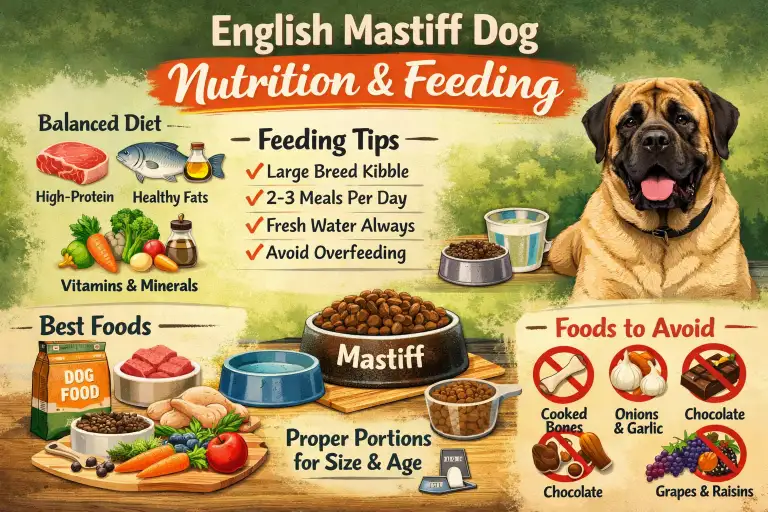
English Mastiffs are not just “large dogs that eat more.” They are a true giant breed, and the way they grow, move, and age makes nutrition far more critical than many owners realize. Feeding mistakes that might be harmless in smaller dogs can lead to lifelong joint damage, obesity, or digestive problems in an English Mastiff.
One of the biggest differences is growth rate. English Mastiff puppies grow extremely fast, often gaining several pounds per week during their first months. Overfeeding calories, protein, or calcium during this period can push the body to grow faster than the bones and joints can safely support. This increases the risk of orthopedic conditions such as hip dysplasia, elbow dysplasia, and osteochondrosis—issues that are already more common in giant breeds.
Adult English Mastiffs have the opposite challenge. They are naturally calm, low-to-moderate energy dogs, yet they have a large body mass. This combination makes them very prone to weight gain if portions are not carefully controlled. Even a few extra pounds can place significant strain on joints, worsen arthritis, and reduce mobility over time. For Mastiffs, staying lean is not about appearance—it directly affects comfort and lifespan.
Digestive health is another key concern. English Mastiffs have deep chests, which puts them at higher risk for gastric dilatation-volvulus (bloat). While nutrition alone does not cause bloat, how and when you feed—meal size, feeding speed, and timing—plays a role in risk management. Large, infrequent meals or rapid eating can increase digestive stress in this breed.
Finally, English Mastiffs age faster than smaller dogs. Nutritional needs change earlier in life, especially when it comes to calorie density, joint support, and muscle maintenance. What works for a two-year-old Mastiff may not be appropriate for the same dog at six or seven years old.
Understanding these breed-specific realities is the foundation of proper English Mastiff nutrition. we’ll break down exactly what to feed, how much to feed, and how to adjust your dog’s diet at every life stage to support healthy growth, strong joints, and long-term well-being.
What to Feed an English Mastiff for Optimal Health
Feeding an English Mastiff is about balance, not excess. Bigger dogs do not need extreme protein, heavy supplements, or trendy diets. They need steady nutrition that supports joints, digestion, and a healthy weight over a long lifespan.
At the most basic level, a good English Mastiff diet should provide enough protein to maintain muscle, enough fat for energy and skin health, and controlled minerals to protect growing bones and joints.
Protein helps your Mastiff keep strong muscles that support their heavy frame. Too little protein leads to weakness and muscle loss, but too much—especially in puppies—can push growth too fast. Most healthy English Mastiffs do best with moderate protein levels rather than very high-protein formulas.
Fat provides energy and helps absorb vitamins, but it is also the biggest driver of weight gain. Because English Mastiffs are not highly active dogs, overly fatty foods can quickly lead to obesity. Moderate fat levels are safer for long-term joint and heart health.
Carbohydrates and fiber support digestion and gut health. Well-cooked grains or quality plant sources can be useful, especially for stool quality and energy balance. Fiber also helps many Mastiffs feel full without overeating.
Minerals deserve special attention, especially calcium and phosphorus. Giant-breed dogs are very sensitive to mineral imbalances. Too much calcium—often from supplements or poorly balanced homemade diets—can seriously harm bone development in puppies.
Below is a quick reference for nutrient targets commonly recommended for English Mastiffs eating complete and balanced diets.
Ideal Nutrient Ranges for English Mastiffs
| Nutrient | General Target Range | Why It Matters |
|---|---|---|
| Protein | Moderate (adult ~22–26%) | Maintains muscle without stressing joints |
| Fat | Moderate (adult ~10–15%) | Energy without excess weight gain |
| Fiber | Moderate | Supports digestion and stool quality |
| Calcium | Controlled | Protects bone and joint development |
| Phosphorus | Balanced with calcium | Prevents skeletal problems |
Choosing the right food also means knowing how to read the label. Marketing words like “premium,” “ancestral,” or “wild” do not tell you if the food is good for a giant breed. The ingredient list and guaranteed analysis matter far more than the front of the bag.
How to Read an English Mastiff Dog Food Label
| Label Area | What to Look For | What to Be Careful With |
|---|---|---|
| Ingredient list | Named animal proteins, clear ingredients | Vague meats, excessive fillers |
| Guaranteed analysis | Moderate protein and fat | Extremely high protein or fat |
| Life-stage claim | Complete & balanced for growth or adults | Missing life-stage statement |
| Calcium info | Clearly listed or appropriate for giant breeds | Added calcium supplements |
Many owners ask about supplements. In most cases, a properly formulated commercial diet already meets your English Mastiff’s needs. Adding calcium, phosphorus, or multiple supplements without guidance can do more harm than good. Joint supplements, such as glucosamine or omega-3s, may help some dogs, but they should support—not replace—a balanced diet.
How Much Should an English Mastiff Eat? Feeding Amounts and Schedule
How much you feed an English Mastiff matters just as much as what you feed. This breed gains weight easily, and extra pounds put heavy stress on joints, the heart, and overall comfort. The goal is to keep your Mastiff lean, strong, and able to move without pain.
Calories depend on body weight, age, and daily activity. A calm, couch-loving Mastiff needs far fewer calories than a younger or more active one. Neutered dogs also usually need less food than intact dogs. These numbers are always starting points, not fixed rules.
Daily Calorie Needs for English Mastiffs
| Adult Weight | Low Activity | Moderate Activity |
|---|---|---|
| 120 lb (54 kg) | ~2,200 kcal | ~2,600 kcal |
| 150 lb (68 kg) | ~2,500 kcal | ~3,000 kcal |
| 180 lb (82 kg) | ~2,900 kcal | ~3,400 kcal |
| 200 lb (91 kg) | ~3,100 kcal | ~3,700 kcal |
Portion size depends on the food’s calorie density. Two cups of one kibble can have very different calories than two cups of another. Always check the calories per cup on the bag and adjust slowly.
Example Daily Feeding Amounts (Dry Food Estimate)
| Food Calories per Cup | Daily Cups for 150 lb Adult |
|---|---|
| 350 kcal/cup | ~7–7.5 cups |
| 400 kcal/cup | ~6–6.5 cups |
| 450 kcal/cup | ~5.5–6 cups |
Meal timing is also important. Large, single meals can stress digestion and may increase bloat risk. Most English Mastiffs do best with two meals per day, spaced evenly. Puppies often need three meals per day to support steady growth.
Do not rely only on the measuring cup. Body shape tells you more than numbers. You should be able to feel your dog’s ribs under a light layer of fat, and your Mastiff should have a visible waist when viewed from above.
Simple Body Condition Check for English Mastiffs
| Body Condition | What You See and Feel | Feeding Action |
|---|---|---|
| Underweight | Ribs and hips very visible | Increase food slowly |
| Ideal | Ribs felt easily, clear waist | Maintain current intake |
| Overweight | Ribs hard to feel, no waist | Reduce portions gradually |
Avoid free-feeding. Leaving food out all day often leads to overeating in this breed. Measured meals and regular weigh-ins help prevent slow, unnoticed weight gain.
English Mastiff Feeding by Life Stage and Body Condition
English Mastiffs’ nutritional needs change as they grow. Puppies, adults, and seniors all need different amounts of calories, protein, and minerals. Feeding the wrong way at the wrong stage can cause growth problems, joint issues, or weight gain.
Puppies need slow, controlled growth. Too much food or too much calcium can harm bones and joints. Most Mastiff puppies do well with three small meals per day and a diet formulated for giant-breed puppies.
Adolescent Mastiffs are still growing but start to eat less frequently. Switching to two meals per day is common. Portion control is critical to prevent rapid growth and future joint problems.
Adult Mastiffs usually need two meals per day. Portion sizes should match activity level. Low-energy adults need fewer calories than active or working Mastiffs. Maintaining a healthy weight keeps joints and the heart healthier.
Senior Mastiffs need fewer calories but may need more protein to maintain muscle mass. Joint supplements or soft, easy-to-digest food can help older dogs stay comfortable.
English Mastiff Feeding Guidelines by Life Stage
| Life Stage | Meals per Day | Key Feeding Points | Portion Notes |
|---|---|---|---|
| Puppy (8–24 weeks) | 3 | Slow growth, calcium-controlled food | Feed smaller, frequent meals |
| Adolescent (6–18 months) | 2 | Growth slowing, portion control | Avoid rapid weight gain |
| Adult (2–6 years) | 2 | Maintain ideal weight | Adjust calories for activity |
| Senior (7+ years) | 2 | Lower calories, maintain protein | Consider joint support foods |
Body condition is just as important as age. Underweight dogs need more calories; overweight dogs need less. Checking ribs, waist, and energy levels helps guide adjustments.
Adjusting Portions Based on Body Condition
| Body Condition | Action |
|---|---|
| Underweight | Gradually increase food 5–10% |
| Ideal | Maintain current portions |
| Overweight | Reduce portions 5–10%, increase activity |
Feeding by life stage and body condition helps your Mastiff grow safely, stay lean, and remain strong throughout life.
Common Feeding Problems, Special Diets, and Owner Questions
Even with the right food and portions, owners encounter problems. Food allergies, sensitive stomachs, picky eating, and weight issues are common. Understanding these problems helps you prevent serious health issues.
Some Mastiffs cannot tolerate certain proteins or grains. Switching to a limited ingredient or hypoallergenic formula may help. Sensitive stomachs often do better with easily digestible diets and smaller, more frequent meals.
Treats and human food are another concern. Overfeeding snacks can undo careful portion control. Some human foods, like chocolate, grapes, onions, and garlic, are toxic. Others, like cooked chicken or plain rice, can be healthy in moderation.
Safe vs Unsafe Human Foods for English Mastiffs
| Safe Foods | Unsafe Foods |
|---|---|
| Cooked chicken | Chocolate |
| Plain rice | Grapes & raisins |
| Carrots & green beans | Onions & garlic |
| Pumpkin | Macadamia nuts |
Behavior-based feeding problems also occur. Some Mastiffs eat too fast or guard their food. Others may be picky or refuse meals during stress. Owners should feed in a calm space, use slow feeders if necessary, and avoid frequent food changes without transition.
Common Feeding Problems and Practical Fixes
| Problem | Cause | Solution |
|---|---|---|
| Picky eater | Sudden diet change, stress | Gradually mix old and new food |
| Fast eater | Competition, habit | Use slow feeder or divide meals |
| Loose stool | Diet too rich, sudden switch | Gradual introduction, bland meals |
| Weight gain | Overfeeding, low activity | Adjust portions, increase exercise |
Special diets may include weight management, joint support, or sensitive stomach formulas. Always consult a veterinarian before switching to raw, homemade, or grain-free diets. Proper guidance ensures balanced nutrition and avoids lifelong health issues.
For official, science-based standards on complete and balanced dog diets—especially for large and giant breeds—refer to the AAFCO Dog Food Nutrient Profiles, which outline minimum nutritional requirements for dogs at different life stages.

Ata Ur Rehman is the founder of Pet Age in Human Years Calculator, an educational platform that provides age conversion charts and lifespan guides for dogs, cats, birds, and other companion animals. His work focuses on helping pet owners understand how animal ages translate into human years using commonly accepted age conversion formulas and published lifespan averages.
The website compiles breed and species lifespan data from kennel clubs, breed organizations, and general animal lifespan studies to present simple and easy-to-understand guides for pet owners worldwide.
This website was created to centralize animal age conversion charts into one easy reference platform for pet owners.