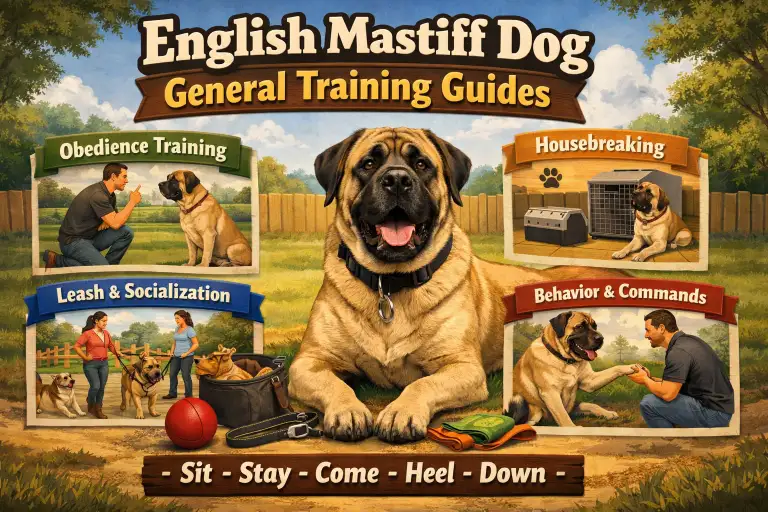
English Mastiff training is not about turning a calm giant into a high-energy performer—it’s about building safe, reliable behavior in a dog whose size alone can create serious problems if training is delayed or inconsistent. This guide is designed for both first-time Mastiff owners and experienced dog owners who are new to giant breeds and want clear, practical, and realistic training guidance.
English Mastiffs mature slowly, both mentally and physically, and they tend to be sensitive, thoughtful dogs rather than fast-reacting learners. Because of this, common “one-size-fits-all” dog training advice often fails with this breed. What works for smaller, high-drive dogs can overwhelm or shut down a Mastiff if applied incorrectly.
In this article, you’ll learn how to train an English Mastiff using calm, structured, science-backed methods that respect their temperament while still setting firm boundaries. The focus is on everyday obedience, leash manners, impulse control, and behavior foundations that keep your dog safe, manageable, and confident in real-world situations.
Why Training an English Mastiff Matters
English Mastiffs are known as gentle giants, but their size means even small behavior problems can become serious very fast. A Mastiff that pulls on the leash, jumps on people, or ignores commands can easily hurt someone by accident. Training is not about control or dominance—it is about safety, trust, and clear communication.
Many owners wait because their Mastiff seems calm as a puppy. This is a common mistake. As Mastiffs grow, they gain strength much faster than they gain self-control. Early training teaches them how to move politely around people, children, and other pets before bad habits form.
Training also helps prevent fear and stress. Mastiffs are sensitive dogs. Without guidance, they can become unsure in new places or overly protective at home. Simple, calm training builds confidence and helps them understand what is expected in daily life.
Most behavior problems seen in adult English Mastiffs—strong leash pulling, guarding behavior, or ignoring cues—start as small issues that were never addressed early. Training now saves frustration later and helps your dog stay welcome in public spaces, at the vet, and around guests.
How Training Affects Daily Life
| Without Training | With Proper Training |
|---|---|
| Pulls hard on the leash | Walks calmly beside you |
| Jumps or leans on people | Greets people politely |
| Ignores basic commands | Responds to simple cues |
| Becomes overprotective | Stays calm and confident |
Understanding English Mastiff Behavior and Temperament
English Mastiffs are calm, loyal, and deeply attached to their families. They are not high-energy dogs, but they are not lazy either. Most Mastiffs like quiet routines and clear rules. They learn best when training feels calm, fair, and predictable.
One important thing to understand is that English Mastiffs grow slowly. Their bodies get big fast, but their minds take much longer to mature. A young Mastiff may look like an adult dog, but still think like a puppy. This is why patience is very important during training.
Mastiffs are also sensitive. Yelling, harsh leash pulls, or punishment can make them shut down or avoid learning. Instead of pushing back, they may simply stop trying. Calm voices, gentle guidance, and rewards work much better with this breed.
Many people think Mastiffs are stubborn or dominant. In reality, most Mastiffs are thoughtful dogs that take time to decide what to do. If training feels confusing or rushed, they may pause or ignore commands. This is not defiance—it is uncertainty.
How English Mastiff Traits Affect Training
| Mastiff Trait | What It Means | How to Train Effectively |
|---|---|---|
| Calm nature | Low energy, steady behavior | Use short, calm sessions |
| Slow maturity | Takes longer to learn rules | Be patient and consistent |
| Sensitive personality | Reacts poorly to harsh methods | Use gentle, positive rewards |
| Strong body | Can overpower handlers easily | Teach manners early |
| Loyal and family-focused | Bonds closely with owners | Train using trust and praise |
Understanding your English Mastiff’s natural behavior helps you train with the dog you have, not the dog you expect. When training matches their temperament, progress becomes smoother and less stressful for both of you.
Step-by-Step English Mastiff Training Method
Training an English Mastiff works best when it is calm, short, and done every day. Long or intense sessions can tire them out or make them lose interest. Slow and steady training gives the best results with this breed.
Keep training sessions short, usually 5 to 10 minutes at a time. Two or three short sessions each day work better than one long session. Always train in a quiet place first, then slowly add distractions once your dog understands the basics.
Start with simple goals. Focus on manners and safety before tricks. Because English Mastiffs are very strong, leash training and calm behavior are more important than flashy commands.
Puppies and adult Mastiffs can both learn, but they need different approaches. Puppies need more breaks and gentle guidance. Adult Mastiffs may need more patience if bad habits are already formed, but they can still learn with the right method.
Rewards should be calm and clear. Soft treats, gentle praise, and a calm voice work best. Excited shouting or rough play can make training harder for this breed.
Simple Daily Training Plan
| Time of Day | Training Focus | Session Length |
|---|---|---|
| Morning | Leash walking and calm behavior | 5–10 minutes |
| Afternoon | Basic commands like sit or down | 5 minutes |
| Evening | Impulse control and focus | 5–10 minutes |
Core Commands to Teach First
| Command | Why It Matters | When to Train |
|---|---|---|
| Sit | Builds calm control | From puppy age |
| Down | Helps with impulse control | Early training |
| Come | Important for safety | After basic focus |
| Heel / Loose leash | Prevents pulling | As soon as walks begin |
| Stay | Builds patience | After sit and down |
Always end training on a positive note, even if progress feels slow. English Mastiffs learn best when they feel safe, understood, and trusted.
Common English Mastiff Training Problems and When to Get Help
Even with the best training, English Mastiffs can face some common challenges because of their size, slow maturity, and sensitive nature. Knowing what to expect helps you prevent problems and know when to seek help from a professional.
Some Mastiffs pull on the leash or ignore commands if they are excited. Others may jump on people or lean on furniture. Overprotective behavior, fear, or anxiety can also appear, especially if the dog has experienced stress or inconsistent training.
Owner mistakes can make problems worse. For example, giving in to pulling on the leash, using harsh punishment, or skipping daily practice can confuse the dog. Recognizing these issues early makes training more effective and safer.
Sometimes problems go beyond normal puppy or adult learning challenges. Aggression, severe fear, or repeated defensive behavior may need a certified trainer or veterinary behaviorist experienced with giant breeds. Early professional guidance can prevent small problems from becoming serious safety risks.
Common Problems and Fixes
| Problem | Why It Happens | How to Fix |
|---|---|---|
| Pulling on leash | Too much strength, excitement | Use short sessions, reward calm walking |
| Jumping on people | Seeking attention or greeting | Teach sit and calm greetings, reward polite behavior |
| Ignoring commands | Distraction or slow learning | Train in quiet areas first, repeat consistently |
| Overprotective behavior | Fear or guarding instinct | Socialize slowly, reward calm responses |
| Fear or anxiety | Past stress or harsh handling | Use desensitization and gentle rewards |
When to Seek Professional Help
| Situation | Recommended Action |
|---|---|
| Aggression toward people or dogs | Contact certified trainer/behaviorist |
| Persistent fear or anxiety | Veterinary behavior consultation |
| Safety concerns with children or guests | Professional training plan tailored to Mastiff |
| Bad habits that do not improve | Reinforce with expert guidance |
Recognizing problems early and acting with calm, consistent methods keeps both you and your Mastiff safe. Professional help is a tool, not a failure, and it can save time and stress in the long run.
For additional breed-specific training insights and responsible ownership guidance, readers can refer to the American Kennel Club’s English Mastiff breed resource, which outlines temperament, training considerations, and giant-breed care standards.

Ata Ur Rehman is the founder of Pet Age in Human Years Calculator, an educational platform that provides age conversion charts and lifespan guides for dogs, cats, birds, and other companion animals. His work focuses on helping pet owners understand how animal ages translate into human years using commonly accepted age conversion formulas and published lifespan averages.
The website compiles breed and species lifespan data from kennel clubs, breed organizations, and general animal lifespan studies to present simple and easy-to-understand guides for pet owners worldwide.
This website was created to centralize animal age conversion charts into one easy reference platform for pet owners.