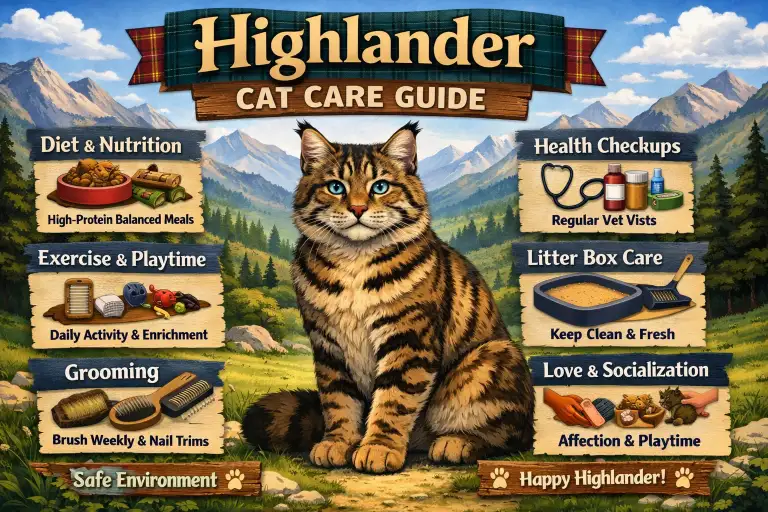
The Highlander cat is not a quiet, lazy lap cat. This breed is known for high energy, strong curiosity, and a playful nature that lasts well into adulthood. Many owners are surprised by how active and involved Highlanders are compared to average house cats. Understanding this early helps prevent stress, behavior problems, and frustration on both sides.
Recommended Dog Care Products
Based on your dog’s age, these products may help with comfort, health, grooming, and daily care.

Purina Pro Plan Veterinary Supplements
Daily probiotics for dogs to support digestive and gut health.
View on Amazon ↗
Earth Rated Poop Bags for Dogs
Leak-proof, extra thick waste bag refill rolls with lavender scent.
View on Amazon ↗
Greenies Pill Pockets for Dogs
Large dog treats for capsule medication, peanut butter flavor.
View on Amazon ↗
HONEY CARE All-Absorb Dog Wrap
Small male dog wraps, 50 count, useful for daily care support.
View on Amazon ↗
Seresto Flea & Tick Collar
Flea and tick treatment and prevention for dogs over 18 lbs.
View on Amazon ↗
Milk-Bone MaroSnacks
Small dog treats with real bone marrow in a 40 oz canister.
View on Amazon ↗
Vital Essentials Dog Treats
Freeze dried beef liver dog treats, grain free and single ingredient.
View on Amazon ↗
Stain & Odor Eliminator
Enzyme cleaner for pet stains, carpet messes, and strong odors.
View on Amazon ↗
Pur Luv Chicken Jerky Treats
Dog treats made with real chicken breast, high protein and chew-friendly.
View on Amazon ↗
Milk-Bone Flavor Snacks
Mini crunchy dog biscuits in a 36 oz canister for small rewards.
View on Amazon ↗As an Amazon Associate, we may earn from qualifying purchases.
Highlanders are usually larger and more muscular than typical cats. They like to climb, jump, and explore every part of the home. Because of this, they need more space, more play, and more daily interaction. If these needs are ignored, Highlanders often create their own fun, which can look like bad behavior to owners.
Their intelligence is another key difference. Highlander cats learn patterns fast. They can open doors, figure out puzzle toys, and get bored quickly if life feels repetitive. This means care is not just about food and litter, but also about keeping their minds busy in healthy ways.
Highlanders are also very social. Many enjoy following their owners from room to room and want to be part of daily life. They usually do better in homes where people have time to interact with them. Leaving a Highlander alone for long hours without stimulation can lead to stress and unwanted behaviors.
Daily and Weekly Care Routine for a Highlander Cat
Daily care for a Highlander cat starts with play. These cats need active play every day to burn energy and stay calm. Short play sessions spread through the day work better than one long session. Wand toys, chase games, and puzzle feeders are good choices.
Weekly care focuses more on body checks and grooming. While many Highlanders have short coats, brushing still helps reduce shedding and builds trust. Ear checks are important because their ear shape can trap dirt. Nail trimming should be done as needed, usually every one to two weeks.
Owners should also watch daily habits closely. Changes in litter box use, appetite, or mood are often the first signs that something is wrong. Highlanders hide pain well, so small changes matter.
Daily vs Weekly Highlander Cat Care
| Care Task | How Often | Why It Matters |
|---|---|---|
| Active play | Daily | Prevents boredom and behavior issues |
| Mental games | Daily | Keeps the cat calm and focused |
| Litter box check | Daily | Early health warning signs |
| Brushing | Weekly | Reduces shedding and skin issues |
| Ear check | Weekly | Prevents infections |
| Nail trim | Every 1–2 weeks | Protects furniture and paws |
Home Environment, Exercise, and Enrichment Needs
A Highlander cat needs a home that supports movement and exploration. Floor space alone is not enough. Vertical space is very important. Cat trees, shelves, and window perches help Highlanders feel confident and relaxed.
Exercise is not optional for this breed. Without enough movement, Highlanders may become destructive or overly vocal. A good home setup allows them to climb, jump, and watch their surroundings safely. This is especially important for indoor-only cats.
Recommended Dog Care Products
Based on your dog’s age, these products may help with comfort, health, grooming, and daily care.
Purina Pro Plan Veterinary Supplements
Daily probiotics for dogs to support digestive and gut health.
View on Amazon ↗
Earth Rated Poop Bags for Dogs
Leak-proof, extra thick waste bag refill rolls with lavender scent.
View on Amazon ↗
Greenies Pill Pockets for Dogs
Large dog treats for capsule medication, peanut butter flavor.
View on Amazon ↗
HONEY CARE All-Absorb Dog Wrap
Small male dog wraps, 50 count, useful for daily care support.
View on Amazon ↗
Seresto Flea & Tick Collar
Flea and tick treatment and prevention for dogs over 18 lbs.
View on Amazon ↗
Milk-Bone MaroSnacks
Small dog treats with real bone marrow in a 40 oz canister.
View on Amazon ↗
Vital Essentials Dog Treats
Freeze dried beef liver dog treats, grain free and single ingredient.
View on Amazon ↗
Stain & Odor Eliminator
Enzyme cleaner for pet stains, carpet messes, and strong odors.
View on Amazon ↗
Pur Luv Chicken Jerky Treats
Dog treats made with real chicken breast, high protein and chew-friendly.
View on Amazon ↗
Milk-Bone Flavor Snacks
Mini crunchy dog biscuits in a 36 oz canister for small rewards.
View on Amazon ↗As an Amazon Associate, we may earn from qualifying purchases.
Mental enrichment is just as important as physical exercise. Puzzle toys, rotating toys, and training games help prevent boredom. Simple changes, like moving furniture or adding a new box, can make the environment feel fresh.
Enrichment Needs and Common Outcomes
| Enrichment Level | Cat Behavior |
|---|---|
| Low enrichment | Bored, destructive, restless |
| Moderate enrichment | Calm but still demanding |
| High enrichment | Relaxed, playful, confident |
Common Highlander Cat Care Mistakes and Safety Concerns
One of the biggest mistakes owners make is underestimating how much time a Highlander needs. These cats are not low-effort pets. Skipping play or ignoring mental needs often leads to scratching, knocking things over, or nighttime activity.
Another common mistake is using punishment. Highlanders do not respond well to yelling or spray bottles. This can increase fear and damage trust. Most problem behaviors come from boredom, not bad attitude.
Safety is also important because Highlanders are bold explorers. They may jump from high places or squeeze into unsafe spaces. Windows, balconies, and shelves should be secured. Small objects that can be swallowed should be kept out of reach.
Care Mistakes and Better Options
| Mistake | Result | Better Approach |
|---|---|---|
| Not enough play | Destructive behavior | Short daily play sessions |
| Punishment | Fear and stress | Redirect and reward |
| No climbing space | Anxiety | Add vertical areas |
| Ignoring small changes | Late health care | Track daily habits |
Health, Vet Care, and Long-Term Ownership Expectations
Highlander cats are generally healthy, but regular vet care is still important. Annual checkups help catch problems early. Vaccinations, parasite control, and dental checks should not be skipped.
Because Highlanders are active and large, joint health matters as they age. Owners should watch for stiffness, lower activity, or trouble jumping. These signs often appear slowly and are easy to miss.
Behavior changes can also signal health issues. A normally social Highlander that starts hiding or acting aggressive may be in pain. When in doubt, it is always safer to talk to a veterinarian.
Owning a Highlander is a long-term commitment. These cats can live well into their teens. They do best with owners who enjoy interaction, play, and daily involvement. If you want a very independent or quiet pet, this may not be the right breed.
Recommended Dog Care Products
Based on your dog’s age, these products may help with comfort, health, grooming, and daily care.
Purina Pro Plan Veterinary Supplements
Daily probiotics for dogs to support digestive and gut health.
View on Amazon ↗
Earth Rated Poop Bags for Dogs
Leak-proof, extra thick waste bag refill rolls with lavender scent.
View on Amazon ↗
Greenies Pill Pockets for Dogs
Large dog treats for capsule medication, peanut butter flavor.
View on Amazon ↗
HONEY CARE All-Absorb Dog Wrap
Small male dog wraps, 50 count, useful for daily care support.
View on Amazon ↗
Seresto Flea & Tick Collar
Flea and tick treatment and prevention for dogs over 18 lbs.
View on Amazon ↗
Milk-Bone MaroSnacks
Small dog treats with real bone marrow in a 40 oz canister.
View on Amazon ↗
Vital Essentials Dog Treats
Freeze dried beef liver dog treats, grain free and single ingredient.
View on Amazon ↗
Stain & Odor Eliminator
Enzyme cleaner for pet stains, carpet messes, and strong odors.
View on Amazon ↗
Pur Luv Chicken Jerky Treats
Dog treats made with real chicken breast, high protein and chew-friendly.
View on Amazon ↗
Milk-Bone Flavor Snacks
Mini crunchy dog biscuits in a 36 oz canister for small rewards.
View on Amazon ↗As an Amazon Associate, we may earn from qualifying purchases.
Warning Signs and When to See a Vet
| Sign | Action |
|---|---|
| Sudden behavior change | Vet visit |
| Limping or stiffness | Vet check |
| Appetite change | Monitor and call vet |
| Litter box issues | Vet visit |
For additional expert-backed feline care guidance, you can visit the International Cat Care resource by ISFM:
https://icatcare.org

Ata Ur Rehman is the founder of Pet Age in Human Years Calculator, an educational platform that provides age conversion charts and lifespan guides for dogs, cats, birds, and other companion animals. His work focuses on helping pet owners understand how animal ages translate into human years using commonly accepted age conversion formulas and published lifespan averages.
The website compiles breed and species lifespan data from kennel clubs, breed organizations, and general animal lifespan studies to present simple and easy-to-understand guides for pet owners worldwide.
This website was created to centralize animal age conversion charts into one easy reference platform for pet owners.