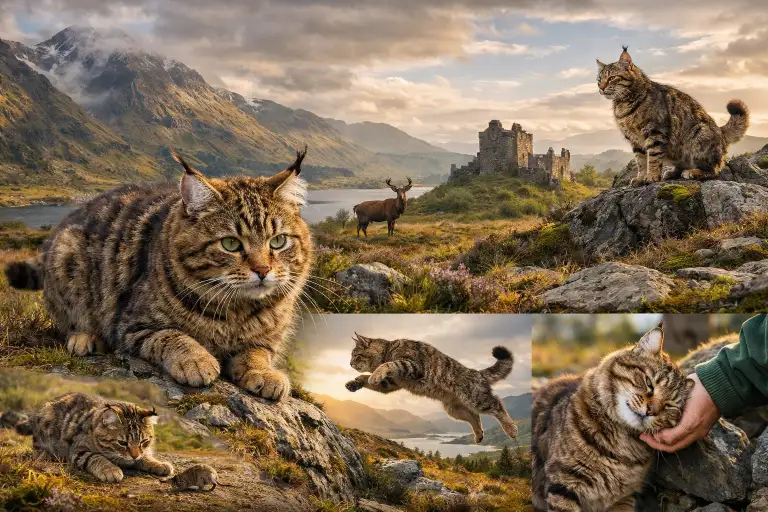
The Highlander cat is known for a bold look and a surprisingly gentle heart. Many people expect this cat to be wild or aggressive because of its strong body and curled ears, but real-life experience shows a very different story. Highlanders are often calm, curious, and people-focused cats who enjoy being part of daily life.
Recommended Dog Care Products
Based on your dog’s age, these products may help with comfort, health, grooming, and daily care.

Purina Pro Plan Veterinary Supplements
Daily probiotics for dogs to support digestive and gut health.
View on Amazon ↗
Earth Rated Poop Bags for Dogs
Leak-proof, extra thick waste bag refill rolls with lavender scent.
View on Amazon ↗
Greenies Pill Pockets for Dogs
Large dog treats for capsule medication, peanut butter flavor.
View on Amazon ↗
HONEY CARE All-Absorb Dog Wrap
Small male dog wraps, 50 count, useful for daily care support.
View on Amazon ↗
Seresto Flea & Tick Collar
Flea and tick treatment and prevention for dogs over 18 lbs.
View on Amazon ↗
Milk-Bone MaroSnacks
Small dog treats with real bone marrow in a 40 oz canister.
View on Amazon ↗
Vital Essentials Dog Treats
Freeze dried beef liver dog treats, grain free and single ingredient.
View on Amazon ↗
Stain & Odor Eliminator
Enzyme cleaner for pet stains, carpet messes, and strong odors.
View on Amazon ↗
Pur Luv Chicken Jerky Treats
Dog treats made with real chicken breast, high protein and chew-friendly.
View on Amazon ↗
Milk-Bone Flavor Snacks
Mini crunchy dog biscuits in a 36 oz canister for small rewards.
View on Amazon ↗As an Amazon Associate, we may earn from qualifying purchases.
Personality in Highlander cats is not just one fixed type. Some are very playful and outgoing, while others are quieter and more observant. What they usually share is confidence. A Highlander cat often walks into a room like it belongs there, without fear but also without stress.
These cats tend to form strong bonds with their people. They may follow you from room to room, sit nearby, or watch what you are doing. This does not always mean they want to be held. Many Highlanders prefer being close rather than on your lap, which is a normal and healthy affection style.
Understanding this personality early helps owners avoid false expectations. The Highlander is not a “hands-off” cat, but it is also not always a clingy one. It sits comfortably in the middle, enjoying connection while keeping its independence.
Highlander Personality Snapshot
| Trait Area | What Most Owners Notice |
|---|---|
| Confidence | Comfortable in new spaces |
| Affection style | Likes closeness more than cuddling |
| Curiosity | Interested in people and movement |
| Emotional tone | Calm, steady, and relaxed |
Core Behavioral Traits of the Highlander Cat
Highlander cats are often described as balanced. They usually have good energy levels without being overwhelming. They enjoy play, especially games that involve chasing or jumping, but they also know how to settle down and rest.
Intelligence is another strong trait. Many Highlanders quickly learn routines, such as feeding times or where toys are kept. This intelligence shows up as problem-solving rather than tricks. For example, a Highlander may learn how to open doors or find hidden toys.
Independence is present, but not in a cold way. A Highlander cat can entertain itself for a while, yet it still wants social contact every day. This makes the breed a good fit for homes where people are busy but still emotionally available.
Emotionally, Highlanders are usually stable cats. They are less likely to panic over small changes and more likely to observe first before reacting. This makes them feel “easy to live with” for many owners.
Behavior Trait Breakdown
Recommended Dog Care Products
Based on your dog’s age, these products may help with comfort, health, grooming, and daily care.
Purina Pro Plan Veterinary Supplements
Daily probiotics for dogs to support digestive and gut health.
View on Amazon ↗
Earth Rated Poop Bags for Dogs
Leak-proof, extra thick waste bag refill rolls with lavender scent.
View on Amazon ↗
Greenies Pill Pockets for Dogs
Large dog treats for capsule medication, peanut butter flavor.
View on Amazon ↗
HONEY CARE All-Absorb Dog Wrap
Small male dog wraps, 50 count, useful for daily care support.
View on Amazon ↗
Seresto Flea & Tick Collar
Flea and tick treatment and prevention for dogs over 18 lbs.
View on Amazon ↗
Milk-Bone MaroSnacks
Small dog treats with real bone marrow in a 40 oz canister.
View on Amazon ↗
Vital Essentials Dog Treats
Freeze dried beef liver dog treats, grain free and single ingredient.
View on Amazon ↗
Stain & Odor Eliminator
Enzyme cleaner for pet stains, carpet messes, and strong odors.
View on Amazon ↗
Pur Luv Chicken Jerky Treats
Dog treats made with real chicken breast, high protein and chew-friendly.
View on Amazon ↗
Milk-Bone Flavor Snacks
Mini crunchy dog biscuits in a 36 oz canister for small rewards.
View on Amazon ↗As an Amazon Associate, we may earn from qualifying purchases.
| Behavior Trait | Typical Highlander Pattern |
|---|---|
| Energy level | Medium to medium-high |
| Intelligence | High, observant, quick learner |
| Independence | Moderate |
| Playfulness | Strong, especially interactive play |
Social Behavior With Humans and Other Pets
With humans, Highlander cats are often friendly and open. They usually enjoy meeting new people and may approach guests without fear. This does not mean they want constant touching, but they are rarely shy.
In homes with children, Highlanders often do well when treated gently. They tend to tolerate normal household noise better than many sensitive breeds. Still, like all cats, they need space and respect when they walk away.
With other cats and pets, Highlanders are usually social but confident. They are not pushovers, yet they are not bullies either. Slow introductions matter, but once settled, many Highlanders enjoy having animal companions.
Their social style is best described as “present but not demanding.” They like being part of the group without needing constant attention.
Social Compatibility Overview
| Relationship | Common Behavior |
|---|---|
| Adults | Friendly and calm |
| Children | Patient with respectful handling |
| Other cats | Social after proper introduction |
| Dogs | Often adaptable, depends on dog energy |
Communication, Play, and Daily Activity Patterns
Highlander cats communicate in subtle ways. They may not be very loud, but they use body language clearly. Slow blinking, upright tails, and relaxed ears often mean they feel safe and comfortable.
Vocal sounds are usually soft and meaningful. Many Highlanders “talk” when they want attention or food, but constant loud meowing is not typical. Owners often learn their cat’s small sounds over time.
Play is important for this breed. Highlanders enjoy games that copy hunting, like chasing moving toys or pouncing. They also like climbing and high places, which help them feel secure and in control of their space.
Daily activity often follows the home’s routine. Highlanders may be more active in the morning and evening, with rest periods during the day. This pattern is normal and healthy cat behavior.
Common Signals and What They Usually Mean
Recommended Dog Care Products
Based on your dog’s age, these products may help with comfort, health, grooming, and daily care.
Purina Pro Plan Veterinary Supplements
Daily probiotics for dogs to support digestive and gut health.
View on Amazon ↗
Earth Rated Poop Bags for Dogs
Leak-proof, extra thick waste bag refill rolls with lavender scent.
View on Amazon ↗
Greenies Pill Pockets for Dogs
Large dog treats for capsule medication, peanut butter flavor.
View on Amazon ↗
HONEY CARE All-Absorb Dog Wrap
Small male dog wraps, 50 count, useful for daily care support.
View on Amazon ↗
Seresto Flea & Tick Collar
Flea and tick treatment and prevention for dogs over 18 lbs.
View on Amazon ↗
Milk-Bone MaroSnacks
Small dog treats with real bone marrow in a 40 oz canister.
View on Amazon ↗
Vital Essentials Dog Treats
Freeze dried beef liver dog treats, grain free and single ingredient.
View on Amazon ↗
Stain & Odor Eliminator
Enzyme cleaner for pet stains, carpet messes, and strong odors.
View on Amazon ↗
Pur Luv Chicken Jerky Treats
Dog treats made with real chicken breast, high protein and chew-friendly.
View on Amazon ↗
Milk-Bone Flavor Snacks
Mini crunchy dog biscuits in a 36 oz canister for small rewards.
View on Amazon ↗As an Amazon Associate, we may earn from qualifying purchases.
| Signal | Common Meaning |
|---|---|
| Slow blink | Trust and comfort |
| Tail held high | Confidence and friendliness |
| Short chirps | Greeting or interest |
| Sudden zooming | Play energy release |
Commonly Misunderstood Highlander Cat Behaviors
One common misunderstanding is that Highlanders are wild or aggressive because of their appearance. In reality, most behavior concerns come from normal cat instincts like play hunting or boundary setting.
Another myth is that a confident cat does not need affection. Highlanders may not always seek laps, but they still need emotional connection, routine, and social time to feel secure.
Some owners worry when a Highlander hides or climbs high. These behaviors are normal comfort actions for cats. Hiding can mean rest, not fear, and climbing often means the cat feels safe enough to explore.
Understanding these behaviors helps owners respond with patience instead of worry. Most actions that seem “odd” are simply part of how cats communicate their needs.
Myth vs Reality
| Myth | Reality |
|---|---|
| Highlanders are aggressive | Usually calm and social |
| They dislike affection | They show it in subtle ways |
| Hiding means fear | Often means rest or comfort |
| High energy means trouble | Often just healthy play |
Learn more about general cat behavior from a trusted source:
https://www.aspca.org/pet-care/cat-care/cat-behavior-tips

Ata Ur Rehman is the founder of Pet Age in Human Years Calculator, an educational platform that provides age conversion charts and lifespan guides for dogs, cats, birds, and other companion animals. His work focuses on helping pet owners understand how animal ages translate into human years using commonly accepted age conversion formulas and published lifespan averages.
The website compiles breed and species lifespan data from kennel clubs, breed organizations, and general animal lifespan studies to present simple and easy-to-understand guides for pet owners worldwide.
This website was created to centralize animal age conversion charts into one easy reference platform for pet owners.