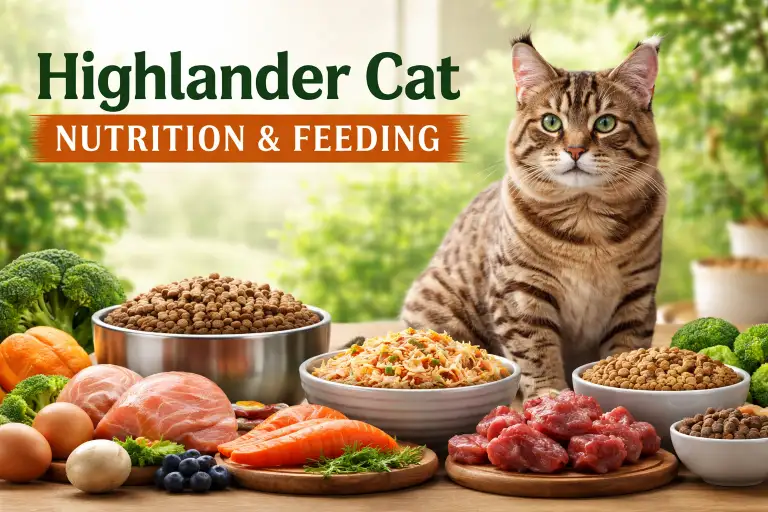
Highlander cats are large, strong, and very active compared to many other house cats. Because of their size and playful nature, what they eat matters a lot. A good diet helps them keep strong muscles, healthy joints, and steady energy throughout the day. Feeding a Highlander the wrong way can slowly lead to weight gain or low energy, even if the cat looks fine at first.
Recommended Dog Care Products
Based on your dog’s age, these products may help with comfort, health, grooming, and daily care.

Purina Pro Plan Veterinary Supplements
Daily probiotics for dogs to support digestive and gut health.
View on Amazon ↗
Earth Rated Poop Bags for Dogs
Leak-proof, extra thick waste bag refill rolls with lavender scent.
View on Amazon ↗
Greenies Pill Pockets for Dogs
Large dog treats for capsule medication, peanut butter flavor.
View on Amazon ↗
HONEY CARE All-Absorb Dog Wrap
Small male dog wraps, 50 count, useful for daily care support.
View on Amazon ↗
Seresto Flea & Tick Collar
Flea and tick treatment and prevention for dogs over 18 lbs.
View on Amazon ↗
Milk-Bone MaroSnacks
Small dog treats with real bone marrow in a 40 oz canister.
View on Amazon ↗
Vital Essentials Dog Treats
Freeze dried beef liver dog treats, grain free and single ingredient.
View on Amazon ↗
Stain & Odor Eliminator
Enzyme cleaner for pet stains, carpet messes, and strong odors.
View on Amazon ↗
Pur Luv Chicken Jerky Treats
Dog treats made with real chicken breast, high protein and chew-friendly.
View on Amazon ↗
Milk-Bone Flavor Snacks
Mini crunchy dog biscuits in a 36 oz canister for small rewards.
View on Amazon ↗As an Amazon Associate, we may earn from qualifying purchases.
Cats, including Highlanders, are obligate carnivores. This means their bodies are built to get nutrition mainly from animal foods. They need meat-based protein to survive and stay healthy. Unlike humans or dogs, cats cannot adjust well to low-protein diets. This is why understanding basic cat nutrition is more important than following food trends or marketing claims.
This guide is written to help everyday cat owners make better feeding choices. It does not replace advice from a veterinarian. Instead, it explains how cat food works, what Highlander cats generally need, and how owners can avoid common feeding mistakes at home.
By the end of this guide, you should feel more confident about choosing food, setting feeding routines, and understanding your Highlander cat’s needs at different life stages. The goal is balance, not perfection.
Understanding Highlander Cat Nutritional Needs
Highlander cats need a diet that supports their muscular build and active lifestyle. Like all cats, they rely on nutrients that come from animal sources. Protein is the most important part of their diet, followed by fats and then carbohydrates in small amounts.
Protein helps maintain muscle and supports growth and repair. Fats provide energy and help keep the skin and coat healthy. Carbohydrates are not essential for cats, but small amounts can be used for energy when included properly in cat food.
Vitamins, minerals, and special nutrients like taurine are also important. Taurine supports heart health, vision, and digestion. Cats cannot make enough taurine on their own, so it must come from food. Balanced commercial cat foods are designed to include these nutrients safely.
The table below shows the key nutrients Highlander cats rely on and why they matter.
| Nutrient | Why It Matters for Highlander Cats |
|---|---|
| Animal protein | Builds and maintains strong muscles |
| Fat | Main energy source and coat health |
| Taurine | Heart, vision, and digestion support |
| Vitamins & minerals | Overall body function and immunity |
| Moisture | Supports kidney and urinary health |
Best Food Choices for Highlander Cats
Choosing the right type of food is just as important as choosing the right nutrients. Most Highlander cats do well on wet food, dry food, or a mix of both. Each option has benefits and limits, and no single choice is perfect for every home.
Wet food contains a lot of moisture, which helps cats stay hydrated. This is helpful because many cats do not drink enough water on their own. Dry food is easier to store, usually costs less, and can be left out for short periods. Mixed feeding combines both and is common for many owners.
Recommended Dog Care Products
Based on your dog’s age, these products may help with comfort, health, grooming, and daily care.
Purina Pro Plan Veterinary Supplements
Daily probiotics for dogs to support digestive and gut health.
View on Amazon ↗
Earth Rated Poop Bags for Dogs
Leak-proof, extra thick waste bag refill rolls with lavender scent.
View on Amazon ↗
Greenies Pill Pockets for Dogs
Large dog treats for capsule medication, peanut butter flavor.
View on Amazon ↗
HONEY CARE All-Absorb Dog Wrap
Small male dog wraps, 50 count, useful for daily care support.
View on Amazon ↗
Seresto Flea & Tick Collar
Flea and tick treatment and prevention for dogs over 18 lbs.
View on Amazon ↗
Milk-Bone MaroSnacks
Small dog treats with real bone marrow in a 40 oz canister.
View on Amazon ↗
Vital Essentials Dog Treats
Freeze dried beef liver dog treats, grain free and single ingredient.
View on Amazon ↗
Stain & Odor Eliminator
Enzyme cleaner for pet stains, carpet messes, and strong odors.
View on Amazon ↗
Pur Luv Chicken Jerky Treats
Dog treats made with real chicken breast, high protein and chew-friendly.
View on Amazon ↗
Milk-Bone Flavor Snacks
Mini crunchy dog biscuits in a 36 oz canister for small rewards.
View on Amazon ↗As an Amazon Associate, we may earn from qualifying purchases.
When reading cat food labels, look for named animal proteins near the top of the ingredient list. Avoid focusing only on marketing words like “premium” or “natural.” What matters most is balanced nutrition that meets cat food standards.
The table below compares food types in a simple way.
| Food Type | Pros | Cons |
|---|---|---|
| Wet food | High moisture, strong smell, easy to eat | Higher cost, shorter shelf life |
| Dry food | Convenient, affordable, long-lasting | Low moisture, easy to overfeed |
| Mixed feeding | Balance of moisture and convenience | Needs portion control |
Feeding Amounts, Frequency, and Life Stages
How much a Highlander cat eats depends on age, activity level, and body size. Large cats do not always need more food just because they are big. Overfeeding often happens slowly, so owners should watch body shape, not just the bowl.
Most adult Highlander cats do well with measured meals once or twice a day. Free feeding can work for some cats, but it makes it harder to control portions. Kittens need more frequent meals because they are growing fast and burning more energy.
As cats age, their needs change. Senior Highlander cats may become less active and need fewer calories, but still require good protein to maintain muscle. Indoor cats and neutered cats often need careful portion control because their energy needs are lower.
The table below gives a simple feeding overview by life stage.
| Life Stage | Feeding Focus | General Approach |
|---|---|---|
| Kitten | Growth and energy | Multiple small meals |
| Adult | Weight and muscle balance | Measured daily meals |
| Senior | Muscle support and digestion | Adjust portions, monitor weight |
Treats, Feeding Mistakes, and Owner Guidance
Treats can be part of a Highlander cat’s diet, but they should be limited. Treats should make up only a small part of daily calories. Too many treats can quickly lead to weight gain, especially in large cats.
Many human foods are unsafe for cats. Foods like onions, garlic, chocolate, and cooked bones should never be given. Even safe foods should not replace balanced cat food. Treats are best used for training or bonding, not nutrition.
Common feeding mistakes include overfeeding, switching foods too quickly, and relying only on dry food without thinking about hydration. Another mistake is assuming a big cat needs unlimited food. Regular weight checks and steady routines help prevent problems.
Use the table below as a quick reminder of good feeding habits.
Recommended Dog Care Products
Based on your dog’s age, these products may help with comfort, health, grooming, and daily care.
Purina Pro Plan Veterinary Supplements
Daily probiotics for dogs to support digestive and gut health.
View on Amazon ↗
Earth Rated Poop Bags for Dogs
Leak-proof, extra thick waste bag refill rolls with lavender scent.
View on Amazon ↗
Greenies Pill Pockets for Dogs
Large dog treats for capsule medication, peanut butter flavor.
View on Amazon ↗
HONEY CARE All-Absorb Dog Wrap
Small male dog wraps, 50 count, useful for daily care support.
View on Amazon ↗
Seresto Flea & Tick Collar
Flea and tick treatment and prevention for dogs over 18 lbs.
View on Amazon ↗
Milk-Bone MaroSnacks
Small dog treats with real bone marrow in a 40 oz canister.
View on Amazon ↗
Vital Essentials Dog Treats
Freeze dried beef liver dog treats, grain free and single ingredient.
View on Amazon ↗
Stain & Odor Eliminator
Enzyme cleaner for pet stains, carpet messes, and strong odors.
View on Amazon ↗
Pur Luv Chicken Jerky Treats
Dog treats made with real chicken breast, high protein and chew-friendly.
View on Amazon ↗
Milk-Bone Flavor Snacks
Mini crunchy dog biscuits in a 36 oz canister for small rewards.
View on Amazon ↗As an Amazon Associate, we may earn from qualifying purchases.
| Do | Don’t |
|---|---|
| Measure food portions | Guess portion sizes |
| Provide fresh water daily | Ignore water intake |
| Use treats in moderation | Feed table scraps often |
| Watch body condition | Rely only on food labels |
For additional general cat nutrition information, you can visit the World Small Animal Veterinary Association nutrition resources: https://wsava.org/global-guidelines/global-nutrition-guidelines/

Ata Ur Rehman is the founder of Pet Age in Human Years Calculator, an educational platform that provides age conversion charts and lifespan guides for dogs, cats, birds, and other companion animals. His work focuses on helping pet owners understand how animal ages translate into human years using commonly accepted age conversion formulas and published lifespan averages.
The website compiles breed and species lifespan data from kennel clubs, breed organizations, and general animal lifespan studies to present simple and easy-to-understand guides for pet owners worldwide.
This website was created to centralize animal age conversion charts into one easy reference platform for pet owners.