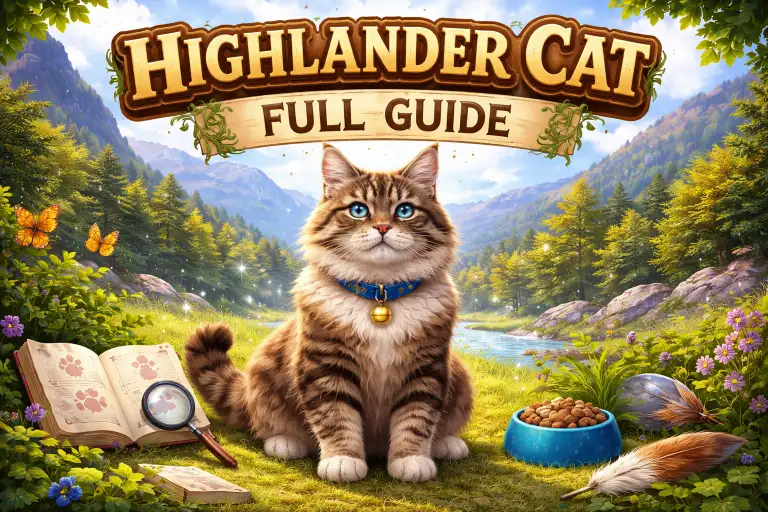
The Highlander cat is a modern domestic breed that looks wild but lives like a house cat. Many people first notice this breed because of its curled ears, short tail, and strong body. At a glance, the Highlander can look like a small jungle cat, but its behavior is very friendly and social. This contrast is the main reason people search for the Highlander cat breed.
Recommended Dog Care Products
Based on your dog’s age, these products may help with comfort, health, grooming, and daily care.

Purina Pro Plan Veterinary Supplements
Daily probiotics for dogs to support digestive and gut health.
View on Amazon ↗
Earth Rated Poop Bags for Dogs
Leak-proof, extra thick waste bag refill rolls with lavender scent.
View on Amazon ↗
Greenies Pill Pockets for Dogs
Large dog treats for capsule medication, peanut butter flavor.
View on Amazon ↗
HONEY CARE All-Absorb Dog Wrap
Small male dog wraps, 50 count, useful for daily care support.
View on Amazon ↗
Seresto Flea & Tick Collar
Flea and tick treatment and prevention for dogs over 18 lbs.
View on Amazon ↗
Milk-Bone MaroSnacks
Small dog treats with real bone marrow in a 40 oz canister.
View on Amazon ↗
Vital Essentials Dog Treats
Freeze dried beef liver dog treats, grain free and single ingredient.
View on Amazon ↗
Stain & Odor Eliminator
Enzyme cleaner for pet stains, carpet messes, and strong odors.
View on Amazon ↗
Pur Luv Chicken Jerky Treats
Dog treats made with real chicken breast, high protein and chew-friendly.
View on Amazon ↗
Milk-Bone Flavor Snacks
Mini crunchy dog biscuits in a 36 oz canister for small rewards.
View on Amazon ↗As an Amazon Associate, we may earn from qualifying purchases.
The breed was developed in the early 2000s in the United States. Breeders wanted a cat with a bold, wild look but a calm and loving personality. The Highlander comes from breeding programs that included the Desert Lynx and related lines. Despite rumors, Highlander cats do not have wild cat DNA. They are fully domestic cats, just selectively bred for certain features.
Many people ask if the Highlander cat is aggressive or difficult. In real homes, this is usually not true. Highlanders are known for being confident, curious, and people-focused. They enjoy attention and like to be involved in daily life. This makes them very different from truly independent or aloof cat breeds.
The Highlander is recognized by TICA (The International Cat Association) as a developing breed. Because it is still uncommon, most people have never met one in person. That is why clear, honest information is important before choosing this cat
Highlander Cat Appearance and Size
The Highlander cat is medium to large in size and has a powerful, athletic body. It grows more slowly than many common house cats and may not fully mature until around three years of age. Males are usually larger and heavier than females.
One of the most striking features is the curled ears. These ears curve gently backward and give the cat an alert, wild expression. The curl does not affect hearing when bred responsibly. Another key trait is the naturally short or bobbed tail, which can vary in length from cat to cat.
Highlanders can be shorthaired or longhaired. Their coats feel soft and plush, not rough. Many have spotted or marbled patterns that add to the wild look. Polydactyl paws, meaning extra toes, are also common and fully accepted in the breed.
Below is a quick snapshot table to make these traits easy to scan.
| Feature | Typical Highlander Traits |
|---|---|
| Weight | 10–20 pounds |
| Body Type | Muscular and solid |
| Coat Length | Short or long |
| Ear Shape | Curled backward |
| Tail | Short or bobbed |
| Special Traits | Polydactyl paws |
Highlander Cat Personality and Behavior
The Highlander cat is known for its bold and outgoing personality. These cats are usually confident and curious, even in new places. They like to explore, climb, and watch everything happening around them. Many owners describe them as “dog-like” because they often follow people from room to room.
Highlanders are affectionate but not always lap cats. Some enjoy cuddling, while others prefer to sit close by. They form strong bonds with their humans and often choose a favorite person. This breed does not like being ignored for long periods and does best in homes where someone is around often.
Recommended Dog Care Products
Based on your dog’s age, these products may help with comfort, health, grooming, and daily care.
Purina Pro Plan Veterinary Supplements
Daily probiotics for dogs to support digestive and gut health.
View on Amazon ↗
Earth Rated Poop Bags for Dogs
Leak-proof, extra thick waste bag refill rolls with lavender scent.
View on Amazon ↗
Greenies Pill Pockets for Dogs
Large dog treats for capsule medication, peanut butter flavor.
View on Amazon ↗
HONEY CARE All-Absorb Dog Wrap
Small male dog wraps, 50 count, useful for daily care support.
View on Amazon ↗
Seresto Flea & Tick Collar
Flea and tick treatment and prevention for dogs over 18 lbs.
View on Amazon ↗
Milk-Bone MaroSnacks
Small dog treats with real bone marrow in a 40 oz canister.
View on Amazon ↗
Vital Essentials Dog Treats
Freeze dried beef liver dog treats, grain free and single ingredient.
View on Amazon ↗
Stain & Odor Eliminator
Enzyme cleaner for pet stains, carpet messes, and strong odors.
View on Amazon ↗
Pur Luv Chicken Jerky Treats
Dog treats made with real chicken breast, high protein and chew-friendly.
View on Amazon ↗
Milk-Bone Flavor Snacks
Mini crunchy dog biscuits in a 36 oz canister for small rewards.
View on Amazon ↗As an Amazon Associate, we may earn from qualifying purchases.
Energy level is high, especially in younger cats. Highlanders enjoy active play and mental challenges. They may fetch toys, open doors, or climb tall furniture. Because of this, boredom can lead to rough play or minor trouble if they do not get enough activity.
The table below summarizes key behavior traits in a simple way.
| Trait | Level |
|---|---|
| Affection | Medium to high |
| Energy | High |
| Intelligence | High |
| Vocalization | Low to medium |
| Social with Pets | Usually very good |
Highlanders usually do well with respectful children and other pets, including dogs. Early social time helps them grow into calm and confident adults.
Living With a Highlander Cat
Living with a Highlander cat is active and interactive. These cats need daily playtime to stay happy. Toys, climbing trees, and puzzle feeders help keep their minds busy. Without enough stimulation, they may become restless or too rough during play.
Grooming needs are moderate. Shorthaired Highlanders need weekly brushing, while longhaired ones may need brushing two to three times a week. They usually handle grooming well and many tolerate nail trims and ear checks if trained early. Special attention should be given to the ears to keep them clean.
Highlanders are intelligent and can learn routines quickly. Many owners successfully train them to walk on a leash or respond to simple commands. They do best with positive rewards like treats and praise. Harsh training does not work well for this breed.
Health-wise, the Highlander is generally strong. Most live between 12 and 15 years. Responsible breeders watch for joint health and ear structure issues. Below is a simple suitability table to help readers decide if this breed fits their lifestyle.
| Home Type | Fit |
|---|---|
| Families with kids | Very good |
| Apartment living | Good with play |
| Seniors | Moderate |
| First-time owners | Possible with research |
| Multi-pet homes | Very good |
Highlander Cat Cost, Pros & Cons
Highlander cats are rare, so the purchase price is higher than average. A pet-quality kitten usually costs between $800 and $2,000, depending on breeder and location. Show or breeding cats may cost more. Because they are active, owners often spend extra on toys and climbing furniture.
Monthly costs include quality food, routine vet care, and grooming supplies. Pet insurance is often a smart choice due to the breed’s size and activity level. Overall, the Highlander is not a low-cost cat, but many owners feel the personality is worth it.
The table below shows a clear pros and cons overview.
Recommended Dog Care Products
Based on your dog’s age, these products may help with comfort, health, grooming, and daily care.
Purina Pro Plan Veterinary Supplements
Daily probiotics for dogs to support digestive and gut health.
View on Amazon ↗
Earth Rated Poop Bags for Dogs
Leak-proof, extra thick waste bag refill rolls with lavender scent.
View on Amazon ↗
Greenies Pill Pockets for Dogs
Large dog treats for capsule medication, peanut butter flavor.
View on Amazon ↗
HONEY CARE All-Absorb Dog Wrap
Small male dog wraps, 50 count, useful for daily care support.
View on Amazon ↗
Seresto Flea & Tick Collar
Flea and tick treatment and prevention for dogs over 18 lbs.
View on Amazon ↗
Milk-Bone MaroSnacks
Small dog treats with real bone marrow in a 40 oz canister.
View on Amazon ↗
Vital Essentials Dog Treats
Freeze dried beef liver dog treats, grain free and single ingredient.
View on Amazon ↗
Stain & Odor Eliminator
Enzyme cleaner for pet stains, carpet messes, and strong odors.
View on Amazon ↗
Pur Luv Chicken Jerky Treats
Dog treats made with real chicken breast, high protein and chew-friendly.
View on Amazon ↗
Milk-Bone Flavor Snacks
Mini crunchy dog biscuits in a 36 oz canister for small rewards.
View on Amazon ↗As an Amazon Associate, we may earn from qualifying purchases.
| Pros | Cons |
|---|---|
| Friendly and social | Needs lots of play |
| Unique wild look | Higher purchase price |
| Good with kids and pets | Can get bored easily |
| Intelligent and trainable | Not ideal for very quiet homes |
In summary, the Highlander cat is best for people who want an active, engaging companion. It may not suit someone looking for a quiet, independent cat, but for the right home, it can be a loving and entertaining pet for many years.
For more official breed information, you can visit the TICA breed listings:
https://tica.org

Ata Ur Rehman is the founder of Pet Age in Human Years Calculator, an educational platform that provides age conversion charts and lifespan guides for dogs, cats, birds, and other companion animals. His work focuses on helping pet owners understand how animal ages translate into human years using commonly accepted age conversion formulas and published lifespan averages.
The website compiles breed and species lifespan data from kennel clubs, breed organizations, and general animal lifespan studies to present simple and easy-to-understand guides for pet owners worldwide.
This website was created to centralize animal age conversion charts into one easy reference platform for pet owners.