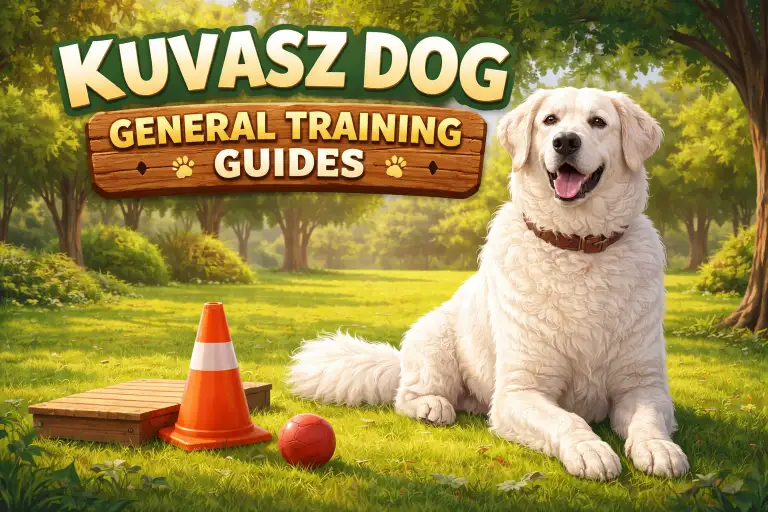
Training a Kuvasz is about building trust, structure, and cooperation. This breed was developed to work independently, guarding livestock and property without waiting for instructions. That means they do not respond like many companion dogs do, and trying to force obedience can backfire.
This guide is for families, rural homeowners, and anyone who wants a calm, reliable Kuvasz. You will learn how to guide behavior, set rules, and avoid common mistakes that lead to frustration or unsafe situations. Whether you have a puppy, adolescent, adult, or rescue Kuvasz, the goal is to create a dog that chooses to respond to you because it understands the rules and feels safe.
Why Kuvasz Training Is Different From Other Dog Breeds
Kuvasz dogs are guardians by nature. Unlike most family pets, they make decisions on their own, assessing threats and choosing actions. This independence often gets misread as stubbornness, but it is actually a key part of their personality.
Training is especially important because of their size and strength. A full-grown Kuvasz can easily overpower a person if boundaries and guidance are not in place. Forceful training methods often backfire, causing fear, avoidance, or defensive behavior. Calm, consistent leadership and clear rules work far better.
| Trait | Kuvasz | Typical Family Dog |
|---|---|---|
| Main instinct | Guardian and decision-maker | Human-focused companion |
| Response to commands | Thinks before acting | Acts quickly |
| Reaction to pressure | Resists or shuts down | Often complies |
| Best training goal | Trust and guidance | Precision obedience |
Understanding these differences helps owners train effectively without frustration.
Understanding Kuvasz Behavior and Learning Style
Kuvasz dogs are careful thinkers. Before responding, they evaluate the situation, which can make them seem slow or stubborn. This is normal and shows intelligence, not defiance.
They are also sensitive to how training feels. Loud voices, rough handling, or sudden corrections can make them shut down or avoid the handler. Calm, steady, and consistent guidance is far more effective. Their mental maturity can take two to three years, so patience and realistic expectations are essential.
| Behavior | Normal Kuvasz Trait | Needs Extra Support |
|---|---|---|
| Pausing before obeying | Thinking and assessing | Ignoring commands indoors |
| Barking at strangers | Alert guarding | Escalating fear or lunging |
| Independence | Self-guided mindset | Avoiding all interaction |
| Watching from a distance | Protective awareness | Inability to settle |
Understanding what is normal versus problem behavior helps owners train safely and effectively.
Step-by-Step Kuvasz Training Approach That Works
Training works best when sessions are short, calm, and consistent. Focus on building engagement first: name recognition, calm focus, and responding to your presence. These skills form the foundation for everything else.
Short, frequent sessions are better than long, stressful ones. Start in quiet areas and gradually add distractions. Reward good behavior with calm praise, treats, or access to something the dog enjoys. Timing is important—reward immediately after the correct action.
| Age | Main Focus | Session Length | Frequency |
|---|---|---|---|
| Puppy | Name, handling, calm behavior | 3–5 minutes | 2–3 times daily |
| Adolescent | Leash skills, boundaries | 5–10 minutes | Once daily |
| Adult | Reliability and calm control | 10–15 minutes | 3–5 times weekly |
| Do | Don’t |
|---|---|
| Stay calm and confident | Repeat commands over and over |
| Reward good choices | Use force or yelling |
| Keep routines steady | Expect instant obedience |
Clear rules, consistent reinforcement, and patient repetition create a cooperative, safe Kuvasz.
Common Kuvasz Training Problems and When to Get Help
Even with training, some behaviors may worry owners. Ignoring commands, leash pulling, and guarding property are common. Most issues can be managed at home, but some require professional support.
| Issue | Try Training First | Get Professional Help |
|---|---|---|
| Leash pulling | Yes | No |
| Ignoring recall outdoors | Yes | If it worsens |
| Guarding property | Early stages | If intensity increases |
| Fear or aggression | No | Yes, immediately |
Seek a trainer experienced with guardian breeds if your Kuvasz shows fear-based aggression, attempts to bite, or becomes difficult to control. Early professional support keeps your dog safe and prevents small issues from becoming serious problems.
For more detailed insights on guardian breeds and their behavior, visit the American Kennel Club’s guide to Kuvasz dogs: https://www.akc.org/dog-breeds/kuvasz/.

Ata Ur Rehman is the founder of Pet Age in Human Years Calculator, an educational platform that provides age conversion charts and lifespan guides for dogs, cats, birds, and other companion animals. His work focuses on helping pet owners understand how animal ages translate into human years using commonly accepted age conversion formulas and published lifespan averages.
The website compiles breed and species lifespan data from kennel clubs, breed organizations, and general animal lifespan studies to present simple and easy-to-understand guides for pet owners worldwide.
This website was created to centralize animal age conversion charts into one easy reference platform for pet owners.