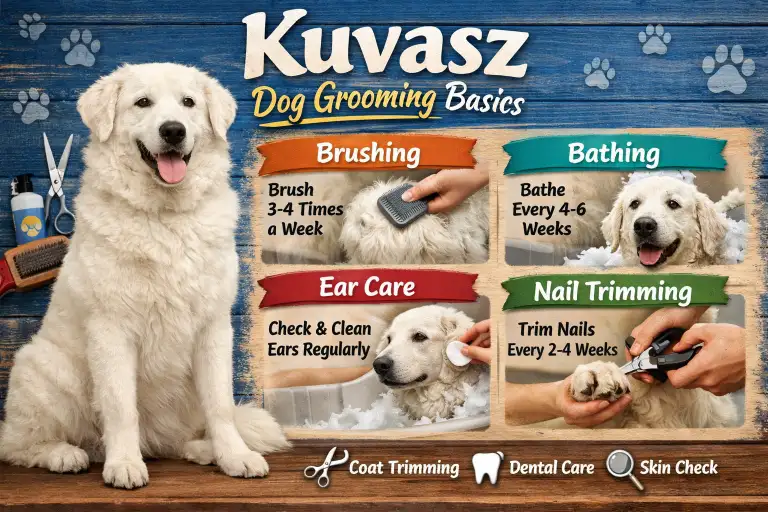
Grooming a Kuvasz is more than making them look clean—it keeps their coat healthy, skin comfortable, and prevents problems. Kuvasz dogs have thick, white double coats designed for protection and insulation. Without proper care, their undercoat can mat, trap dirt, and hide skin issues.
Regular grooming helps control shedding, prevents mats, and lets you notice early signs of skin problems, parasites, or irritation. It also improves the dog’s comfort and behavior. Many “difficult” dogs become calmer once their coat and nails are maintained properly.
| Grooming Aspect | What to Expect With a Kuvasz |
|---|---|
| Coat type | Thick double coat (guard hair + soft undercoat) |
| Shedding level | Moderate year-round, heavy during seasonal blows |
| Grooming difficulty | Moderate to high if not regular |
| Odor level | Low when maintained properly |
| Home grooming | Essential and ongoing |
| Professional grooming | Helpful during heavy shedding or matting |
This guide will help Kuvasz owners understand the coat, manage shedding, and groom safely at home while knowing when professional help is needed.
Understanding the Kuvasz Double Coat and Shedding
The Kuvasz has two coat layers: a coarse guard coat on top and a soft undercoat underneath. The guard coat protects against dirt, moisture, and sun. The undercoat keeps the dog warm in winter and cool in summer.
Shedding happens year-round but peaks in spring and sometimes fall. Brushing is essential to remove loose hair and prevent mats. Certain areas mat faster, like behind the ears, under the legs, and around the collar.
Shaving a Kuvasz is a common mistake. It damages the coat, exposes skin to sunburn, and can cause uneven regrowth. Proper brushing removes loose hair safely and keeps the coat healthy.
| Coat Area | Why It Needs Extra Care |
|---|---|
| Behind the ears | Fine hair tangles easily |
| Neck and chest | Collar friction causes mats |
| Under the legs | Movement creates tight mats |
| Thighs and rear | Thick undercoat collects loose hair |
| Tail | Feathered fur traps debris |
Understanding the coat and shedding patterns helps owners plan a consistent grooming routine that keeps the Kuvasz healthy and comfortable.
Kuvasz Grooming Routine at Home (Step-by-Step)
A simple home grooming routine makes the Kuvasz easier to care for and reduces shedding. Brush 3–4 times per week, daily during heavy shedding. Use slicker brushes for surface hair, undercoat rakes to remove dense undercoat, and a metal comb for mats.
Bathing is needed every 6–10 weeks, more if the dog is dirty. Use dog-specific shampoo suitable for sensitive skin and double coats. Dry thoroughly to prevent trapped moisture, which can lead to skin issues.
| Grooming Task | How Often | Notes for Kuvasz Owners |
|---|---|---|
| Brushing | 3–4 times per week | Daily in shedding season |
| Bathing | Every 6–10 weeks | Only when necessary |
| Nail trimming | Every 3–4 weeks | Check weekly |
| Ear check | Weekly | Clean only when needed |
| Coat inspection | Weekly | Look for mats or irritation |
| Grooming Tool | Why It’s Useful | What to Avoid |
|---|---|---|
| Slicker brush | Removes surface hair | Pressing too hard |
| Undercoat rake | Removes dead undercoat | On matted hair |
| Metal comb | Finds hidden tangles | Skipping regular checks |
| Dog shampoo | Protects skin | Human or harsh shampoos |
| High-velocity dryer | Removes loose hair | Hot air on skin |
Regular brushing and proper bathing maintain a clean, comfortable coat while preventing mats and skin problems.
Extra Kuvasz Grooming Care: Nails, Ears, Skin, and Health
Nails, ears, and skin are essential parts of grooming. Overgrown nails can hurt joints, so trim every 3–4 weeks. Drop ears reduce airflow, so check weekly for dirt, wax, or odor. Only clean when necessary and avoid putting objects deep into the ear canal.
Skin checks should be done during brushing. Look for redness, flaking, or unusual patches, especially during shedding season. Early detection prevents serious problems. Dental care is also important—brush a few times per week with dog-safe toothpaste.
| Warning Sign | What It May Mean | Action |
|---|---|---|
| Red or warm skin | Irritation/infection | Stop grooming, check with vet |
| Flaky skin | Dryness/product reaction | Adjust bathing or products |
| Strong odor | Yeast/bacterial infection | Vet visit |
| Excessive scratching | Allergies/parasites | Veterinary advice |
| Hair loss patches | Hormonal or skin disease | Vet exam |
Including these steps ensures the Kuvasz stays healthy, comfortable, and pain-free.
Professional Grooming, Seasonal Care, and Common Mistakes
Some grooming tasks are easier with a professional groomer, especially heavy shedding or mat removal. Professionals have tools and experience to handle dense double coats safely.
Seasonal grooming is key. In spring, daily brushing helps manage the “blow coat.” In winter, focus on keeping the coat clean and dry rather than removing insulation. Avoid over-bathing, shaving, or using human shampoos—they damage skin and coat.
| Grooming Task | Safe at Home | Professional Needed |
|---|---|---|
| Regular brushing | Yes | — |
| Light bathing | Yes | — |
| Heavy shedding removal | Sometimes | Yes |
| Severe mat removal | No | Yes |
| Nail trimming | Yes | Yes |
| Full coat blow-out | No | Yes |
| Common Mistake | Problem | Correct Approach |
|---|---|---|
| Shaving coat | Damages hair & skin | Brush & deshed instead |
| Over-bathing | Dries skin, causes itching | Bathe only when needed |
| Skipping brushing | Leads to mats & skin issues | Short, regular sessions |
| Human shampoo | Upsets skin balance | Use dog-specific shampoo |
| Ignoring nails/ears | Causes pain/infections | Check weekly |
Using a professional strategically ensures safety, comfort, and proper coat maintenance, while a consistent home routine keeps your Kuvasz looking and feeling its best year-round.
For more expert guidance on double-coated dog breeds, visit the American Kennel Club’s grooming resources here.

Ata Ur Rehman is the founder of Pet Age in Human Years Calculator, an educational platform that provides age conversion charts and lifespan guides for dogs, cats, birds, and other companion animals. His work focuses on helping pet owners understand how animal ages translate into human years using commonly accepted age conversion formulas and published lifespan averages.
The website compiles breed and species lifespan data from kennel clubs, breed organizations, and general animal lifespan studies to present simple and easy-to-understand guides for pet owners worldwide.
This website was created to centralize animal age conversion charts into one easy reference platform for pet owners.