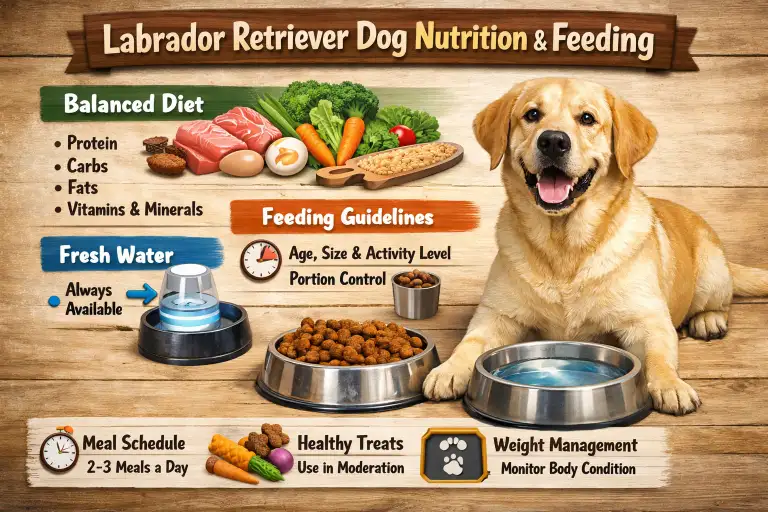
Labradors are one of the most popular dog breeds in the world, but they also have very specific feeding needs. Many Labradors love food, act hungry often, and gain weight easily. This makes proper nutrition especially important for this breed.
A Labrador’s diet affects much more than just body weight. The right food helps support healthy joints, steady energy, strong muscles, good digestion, and a shiny coat. Poor feeding habits can lead to obesity, joint pain, low energy, skin problems, and a shorter lifespan.
Labradors were bred to work. Even pet Labradors still have strong appetites and a natural drive to eat. This means owners must control portions and food choices carefully. Feeding too much, even with high-quality food, can cause long-term health problems.
Good nutrition also supports behavior. Labradors that eat balanced meals with enough protein and fiber are often calmer, less desperate for food, and easier to train. On the other hand, diets that are too high in calories or too low in nutrients can lead to restlessness, begging, and poor focus.
Another reason diet matters is joint health. Labradors are a large breed and are prone to hip and elbow issues. Extra body weight puts more stress on joints, especially as dogs age. Keeping a Labrador at a healthy weight is one of the best ways to protect mobility and comfort.
This guide is designed to help Labrador owners:
- Understand what Labradors truly need from food
- Avoid common feeding mistakes
- Choose the right type of food
- Feed the right amount at each life stage
- Keep Labradors healthy, active, and comfortable for years
Nutritional Requirements of a Labrador Retriever
Labradors need balanced food to stay healthy. Because they love to eat, the quality and balance of nutrients matter more than just filling the bowl. A good diet gives energy, controls hunger, and protects joints.
This section explains the main nutrients Labradors need and how to choose the right food.
Labradors need three main nutrients in the largest amounts: protein, fat, and carbohydrates with fiber.Protein helps build muscles, supports the immune system, and keeps your Labrador strong. Most Labradors do well with moderate to high-quality protein. Very low protein can cause muscle loss. Poor-quality protein can upset the stomach.Fat gives energy and keeps the coat shiny, but Labradors gain weight easily. Too much fat leads to fast weight gain, especially in neutered or low-activity dogs.Carbohydrates are not bad. The right carbs and fiber help Labradors feel full and support digestion. Fiber is very helpful for dogs that always seem hungry.
Main Nutrient Needs for Labradors
| Nutrient | Why Labradors Need It | Typical Range |
|---|---|---|
| Protein | Muscle, energy, immune health | 22–30% |
| Fat | Energy, coat health | 10–16% |
| Fiber | Fullness, digestion | 3–7% |
These ranges are general guidelines. Puppies, seniors, and working Labradors may need small changes.
Labradors also need vitamins and minerals, even though these are needed in smaller amounts.
Calcium and phosphorus support bones and joints. Omega-3 fats support joints, skin, and coat. Zinc and vitamin E help the immune system.
Large-breed puppies must not get too much calcium. Too much can harm growing joints. This is why balanced puppy food is very important.
Vitamins, Minerals, and Supplements for Labradors
| Nutrient | Main Benefit | Supplement Needed? |
|---|---|---|
| Calcium | Bones and joints | No, if diet is balanced |
| Omega-3 | Joints and skin | Sometimes |
| Glucosamine | Joint support | Vet advice needed |
| Vitamin E | Immune health | Rarely |
Most Labradors do not need supplements if they eat complete dog food. Giving extra vitamins without advice can cause problems.
When choosing food, always check for a statement that says the food is complete and balanced. This means it meets standards set by AAFCO or FEDIAF. These standards help make sure Labradors get all needed nutrients in safe amounts.
Dog food labels can be confusing. Focus on:
- Real animal protein near the top of the ingredient list
- Protein and fat levels that fit Labrador needs
- A clear “complete and balanced” feeding statement
Ignore words like “premium” or “natural” by themselves. They do not guarantee quality.
Also remember that Labradors often need less food than the bag suggests. Labels are general and do not account for easy weight gain in this breed.
Good nutrition is about balance, not extremes. A steady, well-planned diet helps Labradors stay active, happy, and healthy.
How Much to Feed a Labrador and Feeding Schedule
Feeding the right amount is one of the hardest parts of owning a Labrador. Labradors love food and often act hungry, even when they are getting enough. Feeding too much can quickly lead to weight gain and joint problems.
This section explains how much to feed, how often to feed, and how to adjust food for real life.
Labradors do not all need the same amount of food. Calories depend on body weight, age, and activity level.
Daily Calorie Needs for Adult Labradors
| Labrador Weight | Low Activity | Moderate Activity | High Activity |
|---|---|---|---|
| 55 lb (25 kg) | 1,100 kcal | 1,350 kcal | 1,600 kcal |
| 65 lb (30 kg) | 1,250 kcal | 1,500 kcal | 1,800 kcal |
| 75 lb (34 kg) | 1,400 kcal | 1,700 kcal | 2,000 kcal |
| 85 lb (39 kg) | 1,550 kcal | 1,900 kcal | 2,200 kcal |
Low activity means short walks and lots of rest.
High activity means long walks, swimming, training, or working roles.
These numbers are guides. Some Labradors need slightly more or less.
Dog food bags often suggest too much food for Labradors. Start with the lower amount and adjust slowly.
Feeding schedule also matters. Regular meal times help digestion and prevent begging.
Feeding Frequency by Age
| Life Stage | Meals Per Day | Notes |
|---|---|---|
| Puppy (8–16 weeks) | 3–4 | Small, frequent meals |
| Puppy (4–12 months) | 3 | Supports steady growth |
| Adult | 2 | Best for weight control |
| Senior | 2 (smaller meals) | Easier on digestion |
Free feeding is not recommended for Labradors. Most will overeat if food is always available.
Portion size should be adjusted using your dog’s body shape, not just a scale.
A healthy Labrador should:
- Have a visible waist when seen from above
- Have ribs you can feel but not see
- Move easily without heavy breathing
Signs You May Be Feeding Too Much or Too Little
| Sign | What It May Mean |
|---|---|
| Fast weight gain | Too many calories |
| Always hungry | Low fiber or too many treats |
| Loose stool | Too much food or fast changes |
| Low energy | Poor food quality or low calories |
Treats count as food. They should make up no more than 10% of daily calories.
Treat and Snack Guidelines
| Treat Type | Better Choice |
|---|---|
| Training treats | Small, soft, low-calorie |
| Chews | Short use, supervised |
| Human food | Plain chicken, carrot, apple (small pieces) |
Cut treats before cutting meals if weight gain starts.
Feeding a Labrador is about consistency and control, not guessing. Measuring food and watching body shape helps prevent many health problems.
Best Food for Labradors and Safe Foods to Eat
Choosing the right food for a Labrador can feel confusing. There are many options, and Labradors will happily eat almost anything. The best food is one that keeps your dog healthy, full, and at a good weight.
There is no single perfect diet for all Labradors. Age, activity level, health, and weight all matter.
Common Types of Dog Food for Labradors
| Food Type | Good Points | Things to Watch |
|---|---|---|
| Dry food (kibble) | Easy to measure, affordable, long shelf life | Low-quality brands can cause weight gain |
| Canned food | Tasty, higher moisture | High calories, easy to overfeed |
| Fresh cooked food | Easy to digest, high-quality ingredients | Expensive, needs portion control |
| Raw food | High protein, appealing taste | Safety risks, hard to balance |
| Freeze-dried food | Convenient, long shelf life | Very calorie-dense |
| Homemade food | Full control of ingredients | Needs vet guidance to avoid nutrient gaps |
For most Labradors, high-quality kibble or fresh cooked food works best for daily feeding.
Good Labrador food should:
- List a real animal protein near the top
- Have moderate fat levels
- Include fiber to help with fullness
- Say “complete and balanced” on the label
Avoid foods that rely heavily on fillers or vague meat ingredients.
Human Foods Labradors Can Eat Safely
Some human foods are safe as treats when given in small amounts.
| Safe Food | Notes |
|---|---|
| Cooked chicken or turkey | Plain, no seasoning |
| Eggs | Fully cooked |
| Carrots | Low calorie, crunchy |
| Apples | No seeds |
| Rice | Plain, easy to digest |
| Pumpkin | Helps stool quality |
These foods should never replace a complete dog diet.
Foods Labradors Must Never Eat
Some foods are dangerous and can make dogs very sick.
| Toxic Food | Why It Is Dangerous |
|---|---|
| Chocolate | Affects heart and brain |
| Grapes and raisins | Can damage kidneys |
| Onions and garlic | Harm red blood cells |
| Xylitol | Causes low blood sugar |
| Cooked bones | Can splinter |
| Alcohol | Very toxic |
Keep these foods out of reach at all times.
Treats and Snacks for Food-Loving Labradors
Labradors love treats, but treats add calories fast.
Good treat habits:
- Use small, low-calorie treats
- Count treats as part of daily food
- Avoid table scraps
| Better Treats | Treats to Limit |
|---|---|
| Training treats | Cheese cubes |
| Veggie snacks | Fatty meats |
| Plain cooked meat | Processed snacks |
Too many treats are one of the main reasons Labradors gain weight.
Watch how your Labrador reacts to food. Signs a food may not be right include:
- Ongoing loose stool
- Excess gas
- Itchy skin or ears
- Fast weight gain
Always change food slowly over 7 to 10 days.
Special Diets, Common Feeding Problems, and Labrador-Specific Issues
Labradors are loving and active dogs, but they often have feeding challenges. Many Labradors gain weight easily, seem hungry all the time, or have sensitive stomachs. This section explains how to handle these problems in a simple and safe way.
Weight Loss and Obesity in Labradors
Extra weight puts stress on a Labrador’s joints and heart. Even a small amount of weight gain can cause long-term health issues.
Signs your Labrador may be overweight:
- No clear waist
- Heavy breathing after short walks
- Slow movement or stiffness
Healthy weight loss tips:
- Measure every meal
- Choose food with more protein and fiber
- Cut treats first, not meals
- Increase daily movement
| Goal | What to Do |
|---|---|
| Slight weight gain | Reduce food by 10% |
| Clear obesity | Use weight-control food |
| Always hungry | Increase fiber |
Never starve a Labrador. Slow and steady weight loss is safest.
Labradors With Food Allergies or Sensitive Stomachs
| Category | Details |
|---|---|
| Common signs of food sensitivity | Loose stool, gas, vomiting, itchy skin or ears |
| Common trigger foods | Chicken, beef, dairy, wheat |
| Problem | Helpful Diet |
|---|---|
| Food allergy | Limited-ingredient food |
| Sensitive stomach | Easy-to-digest food |
| Loose stool | Added fiber and probiotics |
Always change food slowly over 7 to 10 days.
Feeding Active vs Low-Activity Labradors
Not all Labradors burn the same calories.
| Activity Level | Feeding Focus |
|---|---|
| Very active | Slightly more calories |
| Average pet | Balanced portions |
| Low activity or senior | Lower fat, more fiber |
Feed based on daily activity, not breed reputation.
Common Feeding Mistakes Labrador Owners Make
Many problems come from habits, not food quality.
| Mistake | Better Choice |
|---|---|
| Free feeding | Set meal times |
| Too many treats | Low-cal treats |
| Table scraps | Dog-safe snacks |
| Guessing portions | Measure food |
Real-Life Labrador Feeding Problems
“My Labrador is always hungry”
This is common. Labradors are wired to look for food. Hunger does not always mean they need more.
“My Labrador eats too fast”
Use slow feeder bowls or spread food on a flat tray.
“My Labrador won’t eat breakfast”
Some Labradors prefer eating later. Keep a routine and avoid extra snacks.
“Feeding more than one dog”
Feed Labradors separately to stop food stealing.
“Feeding during travel”
Bring the same food and measure portions to avoid stomach upset.
When to See a Vet or Nutrition Expert
Get help if:
- Weight keeps going up
- Diarrhea lasts more than a few days
- Skin or ear problems repeat
- You want to feed homemade or raw food
For official guidance on complete and balanced dog food standards, you can review the AAFCO Dog Food Nutrient Profiles, which explain how commercial dog foods are formulated to meet canine nutritional needs:
https://www.aafco.org/consumers/understanding-pet-food/

Ata Ur Rehman is the founder of Pet Age in Human Years Calculator, an educational platform that provides age conversion charts and lifespan guides for dogs, cats, birds, and other companion animals. His work focuses on helping pet owners understand how animal ages translate into human years using commonly accepted age conversion formulas and published lifespan averages.
The website compiles breed and species lifespan data from kennel clubs, breed organizations, and general animal lifespan studies to present simple and easy-to-understand guides for pet owners worldwide.
This website was created to centralize animal age conversion charts into one easy reference platform for pet owners.