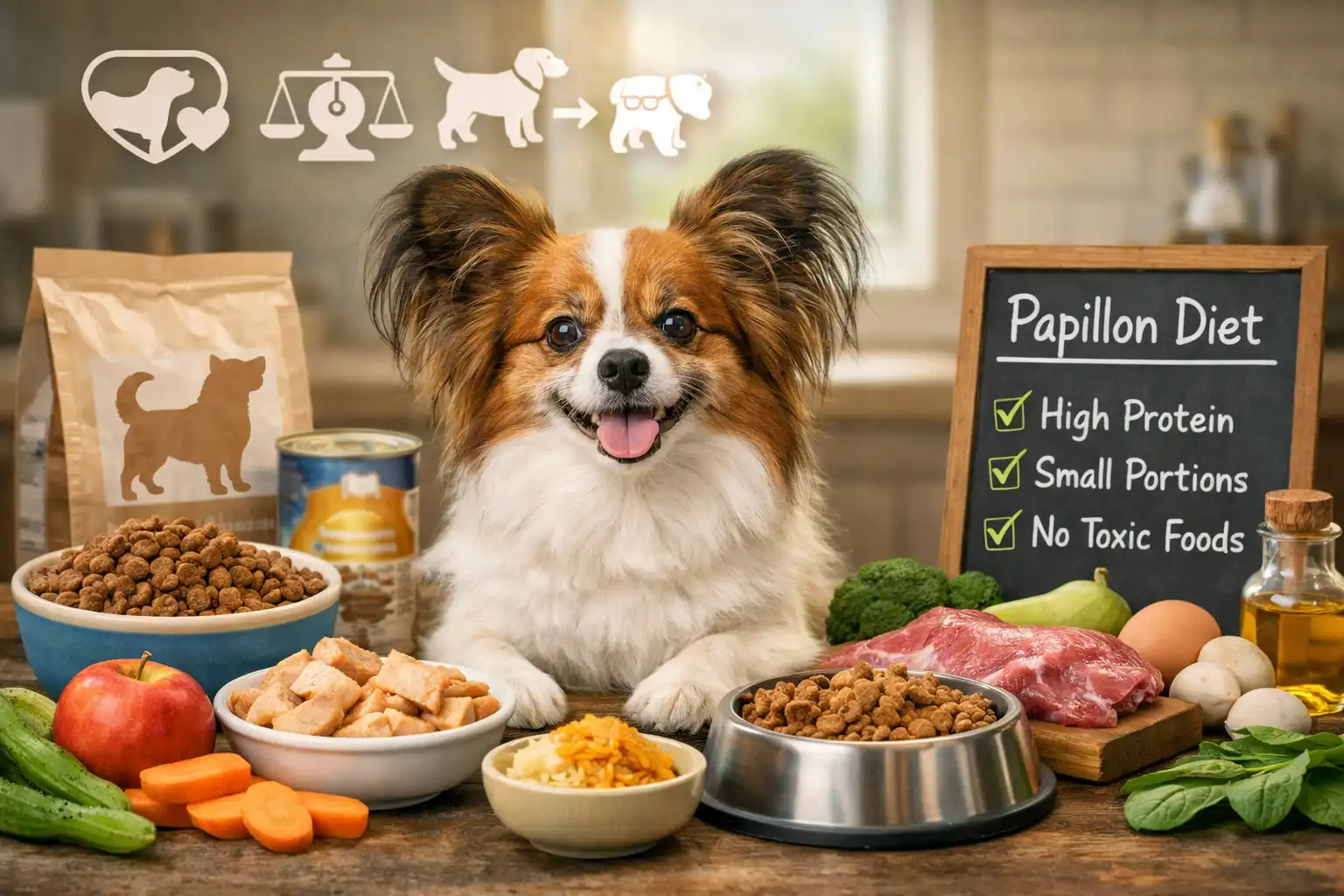
Papillon Dog Food Guide: Best Diet, Feeding Amount, and Nutrition Tips
Papillon dogs are small, active, and long-lived. Because of their size, what they eat matters a lot. A small mistake in food choice or portion size can affect their weight, teeth, energy, and overall health much faster than it would in a large dog.
Papillon dog food should support steady energy, a healthy coat, strong teeth, and good digestion. These dogs have fast metabolisms, which means they burn energy quickly but can also gain weight easily if overfed. Feeding the right food in the right amount helps keep them playful and comfortable every day.
Nutrition also plays a big role in long-term health. Papillons are known to live many years, so their diet should support healthy aging. Poor food choices over time can lead to problems like dental disease, obesity, low energy, or stomach issues. Good nutrition helps reduce these risks and supports a better quality of life.
If you want to understand the breed better, including lifespan and long-term care needs, the Papillon Dog Full Guide gives helpful background that connects diet with overall health planning.
Good nutrition is not about expensive food or strict rules. It is about balance, portion control, and choosing food that fits your papillon’s size and activity level. In the next section, we will look at what the best food for papillon dogs really is and how to choose it wisely.
Best Food for Papillon Dogs: What to Feed and Why
Choosing the best food for a papillon dog does not have to be confusing. Papillons are small dogs, so they need food made for small breeds. The food should be easy to chew, rich in protein, and gentle on the stomach. Quality matters more than brand names or fancy words on the bag.
A good papillon dog food should have real meat as the first ingredient, healthy fats for energy, and simple ingredients that are easy to digest. Avoid foods with too many fillers, artificial colors, or strong flavors. These can upset a small dog’s stomach over time.
Papillons can do well on different types of dog food. The best choice depends on your dog’s age, activity level, and digestion.
Types of dog food for papillons
| Food type | Good for papillons | Main benefits | Things to watch |
|---|---|---|---|
| Dry food (kibble) | Yes | Easy to store, helps teeth | Choose small-breed size |
| Wet food | Yes | Tasty, easy to chew | Can cause weight gain |
| Fresh food | Yes | High quality, soft texture | More expensive |
| Raw food | Sometimes | Natural ingredients | Needs careful handling |
| Homemade food | Sometimes | Full control of ingredients | Must be balanced properly |
Many owners struggle to read dog food labels. Companies often use marketing words that sound healthy but mean very little. Learning a few basics can help you choose better food.
What to look for on a dog food label
| Label item | What it means | Why it matters for papillons |
|---|---|---|
| First ingredient | Main part of the food | Should be real meat |
| Protein % | Muscle and energy support | Helps small active dogs |
| Fat % | Energy and coat health | Too much causes weight gain |
| AAFCO statement | Nutritional balance | Shows food is complete |
| Ingredient list length | Simpler is better | Easier digestion |
If your papillon is a picky eater or has a sensitive stomach, start with simple recipes and avoid switching foods often. Sudden food changes can cause loose stool or loss of appetite. Always change food slowly over several days.
Choosing the right food sets the base for good health, but portion size is just as important. Even the best food can cause problems if you feed too much.
How Much to Feed a Papillon and Feeding Schedule
Knowing how much to feed a papillon is just as important as choosing the right food. Because papillons are small dogs, even a little extra food can lead to weight gain. On the other hand, feeding too little can cause low energy and weakness.
Portion size depends on your dog’s weight, age, and activity level. An active papillon needs more food than one that spends most of the day resting. Always use the feeding guide as a starting point, then adjust based on how your dog looks and feels.
Papillon feeding amount by weight
| Dog weight | Daily food amount | Daily calories (approx.) |
|---|---|---|
| 5 lbs (2.3 kg) | 1/3 cup | 150–180 kcal |
| 7 lbs (3.2 kg) | 1/2 cup | 200–230 kcal |
| 10 lbs (4.5 kg) | 2/3 cup | 250–300 kcal |
These amounts are general guides. Some foods are more calorie-dense than others, so always check the food label. If your papillon starts gaining weight, slightly reduce the portion. If your dog seems hungry all the time or low on energy, talk to your vet before increasing food.
Feeding schedule by age
| Life stage | Meals per day | Helpful notes |
|---|---|---|
| Puppy | 3–4 meals | Small meals help growth |
| Adult | 2 meals | Keeps energy steady |
| Senior | 2 smaller meals | Easier on digestion |
Puppies need more meals because they are growing and burn energy fast. Adult papillons usually do well with two meals a day, one in the morning and one in the evening. Senior dogs may need smaller portions, especially if they are less active.
Always keep fresh water available. Even dry food-fed dogs need plenty of water to stay healthy. Watch your papillon’s body shape often. You should be able to feel the ribs gently without seeing them.
Feeding the right amount helps prevent obesity, joint stress, and heart problems later in life. Once portions and timing are set, feeding becomes easy and stress-free.
Safe Foods, Treats, and Foods Papillons Must Avoid
Many papillon owners like to share food with their dogs. This is okay sometimes, but only if you know what is safe. Papillons are small dogs, so even small amounts of the wrong food can make them sick. It is always better to be careful.
Some human foods are safe for papillons and can be a healthy treat when given in small amounts. These foods should be plain, cooked, and free from salt, sugar, or spices.
Safe human foods for papillons
| Food | Safe amount | Why it is okay |
|---|---|---|
| Cooked chicken | Small pieces | Good protein |
| Cooked turkey | Small pieces | Easy to digest |
| Carrots | Few slices | Good for teeth |
| Apples (no seeds) | Small pieces | Fiber and vitamins |
| Plain rice | Small spoon | Gentle on stomach |
| Pumpkin (plain) | Small spoon | Helps digestion |
Treats should never replace regular meals. Treats should make up only a small part of your papillon’s daily food. Too many treats can cause weight gain and bad eating habits.
Some foods are very dangerous for dogs and should never be given. Even a small bite can cause serious health problems.
Foods papillons must not eat
| Food | Why it is unsafe | Possible problem |
|---|---|---|
| Chocolate | Toxic to dogs | Vomiting, heart issues |
| Grapes and raisins | Damages kidneys | Kidney failure |
| Onions and garlic | Harms red blood cells | Weakness, illness |
| Xylitol (sweetener) | Very toxic | Low blood sugar |
| Alcohol | Poisonous | Serious poisoning |
| Cooked bones | Can splinter | Choking, injury |
Never give food just because your dog begs. Papillons are smart and learn quickly. Feeding table scraps often can lead to picky eating and weight problems.
If your papillon eats something unsafe by accident, contact a vet right away. Acting fast can save your dog’s life.
Special Diets, Common Feeding Problems, and FAQs
Some papillon dogs need special diets. Puppies, senior dogs, and dogs with health problems may not do well on regular food. Paying attention to your dog’s age and condition helps you choose the right diet.
Papillon puppies need food made for growth. It should be rich in protein and easy to digest. Senior papillons often need fewer calories but more support for joints and digestion. Knowing your dog’s life stage makes feeding easier. The Papillon Dog Age In Human Years Calculator can help you understand whether your papillon is still young, fully grown, or entering senior years.
Some papillons have food allergies or sensitive stomachs. These dogs may get itchy skin, loose stool, or vomit after eating certain foods. In these cases, simple diets with fewer ingredients work best. Always talk to a vet before changing to a special or medical diet.
Common papillon feeding problems and fixes
| Problem | Common cause | Simple fix |
|---|---|---|
| Picky eating | Too many treats or food changes | Feed on schedule, reduce treats |
| Weight gain | Overfeeding | Measure food, cut portions |
| Loose stool | Fast food change | Switch food slowly |
| Always hungry | Low-quality food | Choose higher protein food |
| Skipping meals | Stress or routine change | Keep feeding times steady |
Many owners worry when their papillon skips a meal. This is often normal, especially during hot weather or small routine changes. If your dog refuses food for more than one day or seems weak, contact a vet.
Quick answers to common questions
No. Human food should be an occasional treat only.
They need small-breed food with good protein and portion control.
When should If your papillon loses weight, gains weight fast, or has stomach issues.
Final thought
Feeding a papillon does not have to be hard or stressful. When you choose good-quality food, measure portions, and keep a simple routine, your papillon can stay healthy, active, and happy for many years. Small dogs feel the effects of food quickly, so even small changes can make a big difference. Pay attention to your dog’s weight, energy, and digestion, and adjust when needed. When in doubt, asking a vet for advice is always the safest choice.
For trusted, science-based feeding guidelines and general dog nutrition standards, you can also visit the Association of American Feed Control Officials (AAFCO), which sets nutritional requirements used by many quality dog food brands: https://www.aafco.org.
Related Article