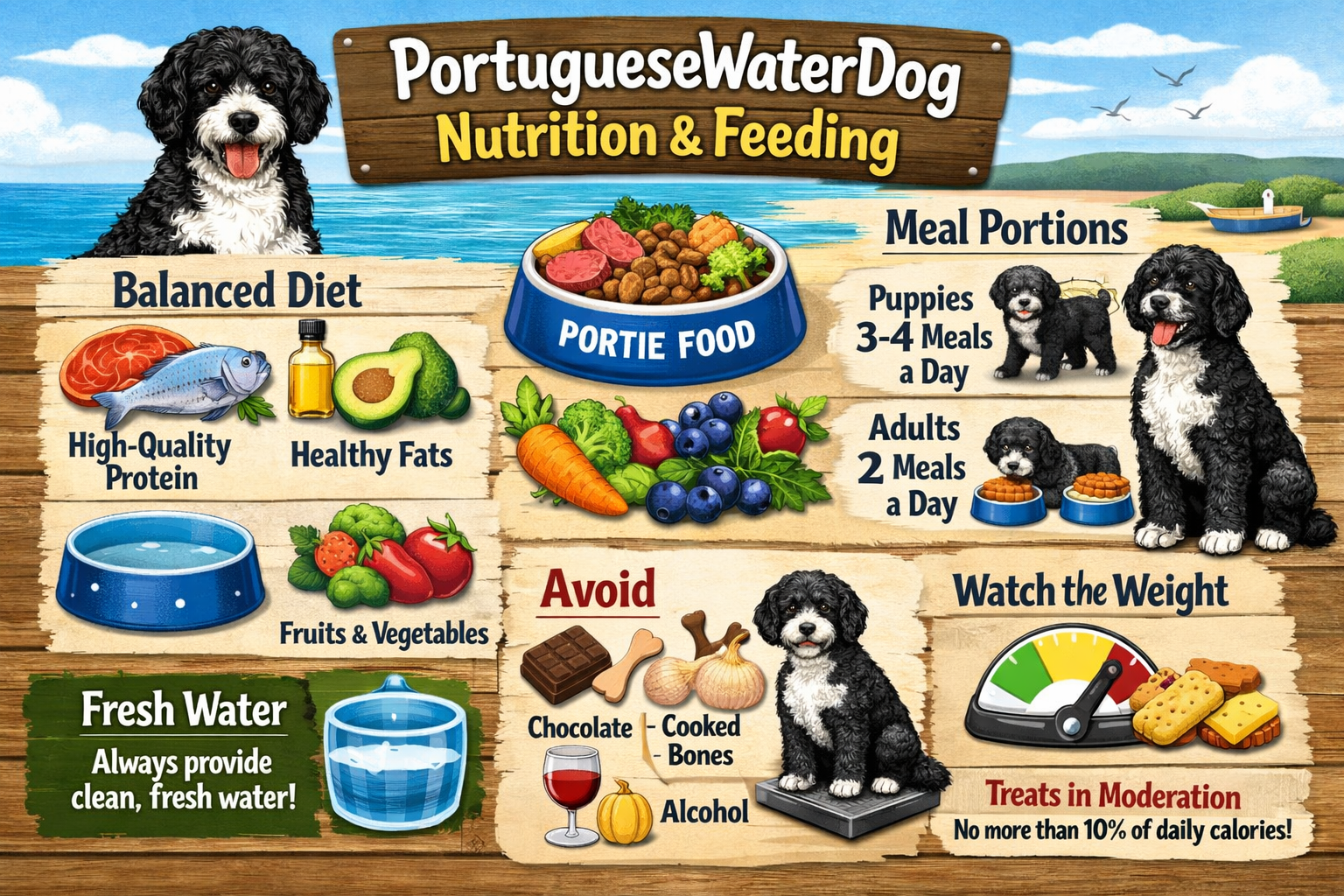
Portuguese Water Dogs are energetic, intelligent, medium-to-large working dogs with a long history of water retrieval and active companionship. Their nutrition is not just about keeping them full—it directly influences their energy levels, muscle tone, coat condition, joint health, digestion, and long-term wellbeing. This guide is designed to help you understand how to feed a Portuguese Water Dog in a way that supports both everyday family life and higher-activity lifestyles. Whether your dog is a playful puppy, an active adult, or a slowing senior, proper nutrition plays a central role in how they feel and function each day.
- High energy and stamina
- Muscular, athletic builds needing adequate protein and calories
- Dense, curly or wavy coats needing good fats and micronutrients
- A tendency to gain weight if calories exceed activity
Poor nutrition can cause:
- Excessive hunger or food obsession
- Weight gain despite normal portions
- Dull coat, flaky skin, or shedding
- Digestive issues
- Reduced stamina or slow recovery
Good nutrition provides:
- Steady energy
- Lean muscle maintenance
- Healthy skin and shiny coat
- Better joint comfort
- Easier weight management
Because Portuguese Water Dogs vary in activity, portions and diet must match each dog’s lifestyle.
Best Diet for a Portuguese Water Dog: Nutritional Needs Explained
A balanced diet supports health, activity, and recovery. Main nutrients include protein, fat, carbohydrates, vitamins, and minerals.
- Protein: Builds and maintains muscles. Animal protein as first ingredient is best.
- Fat: Provides energy, supports coat and skin, and joint health.
- Carbohydrates: Moderate amounts help digestion and steady energy.
- Vitamins & minerals: Support bones, joints, immune system, and overall health.
| Nutrient | General Range | Why It Matters |
|---|---|---|
| Protein | 22–30% | Muscle strength and activity |
| Fat | 12–18% | Energy, coat, skin support |
| Carbohydrates | Moderate | Energy and digestion |
| Omega-3 fats | Included | Joints, skin, coat health |
Grain-free diets are optional; the dog’s response matters most. Supplements are usually unnecessary if food is complete and balanced.
How Much to Feed a Portuguese Water Dog (Feeding Chart & Schedule)
Portions depend on weight, age, and activity. Feeding too little causes low energy; too much causes weight gain.
| Dog Weight | Low Activity | Moderate Activity | High Activity |
|---|---|---|---|
| 35 lbs | 800 kcal | 950 kcal | 1,100 kcal |
| 45 lbs | 950 kcal | 1,100 kcal | 1,300 kcal |
| 55 lbs | 1,100 kcal | 1,300 kcal | 1,550 kcal |
| 60 lbs | 1,200 kcal | 1,400 kcal | 1,650 kcal |
Meal timing:
| Life Stage | Meals Per Day | Notes |
|---|---|---|
| Puppy (<12 mo) | 3–4 | Supports growth and steady energy |
| Adult | 2 | Helps weight control and digestion |
| Senior | 2 smaller | Easier digestion, fewer calories |
Check body shape: ribs should be felt lightly; dog should have a visible waist. Avoid free-feeding to prevent weight gain.
Best Dog Food Types for Portuguese Water Dogs (Kibble, Fresh, Raw & More)
Portuguese Water Dogs can eat many types of dog food. Choose complete, balanced foods that suit your dog’s health, activity, and your schedule.
| Food Type | Pros | Cons | Best For |
|---|---|---|---|
| Dry kibble | Affordable, easy, balanced | Low moisture | Most families |
| Fresh food | High moisture, digestible | Higher cost | Sensitive stomachs |
| Raw diet | High protein, minimal processing | Safety, balance risks | Experienced owners |
| Canned food | Tasty, soft texture | Higher calories | Picky eaters |
| Freeze-dried | Lightweight, long shelf life | Expensive | Travel or rotation |
| Homemade | Full control of ingredients | Hard to balance | Vet-guided plans |
Safe vs toxic foods:
| Safe | Unsafe |
|---|---|
| Cooked chicken | Chocolate |
| Plain rice | Grapes, raisins |
| Carrots | Onions, garlic |
| Apples (no seeds) | Xylitol |
| Plain pumpkin | Alcohol |
| Cooked eggs | Cooked bones |
Treats should be ≤10% of daily calories. Avoid table scraps.
Special Diets, Common Feeding Problems & When to See a Vet
Some Portuguese Water Dogs need special care due to age, health, or activity changes. Recognizing normal vs unusual eating helps keep dogs healthy.
- Food allergies or sensitivities: Itchy skin, ear infections, gas, or loose stool. Simple diets with fewer ingredients often help. Changes should be gradual.
- Weight problems: Active dogs can gain weight if overfed or given too many treats. Older and neutered dogs need fewer calories.
- Always hungry: Can be boredom or habit, not true hunger. Measured meals and routine help.
| Problem | Possible Reason | What Usually Helps |
|---|---|---|
| Picky eater | Too many treats, routine changes | Fixed meals, fewer snacks |
| Always hungry | Boredom or overfeeding | Measured meals, more activity |
| Weight gain | Too many calories | Smaller portions, low-cal treats |
| Loose stool | Food change too fast | Slow transition over 7–10 days |
| Not eating | Stress or illness | Monitor, call vet |
Switch foods gradually over 1–2 weeks to avoid upset stomachs. Consult a veterinarian or nutritionist for persistent problems.
For more detailed information on Portuguese Water Dog health and breed standards, you can visit the American Kennel Club page: https://www.akc.org/dog-breeds/portuguese-water-dog/.

Ata Ur Rehman is the founder of Pet Age in Human Years Calculator, an educational platform that provides age conversion charts and lifespan guides for dogs, cats, birds, and other companion animals. His work focuses on helping pet owners understand how animal ages translate into human years using commonly accepted age conversion formulas and published lifespan averages.
The website compiles breed and species lifespan data from kennel clubs, breed organizations, and general animal lifespan studies to present simple and easy-to-understand guides for pet owners worldwide.
This website was created to centralize animal age conversion charts into one easy reference platform for pet owners.