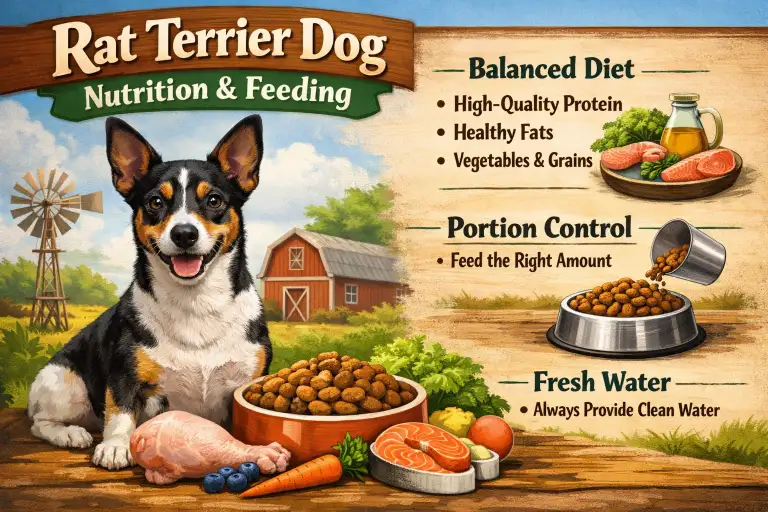
Rat Terriers are small dogs with big energy. They were originally bred for hunting and farm work, which means their bodies are designed to stay lean, active, and metabolically efficient. Feeding a Rat Terrier “like any small dog” often leads to problems such as weight gain, constant hunger, or nutrient imbalances. Proper nutrition isn’t just about choosing a popular brand — it’s about understanding what this breed actually needs to thrive.
A well-balanced Rat Terrier diet supports steady energy levels, strong muscles, healthy skin and coat, good digestion, and long-term joint health. Because Rat Terriers tend to burn calories quickly, especially when they’re active or mentally stimulated, underfeeding can be just as harmful as overfeeding. Many owners don’t realize that small, athletic dogs often need nutrient-dense food rather than simply smaller portions of low-quality diets.
At the foundation of Rat Terrier dog nutrition are three macronutrients: protein, fat, and carbohydrates. Protein is especially important for this breed. Rat Terriers benefit from animal-based protein sources that help maintain lean muscle mass and support their naturally active lifestyle. In practical terms, most healthy adult Rat Terriers do best on foods where protein is a clear priority rather than an afterthought.
Dietary fat plays a crucial role as well. Fat provides concentrated energy, supports brain function, and helps maintain a healthy coat. For a breed that is always on the move, fat is not something to fear — it’s something to manage appropriately. Too little fat can leave a Rat Terrier sluggish, while too much can contribute to unnecessary weight gain if activity levels are low.
Carbohydrates are not inherently bad for Rat Terriers, but quality and quantity matter. Easily digestible carbohydrates can provide quick energy and fiber for gut health, while excessive fillers may lead to bloating, inconsistent stool quality, or spikes in hunger. The goal is balance, not elimination.
Micronutrients such as vitamins and minerals are just as important as macronutrients, even though they’re needed in smaller amounts. Calcium and phosphorus support bone strength, zinc and biotin contribute to skin and coat health, and antioxidants help protect against cellular damage. For most Rat Terriers, a complete and balanced commercial diet that meets AAFCO standards provides these nutrients without the need for routine supplementation. Adding supplements without guidance can sometimes do more harm than good.
From a veterinary nutrition standpoint, the safest foundation for any Rat Terrier diet is food labeled as “complete and balanced” for the appropriate life stage. Standards set by organizations like AAFCO and informed by NRC research ensure that essential nutrients are present in the correct proportions. This doesn’t mean every AAFCO-compliant food is perfect, but it does mean the diet meets minimum nutritional requirements when fed as directed.
Ultimately, good Rat Terrier nutrition is about consistency, balance, and observation. No two dogs burn calories at the same rate, even within the same breed. Paying attention to body condition, energy levels, stool quality, and appetite tells you far more than the label alone. When those factors are aligned, you know your Rat Terrier is getting what they truly need.
How Much to Feed a Rat Terrier (Calories, Portions, and Schedules)
Feeding your Rat Terrier the right amount is just as important as feeding the right food. Because Rat Terriers are small but very active, their calorie needs can vary a lot depending on age, weight, and energy level. Feeding too little can leave your dog hungry and thin, while too much can lead to weight gain and health problems.
On average, adult Rat Terriers weigh between 10 and 25 pounds. Most small adult dogs need about 40 calories per pound of body weight per day, but very active dogs or working Rat Terriers may need up to 50 calories per pound. Puppies and young dogs burn even more energy and may need 2–3 times as many calories per pound compared to adults.
Portion sizes can be split into two or three meals a day. Puppies do best with 3–4 smaller meals, adults usually thrive on 2 meals per day, and senior dogs can eat 1–2 smaller meals depending on appetite and activity. Feeding the same amount at the same times each day helps maintain energy and digestion.
A simple way to check if your Rat Terrier is eating the right amount is to use the Body Condition Score (BCS). You should be able to feel your dog’s ribs without pressing hard, see a visible waist from above, and notice a slight tuck behind the ribs. If your dog is too thin or gaining weight, adjust food portions slowly over a week or two.
shows a practical guide for daily calorie needs and portions based on weight and activity:
| Weight (lbs) | Low Activity (cal/day) | Moderate Activity (cal/day) | High Activity (cal/day) |
|---|---|---|---|
| 10 | 400 | 450 | 500 |
| 15 | 600 | 675 | 750 |
| 20 | 800 | 900 | 1,000 |
| 25 | 1,000 | 1,125 | 1,250 |
shows a sample feeding schedule for different life stages:
| Life Stage | Number of Meals | Example Times |
|---|---|---|
| Puppy (2–6 mo) | 3–4 | 7am, 12pm, 5pm, 8pm |
| Puppy (6–12 mo) | 3 | 7am, 12pm, 5pm |
| Adult (1–7 yr) | 2 | 7am, 5pm |
| Senior (7+ yr) | 1–2 | 8am, optional 5pm |
Adjust portions as needed based on your dog’s activity and body condition. Always provide fresh water with every meal, and monitor your dog’s weight weekly to make small corrections.
Best Food Choices for Rat Terriers (Kibble, Fresh, Raw, and More)
Choosing the right food for your Rat Terrier is important for energy, health, and long life. Small, active dogs like Rat Terriers need nutrient-rich food that supports muscles, skin, coat, and digestion. Not all dog foods are created equal, so it helps to know the main types and what works best for this breed.
Kibble is the most common dog food. It is easy to store, convenient, and usually balanced for daily nutrition. Look for high-quality kibble with real meat listed first in the ingredients and minimal fillers like corn or wheat. Kibble can also help keep teeth a bit cleaner if chewed properly.
Canned or wet food is higher in moisture, which helps hydration. It often tastes better, so picky eaters may enjoy it. However, it is usually more expensive and spoils faster after opening. Combining wet and dry food can be a good mix for small breeds.
Fresh or homemade diets let you control exactly what goes into your dog’s bowl. They can be very healthy when balanced with protein, fat, fiber, vitamins, and minerals. However, homemade diets need careful planning or consultation with a veterinary nutritionist to avoid missing nutrients.
Raw or freeze-dried foods can work for some dogs, but they must be handled safely to prevent bacteria and meet nutritional requirements. Small dogs like Rat Terriers may need smaller pieces or mixes with kibble to prevent choking and ensure balanced meals.
shows the main dog food types, pros, and cons for Rat Terriers:
| Food Type | Pros | Cons | Best For |
|---|---|---|---|
| Kibble | Convenient, balanced, long shelf life | Can contain fillers, may be less palatable | Most adults, easy feeding routine |
| Wet/Canned | High moisture, tasty, good for picky eaters | Expensive, spoils quickly | Picky eaters, hydration support |
| Fresh/Homemade | Full control of ingredients, high quality | Time-consuming, risk of imbalance | Owners who want full control, specific diets |
| Raw/Freeze-Dried | High protein, minimal processing | Risk of bacteria, needs careful handling | Active dogs, supervised feeding |
shows example ingredient priorities for Rat Terriers:
| Nutrient | Ideal Sources | Why it Matters for Rat Terriers |
|---|---|---|
| Protein | Chicken, beef, fish, eggs | Maintains lean muscle for active dogs |
| Fat | Fish oil, chicken fat, flaxseed | Energy, coat, and brain support |
| Carbohydrates | Sweet potatoes, brown rice, oats | Digestible energy and fiber |
| Fiber | Pumpkin, beet pulp, veggies | Healthy digestion, prevents soft stool |
| Vitamins & Minerals | Carrots, spinach, supplements | Overall health, bones, skin, immune system |
Safe Foods, Treats, and What Rat Terriers Should Never Eat
Knowing what your Rat Terrier can and cannot eat is very important. Some human foods are safe in small amounts, but others can be toxic and even life-threatening. Treats are great for training and bonding, but too many can cause weight gain or upset tummies.
Safe human foods for Rat Terriers include small portions of cooked chicken, turkey, eggs, pumpkin, carrots, blueberries, and green beans. These foods provide nutrients and fiber without harming your dog. Always avoid adding salt, sugar, or seasonings.
Dangerous foods to avoid include chocolate, grapes, raisins, onions, garlic, xylitol (sweetener), alcohol, caffeine, and macadamia nuts. Even small amounts can cause serious health problems. Keep these out of reach at all times.
Treats should make up no more than 10% of your Rat Terrier’s daily calories. Use them for training, mental stimulation, or rewards, but adjust meal portions so your dog does not gain weight. High-value treats like small pieces of chicken or commercial training treats work best for this energetic breed.
shows safe and unsafe foods for Rat Terriers:
| Safe Foods | Unsafe/Toxic Foods |
|---|---|
| Cooked chicken or turkey | Chocolate |
| Eggs | Grapes & raisins |
| Pumpkin & carrots | Onions & garlic |
| Green beans & peas | Xylitol (sweetener) |
| Blueberries & apples | Alcohol & caffeine |
| Plain cooked rice or oats | Macadamia nuts |
shows treat guidelines for Rat Terriers:
| Treat Type | Recommended Amount | Notes |
|---|---|---|
| Small cooked meat pieces | 5–10 pieces/day | High value for training |
| Commercial small treats | 10–15 treats/day | Should be low calorie |
| Vegetables & fruits | 1–2 tablespoons/day | Fiber and low calories |
Special Diets, Common Feeding Problems, and When to See a Vet
Some Rat Terriers need special diets or extra care when it comes to feeding. Allergies, sensitive stomachs, weight problems, and picky eating are common issues for this breed. Understanding these challenges can help your dog stay healthy and happy.
Dogs with food allergies or itchy skin may do better on limited ingredient diets or foods without common allergens like beef, chicken, or grains. Sensitive stomachs may benefit from digestible proteins and added fiber. If your Rat Terrier has loose stool, vomiting, or digestive upset, it is important to monitor symptoms and possibly switch foods gradually.
Weight management is another common concern. Active Rat Terriers burn a lot of energy, but indoor or low-activity dogs can gain weight quickly. Feeding the right portions, using measured treats, and following a balanced diet are key. Overweight dogs may need a reduced-calorie formula, while underweight dogs may require high-calorie, nutrient-dense food.
Picky eaters may refuse meals, only eat certain foods, or leave parts of their meals. Rotating flavors, warming food slightly, or mixing textures can encourage eating. Treats can be used strategically for training, but too many can worsen weight or picky habits.
Switching foods should be done gradually over 7–10 days to avoid digestive upset. Start by mixing a small amount of new food with the old food and slowly increase the new food portion each day.
shows common feeding problems and solutions for Rat Terriers:
| Problem | Possible Cause | Solution |
|---|---|---|
| Itchy skin / allergies | Food sensitivity | Try limited ingredient diet, consult vet |
| Loose stool / diarrhea | Sensitive stomach / food change | Switch food gradually, add fiber |
| Weight gain | Overfeeding / low activity | Reduce portions, increase exercise |
| Weight loss / poor appetite | Underfeeding / illness | High-calorie food, check with vet |
| Picky eating | Texture/flavor preference | Rotate flavors, try mixed textures |
shows special diet tips by life stage and activity:
| Life Stage / Activity | Diet Tip |
|---|---|
| Puppy (high energy) | High protein, frequent small meals |
| Adult (moderate activity) | Balanced diet, standard portions |
| Senior (lower activity) | Lower calories, joint support nutrients |
| High-energy / working dogs | Extra protein and fat for energy |
| Low-activity / indoor dogs | Reduced calories, fiber-rich food |
“For more detailed information about this breed, visit the American Kennel Club’s official breed page.”

Ata Ur Rehman is the founder of Pet Age in Human Years Calculator, an educational platform that provides age conversion charts and lifespan guides for dogs, cats, birds, and other companion animals. His work focuses on helping pet owners understand how animal ages translate into human years using commonly accepted age conversion formulas and published lifespan averages.
The website compiles breed and species lifespan data from kennel clubs, breed organizations, and general animal lifespan studies to present simple and easy-to-understand guides for pet owners worldwide.
This website was created to centralize animal age conversion charts into one easy reference platform for pet owners.