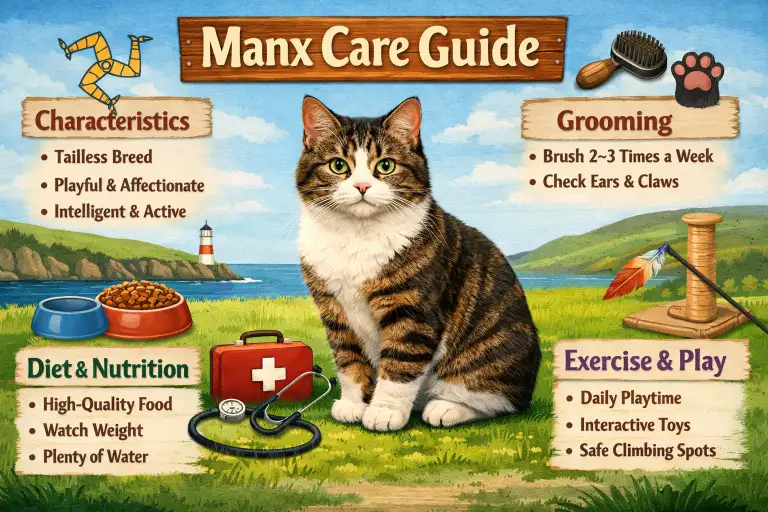
Manx cats are a unique and charming breed known for their lack of a tail and playful personalities. While they can make wonderful companions, their special anatomy means they need care that is a bit different from other cats. Understanding their needs helps owners prevent health issues and keep their Manx happy and active.
Recommended Dog Care Products
Based on your dog’s age, these products may help with comfort, health, grooming, and daily care.

Purina Pro Plan Veterinary Supplements
Daily probiotics for dogs to support digestive and gut health.
View on Amazon ↗
Earth Rated Poop Bags for Dogs
Leak-proof, extra thick waste bag refill rolls with lavender scent.
View on Amazon ↗
Greenies Pill Pockets for Dogs
Large dog treats for capsule medication, peanut butter flavor.
View on Amazon ↗
HONEY CARE All-Absorb Dog Wrap
Small male dog wraps, 50 count, useful for daily care support.
View on Amazon ↗
Seresto Flea & Tick Collar
Flea and tick treatment and prevention for dogs over 18 lbs.
View on Amazon ↗
Milk-Bone MaroSnacks
Small dog treats with real bone marrow in a 40 oz canister.
View on Amazon ↗
Vital Essentials Dog Treats
Freeze dried beef liver dog treats, grain free and single ingredient.
View on Amazon ↗
Stain & Odor Eliminator
Enzyme cleaner for pet stains, carpet messes, and strong odors.
View on Amazon ↗
Pur Luv Chicken Jerky Treats
Dog treats made with real chicken breast, high protein and chew-friendly.
View on Amazon ↗
Milk-Bone Flavor Snacks
Mini crunchy dog biscuits in a 36 oz canister for small rewards.
View on Amazon ↗As an Amazon Associate, we may earn from qualifying purchases.
These cats are intelligent, social, and often very attached to their families. However, their spinal structure can make them prone to certain problems, including back issues and digestive concerns. Knowing what to watch for and how to provide the right care is essential.
Many first-time Manx owners search for advice about grooming, feeding, and health care. A tailored guide helps avoid mistakes like overfeeding, improper litter setups, or neglecting spinal health. This article aims to give clear, step-by-step advice that covers all ages of Manx cats, from playful kittens to seniors.
Taking the time to understand your Manx’s specific care requirements will make daily life easier for both you and your cat. By following breed-focused guidance, you can enjoy a happy, healthy, and long life together with your Manx companion.
Essential Daily & Weekly Manx Care Routine
Manx cats thrive when they have a consistent daily routine. Feeding, litter box maintenance, play, and grooming are all important parts of their care. A structured routine helps prevent common health problems like constipation or urinary issues.
Feeding your Manx should match their age, size, and activity level. Kittens need more frequent meals, while adult cats usually do well with two meals a day. Always provide fresh water and monitor your cat’s intake. Dehydration can lead to urinary problems, which Manx cats are prone to.
Playtime and enrichment are essential. Manx cats are active and intelligent, so interactive toys, climbing spaces, and daily play sessions help prevent boredom and behavioral problems. Grooming is also part of the routine. Brush your Manx at least once a week to remove loose hair and prevent mats, especially if they have longer fur.
Litter box care is particularly important. Keep the box clean and watch for signs of constipation or straining. Some Manx cats may need a softer litter to reduce discomfort. Checking nails, ears, and teeth weekly ensures your cat stays healthy and comfortable.
Daily & Weekly Manx Care Checklist
| Task | Frequency | Notes |
|---|---|---|
| Feeding | Daily | Follow life-stage portions; fresh water always available |
| Litter Box Cleaning | Daily | Scoop at least once a day; wash weekly |
| Play & Enrichment | Daily | 10–20 minutes minimum; include climbing or interactive toys |
| Grooming | Weekly | Brush fur, check for mats |
| Nail Check | Weekly | Trim if needed |
| Ear Cleaning | Weekly | Only if dirty |
| Dental Hygiene | Weekly | Brush teeth or provide dental treats |
Manx Health, Anatomy & Common Problems
Manx cats have a unique spinal structure due to their short or missing tails. This makes them prone to back problems and sometimes issues with their bowels or bladder. Understanding these risks helps owners spot warning signs early.
Recommended Dog Care Products
Based on your dog’s age, these products may help with comfort, health, grooming, and daily care.
Purina Pro Plan Veterinary Supplements
Daily probiotics for dogs to support digestive and gut health.
View on Amazon ↗
Earth Rated Poop Bags for Dogs
Leak-proof, extra thick waste bag refill rolls with lavender scent.
View on Amazon ↗
Greenies Pill Pockets for Dogs
Large dog treats for capsule medication, peanut butter flavor.
View on Amazon ↗
HONEY CARE All-Absorb Dog Wrap
Small male dog wraps, 50 count, useful for daily care support.
View on Amazon ↗
Seresto Flea & Tick Collar
Flea and tick treatment and prevention for dogs over 18 lbs.
View on Amazon ↗
Milk-Bone MaroSnacks
Small dog treats with real bone marrow in a 40 oz canister.
View on Amazon ↗
Vital Essentials Dog Treats
Freeze dried beef liver dog treats, grain free and single ingredient.
View on Amazon ↗
Stain & Odor Eliminator
Enzyme cleaner for pet stains, carpet messes, and strong odors.
View on Amazon ↗
Pur Luv Chicken Jerky Treats
Dog treats made with real chicken breast, high protein and chew-friendly.
View on Amazon ↗
Milk-Bone Flavor Snacks
Mini crunchy dog biscuits in a 36 oz canister for small rewards.
View on Amazon ↗As an Amazon Associate, we may earn from qualifying purchases.
Common health concerns include constipation, urinary blockages, and in rare cases, spinal deformities. Straining in the litter box, reluctance to jump, or changes in walking can indicate a problem. Early detection and veterinary care are essential to prevent complications.
Regular vet visits are important for Manx cats. Your veterinarian can check for spinal health, digestive function, and general wellness. Vaccinations, parasite prevention, and dental care should also be maintained according to your cat’s age and lifestyle.
Providing a safe home environment reduces the risk of injury. Avoid letting your Manx jump from high places excessively, and make sure litter boxes and feeding areas are easy to access. A calm, predictable environment keeps your cat happy and healthy.
Common Manx Health Concerns
| Health Issue | Signs to Watch | Action |
|---|---|---|
| Constipation | Straining, small/rare stools | Adjust diet, increase water, consult vet |
| Urinary Blockage | Frequent attempts to urinate, discomfort | Immediate vet care |
| Spinal Problems | Difficulty jumping, abnormal posture | Limit jumping, vet evaluation |
| Obesity | Weight gain, lethargy | Adjust diet and exercise |
| Dental Issues | Bad breath, difficulty eating | Regular brushing, dental checkups |
Manx Behavior, Training & Environment Needs
Manx cats are known for their playful, affectionate, and sometimes mischievous personalities. They enjoy social interaction and can form strong bonds with family members. Early socialization helps kittens grow into confident adults.
Litter training is usually straightforward, but some Manx cats may need extra guidance due to spinal discomfort. Keep the box in a quiet, low-traffic area and ensure it is easy to access. Positive reinforcement and consistency are key.
Creating a stimulating environment is crucial. Provide climbing spaces, scratching posts, and interactive toys to satisfy their curiosity and energy. If you have other pets, introduce them slowly and monitor interactions to avoid stress.
Indoor-only Manx cats can live happy lives if provided with enough mental and physical stimulation. Outdoor access should be safe and supervised. Avoid letting them roam freely, as their unique anatomy makes them more vulnerable to injury.
Frequently Asked Questions (Expert Answers)
Manx cats are special, so owners often have questions about their care. This section addresses the most common concerns.
- Do all Manx cats have tail problems? Not all, but their spinal structure requires attention to prevent complications.
- How often should I groom my Manx? At least once a week, more if they have longer fur.
- Are Manx cats good with children? Yes, they are social and affectionate but supervise young children to avoid accidental injury.
- Can a Manx cat live indoors only? Absolutely, as long as they have enrichment and exercise.
- How do I prevent constipation? Provide fresh water, a high-fiber diet, and monitor litter box habits.
For more detailed breed guidance, check out the International Cat Care Manx Breed Page.
Recommended Dog Care Products
Based on your dog’s age, these products may help with comfort, health, grooming, and daily care.
Purina Pro Plan Veterinary Supplements
Daily probiotics for dogs to support digestive and gut health.
View on Amazon ↗
Earth Rated Poop Bags for Dogs
Leak-proof, extra thick waste bag refill rolls with lavender scent.
View on Amazon ↗
Greenies Pill Pockets for Dogs
Large dog treats for capsule medication, peanut butter flavor.
View on Amazon ↗
HONEY CARE All-Absorb Dog Wrap
Small male dog wraps, 50 count, useful for daily care support.
View on Amazon ↗
Seresto Flea & Tick Collar
Flea and tick treatment and prevention for dogs over 18 lbs.
View on Amazon ↗
Milk-Bone MaroSnacks
Small dog treats with real bone marrow in a 40 oz canister.
View on Amazon ↗
Vital Essentials Dog Treats
Freeze dried beef liver dog treats, grain free and single ingredient.
View on Amazon ↗
Stain & Odor Eliminator
Enzyme cleaner for pet stains, carpet messes, and strong odors.
View on Amazon ↗
Pur Luv Chicken Jerky Treats
Dog treats made with real chicken breast, high protein and chew-friendly.
View on Amazon ↗
Milk-Bone Flavor Snacks
Mini crunchy dog biscuits in a 36 oz canister for small rewards.
View on Amazon ↗As an Amazon Associate, we may earn from qualifying purchases.

Ata Ur Rehman is the founder of Pet Age in Human Years Calculator, an educational platform that provides age conversion charts and lifespan guides for dogs, cats, birds, and other companion animals. His work focuses on helping pet owners understand how animal ages translate into human years using commonly accepted age conversion formulas and published lifespan averages.
The website compiles breed and species lifespan data from kennel clubs, breed organizations, and general animal lifespan studies to present simple and easy-to-understand guides for pet owners worldwide.
This website was created to centralize animal age conversion charts into one easy reference platform for pet owners.